

Reviewed · LOUVRE MUSEUM TOURS
Louvre & Mona Lisa Small Group Tour with Reserved Entry
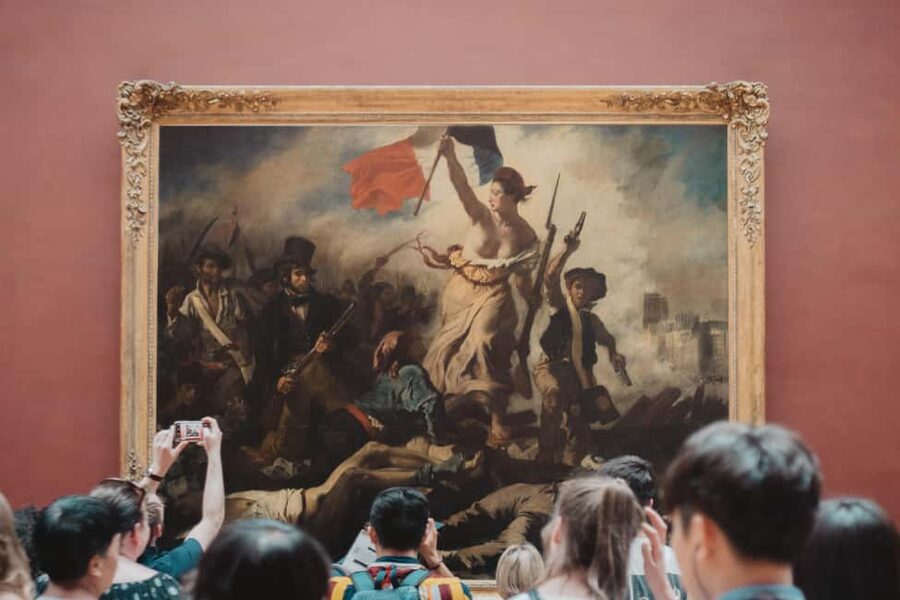
The smartest part of this Louvre visit is the reserved entry. You meet beside the Arc de Triomphe du Carrousel, then head into the world’s largest museum without first losing precious Paris time to the ticket line. Inside, an English-speaking guide connects the famous works, from the medieval fortress below your feet to Leonardo’s Mona Lisa and Delacroix’s Liberty Leading the People.
I like the three-hour focus and the headsets, which let you hear the guide even when the galleries fill with school groups and tour parties. Guides such as Omar, Maxim, Addie, Caroline, and Severine have earned especially warm praise for bringing humor, patience, and clear explanations to the art. The tradeoff is pace: three hours can feel packed, and one guide may spend more time on art history than you prefer.
Key points at a glance
- Reserved Louvre entry: Spend less time waiting outside and more time inside the museum.
- Small-group format: The advertised maximum is 12 people, though group size can occasionally feel larger.
- Major works in one route: See the Mona Lisa, Winged Victory, Psyche and Cupid, and Liberty Leading the People.
- A guide gives the art context: You get stories, symbols, and background that are easy to miss on your own.
- Three hours is efficient but active: Expect plenty of walking, standing, and a brisk look at a huge museum.
- Simple meeting point: Look for blue-clad staff beside the Arc de Triomphe du Carrousel.
Why reserved Louvre entry matters
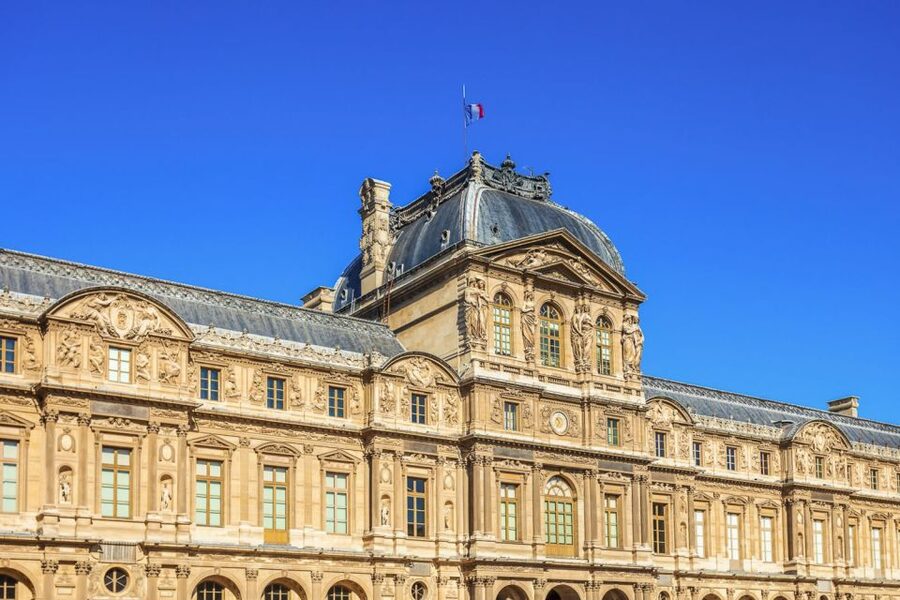
The Louvre is not a museum you casually pop into. It is enormous, heavily visited, and filled with more objects than you can sensibly see in one day. A reserved time and entry ticket remove one of the biggest uncertainties from your visit.
That does not mean you walk straight through every part of the building. All visitors still pass security, and the museum can be crowded once you reach the galleries. Still, avoiding the regular ticket line is a real benefit when you have only a few days in Paris.
I especially like this arrangement for a first visit. You do not need to spend your opening hour figuring out which wing leads to which staircase. Your guide takes charge of the route, explains the building, and keeps the group moving toward the major sights.
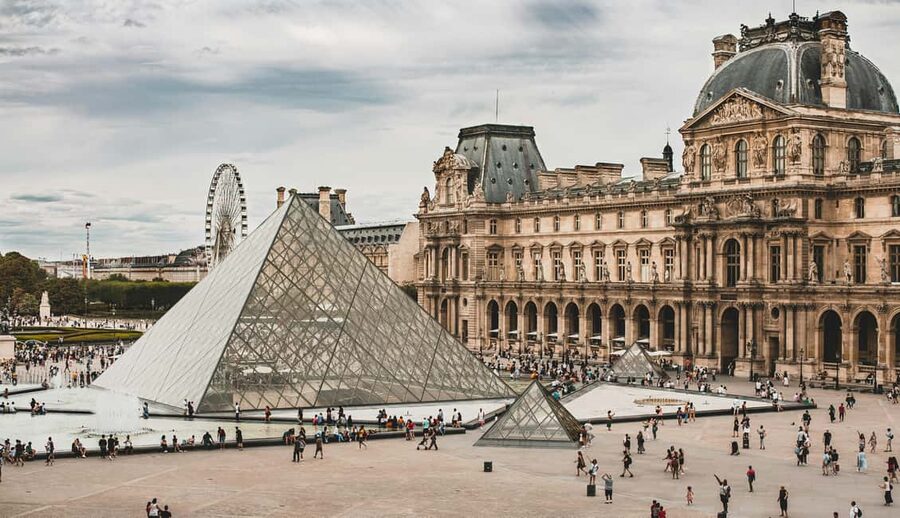
The tour begins at the Arc de Triomphe du Carrousel, the prominent arch topped by a horse-drawn chariot. With your back to the Louvre Pyramid, look across the road toward the entrance to the Tuileries Garden. The blue-clad coordinators wait to the left of the arch, beside the wall railing.
Give yourself enough time to find this spot. The meeting area is central, but the Louvre’s courtyards and paths can confuse you if you arrive at the last minute. There is no hotel pickup, so you handle your own way to the start.
A few other Paris half-days to compare
- Paris: Louvre Museum Timed-Entrance Ticket
★ 4.6 · 71,977 reviews - Paris: Louvre Guided Tour with Reserved Access & Boat Cruise
★ 4.3 · 16,353 reviews - Louvre Museum Masterpieces Guided Tour with Access
★ 4.5 · 12,023 reviews
From royal fortress to giant museum
One of the best features of this tour is that it does not treat the Louvre as a warehouse of famous paintings. You also learn how the building changed over time.
The route includes the medieval foundations of the Louvre, a reminder that this was once a fortified structure before it became a royal palace and, later, a museum. That architectural layer gives the visit a useful backbone. You are not simply moving from one celebrated object to another. You are seeing how French power, collecting, and public culture shaped the building.
The tour also includes royal treasures linked with Napoleon and King Louis XV. Napoleon’s crown offers a quick lesson in ceremony and political image making, while the objects associated with Louis XV show the scale of royal display.
I find this kind of explanation useful because the Louvre can otherwise feel like several museums stitched together. Ancient sculpture, Renaissance painting, French state art, and palace rooms all appear under one roof. A guide helps you understand why they are there and what to notice.
Ancient sculpture and the Winged Victory
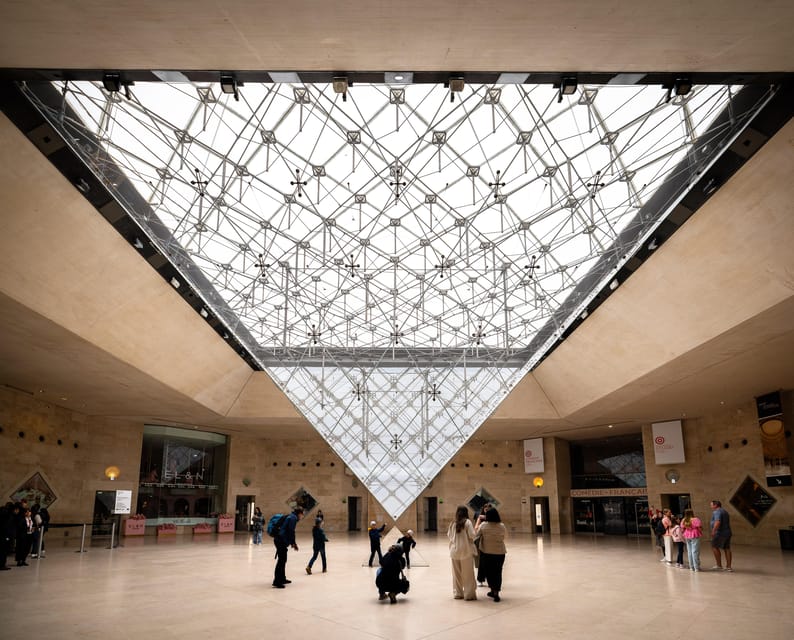
The itinerary reaches back to objects dating from around 450 B.C., then moves through Greek and Roman sculpture and later European art. This broad time span is one reason a guide earns its keep. You are crossing centuries at a fast pace, and the visual language changes constantly.
The Winged Victory of Samothrace, dating from the second century B.C., is one of the essential stops. The sculpture is displayed at the top of a grand staircase, where its position and sweeping form are part of the experience. Your guide can point out the details that make the figure feel full of movement, even though the head and arms are missing.
You also see Antonio Canova’s Psyche and Cupid, a much later work with a very different mood. Its polished marble, graceful pose, and intimate subject offer a fine contrast to the force of Winged Victory.
This pairing is valuable. You get more than a checklist of famous names. You see how artists in different periods approached the human body, emotion, balance, and movement.
The museum route involves a lot of walking, and seating is not guaranteed when you need it. One useful bit of practical advice is to take an open seat when you find one. The Louvre can be tiring, especially when you are also concentrating on a long explanation.
Meeting the Mona Lisa crowd
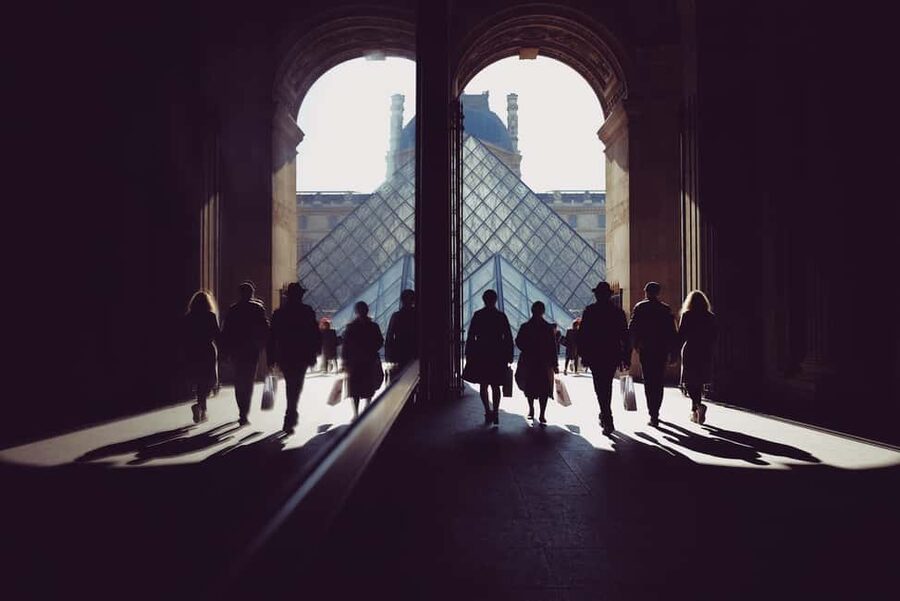
The Mona Lisa is the stop most people have in mind when booking this experience. You will have time to admire Leonardo da Vinci’s portrait and its famously difficult-to-pin-down smile, but do not expect a quiet private encounter.
The painting attracts a large crowd, and reaching it may involve waiting or moving slowly with the flow of people. One past tour experience lost about 20 minutes to the Mona Lisa line. That is an important consideration because three hours goes quickly inside the Louvre.
Your guide can keep talking while the group waits, which makes the delay less wasted. Even so, I think you should set your expectations correctly: reserved museum entry does not mean reserved personal viewing time in front of the Mona Lisa.
This is also where the group format can help. A guide knows the route and can keep everyone together in a crowded room. You are less likely to wander off, miss a turn, or spend half an hour trying to locate the next gallery.
The downside is that the guide controls the timing. If you want to linger over the Mona Lisa, or if you are more interested in one lesser-known painting than another famous stop, you may wish for more freedom. Some guides try to adapt to group interests, but this remains a highlights tour rather than a private museum visit.
Same city, a completely different afternoon:
- Disneyland® Paris 1-Day Ticket
★ 4.6 · 49,412 reviews - Paris: Versailles Palace and Gardens Full Access Ticket
★ 4.6 · 41,579 reviews - Paris: Evening River Cruise with Music
★ 4.4 · 22,721 reviews - Paris: Eiffel Tower Entry Ticket with Optional Summit Access
★ 4.4 · 20,035 reviews
French painting and Liberty Leading the People
The French Wing brings you to one of the tour’s major nineteenth-century images, Eugène Delacroix’s Liberty Leading the People. The painting is visually dramatic, but its importance goes beyond the central figure holding the French flag.
Your guide can explain the political setting and the way Delacroix combines allegory with the bodies and confusion of revolution. This is the sort of work that rewards a little background. Without context, you see a striking painting. With context, you can better understand why it became such a powerful image of France.
This section also rounds out the tour. After ancient sculpture, Renaissance art, royal objects, and the Mona Lisa, you get a look at a later French national style. The route is designed to give you a broad first introduction instead of concentrating only on Italian masterpieces.
A small warning: crowd levels can affect what you see. During a particularly busy visit with many children’s school groups, a guide had to bypass a few important paintings. You may be able to return to missed works after the tour, but that depends on your energy and the museum’s layout.
What the guide adds to three hours
The guide is the heart of this experience. The Louvre can overwhelm you with scale, names, dates, and rooms. A strong guide gives you a thread to follow.
Several guides have been singled out for different strengths. Omar has been praised for passion, humor, and an engaging presentation. Maxim has been described as efficient and clear, while Addie has been noted for energy and an ability to keep people interested. Caroline has helped nervous first-time visitors understand the museum’s layout, and Severine has offered lively explanations of both the building and its art.
Your assigned guide may be someone else, so you should not book based on a particular person appearing on the day. The useful point is that the experience depends heavily on the guide’s approach. The best version combines facts with stories, gives you time to look, and adjusts the explanation when the museum gets noisy or crowded.
The headsets are a practical plus. You can hear the guide without standing shoulder to shoulder with the entire group. They are especially helpful in large rooms or when other tour parties are nearby.
The main criticism is also clear. Some people find the amount of art history too heavy. If you prefer a quick visual tour with short explanations, three hours of detailed interpretation may feel like too much. If you like learning why a work matters, the same detail is likely to be the best part.
Group size, pace, and physical demands
The stated group limit is 12 people or fewer. That is small enough for a more personal feel than a large coach-style tour, and the guide can usually answer questions without losing control of the route.
There is one caveat. At least one past group found the party larger than expected, even though the headsets made it manageable. I would treat 12 as the intended maximum, not an absolute promise that every departure will feel tiny.
The pace is steady. You will walk through several sections of the museum, climb or descend through a large palace complex, and spend time standing in front of major works. A previous participant specifically warned that there is a lot of walking.
The tour is not suitable for wheelchair users, and baby strollers are not allowed. Large bags, umbrellas, luggage, and oversized items must be left at the free bag check. Anything larger than 55 by 35 by 20 centimeters cannot enter the museum.
Bring a passport or identity card. Everyone passes security before entering, so even with reserved access you should allow time for that process.
Is $115 a fair price?
At $115 per person, this is not a budget museum ticket. You are paying for more than admission: the English-speaking guide, reserved access, reservation fee, headsets, and the structure of a three-hour route are included.
The value depends on how you use the Louvre. If you are already comfortable navigating huge museums and want to choose your own rooms, a basic ticket may suit you better. You will have more control and can spend as long as you like with a single artist.
If this is your first Louvre visit, the price is easier to justify. The included museum ticket is listed at 22 euros, while the reservation fee is listed at 70 euros per group. The rest of the cost supports the guide-led format and small-group organization. You are paying to save time and reduce the mental work of planning a route through a very large institution.
The value is also stronger for couples, families, and first-time art-museum visitors who might otherwise feel lost. One past participant had little enthusiasm for the Louvre before the tour, then found the visit much more engaging once a guide explained the stories and details.
EU visitors aged 18 to 26 can enter the Louvre free of charge, though the booking information notes that the package includes the reservation fee. Check the current terms carefully before assuming that the guided package price will change for you.
Who should book this Louvre tour?
I would choose this for a first-time Louvre visitor with only a short window in Paris. It is also a good fit if you want the Mona Lisa, Winged Victory, Psyche and Cupid, Napoleon’s crown, and Liberty Leading the People in one organized visit.
Families and mixed-interest groups can benefit from the guide’s explanations. You do not need to arrive with an art background, and a good guide can make the visit work for someone who is curious but not already passionate about museums.
I would hesitate if you dislike group tours, need extended time with individual works, or prefer silent wandering. The advertised group is small, but the museum itself is not quiet. You should also be comfortable with several hours of walking and standing.
Cancellation is flexible up to 24 hours before the tour for a full refund, and you can reserve now and pay later. Those terms help if your Paris schedule is still shifting.
Should you book it?
Book this tour if you want an efficient first look at the Louvre and value clear explanations more than total independence. The reserved entry, headsets, and focused route solve three common problems: waiting, getting lost, and seeing famous art without understanding why it matters.
Skip it if you plan to spend an entire day on your own with one department, or if detailed commentary sounds tiring. For most first visits, though, three hours with a capable guide is a sensible way to meet the Louvre without letting its size take over your Paris itinerary.
FAQ
How long does the Louvre and Mona Lisa tour last?
The guided tour lasts three hours.
Where does the tour begin?
It begins beside the Arc de Triomphe du Carrousel. With your back to the Louvre Pyramid, look across the road toward the Tuileries Garden. Blue-clad staff wait to the left of the arch beside the wall railing.
Where does the tour finish?
The tour finishes at the Louvre Pyramid.
Is museum entry included?
Yes. The package includes the Louvre entrance ticket, reservation fee, and reserved access.
Is the tour conducted in English?
Yes. The tour has a live English-speaking guide.
How large is the group?
The advertised group size is 12 people or fewer. One past participant found the group larger than expected, so the exact feel may vary.
What should I bring?
Bring a passport or identity card. You should also avoid bringing large bags, luggage, umbrellas, or items larger than 55 by 35 by 20 centimeters.
Can wheelchair users join the tour?
No. The experience is not suitable for wheelchair users. Baby strollers are also not allowed.
Just listed in Paris
- Paris: Giverny & Versailles Small Group or Private Tour★ 4.5 · 49 reviews
- Chartres Cathedral 5 Hours Tour from Paris with Private Transport★ 4.5 · 49 reviews
- Paris: Louvre photoshoot or Seine bridges Eiffel Tower walk★ 5.0 · 49 reviews
- Private tour of the Champagne area, meet local producers and taste their Champagne, start from your hotel in Paris.★ 5.0 · 50 reviews
- Paris: Choux Pastry and Chocolate Éclair Making Class★ 4.9 · 50 reviews
- Paris Eternelle Notre-Dame Virtual Reality Tour★ 4.5 · 50 reviews
- Normandy D-Day Landing Beaches Private Day Trip from Paris★ 5.0 · 50 reviews
- Disneyland® Paris 1 Day with Round-Trip Train Tickets from Paris★ 4.0 · 50 reviews
Louvre Museum Tours, compared.


Louvre Guided Tour with Reserved Access & Boat Cruise
Read our review →
Louvre Museum Entry Ticket With Host and River Cruise
Read our review →
Mona Lisa & Louvre Masterpieces Tour with Reserved Access
Read our review →
Louvre Museum – Exclusive Guided Tour (Entry Included)
Read our review →
Louvre Museum Hosted Entry and Mona Lisa Audioguide
Read our review →
Louvre Priority Access with Mona Lisa Escort or Guided Option
Read our review →
Browse the lists this tour appears in