
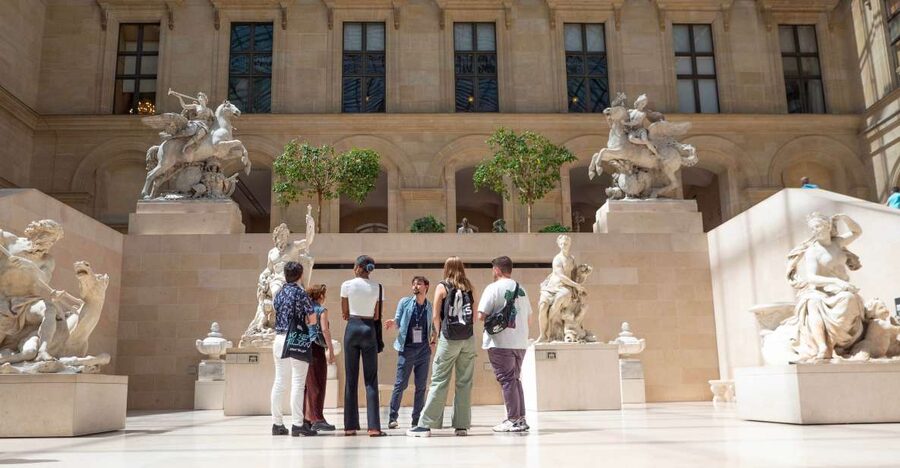
Reviewed · LOUVRE MUSEUM TOURS
Paris: Louvre Museum Highlights and Mona Lisa Tour
The Louvre is too large to approach casually, especially on a first visit. This two-hour highlights tour gives you a sensible route through the former royal palace, with the Mona Lisa, Venus de Milo, and Winged Victory of Samothrace as the main prizes.
I like the pre-reserved entry and the strong storytelling from guides such as Sally, Barbara, Rodrigo, and Pauline. I also like that the route includes medieval foundations and less-famous works, not just the three celebrity pieces. The tradeoff is simple: two hours goes quickly, and crowded rooms, security checks, stairs, and a possible wait of up to 20 minutes can eat into your museum time.
Key points at a glance
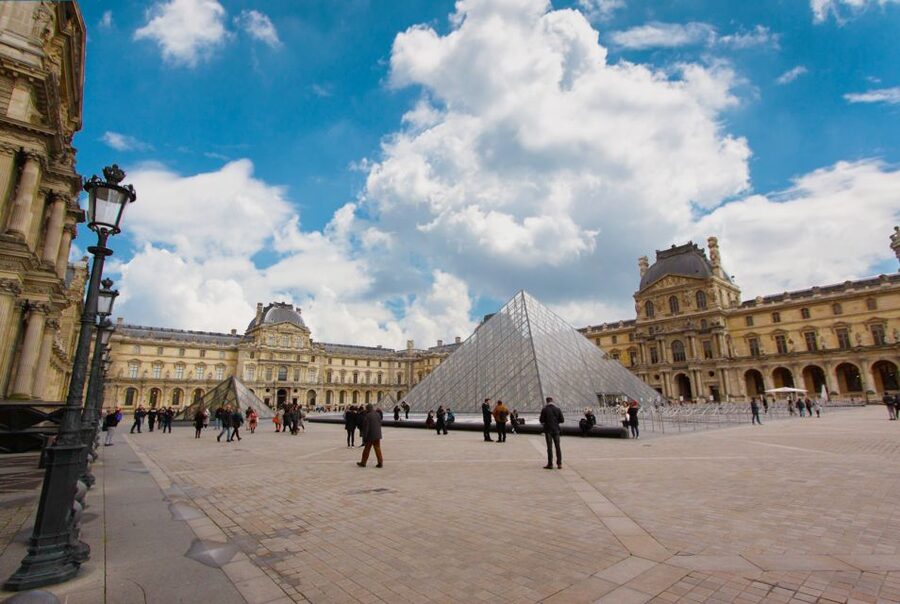
- See the Louvre’s essential trio: The Mona Lisa, Venus de Milo, and Winged Victory of Samothrace are all part of the planned route.
- Enter with a reserved ticket: You still pass airport-style security, but you avoid joining the regular ticket line.
- Follow a sensible path: The guide helps you avoid getting lost in one of Europe’s biggest museums.
- Hear the stories behind the art: Expect context on theft, royal power, Greek mythology, Renaissance painting, and the Louvre itself.
- Visit the medieval foundations: Underground galleries reveal remains of the original fortress beneath the palace.
- Plan for crowds and stairs: The route is not suitable for wheelchair users or people with mobility impairments.
Why a Louvre highlights tour makes sense
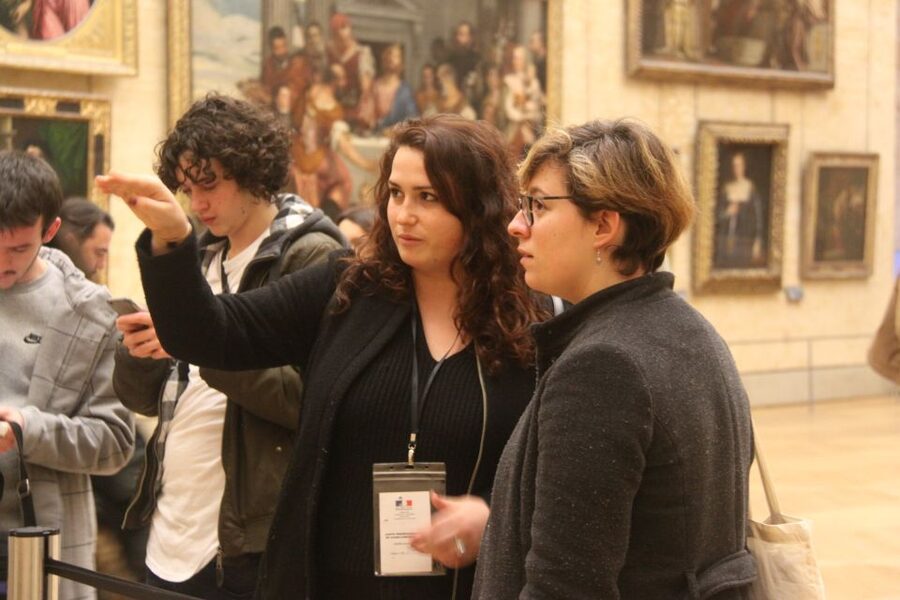
The Louvre is not one tidy museum with a single obvious path. It is a former royal residence with huge wings, grand staircases, long corridors, and collections covering ancient civilizations through the mid-19th century.
You can spend hours wandering and still miss the works you came to see. A guide gives the visit shape. Instead of studying a map at every junction, you follow a planned route and hear why each piece matters.
That matters most if you have only a few days in Paris. You will not see the entire museum in two hours, but you can come away with a clear sense of its major collections and a useful list of rooms to revisit later.
The group size is capped at 20 people. That is not private-tour intimacy, but it is small enough to stay together more easily than in a large coach group. Headsets are supplied, which helps when the museum gets noisy and the guide is speaking near a crowded gallery.
The English-speaking guides receive the strongest praise for their delivery. Sally is described as a strong storyteller, Barbara as friendly and clear, and Rodrigo as good at mixing major works with interesting paintings and objects along the way. Pauline used questions to keep her group involved, while Phillip was especially effective with children.
Guide quality can vary from one departure to the next, but the repeated pattern is clear: the value comes from the person leading you, not just from the ticket.
A few other Paris half-days to compare
- Paris: Louvre Museum Timed-Entrance Ticket
★ 4.6 · 71,977 reviews - Paris: Louvre Guided Tour with Reserved Access & Boat Cruise
★ 4.3 · 16,353 reviews - Louvre Museum Masterpieces Guided Tour with Access
★ 4.5 · 12,023 reviews
Meeting at the Arc du Carrousel du Louvre
Your meeting point is at the Arc du Carrousel du Louvre, just outside the museum. The exact point can vary by booking option, so check your confirmation carefully and arrive early.
This is important: do not walk straight to the Louvre entrance and expect to join the group there. You must meet the guide first. Since the ticket is issued as part of a group booking, a late arrival can mean losing your entry ticket.
The guide should help gather the group before leading you toward the museum. Look for the meeting instructions and allow extra time to find the Arc du Carrousel, particularly if you are unfamiliar with the area.
Bring a passport or identity card. You will also want comfortable shoes. The Louvre route involves walking and stairs, and the museum itself can feel tiring even before you reach the most crowded galleries.
Security and fast-track entry
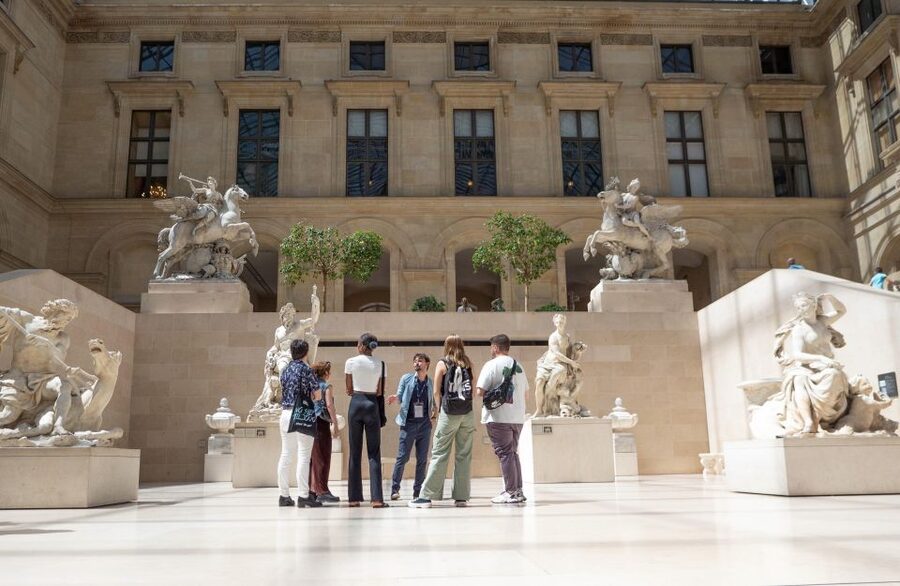
The pre-reserved ticket is one of the tour’s practical advantages. It lets the group use a separate entry process rather than joining the ordinary ticket line.
That does not mean walking directly inside. Everyone must pass airport-style security, and busy periods can still bring a wait of up to 20 minutes. Summer is especially crowded, and the most famous rooms often move at a slower pace.
One visitor found that 35 to 40 minutes of a two-hour visit went into getting inside. That is a useful warning. The phrase skip the line refers to the ticket process, not a guarantee that you will bypass security or every queue inside the museum.
Do not bring luggage or large bags. Double baby strollers are not allowed, and non-folding strollers cannot enter. Travel light, especially if the Louvre is one stop in a full day of sightseeing.
The Louvre as a former royal residence
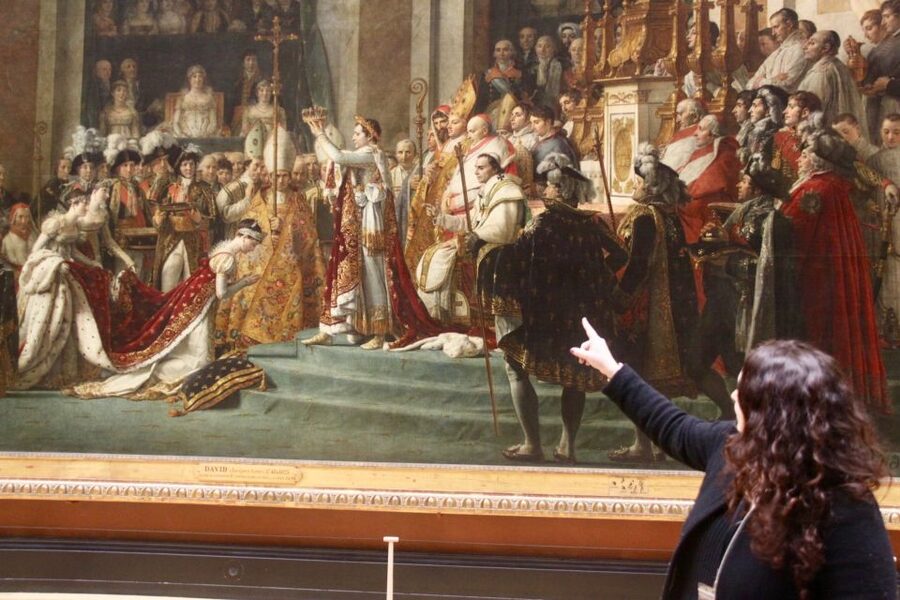
Once inside, the guide places the art in the setting of the building itself. Before it became a public museum, the Louvre was a residence of the Kings of France.
The museum’s story stretches back through several stages of construction and use. The underground galleries reveal remains of the original medieval fortress, giving you a physical look at the foundations beneath the later palace.
I like this part because it keeps the tour from becoming a parade of famous names. You are not only looking at paintings and statues. You are also seeing the building as a record of French power, royal taste, and changing ideas about public access to art.
The underground remains are also a useful change of pace. The Mona Lisa rooms can be packed, while these older foundations offer a quieter way to understand how the site began.
More museums in Paris:
- Paris: Louvre Museum Entry Ticket With Host and River Cruise
★ 4.6 · 9,926 reviews - Les Invalides: Napoleon’s Tomb & Army Museum Entry
★ 4.6 · 9,185 reviews - Louvre Museum – Exclusive Guided Tour (Entry Included)
★ 5.0 · 6,296 reviews - Paris: Louvre Museum Hosted Entry and Mona Lisa Audioguide
★ 4.6 · 5,235 reviews
Venus de Milo and the ancient Greek collection
The Venus de Milo is one of the tour’s major stops. This ancient Greek sculpture has inspired generations of artists, and the guide explains what makes it so influential.
A guided explanation is useful here because the statue’s fame can make it easy to glance, photograph, and move on. Your guide can point out the work’s place in Greek art and explain why a damaged sculpture without its arms became such an enduring symbol.
The route also includes other ancient Greek relics. The Louvre’s ancient collections can feel scattered if you explore alone, so a clear path helps you connect individual objects to larger ideas about mythology, beauty, and public display.
Expect people around the Venus de Milo, particularly during summer and other busy periods. You may need to wait for a clear view, and the group may pause only briefly before moving on.
Winged Victory and the grand staircase
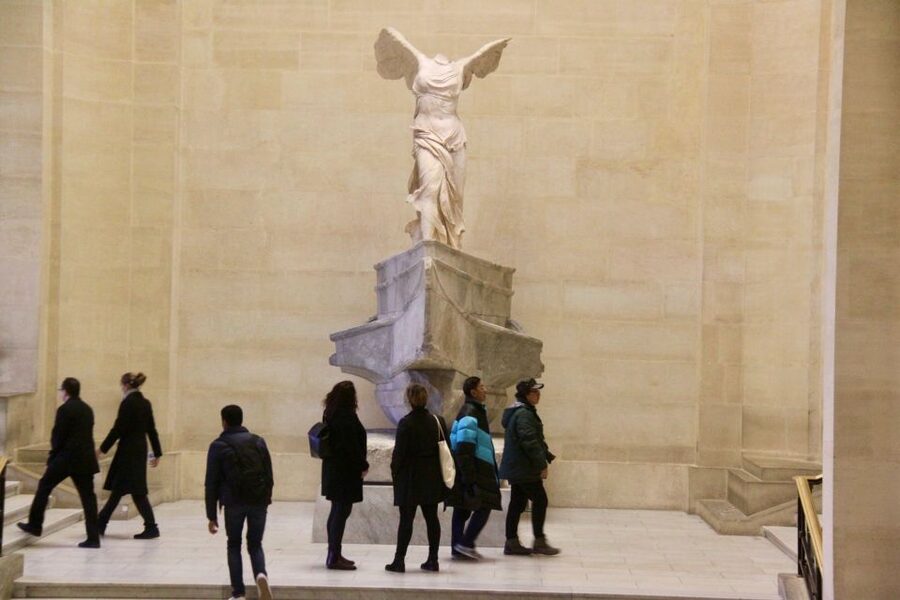
The Winged Victory of Samothrace is another centerpiece. This Hellenistic statue represents Nike, the Greek goddess of victory, and is displayed at the top of a monumental staircase.
The setting is part of the experience. The statue’s placement gives it a dramatic approach, and the guide can help you read the movement and force of the figure rather than treating it as a static object.
This stop also shows why comfortable shoes matter. The route uses stairs, and the museum’s size means plenty of walking between rooms. People with mobility impairments may find the itinerary difficult because of the stair access and the location of the elevators.
If you are visiting with children, the pace may work well if they enjoy stories and visual detail. One guide, Phillip, was praised for keeping children engaged. Still, the Louvre is not a quick, low-effort stop. Families should be ready for crowds, stairs, and a fairly brisk route.
The Mona Lisa and the reality of the crowd
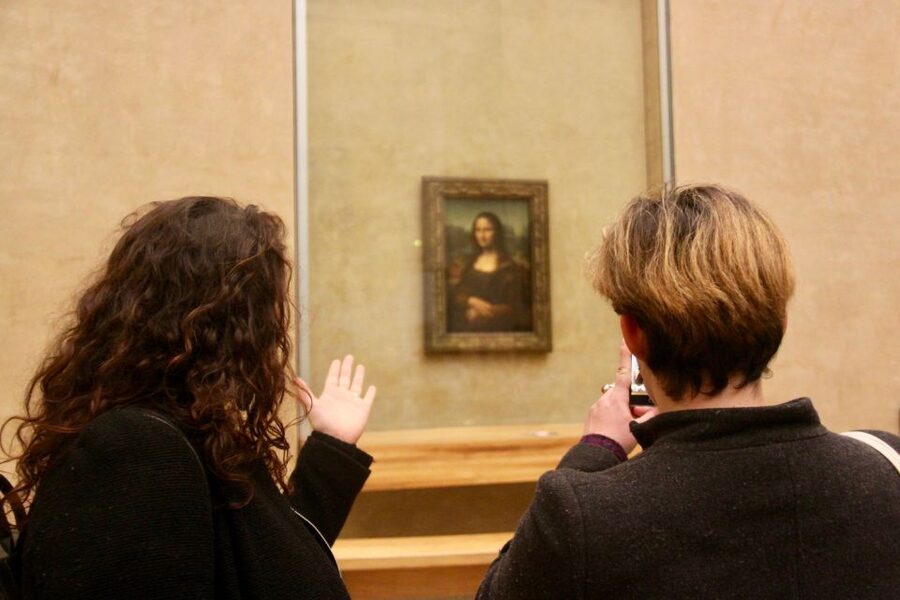
The tour usually builds toward Leonardo da Vinci’s Mona Lisa, the world’s most famous Renaissance portrait. Your guide explains the painting’s significance and the dramatic theft in 1911, an event that helped turn the portrait into a global celebrity.
The story of the theft adds useful context. The painting was famous before 1911, but its disappearance and return gave it a new level of public attention. That history makes the final stop more interesting than a simple photo opportunity.
The room itself can be crowded. You may find a crush of people around the portrait, and the group can be harder to keep together in this area. One useful suggestion from past visitors is for the guide to hold something easy to spot, such as a flag, since a shorter guide can disappear in the crowd.
The tour ends near the Mona Lisa. After the guide’s explanation, you can continue exploring on your own, but pay attention to the museum’s exit rules. Once you leave the wings and return beneath the pyramid, you cannot re-enter the galleries.
That means you should not rush out if you want another look at a nearby room. Ask the guide where the route finishes and decide in advance if you plan to continue inside afterward.
Renaissance paintings and less-famous works
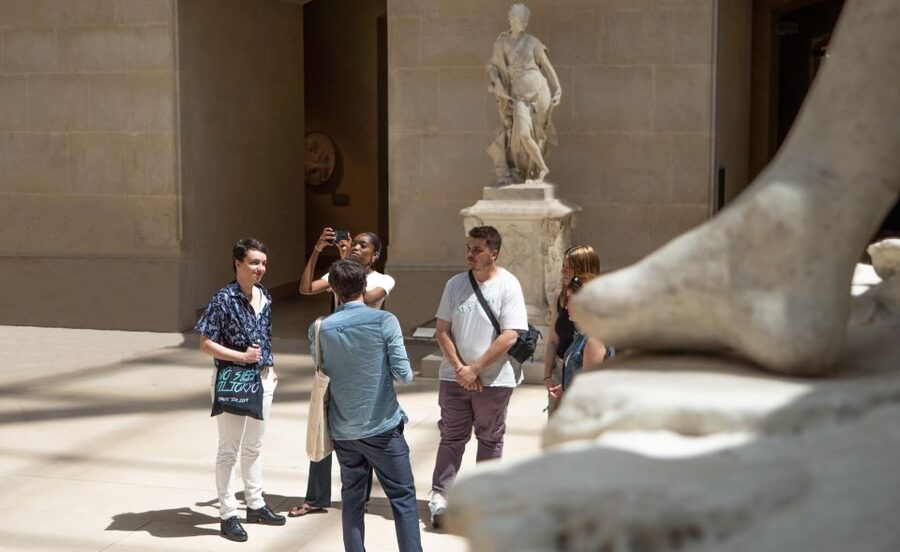
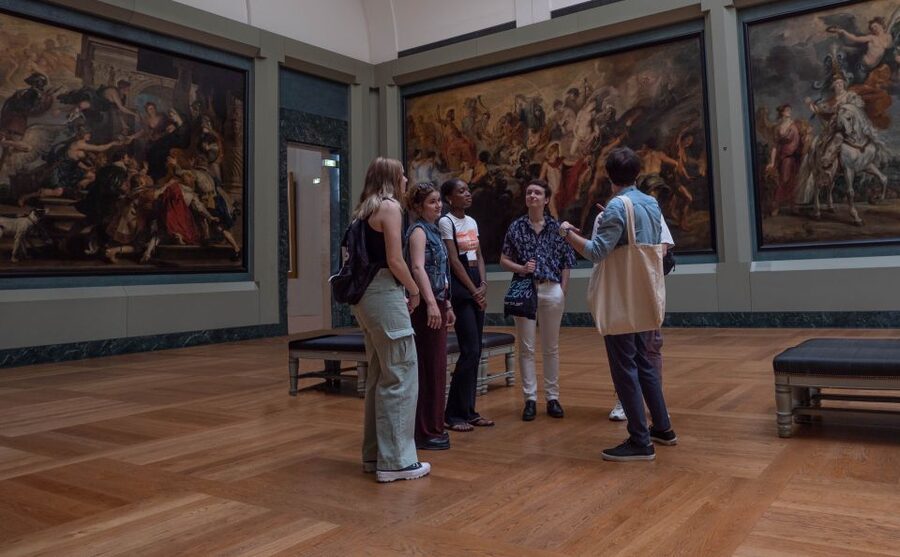
The route includes paintings from the 13th through the 19th centuries, along with Renaissance works and prints from the Royal Collection.
This is where a good guide earns the fee. The Louvre’s famous works get the crowds, but less-famous pieces often provide the clearest lessons in technique, patronage, religion, and daily life. Guides such as Pierre have been praised for pointing out art that a visitor might otherwise walk past.
You may also see rooms associated with Dutch masters and other European collections. One useful pattern is to use the quieter galleries as a break from the crowded rooms around the Mona Lisa and Venus de Milo.
Do not expect a full survey of European painting. Two hours is enough for an introduction and a strong set of highlights, not a complete museum education. The guide has to keep moving, and you will sometimes get only a short look before the group advances.
Still, the range is valuable. Ancient sculpture, Renaissance painting, royal prints, medieval stonework, and palace interiors all appear within one visit. That variety helps you understand why the Louvre can take days to explore.
How fast is the pace?
The advertised duration is one to two hours, with the main guided visit generally lasting about two hours. Once the guided portion ends, you can stay and explore independently, subject to the museum’s re-entry rule.
The pace is described as brisk but manageable. Several people found that two hours was just right for a first visit, while others noted that the museum is so large that the time felt short.
I would treat the tour as an orientation rather than a complete museum day. You will see the principal masterpieces and learn how the building is organized. If you want long, quiet time with individual paintings, plan to return to selected rooms after the tour or visit the museum separately on another day.
The guide also has to manage a group of up to 20 people. In busy galleries, you may need to stay alert and keep sight of the guide. Headsets help with sound, but they do not prevent the group from becoming spread out near popular works.
Is the $116 price fair?
At $116 per person, this is not a cheap museum ticket. You are paying for more than entry: a reserved place, an English-speaking licensed guide, headsets, and help with the museum’s confusing layout.
The value is strongest for a first-time visitor who wants to see the major works without spending precious Paris time figuring out where to go. The ticket alone does not tell you how to connect the medieval fortress, Greek sculpture, Renaissance painting, royal collections, and Mona Lisa into one useful story.
The price is harder to justify if you already know the Louvre well, prefer to wander alone, or want to spend a full day studying a small number of works. An independent visit gives you more control over timing.
I think the fee makes sense for a short Paris stay, families, and anyone who feels uneasy in enormous museums. It is also useful for people who want historical context rather than a quick checklist of famous objects.
Who should book this tour?
This tour suits a first Louvre visit, especially if you want the essential works in a fixed two-hour route. It also fits people who prefer an English-speaking guide and do not want to begin the day by navigating ticket lines and museum maps.
Families can benefit from the stories and structure, though children must have their own booking. The guided format gives younger visitors something to listen for, and the route keeps the visit from becoming an unplanned march through endless rooms.
Art history students and repeat Louvre visitors may prefer more freedom. You may find the pace too quick if your priority is close study, sketching, or photography.
The tour is not suitable for wheelchair users or people with mobility impairments because of the walking, stairs, and limited usefulness of the museum elevators along the route. Anyone carrying luggage should leave it elsewhere before meeting the guide.
Timing, cancellation, and practical cautions
Go as early as your schedule allows. The museum becomes harder to navigate as crowds build, especially around the Mona Lisa, Venus de Milo, and Winged Victory.
Arrive early at the meeting point. If you miss the group, the operator may not be able to issue your ticket. The supplied booking information gives both a free-cancellation policy up to 24 hours ahead and a warning that the tour can be non-refundable and cannot be rescheduled, so check the exact terms attached to your selected option before paying.
Security delays, strikes, or changes to opening times can affect the schedule. On one occasion, a delayed opening pushed the start much later, although the guide still provided the full two-hour visit. That kind of flexibility is helpful, but you should avoid booking a tight connection immediately afterward.
Should you book it?
Book this tour if you want the Louvre’s essential works, a clear route, and lively explanations without trying to conquer the whole museum alone. The repeated praise for guides such as Sally, Barbara, Rodrigo, Pauline, and Pierre points to the tour’s main strength: strong storytelling can turn an overwhelming building into a manageable visit.
Skip it if you prefer complete independence, need a wheelchair-accessible route, or want hours with a single collection. For most first-time visitors with limited time, the reserved entry and expert direction make the $116 cost reasonable, as long as you accept the crowds, stairs, and brisk pace.
FAQ
Where does the Louvre tour meet?
You meet your guide at the Arc du Carrousel du Louvre, just outside the museum. The exact meeting point can vary according to the option booked, so check your booking details carefully.
Is museum entry included?
Yes. The tour includes a pre-reserved Louvre Museum entry ticket.
Does the tour skip the entire security line?
No. You use a separate entrance for the ticket process, but all visitors must pass airport-style security. During peak periods, the security wait may be up to 20 minutes.
How long does the tour last?
The listed duration is one to two hours. The guided visit is generally planned around two hours, after which you may continue exploring under the museum’s re-entry rules.
Is the guide speaking English?
Yes. The tour includes a live English-speaking guide.
Which Louvre artworks are included?
The route includes the Mona Lisa, Venus de Milo, and Winged Victory of Samothrace. It also covers Renaissance works, ancient Greek relics, paintings from the 13th to the 19th centuries, Royal Collection prints, and the medieval fortress remains.
Are headsets provided?
Yes. Headsets are included so you can hear the guide more clearly.
What should I bring?
Bring a passport or identity card and wear comfortable shoes.
Can I bring luggage or a large bag?
No. Luggage and large bags are not allowed. Non-folding strollers and double baby strollers are also not permitted.
Is the tour suitable for people with mobility impairments?
No. The tour is not suitable for people with mobility impairments because the route requires walking and climbing stairs, and the elevator locations do not support the itinerary.
Just listed in Paris
- Chartres Cathedral 5 Hours Tour from Paris with Private Transport★ 4.5 · 49 reviews
- Paris: Giverny & Versailles Small Group or Private Tour★ 4.5 · 49 reviews
- Paris: Louvre photoshoot or Seine bridges Eiffel Tower walk★ 5.0 · 49 reviews
- Private tour of the Champagne area, meet local producers and taste their Champagne, start from your hotel in Paris.★ 5.0 · 50 reviews
- Paris: Choux Pastry and Chocolate Éclair Making Class★ 4.9 · 50 reviews
- Paris Eternelle Notre-Dame Virtual Reality Tour★ 4.5 · 50 reviews
- Normandy D-Day Landing Beaches Private Day Trip from Paris★ 5.0 · 50 reviews
- Disneyland® Paris 1 Day with Round-Trip Train Tickets from Paris★ 4.0 · 50 reviews
Louvre Museum Tours, compared.


Louvre Guided Tour with Reserved Access & Boat Cruise
Read our review →
Louvre Museum Entry Ticket With Host and River Cruise
Read our review →
Mona Lisa & Louvre Masterpieces Tour with Reserved Access
Read our review →
Louvre Museum – Exclusive Guided Tour (Entry Included)
Read our review →
Louvre Museum Hosted Entry and Mona Lisa Audioguide
Read our review →
Louvre Priority Access with Mona Lisa Escort or Guided Option
Read our review →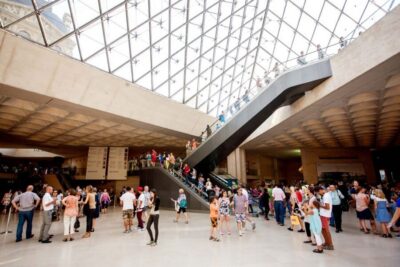
Browse the lists this tour appears in