
Reviewed · BORDEAUX TOURS
Bordeaux:Wine Masterclass & Blending workshop with appetizer
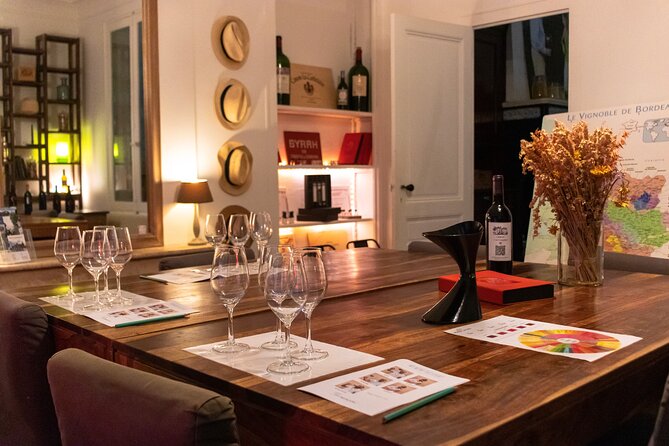
Bordeaux makes more sense when you stop treating wine as a mysterious code and start comparing what is in your glass. This 90-minute workshop takes you from basic tasting skills to your own small cuvée, with six French wines and a generous French apéritif along the way.
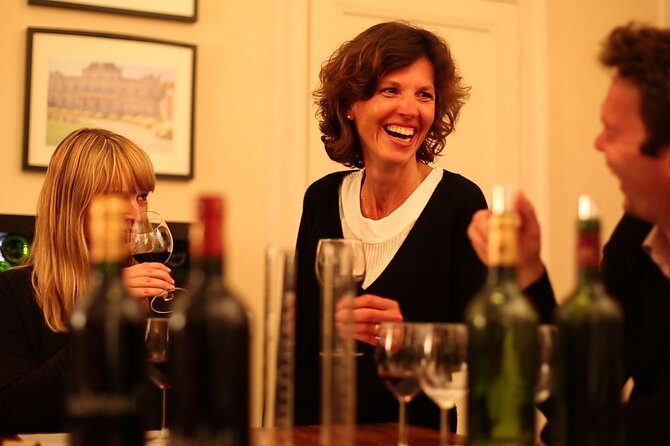
I like the small-group format, capped at 12 people, and the way the class moves beyond simple sipping. You taste single-varietal and blended wines, then try to identify a famous Bordeaux wine blind. The main consideration is that the class can feel quite personal when attendance is tiny, so choose it only if you are comfortable speaking up and sharing your impressions.
Key points to know
- Six wines in one focused session: Taste white and red wines, single-varietal examples, blended wines, and a famous Bordeaux wine in a blind tasting.
- A hands-on blending workshop: Make your own cuvée and see how Merlot and Cabernet Sauvignon can change a final wine.
- French apéritif included: Fresh bread, sausage, cheese, and dark chocolate give you practical food pairings, not just empty glasses.
- Useful for wine beginners: Learn a simple tasting method and gain confidence ordering or comparing wine in restaurants.
- Convenient central meeting point: Meet at À la Française’s apartment at 3 Rue d’Enghien in Bordeaux at 10:25 a.m. for a 10:30 start.
- A good value at $53: The price covers six wines, instruction, the blending session, and food in a compact morning class.
Why this Bordeaux class is worth your morning
Bordeaux is one of France’s great wine regions, but a full winery outing takes time, transport, and often a full day. This class offers a shorter route into the subject. You stay in Bordeaux, sit down with a wine educator, and taste enough examples to understand the basic building blocks of the region.
I like this approach because you are not asked to admire wine from a distance. You get a glass, a comparison, and a question to answer. What changes when a wine is made mainly from Merlot? How does Cabernet Sauvignon affect the blend? What clues can you find when you do not know the bottle in front of you?
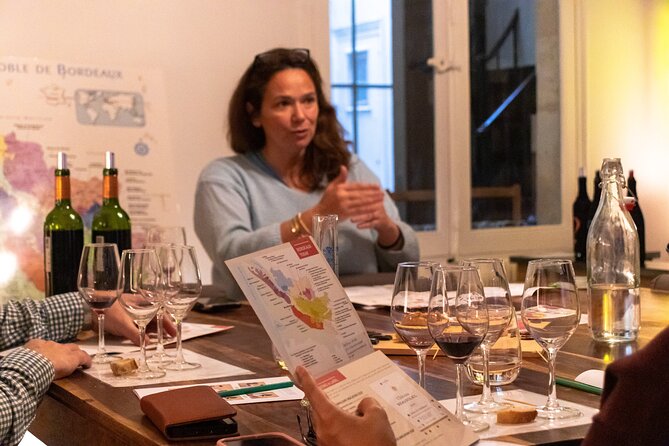
The atmosphere is described as casual and professional. That balance matters. A class that is too formal can make beginners nervous, while a class with no structure can become a pleasant snack break with wine. Here, the tasting lesson, regional background, blending exercise, and blind tasting give the session a clear shape.
The activity is priced at $53 per person. For Bordeaux, that is a reasonable spend if you want instruction rather than just a flight of wine. You are paying for six tastings, a live English-speaking guide, a practical workshop, and an apéritif platter. It is not a meal, and you should not book it as one. Think of it as a well-organized morning introduction to Bordeaux wine with enough food to support the tasting.
A few other Bordeaux half-days to compare
- Bordeaux: Introduction to Bordeaux Wines Tasting Workshop
★ 4.8 · 196 reviews - Bordeaux Super Saver Wine Tasting class and St Emilion region
★ 5.0 · 184 reviews - Bordeaux Wine Masterclass: Blending workshop with appetizer
★ 5.0 · 113 reviews
Meeting at 3 Rue d’Enghien
You meet at À la Française’s apartment, 3 Rue d’Enghien, 33000 Bordeaux. The meeting time is 10:25 a.m. for a 10:30 start, and the class ends at noon.
Arrive on time. The activity has a set sequence, and joining after the opening explanation could make the first lesson harder to follow. The provided information does not include transport arrangements, so plan to reach the address on your own.
The setting is an apartment rather than a vineyard or grand château. That gives the class a more intimate, classroom-style feel. You will not be touring vines, cellars, or historic wine estates. Instead, the focus is the glass in front of you and the way your guide helps you interpret it.
The group can include up to 12 people. That is small enough for questions and discussion without making the class feel like a private lesson. One important detail: the activity requires at least two participants to operate. If only one person books, it may be cancelled and the booking refunded.
Starting with white wine and basic tasting skills
The class opens with a welcome glass of white wine. This is a smart starting point because it gives you something to taste before the technical explanation begins.
Your guide introduces the basics of tasting and helps you pay attention to aroma, flavor, and structure. You do not need a trained palate. In fact, the class is designed to help you stop feeling intimidated when wine language appears on a restaurant menu.
I find this part especially useful for people who usually say they either like or dislike wine without knowing why. A guided comparison can give you more precise preferences. You might notice that you prefer a lighter style, a fruitier profile, or a wine with more body. The point is not to produce perfect answers. It is to give you a method you can use later.
The class is taught in English. French language instruction is not included, so English is the practical choice for this experience.
Learning Bordeaux through Merlot and Cabernet Sauvignon
After the opening white wine, the session turns to Bordeaux and its main grape varieties. Merlot and Cabernet Sauvignon are central to the workshop because Bordeaux is famous for blended wines rather than one single grape in every bottle.
You taste two single-varietal wines. This is where the lesson becomes concrete. Instead of hearing a list of grape names, you can compare how each wine tastes on its own. The exercise prepares you for the main idea of Bordeaux wine: the final character often comes from the blend.
The regional background also helps explain why Bordeaux wine labels can feel less direct than labels from places that put the grape name front and center. The class covers the history of Bordeaux wines, but the emphasis is practical. You are learning how the region’s grapes work together and how to recognize differences in the glass.
If you have already visited Bordeaux’s Left Bank and Right Bank wine areas, this class can still add something useful. A previous participant who had taken a Left Bank and Right Bank tour found that the workshop supplied more information about the wine itself. That makes this a good companion to a vineyard excursion, not just a substitute for one.
Same city, a completely different afternoon:
- Bordeaux: Cité du Vin Entry Ticket and Wine Tasting
★ 4.6 · 3,885 reviews - Bordeaux: River Garonne Cruise with Glass of Wine and Canelé
★ 4.5 · 3,630 reviews - From Bordeaux: Afternoon Saint-Emilion Wine Tasting & snack
★ 4.8 · 1,581 reviews - Medoc or Saint Emilion Wine Tasting and Chateau from Bordeaux
★ 5.0 · 1,415 reviews
Mixing your own cuvée
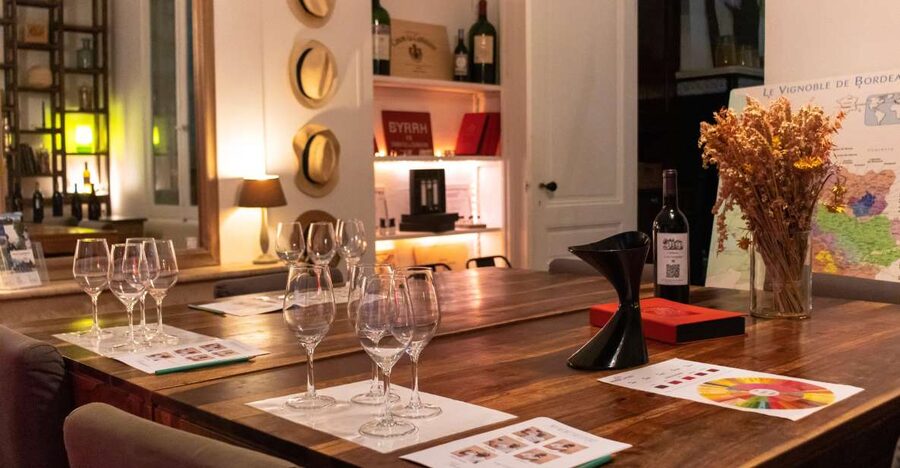
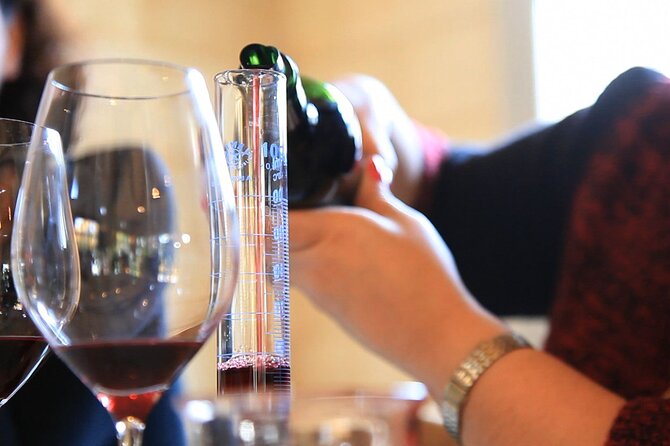
The blending workshop is the activity’s most distinctive feature. A cuvée is a blend made by combining different wines, and here you get to take part rather than simply hear about the process.
You work with the idea that a finished Bordeaux wine is not always about finding one perfect grape. It can be about balance. One wine may bring fruit, another structure, and the final combination may feel different from either sample alone.
This is also the point where the class earns its educational value. Tasting six wines is pleasant. Creating a blend helps you understand why winemakers make choices. Even a small adjustment can change the result, which makes the vocabulary of Bordeaux more memorable.
The exact equipment and quantities are not specified, so you should not expect a full winemaking session or a bottle to take home. Expect a guided tasting exercise focused on comparing combinations and understanding the art of blending.
Two blended wines are prepared in front of you. You taste them side by side and discuss their differences. This gives you a second comparison after the single-varietal wines, so the lesson builds in stages rather than throwing every concept at you at once.
Testing your palate with a blind Bordeaux tasting
The class includes a blind tasting of a famous Bordeaux wine. You are asked to guess where it comes from, which shifts the mood from lesson to friendly challenge.
Blind tasting can sound intimidating, but here it works as a practical test of the skills you have just practiced. You have already learned to look, smell, taste, and compare. Now you try to use those clues without seeing the label.
Do not expect to identify the exact estate with certainty. The value is in making a reasoned guess and hearing how the guide explains the wine. If you miss, you still learn what details helped point toward its origin.
For beginners, this part can be a useful confidence check. You discover that wine tasting is not about magically knowing every bottle. It is about noticing details and making an informed judgment.
One caution is worth noting. A very small group can make every answer feel more exposed. One person who attended with only another participant felt uncomfortable when answers seemed to receive different levels of approval. A supportive guide should make room for different palates, but if you dislike speaking in a tiny group, a fuller session may feel easier.
Pairing six wines with a French apéritif
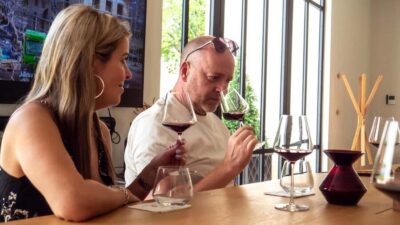
The food is more than decoration. Fresh bread, sausage, cheese, and dark chocolate are served to pair with the wines and help you discover your own tasting profile.
This is a classic French apéritif rather than lunch. The combination gives you salty, creamy, savory, and sweet flavors to compare with the wine. You may find that a wine changes when tasted with cheese or charcuterie, and that is exactly the kind of lesson you can repeat at home.
The platter also makes the morning more comfortable. Six wines in 90 minutes is a serious tasting, even though the pours are not described in detail. Having food alongside the wine helps pace the experience and gives you a practical way to think about pairing.
Do not arrive expecting a full meal. If you need lunch afterward, plan for it separately. The activity notes lunch as optional and not included.
What the small group means for you
The maximum group size is 12, and this is one of the class’s strongest practical features. A smaller group usually gives you more time to ask questions and makes a hands-on exercise easier to manage.
The benefit is clear for people who want explanation rather than a scripted tasting. You can ask about grape varieties, Bordeaux wine history, the blending process, or the tasting method without waiting behind a large crowd. One participant particularly valued having time for questions and described the regional education as excellent.
The tradeoff is that the experience depends more on the guide and on the group’s mood. With a full group, discussion may feel lively and shared. With only two people, the guide’s attention is direct, but you may feel more pressure to answer each question.
The available information does not provide the educator’s name. You can expect a professional wine educator leading the class in English, but no individual guide should be assumed.
Who will get the most from this workshop
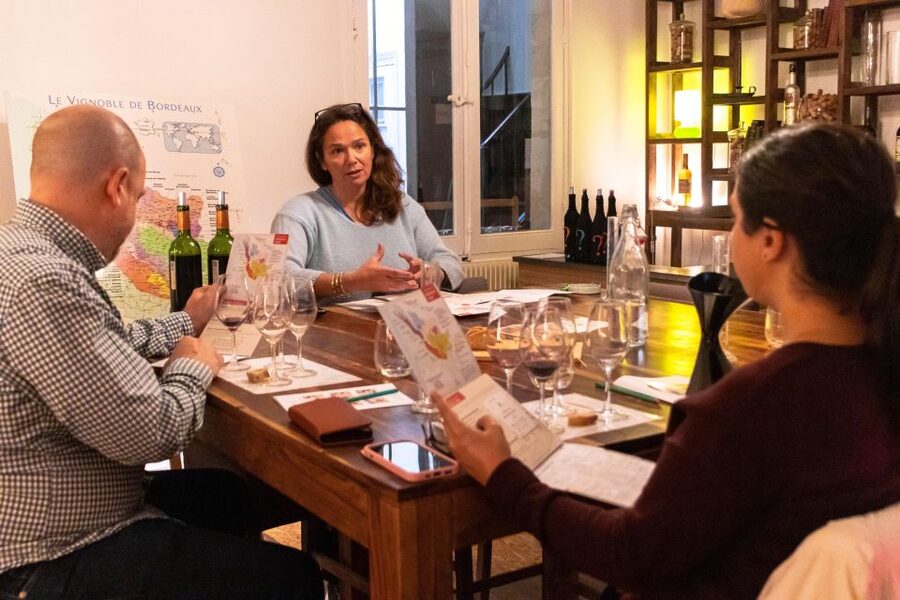
I would recommend this class to a first-time Bordeaux wine visitor who wants a clear introduction without committing to a full day outside the city. It is also useful if you have already visited wineries but still find blends, grape varieties, and tasting terms confusing.
You will get the most from it if you enjoy asking questions and comparing impressions. The class is not simply a performance where you sit quietly and watch someone pour. The blending exercise and blind tasting work better when you take part.
It also suits couples, friends, and solo visitors who want a structured morning activity. The minimum of two participants means a solo booking carries a small cancellation risk, but once the class operates, the group format can make it easy to meet other wine-focused people.
This is not the best choice for someone looking for a vineyard walk, château visit, transportation through the Bordeaux wine region, or a full meal. It is a city-based tasting workshop. People with mobility impairments should note that the activity is not considered suitable for them, and pets are not allowed.
Timing, booking, and cancellation details
The advertised duration is 90 minutes, matching the 10:30 a.m. to noon schedule. That makes it easy to fit before lunch or alongside other Bordeaux sightseeing.
You can cancel up to 24 hours in advance for a full refund. The reserve-now, pay-later option lets you hold a place without paying at the time of booking, which is useful when your Bordeaux schedule is still changing.
Because the class needs at least two participants, check your booking details and messages before setting out. If the provider cancels because only one person is booked, you should receive a full refund.
Should you book the Bordeaux blending workshop?
Book it if you want to understand Bordeaux wine by tasting and comparing, not by listening to a long lecture. The strongest parts are the six-wine progression, the chance to make a cuvée, and the French food pairings. At $53, the package offers solid value for a compact morning, especially if a full winery day does not fit your plans.
Skip it if your main goal is visiting vineyards or grand wine estates. Also think twice if you are uncomfortable answering questions in a very small group. For everyone else, this is a practical way to leave Bordeaux with a better palate, a clearer idea of Merlot and Cabernet Sauvignon, and less fear when choosing wine at dinner.
FAQ
Where does the Bordeaux wine workshop meet?
The meeting point is À la Française’s apartment at 3 Rue d’Enghien, 33000 Bordeaux.
What time should I arrive?
You should arrive at 10:25 a.m. for the 10:30 a.m. start.
How long does the activity last?
The workshop lasts 90 minutes and ends at noon.
How many wines will I taste?
You will taste six French wines, including a welcome white wine, red wines, single-varietal wines, blended wines, and a wine used for the blind tasting.
Is the wine blending session included?
Yes. A blending session is included, and you will create your own cuvée as part of the workshop.
What food is served?
The French apéritif includes fresh bread, sausage, cheese, and dark chocolate. It is not a full lunch.
Is the workshop offered in English?
Yes. The activity includes an English-speaking live guide. French language instruction is not included.
Can I cancel the booking?
Yes. You can cancel up to 24 hours in advance for a full refund. The activity also offers a reserve-now, pay-later option.
Just listed in Bordeaux
- Bordeaux: Exclusive Private Guided Walking Tour★ 4.6 · 50 reviews
- From Bordeaux: Essential Morning Tour with Wine Tasting★ 4.8 · 55 reviews
- Full-day Saint-Emilion: Village, Undergrounds and Châteaux★ 4.5 · 55 reviews
- Bordeaux Old Town & Market Local Food with Wine Tastings Tour★ 4.0 · 56 reviews
- Bordeaux: Saint-Emilion Village Day Trip, 2 Chateaux & Lunch★ 4.8 · 57 reviews
- Bordeaux Free Walking Tour (Tips-Based)★ 4.5 · 57 reviews
- The Ultimate Bordeaux Food Tour: Full Meal & Fine Wines★ 4.8 · 61 reviews
- Bordeaux Food and Wine Tour : Authentic Artisanal Flavors★ 5.0 · 62 reviews
Bordeaux Tours, compared.
River Garonne Cruise with Glass of Wine and Canelé
Read our review →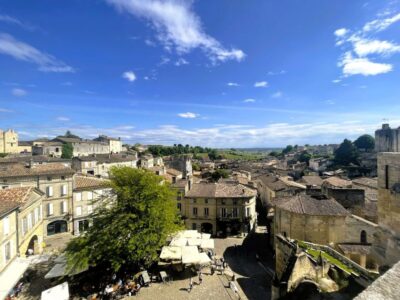
Afternoon Saint-Emilion Wine Tasting & snack
Read our review →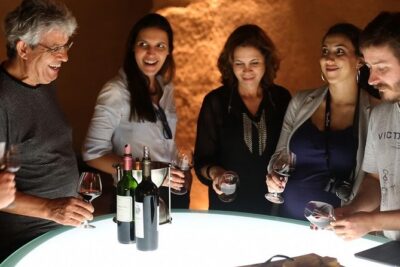
Medoc or Saint Emilion Wine Tasting and Chateau from Bordeaux
Read our review →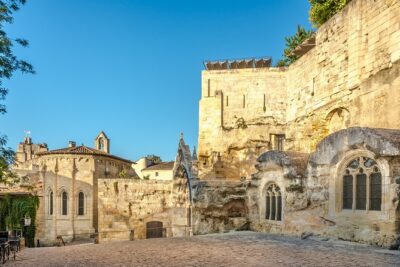
Saint Emilion Day Trip with Sightseeing Tour & Wine Tastings from Bordeaux
Read our review →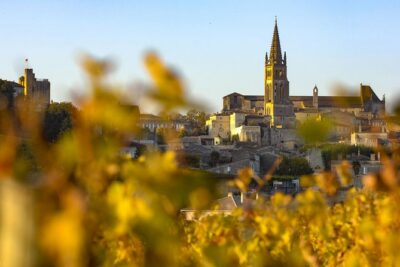
Saint Emilion Half-Day Trip with Wine Tasting & Winery Visit from Bordeaux
Read our review →
Browse the lists this tour appears in