
Reviewed · BAYEUX TOURS
Full-Day Canadian Battlefields & sites Normandy Tour from Bayeux
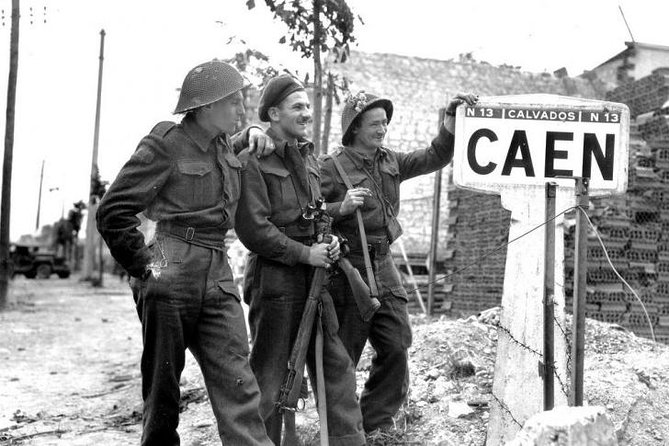
Juno Beach is only the beginning of this Canadian-focused Normandy tour. From the landing sands and German bunkers to the cemetery at Beny-sur-Mer and the road toward Caen, you follow the Canadian advance in the order it happened. That makes the day feel like a connected story, not a stack of unrelated memorials.
I like the small group of no more than eight, which lets the guide answer questions and make occasional personal adjustments. I also like the way the tour moves beyond the famous beach: Abbey d’Ardenne, Carpiquet, and Hill 67 show how hard the fighting remained after D-Day. The main drawback is the pace. This is a long, emotionally heavy day with a lot of information, and the minivan can feel tight when full.
Key points at a glance
- Juno Beach from St. Aubin-sur-Mer to Graye-sur-Mer: See several parts of the Canadian landing area rather than one photo stop.
- Juno Beach Centre and German bunkers: Spend about an hour with Canadian exhibits, firsthand accounts, artifacts, and excavated defenses.
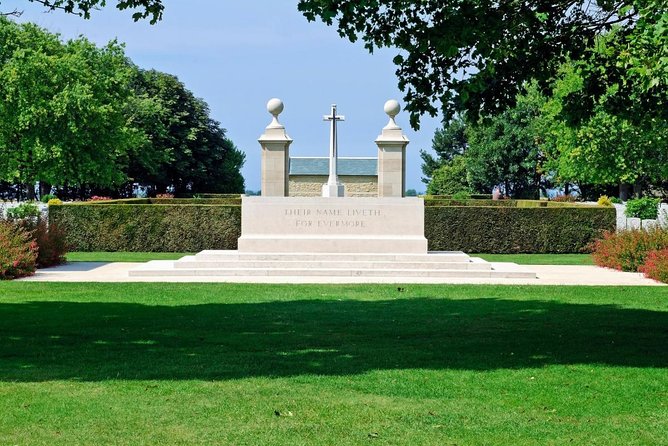
- Beny-sur-Mer Canadian War Cemetery: A quiet, carefully kept place to pay respect to the Canadians killed in Normandy.
- The route toward Caen: Visit Authie, Abbey d’Ardenne, and Carpiquet to understand the advance and the fierce German counterattacks.
- Hill 67 memorials: Finish with the battles south of Caen, where the Canadian story continued after the beach landings.
- Practical small-group format: Bayeux pickup, air-conditioned minivan transport, an English-speaking guide, and a return around 6pm.
Why this Canadian view of Normandy matters
Many Normandy tours concentrate on the American beaches, especially Omaha and Utah. This outing gives you a clear look at what Canadian forces faced at Juno and what happened after they moved inland.
On June 6, 1944, Canadian troops landed against strong German defenses. The fighting did not end once the beach was secured. Canadian forces held positions west of Caen and helped stop counterattacks by the German 12th SS Panzer Division. The tour follows that larger campaign, including the push toward Caen and Carpiquet.
That focus makes this a particularly good choice if you have Canadian family connections, want more than the standard D-Day overview, or simply want to understand the Canadian role on its own terms. You will hear about the 359 Canadians killed on D-Day and the 5,500 who died during the Battle for Normandy, while the Juno Beach Centre places those losses within the wider wartime experience of Canada.
The subject is serious. You should expect moments of silence, graves, battle accounts, and stories about very young soldiers. I would not choose this as a light sightseeing day, but I would choose it for a thoughtful visit to Normandy that connects military history with real places.
A few other Bayeux half-days to compare
- Normandy American D-Day Beaches Full Day Tour from Bayeux
★ 5.0 · 2,103 reviews - Omaha and Band Of Brothers Full Day Tour
★ 5.0 · 1,104 reviews - From Bayeux: American D-Day Sites in Normandy Full-Day Tour
★ 4.9 · 503 reviews
Starting in Bayeux and heading for Juno
The day begins at 8:30am. You can meet the guide at Bayeux train station, Place de Quebec, or request pickup from a Bayeux hotel. Hotel pickup and return apply to Bayeux only, not Paris or the cruise ports.
You ride in an air-conditioned minivan with a maximum of eight people. That format is a real advantage in Normandy. The vehicle can reach places that are awkward to connect by public transport, and you avoid the scale of a large coach group. A guide can also point out details along the road and answer questions as the story develops.
The minivan has some limits. With all seats occupied, several people have described it as tight, and one practical complaint was that the air-conditioning is felt most strongly in the front. The windows cannot be opened, so warm-weather comfort may vary by seat. In winter, the issue changes: bring layers for the coast, since the wind off the English Channel can be biting.
As you drive from Bayeux, the guide sets the military context for June 6 and the following weeks. Guides named Emmanuel, Laurent, Jeremy, Remy, Manon, Bice, and others have led this experience. Their approaches differ, but the strongest reports consistently emphasize clear battlefield explanations, personal stories, and a strong grasp of Canadian operations.
Juno Beach: more than a landing photograph
The first stop is Juno Beach, with about 30 minutes outside. The tour visits different stretches from St. Aubin-sur-Mer to Graye-sur-Mer, including the area where the 3rd Canadian Infantry Division came ashore.
This is where the geography begins to explain the danger. The beach was not an abstract line on a map. Canadian assault troops had to cross open sand under machine-gun fire, then move through German strongpoints and defenses. Your guide explains how the landing unfolded and how the troops pushed beyond the immediate shoreline.
Thirty minutes is enough to stand on the sand, orient yourself, and hear the opening account, but it is not a long beach walk. If you want an unhurried, private exploration of every section of Juno, you would need extra time on another day. Here, the short stop works because the tour has several later places to show what happened after the landing.
The coast can be exposed and windy even when the weather inland feels mild. Wear sturdy shoes and bring a waterproof layer. On a wet day, the emotional weight and physical discomfort can arrive together, so sensible clothing matters.
Inside the Juno Beach Centre
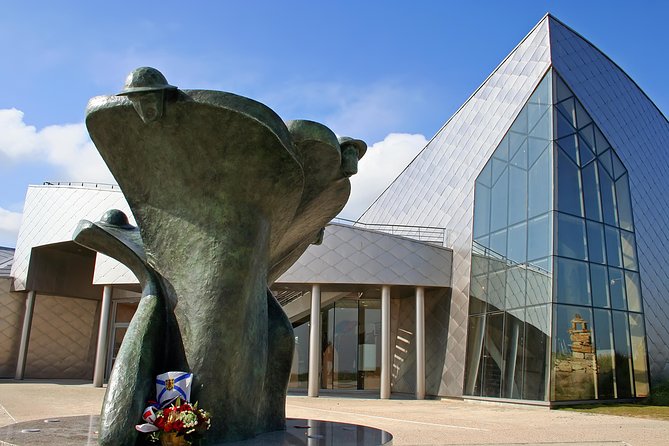
The Juno Beach Centre receives about an hour of the day, with admission included. This museum is dedicated to the Canadians who served and died during the war, including the 45,000 Canadians lost across the conflict.
The exhibits use photographs, archives, firsthand accounts, and artifacts to tell the Canadian story. That wider scope matters. You learn about the landing and the Battle for Normandy, but also see the people and country behind the uniforms. It gives context to the graves you visit later.
You also have access to excavated German bunkers near the beach. Entering these defenses helps you understand the practical problem facing the landing troops. The museum and bunkers work well together: one explains the human and national story, while the other gives you a physical sense of the defenses.
Some tours can make a museum visit feel rushed. Here, the hour provides useful time inside, although you may still wish for longer if you read every panel carefully. The day has many stops, so you will need to choose what to study closely. I suggest listening to the guide’s introduction first, then using the museum to fill in the parts that interest you most.
Same city, a completely different afternoon:
- Normandy American D-Day Experience – Group tour from Bayeux
★ 5.0 · 1,566 reviews - Normandy Beaches Half-Day Afternoon Trip from Bayeux (A2)
★ 4.5 · 1,116 reviews - Omaha Beach D-Day Experience – Afternoon group tour from Bayeux
★ 5.0 · 1,088 reviews - Omaha and Utah beaches
★ 5.0 · 1,085 reviews
Beny-sur-Mer and the cost of victory
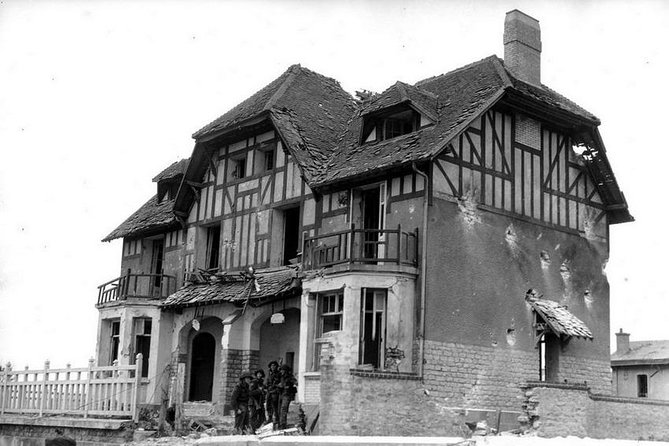
The Beny-sur-Mer Canadian War Cemetery is one of the most moving stops, with about an hour allotted. Rows of Canadian graves create a different mood from the open beach. The names, ages, and dates make the scale of the campaign personal.
This is not a place for hurried sightseeing. Your guide provides the military setting, then you have space to pay your respects. If you are tracing a relative, tell the guide early. One particularly meaningful experience involved a guide helping a visitor locate a great-uncle’s grave and connect it to his battalion.
The cemetery also helps correct a common misunderstanding about D-Day. The landing was a dramatic first step, but the losses continued through two months of fighting. Looking at the cemetery after standing on Juno makes that point more clearly than a map or film can.
The hour is generous enough for a calm visit. It is also one reason this tour can feel emotionally demanding. You are not simply collecting photographs. Plan a quiet evening afterward rather than another packed activity.
Authie and the road to Abbey d’Ardenne
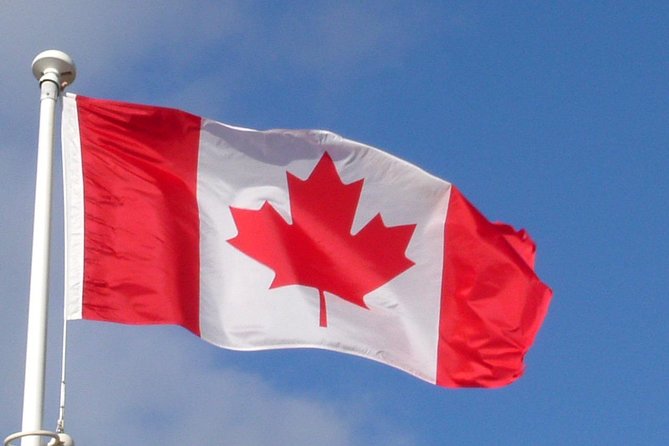
The stop at Authie takes about 30 minutes. It helps bridge the story between the beach and the fighting around Caen, showing that the Canadian advance quickly moved into difficult inland operations.
The Abbey d’Ardenne receives about an hour. The tour uses this location to track the 9th Brigade’s advance on June 7 and the capture of Carpiquet. Your guide explains how the Canadians moved through the area and how the battle developed after the initial landing.
The abbey is especially valuable because it adds human detail to the military timeline. Guides often use stories and smaller details to explain what happened here, and that personal approach is one of the strongest features of the experience. Emmanuel, Laurent, and Jeremy are frequently praised for making the facts easier to follow without losing the solemn nature of the subject.
Keep in mind that this is a history-heavy stop. You may hear a great deal in a short time, and the names, units, dates, and movements can blur together. Take notes if you care about the campaign in detail, or ask the guide to repeat the sequence. The small group makes that possible.
Carpiquet and Hill 67
Carpiquet is scheduled for about an hour. The airfield and surrounding area were important objectives in the advance toward Caen. The tour helps you understand why the battle did not end at the waterline and why capturing key inland positions required more fighting.
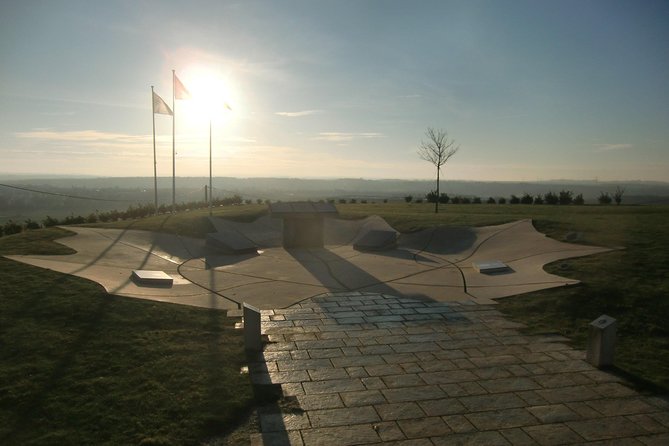
Hill 67, south of Caen, is the final stop and lasts about 30 minutes. Memorials here recall the costly battles that followed the landing. Ending at Hill 67 gives the day a useful final chapter: you begin with troops coming ashore and finish with the broader struggle to hold and extend the Allied position.
The shorter time at Hill 67 means the stop is mainly about orientation and remembrance rather than a long exploration. Still, it rounds out the Canadian story well. Without these inland locations, you could leave Normandy thinking of Juno as a single event. The tour shows it as the start of a sustained campaign.
Guide quality makes or breaks this day
This experience depends heavily on the guide. The route covers many places, but it is the explanation between those places that gives them meaning.
Emmanuel is repeatedly praised for his detailed knowledge, warm manner, and willingness to add extra stops when time allows. Laurent, also called Wally, is described as bilingual, flexible, and able to connect the route with personal family interests. Jeremy is praised for detailed Canadian history and a steady pace. Remy is noted for combining facts with poignant stories, while Bice is especially valued for his focus on Canadian service.
There is one practical warning. One guide reportedly forgot his microphone, and some people found the French accent difficult to follow. That appears to be an isolated problem, but hearing matters on a full day of spoken history. Sit where you can hear clearly and let the guide know if you miss a point.
The best guides keep the day moving without turning it into a lecture marathon. Even so, you will hear a lot. A full day from roughly 8:30am until around 6pm is not the same as the advertised eight-hour shorthand. Allow about nine and a half hours in your plans, including transport and stops.
Lunch, clothing, and day-to-day comfort
Lunch is not included in the $161.32 price. The exact arrangement is not specified, but the day includes time for a local meal according to the tour experience. Bring money for lunch and keep your expectations practical. This is a battlefield day, not a food tour.
Wear layers, comfortable shoes, and weather protection. The coast can be cold and windy in winter, while the enclosed minivan may feel warm when full in summer. You will get in and out of the vehicle repeatedly, so easy clothing and shoes are more useful than formal travel wear.
The tour is offered in English. Most people can participate, and service animals are allowed. Children must be accompanied by an adult. The tour operates near public transportation in Bayeux, but the practical starting point remains Bayeux itself.
Is $161.32 a fair price?
At $161.32 per person, this is not the cheapest way to see Juno Beach. It is a fair price if you value transport, a specialist guide, and access to a spread-out group of Canadian sites in one day.
You are paying for the air-conditioned minivan, fuel, professional guiding, Bayeux hotel pickup and drop-off, and entry to the Juno Beach Centre. You also avoid arranging several rural stops yourself. By public transport or rental car, you would need to plan the route, understand the battlefield geography, and provide your own interpretation.
The strongest value comes from the route design. A beach visit and museum alone would leave out the cemetery, Abbey d’Ardenne, Carpiquet, and Hill 67. The tour connects them in a logical sequence, which saves time and gives you a better grasp of the campaign.
The value is lower if you want complete freedom at each stop, a large amount of quiet museum time, or a leisurely lunch. It is also less appealing if your interest is mainly in American beaches or First World War sites. Vimy Ridge is not nearby, so you need a separate trip for that part of Canadian military history.
Who should book this Canadian battlefield tour?
I would choose this tour if you are staying in Bayeux and want the Canadian story to be the center of your Normandy visit. It suits Canadian families, people researching relatives, and anyone who wants to follow the fighting beyond the landing beach.
It also works well for first-time Normandy visitors who prefer a guide to handle the driving and historical sequence. The small group keeps the day more personal than a large coach tour, and the route includes places you would not easily connect on foot.
I would hesitate if you dislike long days, have limited tolerance for military detail, or need a lot of personal space in a vehicle. The tour is packed, sometimes intense, and physically shaped by repeated stops in changing weather. You should also confirm that a Bayeux start works for your schedule, since there is no pickup from Paris or cruise ports.
With a 97 percent recommendation rate and a 4.9 rating from 191 reviews, the experience has a strong record. More important, the praise centers on the things that matter most here: guides such as Emmanuel, Laurent, Jeremy, and Remy bring the sites to life, and the Canadian focus remains clear from the first beach stop to Hill 67.
Final call: a strong choice for the Canadian story
Book it if you want a serious, well-connected day devoted to Canada’s role in Normandy. The Juno Beach Centre and cemetery are powerful on their own, but the inland stops explain what the Canadian forces faced after leaving the sand.
Skip it if you need a relaxed schedule or want to explore at your own pace. For everyone else, especially those with a Canadian family connection, this is one of the most useful ways to see Juno from Bayeux. Cancelation terms are strict: full refunds require at least six full days’ notice, with smaller refunds available in some later windows.
FAQ
Where does the tour start?
You can meet the guide at Bayeux train station, Place de Quebec, or request pickup from a Bayeux hotel.
What time does the tour begin?
The tour starts at 8:30am.
When does the tour return to Bayeux?
The tour returns to Bayeux at around 6pm.
Is hotel pickup included?
Hotel pickup and drop-off are included for hotels in Bayeux only. Pickup is not offered from Paris or cruise ports.
How many people can join the tour?
The tour has a maximum of eight travelers.
Is the Juno Beach Centre entrance included?
Yes. Admission to the Juno Beach Centre is included in the tour price.
Is lunch included?
No. Lunch is not included.
Is the tour offered in English?
Yes. The tour is offered in English.
What is the cancellation policy?
You can receive a full refund if you cancel at least six full days before the start time. Canceling two to six full days before the tour may provide a 50 percent refund. Cancellations less than two full days before the start time are not refunded.
Just listed in Bayeux
- WW2 Jeep or Dodge truck tour of the Omaha Beach site★ 5.0 · 51 reviews
- Private Tour of American Sites with an Expert Guide from DDAY★ 5.0 · 51 reviews
- Mont Saint Michel Full Day Tour from Bayeux★ 5.0 · 52 reviews
- Private Day Tour including Normandy Landing Beaches & Battlefields from Caen★ 5.0 · 53 reviews
- Bayeux: Band Of Brothers Full-Day Tour★ 4.9 · 53 reviews
- From Bayeux: D-Day American Beaches and US Airborne Day Tour★ 4.8 · 56 reviews
- Le Havre Shore Excursion: Private Day Tour with Omaha Beach & American Cemetery★ 5.0 · 57 reviews
- From Bayeux: 2-hour private sidecar tour in Normandy★ 5.0 · 58 reviews
Bayeux Tours, compared.
Normandy American D-Day Beaches Full Day Tour from Bayeux
Read our review →
Normandy American D-Day Experience – Group tour from Bayeux
Read our review →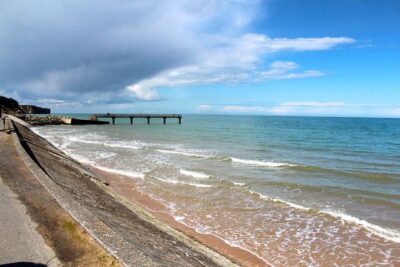
Normandy Beaches Half-Day Afternoon Trip from Bayeux (A2)
Read our review →
Omaha Beach D-Day Experience – Afternoon group tour from Bayeux
Read our review →
Normandy Battlefields Tour – American Sites (A3)
Read our review →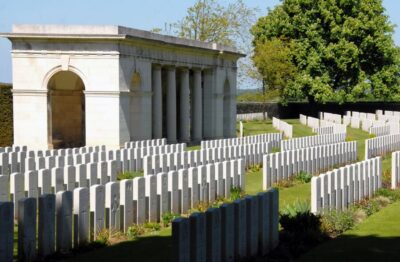
American D-Day Sites in Normandy Half-Day Tour
Read our review →Browse the lists this tour appears in