
Reviewed · PARIS TOURS
Paris: Croissant Baking Class with a Chef
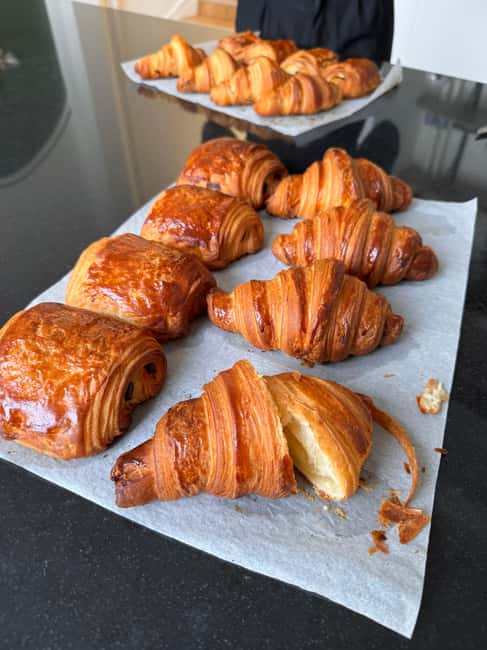
The best part of this Paris activity is that you do not simply watch a pastry chef work. You roll, fold, cut, and shape the dough yourself, then eat the warm results. Chef Léo leads many sessions, while Chef Maria also teaches, and both bring a friendly, lively style to the workbench.
I like the small class size, capped at eight, because croissant dough needs close attention. I also like the mix of practical work and pastry science, from butter quality to proofing. The catch is simple: rolling laminated dough takes real arm strength, and the three-hour session includes waiting while the dough rests.
Key points to know before booking
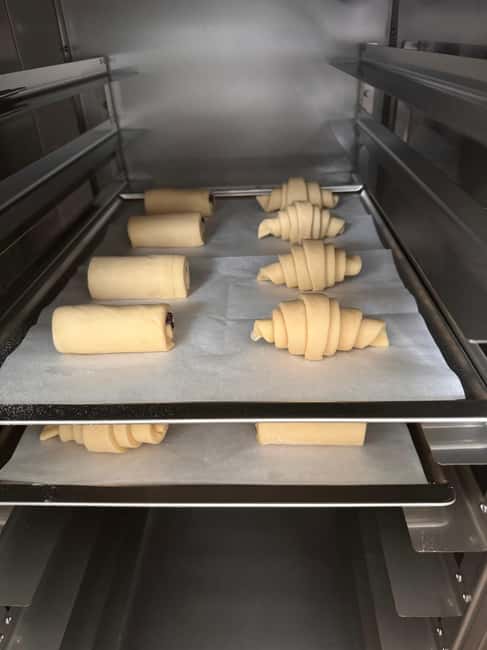
- Make your own laminated pastries: Learn the folding and rolling that create thin, flaky layers.
- Expect eight pastries in many sessions: Several classes produce four butter croissants and four pain au chocolat per person.
- Work in a group of up to eight: The chef can correct your technique instead of teaching from across a crowded room.
- Learn from Chef Léo or Chef Maria: Both are described as warm, clear, funny, and attentive teachers.
- Leave with useful skills: You receive a recipe plus tips on butter, dough, proofing, cutting, and shaping.
- Consider the bi-colour option: On selected days, you can learn to add colored dough for a more decorative pastry.
What makes this Paris croissant class worth your morning
Paris has no shortage of bakeries, so paying $140 for a pastry class needs a good reason. Here, the value is not just the food. You get three hours of instruction, ingredients, use of professional kitchen tools, a recipe to take home, and enough pastry to sample generously and carry away.
The strongest case is the hands-on format. You are not standing behind a glass window while someone else produces perfect crescents. You handle the dough at every important stage. That matters because laminated pastry is difficult to understand from a demonstration alone. Your hands tell you when the dough is too stiff, too warm, or resisting the rolling pin.
The group limit helps, too. With no more than eight people, the chef can move around the workstations, inspect the dough, and show you how to correct a fold or shape. This is especially useful if you are a beginner. The class is designed to work for people who bake often and people who rarely touch pastry dough.
I would not call the price a bargain in the everyday sense. You could buy many excellent croissants in Paris for $140. But if you want a skill, a social activity, and a substantial tasting session in one package, the cost is easier to justify. It is also a good use of a rainy morning, or a break from museums and monuments.
More Cooking Classes in Paris
- Paris Cooking Class and Lunch with Wine plus Market Visit Option
★ 5.0 · 1,024 reviews - Paris Croissant Small-Group Baking Class with a Chef
★ 5.0 · 910 reviews - Paris: French Croissant Baking Class with a Chef
★ 4.9 · 712 reviews
Finding Studio Pâtisserie near Rome and Villiers
The meeting point is Studio Pâtisserie, a building with a gray storefront in the Ile-de-France region of Paris. The nearest metro stops are Rome on Line 2 and Villiers on Line 3.
That transport information is useful because the studio is not described as a major landmark. Give yourself time to find the gray-fronted entrance, especially if you are arriving for an early class. The location is reported as easy to find, but a quick look at the route before leaving your hotel will keep you from arriving flustered and covered in rain.
Once inside, you enter a cozy bakery kitchen. The setting is practical rather than grand. The focus is the workstation, the dough, and the chef. The smell of pastry begins doing some of the work before the class even starts.
English is the teaching language. That removes a common worry in a technical cooking class, since terms such as proofing, folding, and lamination need clear explanation. You can ask questions as you go rather than trying to copy movements without knowing why they matter.
The first stage: building the dough
The session starts with the basic dough. The chef takes you through the ingredients and the early mixing and kneading, explaining how each step affects the finished pastry.
This is where the class asks for effort. Rolling and working croissant dough requires physical strength, and the age rule reflects that. Children under 17 must be with a paying adult, and the activity is not suitable for children under 15. That makes this more appropriate for older teens and adults than for young children looking for a simple holiday activity.
Do not expect the dough to behave like soft cookie dough. Croissant pastry must later hold butter and form layers, so the texture and temperature matter. The chef’s individual corrections are valuable here. A beginner may push too hard, rush the rolling, or let the dough warm too much. Small corrections early can prevent trouble later.
Some classes also include pain au chocolat. That gives you a useful comparison between the classic crescent shape and the chocolate-filled form. You learn that the same basic dough can become different pastries through cutting, filling, and shaping.
Butter, folds, and the science of flaky layers
The heart of the class is the folding process. Croissant dough is rolled and folded around butter, creating many thin layers. When baked, the moisture in the butter and dough helps separate those layers, producing the crisp outside and soft interior people expect from a good croissant.
The chef explains why butter quality matters. This is not just a matter of buying an expensive ingredient. The butter must work with the dough, and its texture affects how evenly you can roll and fold. If it is too hard, it may break into pieces. If it is too soft, it can smear into the dough instead of forming a clean layer.
You also learn about resting and proofing. These pauses can feel slow when you want to bake, but they are part of the process. The dough needs time to relax after rolling, and the shaped pastries need time to rise before they go into the oven.
One participant found the process slightly broken up because of these rests. That is a fair point. Three hours sounds short for a pastry that normally depends on careful timing, so the class has to work around the dough’s needs. The pauses are useful for instruction and questions, but you should not expect nonstop activity from the first minute to the last.
I see this balance of work and waiting as one of the class’s strengths. You learn that good pastry is not made by rushing. The quiet intervals also let the chef explain the reasons behind the method, rather than asking you to memorize a recipe without context.
Same city, a completely different afternoon:
- Paris: Louvre Museum Timed-Entrance Ticket
★ 4.6 · 71,977 reviews - Disneyland® Paris 1-Day Ticket
★ 4.6 · 49,412 reviews - Paris: Versailles Palace and Gardens Full Access Ticket
★ 4.6 · 41,579 reviews - Paris: Evening River Cruise with Music
★ 4.4 · 22,721 reviews
Shaping crescents and pain au chocolat
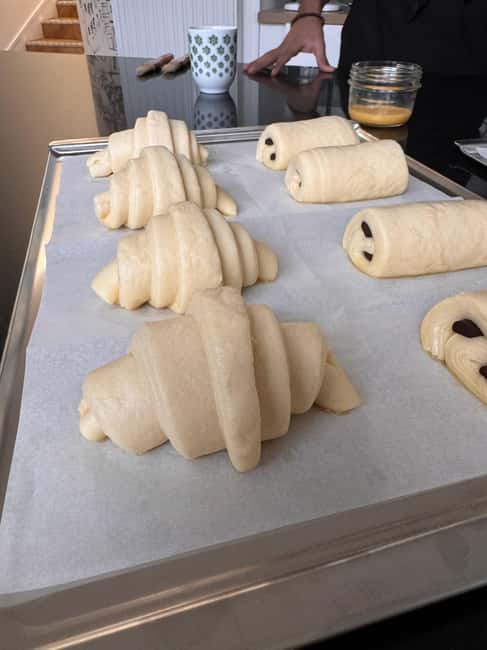
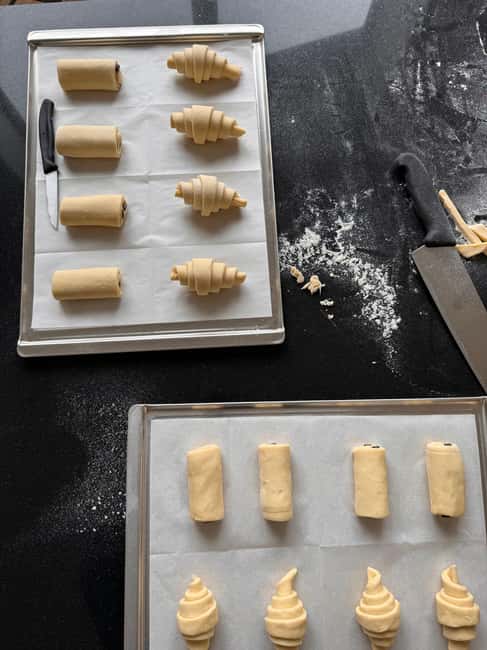
When the dough is ready, you cut it into pieces and shape the pastries. For croissants, that means rolling the dough into classic crescents with an even taper and a neat curl.
This is the stage where your pastries begin to look like something from a Paris bakery, even if your first shape is not perfect. The chef watches closely and offers tips on cutting, rolling, and sealing. You learn how much pressure to use and how to keep the layers intact.
Pain au chocolat brings a different challenge. Instead of forming a crescent, you wrap the dough around chocolate. Several participants found the finished chocolate pastries particularly impressive, which is good news if you prefer a filling to a plain butter croissant.
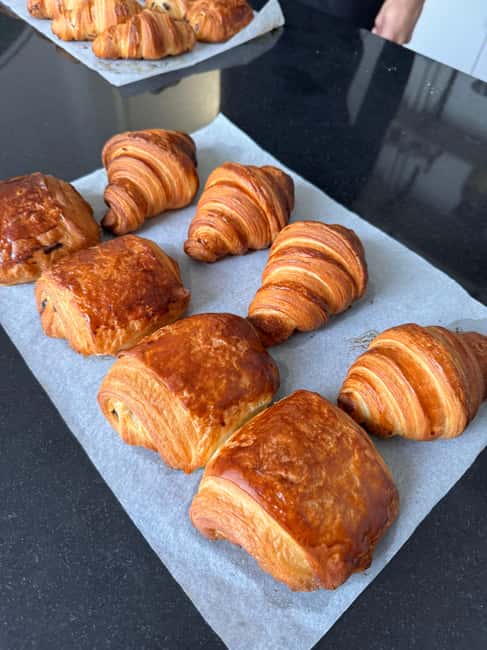
The class can produce four butter croissants and four pain au chocolat per person, according to detailed participant accounts. The exact selection may depend on the session, but you should be ready to leave with a generous bag of pastry. One practical tip: do not plan a large lunch immediately afterward.
Shaping is also the most photogenic part of the morning. Chef Léo has taken photos and videos during some sessions, giving you a record of the work. That is a nice extra, but I would still keep your own phone nearby if you want to capture particular folds or shaping movements for later practice.
The payoff: warm pastry from your own hands
After baking, you get to eat the results while they are fresh. The contrast between the crisp outside and tender center is the reward for all that rolling.
The class includes ample sampling of the croissants you make. Drinks have also been offered at the end of some sessions, giving you a simple way to enjoy a warm pastry before taking the rest away. Since the output can be large, sharing with a partner or saving some for later is sensible.
This tasting is more useful than it may sound. A finished croissant lets you inspect the layers, color, shape, and texture. You can compare the result with the chef’s example and ask what to change at home. Did the dough need more proofing? Was the butter too warm? Did you roll the layers evenly?
You also get the satisfaction of seeing an ordinary-looking lump of dough become a bakery-style pastry. Even people who do not usually bake can follow the process with help. The atmosphere is light and social, so the class works well for couples, families with older children, and friends.
Chef Léo, Chef Maria, and the teaching style
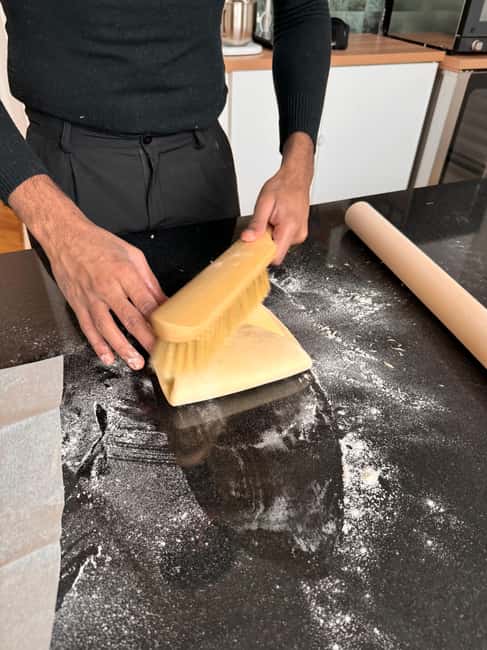
The chef matters greatly in a class like this. Croissant making has enough technical detail that a dry or hurried instructor could turn it into a stressful morning.
Chef Léo is described as energetic, personable, patient, and funny. He explains the steps clearly, checks individual work, and keeps the mood relaxed. He also shares pastry career stories and food suggestions in some sessions, which adds a local touch beyond the recipe.
Chef Maria brings a similar mix of humor, precision, and warmth. She is described as making the process easy to follow while explaining what to do and why. That last part is important. A recipe tells you quantities and timings, but a pastry chef can help you understand what the dough should feel like.
Because the class is in English, you can focus on technique rather than translation. You should still expect to pay attention. This is not a show where you can drift in and out while taking photos. The chef’s small tips about kneading, rolling, and proofing are the details most likely to help when you try the recipe at home.
The bi-colour croissant option
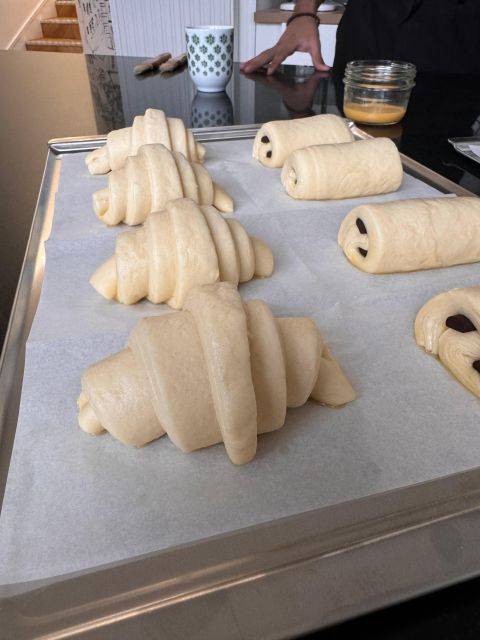
On selected days, you can choose a bi-colour croissant class. This teaches you how to add colored dough to the pastry, creating a more decorative finish.
The option is aimed at experienced bakers and enthusiasts who want extra flair. It is not necessary for learning the basic croissant method, so beginners may prefer the standard class. If you have already made laminated dough at home, the color work offers a more unusual project.
Check the available date and option carefully when booking. The supplied details do not say that every session includes bi-colour pastries. Some sessions may instead focus on regular butter croissants and pain au chocolat.
Who will enjoy this class most
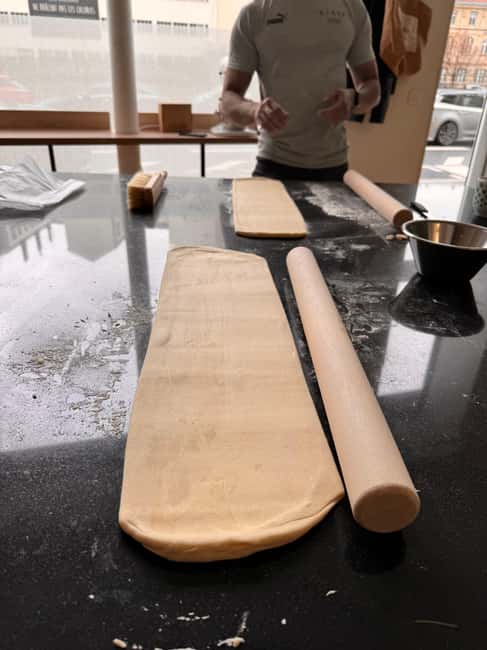
I would choose this activity for several kinds of visitors:
- Food-focused Paris visitors: You get a taste of French baking culture and a skill to carry home.
- Beginner bakers: The chef guides each stage and explains the reasons behind the method.
- Experienced home bakers: You can ask about butter, proofing, and lamination, then test your technique with professional tools.
- Couples and families with older teens: The shared work makes a pleasant group activity, but the age and strength requirements matter.
- Rainy-day planners: Three indoor hours give you a useful alternative to outdoor sightseeing.
- People who prefer activities to monuments: You leave with something you made, not just another photo.
I would think twice if you dislike repetitive physical work or want a fast demonstration. The dough needs rolling, folding, and resting. You may also find eight pastries per person excessive if you are not able to carry or share them.
Practical booking advice and value
The price is $140 per person, and the session lasts three hours. That puts it in the premium range for a cooking activity, but the package includes ingredients, equipment, instruction, the recipe, and a substantial amount of food.
The small group is the main value point. A cheaper class with a large crowd may give you less time with the chef, which matters when you are learning a delicate technique. Here, the chef can check your work and answer questions during the process.
You can cancel up to 24 hours ahead for a full refund, and the reserve-now, pay-later option helps if your Paris schedule is still changing. Starting times vary, so check availability before planning your metro journey or another fixed appointment.
Wear something practical for kneading and rolling. The class does not list a dress code, but pastry work is physical and hands-on. Plan a little space in your day after the class for carrying and eating the pastries.
Should you book the Studio Pâtisserie class?
Book it if you want more than a bakery stop. The best features are the small group, close chef guidance, clear English instruction, and the chance to make both butter pastries and chocolate-filled ones. The warm tasting at the end gives the morning a proper finish.
Skip it if you want a quick activity, have limited arm strength, or are traveling with children under 15. For everyone else, this is a strong Paris food experience, especially for a couple, family with older teens, or home baker who wants practical skills rather than a souvenir that sits on a shelf.
FAQ
How long does the croissant baking class last?
The class lasts three hours. Start times vary, so check the available schedule when booking.
How much does the class cost?
The listed price is $140 per person.
Where does the class meet?
Meet at Studio Pâtisserie, identified by its gray-colored storefront.
Which metro stations are closest?
The closest stations listed are Rome on Metro Line 2 and Villiers on Metro Line 3.
What language is the class taught in?
The class is taught in English.
How many people are in the group?
The class is limited to eight participants.
Is the class suitable for children?
Children under 15 are not suitable for the activity. Children under 17 must be accompanied by a paying adult.
What is included in the price?
The price includes chef guidance, ingredients, professional kitchen tools, the recipe, pastry-making tips, information about the history and science of croissant making, and sampling of the freshly baked pastries.
Can I book a bi-colour croissant class?
Yes, a bi-colour option is available on selected days. It includes the special ingredients and instruction for adding color to the croissant dough.
More Workshops in Paris
- Fragonard Paris: Mini Perfume Workshop
★ 4.5 · 1,924 reviews - Paris: Macaron Class at Galeries Lafayette
★ 4.3 · 905 reviews - Paris: 2-Hour Perfume Creation Workshop
★ 4.8 · 731 reviews - Paris Cooking Class: Learn How to Make Macarons
★ 5.0 · 634 reviews
Just listed in Paris
- Paris: Giverny & Versailles Small Group or Private Tour★ 4.5 · 49 reviews
- Chartres Cathedral 5 Hours Tour from Paris with Private Transport★ 4.5 · 49 reviews
- Paris: Louvre photoshoot or Seine bridges Eiffel Tower walk★ 5.0 · 49 reviews
- Paris: Choux Pastry and Chocolate Éclair Making Class★ 4.9 · 50 reviews
- Private tour of the Champagne area, meet local producers and taste their Champagne, start from your hotel in Paris.★ 5.0 · 50 reviews
- Paris Eternelle Notre-Dame Virtual Reality Tour★ 4.5 · 50 reviews
- Normandy D-Day Landing Beaches Private Day Trip from Paris★ 5.0 · 50 reviews
- Disneyland® Paris 1 Day with Round-Trip Train Tickets from Paris★ 4.0 · 50 reviews
Paris Tours, compared.



Versailles Palace and Gardens Full Access Ticket
Read our review →

Eiffel Tower Entry Ticket with Optional Summit Access
Read our review →

Louvre Guided Tour with Reserved Access & Boat Cruise
Read our review →
Moulin Rouge Cabaret Show Ticket with Champagne
Read our review →Browse the lists this tour appears in