
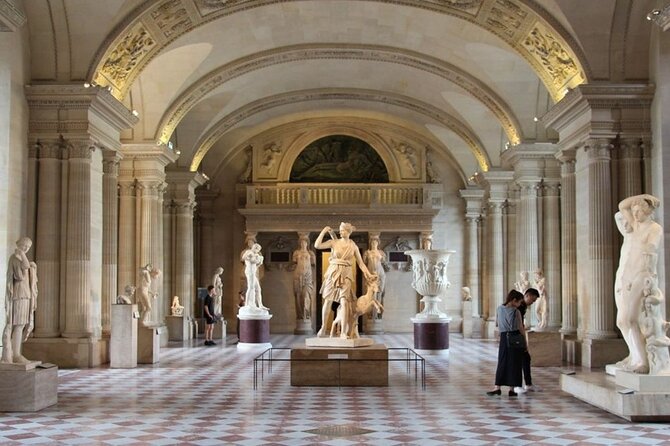
Reviewed · LOUVRE MUSEUM TOURS
Guided tour of the Louvre Museum with tickets included
The smartest thing about this Louvre tour is its tight two-hour route. Instead of wandering through one enormous gallery after another, you move from the medieval foundations to Egyptian and Greek art, then on to the great Italian and French paintings. Guide Matteo Allavena supplies the thread connecting the building, the art, and the people who shaped both.
I like two things right away: the small maximum group of six, which makes questions and conversation practical, and the skip-the-line entry, especially useful when Paris is hot and the Louvre entrance is crowded. The main caution is timing. Two hours gives you a sharp introduction, not a full museum visit, and the meeting point at Café Marly needs careful attention.
Key points at a glance

- Medieval Louvre foundations: See the 13th-century walls beneath the modern museum and learn how a fortress became a palace and then a museum.
- A carefully chosen art route: The tour includes the Tanis Sphinx, Venus de Milo, Winged Victory, Mona Lisa, and major French paintings.
- Context behind famous works: Matteo explains why pieces such as the Mona Lisa and Liberty Guiding the People matter, rather than simply pointing them out.
- Small-group format: With no more than six people, the guide can respond to questions and adjust the emphasis to the group.
- Fast entry and focused pacing: Admission and skip-the-line access help you use a short visit well.
- English-language tour: The experience is offered in English and ends back at the starting point.
Why a focused Louvre visit makes sense
The Louvre is not just a large museum. It is a former fortress, royal residence, and collection of art from many centuries and cultures. You can spend hours inside and still leave feeling that you missed the point.
That is where a guide earns the fee. I like the way this tour begins with the building itself, rather than racing straight to the Mona Lisa. The medieval walls give you a physical starting point. You see the remains of the 13th-century Louvre and understand that the museum grew out of a defensive structure before it became a royal palace.
The route then moves through several major departments. You are not asked to study every room. Instead, you get a guided sample of Egyptian antiquities, Greek sculpture, Renaissance painting, French classicism, and Romanticism. For a first visit, that range is useful because it gives you a sense of the Louvre’s scale without turning the afternoon into an endurance test.
The tour costs $114.93 per person and includes the 28-euro museum admission, a speaker guide, and skip-the-line access. That is not a budget ticket, but the value depends on your priorities. If you have only two hours, or if the thought of navigating the Louvre alone makes you hesitate, the guide and saved time can justify the extra cost. If you already know the museum well and want to linger over a few works at your own pace, a guided highlights tour may feel restrictive.
A few other Paris half-days to compare
- Paris: Louvre Museum Timed-Entrance Ticket
★ 4.6 · 71,977 reviews - Paris: Louvre Guided Tour with Reserved Access & Boat Cruise
★ 4.3 · 16,353 reviews - Louvre Museum Masterpieces Guided Tour with Access
★ 4.5 · 12,023 reviews
Meeting Matteo at Café Marly
The meeting point is Café Marly, at 93 Rue de Rivoli, 75001 Paris. This is beside the Louvre, but busy surroundings can make any city meeting point feel less obvious than expected.
I would arrive early and keep your phone ready. One useful practical detail is that Matteo has contacted some guests through WhatsApp and the booking app, but messages can be missed if you do not have mobile service. A clearly visible sign at the meeting point would make things easier, so confirm the precise meeting instructions before you set out.
The tour ends back at the meeting point. No hotel pickup or other transfer is included, and food, drinks, coffee, and tea are also separate. The Louvre is near public transportation, so getting to the area is straightforward, but you arrange that part yourself.
The group limit of six is one of the tour’s strongest features. Large museum tours can turn into a game of trying to hear the guide over nearby groups. A small party gives you a better chance to ask about a painting, request a little more time, or tell Matteo what interests you most.
The medieval walls and the Tanis Sphinx
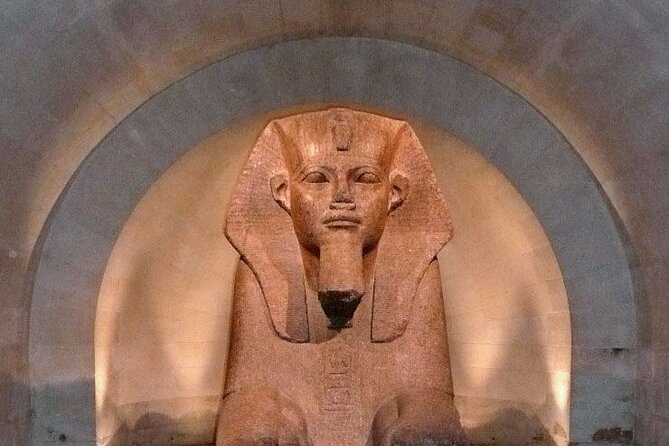
Beginning below the present-day museum helps put the Louvre in order. The medieval walls show that the building was not designed as a museum from the start. They are a reminder that the Louvre’s story is tied to Parisian power, defense, monarchy, and later public culture.
From there, the tour reaches the Tanis Sphinx, an approximately 4,000-year-old Egyptian sculpture. It is an early change of pace from the architecture under your feet. The sphinx gives Matteo a chance to explain how the museum’s collections stretch far beyond European painting.
This section is especially useful if you are new to ancient Egyptian art. A guide can point out the difference between simply seeing an old object and understanding the role, symbols, and setting that gave it meaning. The stop is short, but it broadens the visit before the route turns toward Greek sculpture.
Greek sculpture: three essential stops
The Greek department includes the Athena of Velletrie, the Venus de Milo, and the Victory of Samothrace. These are not filler stops on the way to Leonardo. They are among the Louvre’s central sculptures, and each offers a different lesson in how ancient art has been preserved, displayed, and interpreted.
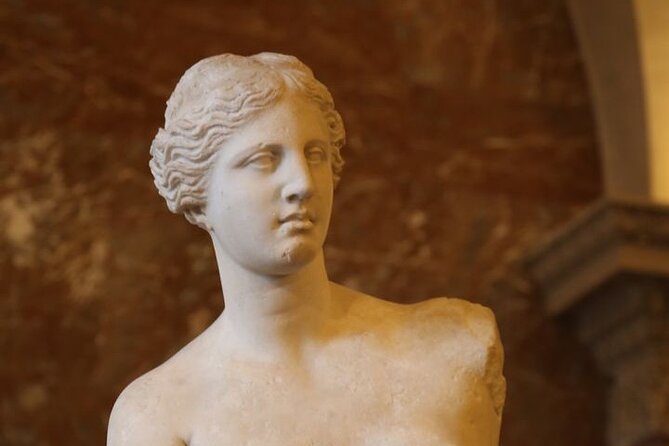
The Venus de Milo is famous for its missing arms and calm, idealized form. You will likely find the room busy, but the guide’s explanation can help you look past the crowd and notice the sculpture’s pose, balance, and surface.
The Winged Victory of Samothrace is a very different experience. Its high position and sweeping form create a sense of motion. Rather than treating it as a static statue, Matteo can help you see how the drapery and wings suggest wind, force, and arrival.
The Athena of Velletrie adds another example of ancient representation and religious imagery. Three sculptures in one section make the Greek department easier to remember, especially when you are trying to build a mental map of a museum that can otherwise feel like a series of grand rooms.
More museums in Paris:
- Paris: Louvre Museum Entry Ticket With Host and River Cruise
★ 4.6 · 9,926 reviews - Les Invalides: Napoleon’s Tomb & Army Museum Entry
★ 4.6 · 9,185 reviews - Louvre Museum – Exclusive Guided Tour (Entry Included)
★ 5.0 · 6,296 reviews - Paris: Louvre Museum Hosted Entry and Mona Lisa Audioguide
★ 4.6 · 5,235 reviews
Galerie Apollon and the road to Versailles
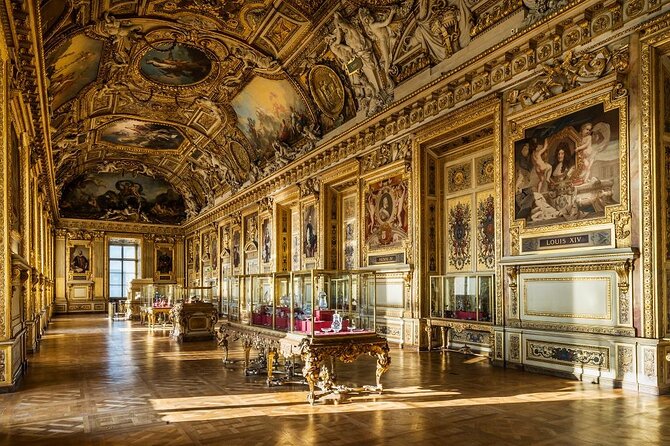
Galerie Apollon is one of the Louvre’s most ornate interiors. Its ceiling and decoration point toward the taste of the French monarchy and the decorative style later associated with Versailles.
The tour description calls this gallery the finest piece in the Louvre, a bold claim, but understandable when you look at the room as a work of art rather than a mere passageway. This stop is valuable because it shifts attention from individual paintings to the building’s interiors and the way royal spaces were designed to impress.
I also like the connection to Versailles. You are not visiting Versailles on this tour, but the gallery helps explain the visual language that appears there: ceremony, wealth, allegory, and royal authority. If grand interiors interest you more than another famous canvas, this may be one of your favorite moments.
Giotto and the Italian painting rooms
The Italian medieval painting section includes Giotto’s Saint Francis Receiving the Stigmata. The work is important not only because of its subject, but because Giotto occupies a key place in the development of Western painting.
This is the kind of stop that makes a guide especially useful. A casual visit can send you toward the most famous names and leave earlier works as background decoration. Matteo’s role is to explain why Giotto matters and what changed in painting during this period.
You do not need a degree in art history to benefit. A good explanation gives you a way to look at the figures, setting, gestures, and religious story. The point is not to memorize dates. It is to see how artists gradually made painted scenes feel more human and more spatial.
The Grande Galerie and Leonardo’s Mona Lisa
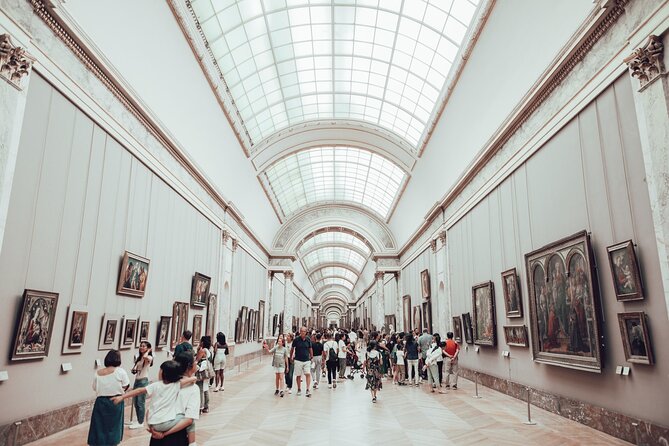
The Grande Galerie is one of the Louvre’s defining spaces. Its long scale makes the museum’s former palace identity clear, while the paintings along its walls create an almost overwhelming procession of Italian art.
The route includes Ghirlandaio’s The Old Man and His Grandchild and Veronese’s The Wedding Feast at Cana. These works help keep the famous Leonardo painting in context. The Louvre is not only a place to see the Mona Lisa. It is also a place to understand the art around her.
Of course, the Mona Lisa is the tour’s biggest magnet. Expect a crowd and a brief viewing rather than a quiet private moment. The value of having Matteo there is that he can explain the painting’s reputation, visual details, and cultural importance while helping you avoid treating the stop as a simple photograph opportunity.
Many people leave the Louvre able to say they saw the Mona Lisa but unable to recall much else. This route aims for a better result. You see Leonardo, but you also understand how the surrounding gallery and neighboring masterpieces contribute to the experience.
David, Napoleon, and the French grand style

The classicism section includes Jacques-Louis David’s The Coronation of Napoleon and Leonidas at Thermopylae. These paintings give you a clear look at French history painting, where scale, drama, moral example, and political power meet.
The Coronation of Napoleon is particularly useful for reading the Louvre as a museum of national storytelling. The painting presents a carefully staged public event, and the details reward a guide who can explain who appears in the scene and why the composition was arranged as it was.
Leonidas at Thermopylae turns to heroic sacrifice and ancient Greek subject matter. Seeing it beside Napoleon’s coronation helps you notice how French painters used the ancient world to speak about courage, duty, and leadership.
The tour can also respond to group interests. One family specifically wanted to see Napoleon’s apartments and was encouraged to visit them because of their remarkable decoration. Those rooms are not listed as a guaranteed stop in the main route, so you should not assume they will be included, but it is worth telling Matteo early if imperial interiors are high on your list.
Romanticism: shipwreck and revolution
The final major section includes Théodore Géricault’s The Raft of the Medusa and Eugène Delacroix’s Liberty Guiding the People. These paintings bring the route into the charged world of French Romanticism.
The Raft of the Medusa is physically large and emotionally difficult. Its crowded composition and desperate subject demand more than a quick glance. A guide can show you where to look, how the figures direct your eye, and how the painting turns a real disaster into a forceful political statement.
Delacroix’s Liberty Guiding the People is another image many people recognize before they know its full setting. The figure of Liberty, the fallen bodies, and the advancing crowd have made it a symbol of revolution. Matteo’s explanation helps separate the familiar poster-like image from the painting’s specific historical moment.
Ending with these works gives the tour a strong finish. You have moved from fortress walls and ancient sculpture to paintings filled with modern political emotion. That arc makes the Louvre feel less like a random storehouse and more like a record of changing ideas.
What Matteo adds to the visit
The strongest feature here is the guide’s storytelling. Matteo is praised for explaining not just the objects, but the history of the Louvre and the meaning behind individual works. He is also described as patient with questions, friendly with families, and able to keep children involved.
That matters in a museum where labels can be brief and rooms can be confusing. You may understand a painting better when someone points out a visual clue, explains the commission, or connects a work to another room you have already seen.
The tour also appears flexible within its short format. You can tell Matteo what you most want to see, and he may adjust the emphasis when time permits. Still, flexibility has limits. The advertised route already contains many stops, so asking for several additional departments could make the pace brisk.
A two-hour tour will not turn you into an expert on the Louvre. It should give you a useful map, a handful of stories you can recall, and enough confidence to continue on your own if museum hours and energy allow.
Timing, tickets, and the one serious caution
Skip-the-line access is a major practical benefit. The Louvre can have long queues, and standing outside in summer heat can drain the energy you need for the galleries. The included entrance ticket also keeps you from dealing with that part separately.
There was one serious booking problem in the supplied material. A tour was apparently accepted even though the guide had another French-language booking, leaving a family without the guided experience they had paid for. Matteo apologized, helped them enter more quickly, and issued a full refund, but the disruption was still substantial.
The lesson is simple: do not book at the last possible moment if the guided portion is essential to your Paris plans. Confirmation is issued at booking, but you should still check the meeting details and contact messages before leaving your hotel. The standard cancellation policy allows a full refund when you cancel at least 24 hours before the start time. Cancellations or changes inside that window are not refunded or accepted.
The tour requires a minimum number of participants. If that minimum is not met and the experience is canceled, you are offered another date or experience, or a full refund.
Who should book this Louvre tour?
I would choose this tour for a first-time Louvre visitor who wants the major works explained in plain English. It also suits families, since Matteo has handled children’s questions and kept an 11-year-old engaged during the two-hour route.
It is a good match for you if:
- You have limited time in Paris.
- You dislike museum navigation and long entrance queues.
- You want both famous works and a little architectural background.
- You prefer asking questions to reading every label.
- You want a small group rather than a large herd.
I would think twice if you want to spend an hour with one painting, explore obscure departments, or move at a very slow pace. The itinerary covers a lot, and the Louvre’s best-known rooms can be crowded. You will see highlights, but you will not see everything.
Admission is free for visitors under 18 and for EEA residents under 26 with valid identification and proof of residency. Since the listed price includes a 28-euro ticket, eligible visitors should confirm how the booking handles their free admission before paying the full amount.
Should you book it?
Book this tour if your goal is to make sense of the Louvre quickly rather than simply enter it. The small group, English-language guidance, major works, and skip-the-line access create a strong package for a first visit.
The price is high compared with entering on your own, but the two-hour route covers the medieval foundations, ancient sculpture, royal interiors, Italian painting, Leonardo, David, Géricault, and Delacroix. For many people, that structure is worth paying for.
Check the meeting instructions, avoid a last-minute booking, and tell Matteo your priorities at the start. If you do that, this is a practical way to turn the Louvre from an intimidating maze into a readable introduction to one of Paris’s great museums.
FAQ
How long does the Louvre tour last?
The tour lasts approximately two hours.
What language is the tour offered in?
The tour is offered in English.
Is the Louvre admission ticket included?
Yes. The experience includes the 28-euro entrance ticket.
Does the tour include skip-the-line access?
Yes. Skip-the-line entry is included.
Where does the tour meet?
The meeting point is Café Marly, 93 Rue de Rivoli, 75001 Paris, France.
Where does the tour end?
The activity ends back at the meeting point.
How many people can join the tour?
The tour has a maximum of six participants.
Just listed in Paris
- Chartres Cathedral 5 Hours Tour from Paris with Private Transport★ 4.5 · 49 reviews
- Paris: Giverny & Versailles Small Group or Private Tour★ 4.5 · 49 reviews
- Paris: Louvre photoshoot or Seine bridges Eiffel Tower walk★ 5.0 · 49 reviews
- Paris: Choux Pastry and Chocolate Éclair Making Class★ 4.9 · 50 reviews
- Private tour of the Champagne area, meet local producers and taste their Champagne, start from your hotel in Paris.★ 5.0 · 50 reviews
- Paris Eternelle Notre-Dame Virtual Reality Tour★ 4.5 · 50 reviews
- Normandy D-Day Landing Beaches Private Day Trip from Paris★ 5.0 · 50 reviews
- Disneyland® Paris 1 Day with Round-Trip Train Tickets from Paris★ 4.0 · 50 reviews
Louvre Museum Tours, compared.


Louvre Guided Tour with Reserved Access & Boat Cruise
Read our review →
Louvre Museum Entry Ticket With Host and River Cruise
Read our review →
Mona Lisa & Louvre Masterpieces Tour with Reserved Access
Read our review →
Louvre Museum – Exclusive Guided Tour (Entry Included)
Read our review →
Louvre Museum Hosted Entry and Mona Lisa Audioguide
Read our review →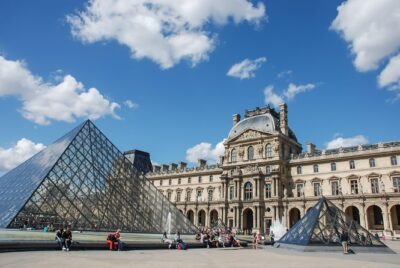
Louvre Priority Access with Mona Lisa Escort or Guided Option
Read our review →
Browse the lists this tour appears in