
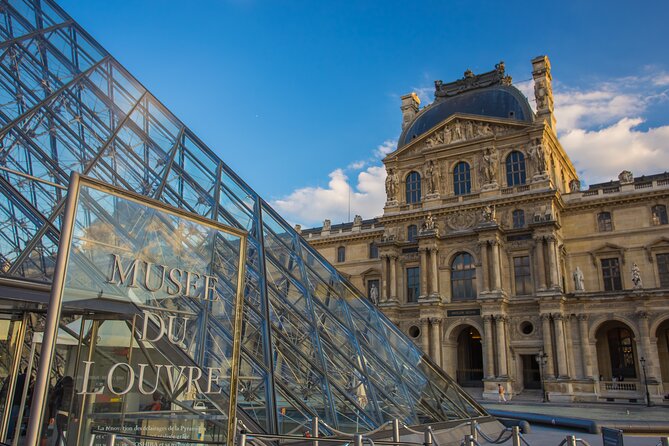
Reviewed · LOUVRE MUSEUM TOURS
Small-Group Louvre Museum Masterpieces Tour with Access
The Louvre is too large for a first visit to handle casually. This tour gives you a clear route through its royal foundations, grand galleries, famous sculptures, and major paintings, with an art historian explaining what you are seeing as you go. The payoff is a focused introduction rather than three hours of wandering in circles.
I like the small group of 12 or fewer and the fact that admission, the reservation fee, and an audio headset are included. I also like the extra freedom after the tour: once the guided portion ends, you can stay inside and return to the works that caught your eye.
The main caution is pace. You will cover a lot of ground, often using stairs, and the Mona Lisa can be surrounded by a thick crowd. Also, the promised group size has not always held, so confirm the arrangement at the start.
Key points to know before you book
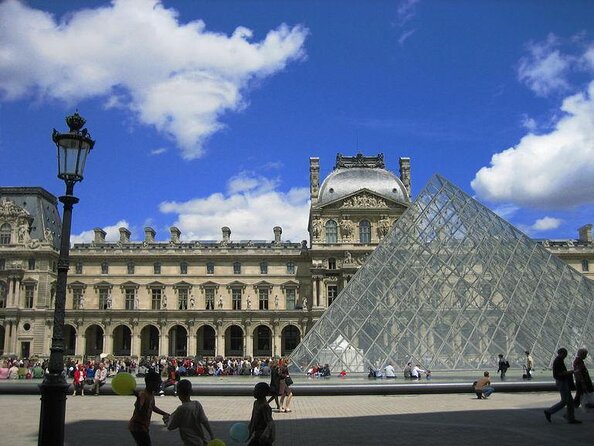
- Three hours with the Louvre’s major works: Expect the medieval foundations, Venus de Milo, Apollo Gallery, Canova, Delacroix, Michelangelo, and Leonardo.
- Usually capped at 12 people: This makes it easier to hear the guide and ask questions, though occasional group mergers have produced much larger groups.
- Admission and headset included: The €22 adult museum ticket, €70 group reservation fee, and audio equipment are covered.
- English-speaking guides vary by departure: Highly praised guides include Maryam, Addie, Hamish, Florence, Toni, Nazli, Maxim, Omar, and Séverine.
- You can stay after the tour: The guided visit lasts about three hours, but your museum access lets you continue at your own pace.
- Meet at the Carrousel du Louvre: The start point is the Arc de Triomphe du Carrousel, not a hotel, and finding the guide matters.
Why a guided first visit helps at the Louvre
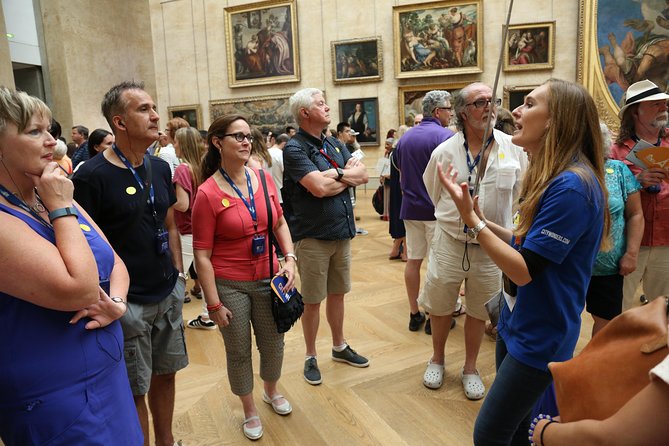
The Louvre is not simply a large museum. It is a former royal residence with long corridors, grand staircases, several wings, and more art than you can sensibly absorb in one day. A guide helps you make choices before the building makes them for you.
This tour is designed around a first visit. You will not see every department or every famous painting. Instead, the guide connects a selection of major works with stories about the artists, French rulers, and the building itself.
That approach suits me. I would rather understand a handful of works than rush past hundreds with no sense of why they matter. The tour also gives you a route through the museum, which is useful when the crowds and signs begin to blur together.
The quality depends heavily on the individual guide. Names praised for clear explanations, energy, and good group care include Florence, Maryam, Addie, Hamish, Toni, Nazli, Maxim, Omar, and Séverine. One guide, Nazli, reportedly used a distinctive doll-shaped paddle so her group could follow her through packed rooms. That sort of simple visual aid can make a real difference inside the Louvre.
A few other Paris half-days to compare
- Paris: Louvre Museum Timed-Entrance Ticket
★ 4.6 · 71,977 reviews - Paris: Louvre Guided Tour with Reserved Access & Boat Cruise
★ 4.3 · 16,353 reviews - Louvre Museum Masterpieces Guided Tour with Access
★ 4.5 · 12,023 reviews
Starting at the Arc de Triomphe du Carrousel
The meeting point is the Arc de Triomphe du Carrousel, at Place du Carrousel. This is close to the Louvre entrance, but do not treat it as a vague meeting area. The instructions refer to a guide holding a small blue flag, and several people have found the start confusing when they arrived late or could not spot the representative.
Plan to arrive early. The listed start time is 10:30 a.m., while the tour is also described as having morning or afternoon options. Check your confirmation carefully for your exact departure, since a missed meeting can mean missing the entire visit.
The meeting point is near public transportation, but the last approach can still take longer than expected. If you are crossing the Carrousel area, allow time to identify the guide and settle in. A small group cannot always wait for a late arrival, especially once the guide has begun the entry process.
Security checks are mandatory, and delays can occur before you reach the galleries. The included reservation is useful, but it does not remove every queue or screening step. Keep your ticket details accessible on your phone and avoid arriving at the last second.
The medieval foundations and royal Louvre
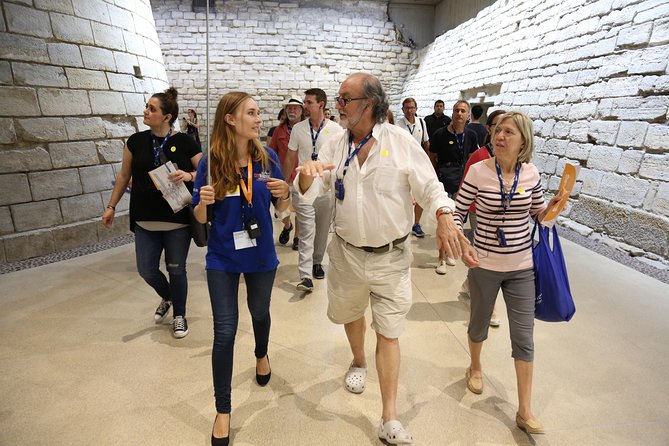
The tour begins beneath the grand museum, with the medieval foundations of the original Louvre. This is an important opening because it shows that the building was not created as a museum. It began as a medieval fortress and later grew into a royal residence before becoming the vast public collection you see today.
You might find this part less immediately thrilling than the Mona Lisa, but it gives the rest of the tour a useful frame. The palace rooms, ceremonial galleries, and royal objects make more sense once you understand the building’s earlier purpose.
A guide can point out how the Louvre developed over time and help you read the architecture as part of the story. Without that context, it is easy to see only a sequence of impressive rooms.
Venus de Milo and the language of sculpture
The Venus de Milo is one of the tour’s central stops. The statue is famous, but a guide can give you more to consider than the missing arms and the familiar name. You will look at the figure as a work of ancient sculpture and hear how its pose and presentation shape the way modern viewers respond to it.
The same is true in the Italian sculpture rooms, where Michelangelo’s work enters the route. These stops are valuable because sculpture is best understood at close range. You can notice posture, balance, surface, and the way the figure occupies space.
The drawback is crowding. Major statues attract people from every direction, and your viewing time may be shared with several other groups. Stay close to your guide and use the headset so you do not lose the explanation while trying to find a better angle.
More museums in Paris:
- Paris: Louvre Museum Entry Ticket With Host and River Cruise
★ 4.6 · 9,926 reviews - Les Invalides: Napoleon’s Tomb & Army Museum Entry
★ 4.6 · 9,185 reviews - Louvre Museum – Exclusive Guided Tour (Entry Included)
★ 5.0 · 6,296 reviews - Paris: Louvre Museum Hosted Entry and Mona Lisa Audioguide
★ 4.6 · 5,235 reviews
The Apollo Gallery and royal crowns
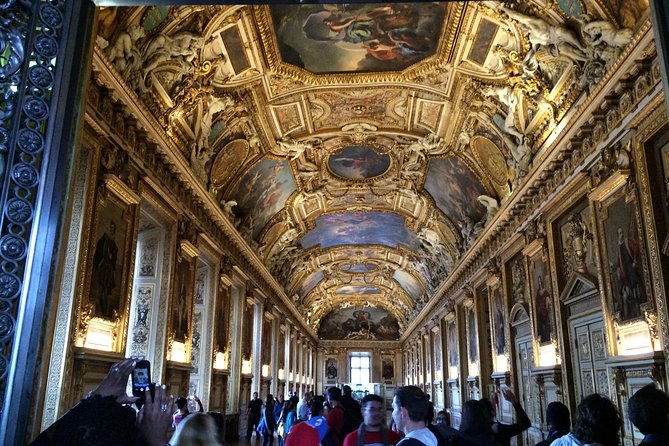
The Apollo Gallery brings a change of mood. It is a grand, ornate room associated with French royal display, and it houses royal crowns linked with Napoleon and King Louis XV.
This is one of the tour’s more distinctive choices. Many first-time visits focus almost entirely on paintings, yet royal objects explain how power was presented in France. The crowns are not just decorative pieces. They connect art, ceremony, monarchy, and the public image of rulers.
Your guide is expected to add stories about Napoleon and Louis XV, giving the objects a human and political setting. If you enjoy royal history and decorative arts, this may be one of the most rewarding sections.
It is also a reminder that the Louvre is not only a gallery of paintings. The museum’s appeal comes from the way art, architecture, politics, and daily royal life meet under one roof.
Canova, Delacroix, and Michelangelo
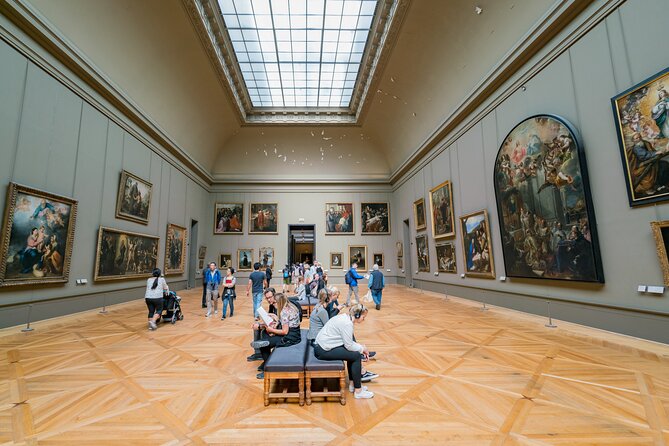
Antonio Canova’s Psyche and Cupid offers a graceful study in marble. The subject is love, but the attraction is also technical: the smooth surface, the careful arrangement of the bodies, and the sense of movement in a material that appears still.
A guide can help you see why the sculpture is more than a pretty scene. Look for the balance between the figures and the way the composition leads your eye around the work. This kind of explanation is hard to get from a quick glance and a wall label.
The tour then turns to Eugène Delacroix’s Liberty Leading the People, an image tied to the French struggle for freedom. It is a work with political force, not just a dramatic painting. You will hear how the figures, flag, and action create a larger statement about revolt and national identity.
Michelangelo’s work in the Italian sculpture hall adds another major name. The route moves between different periods and media, but the guide’s job is to keep the connections clear. You are not simply collecting famous names. You are seeing how artists use bodies, gestures, materials, and symbols to express power or emotion.
Leonardo da Vinci and the Mona Lisa crowd
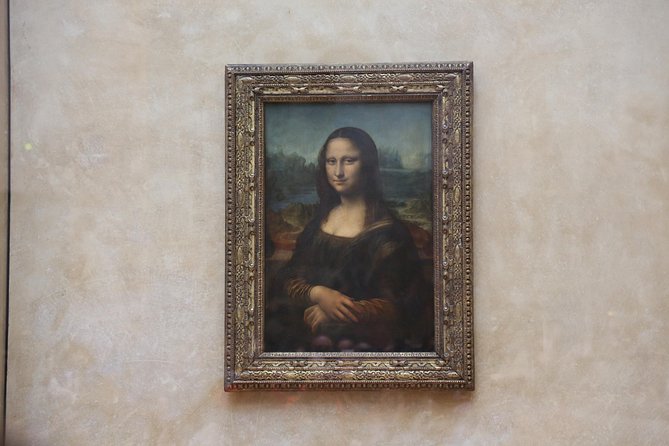
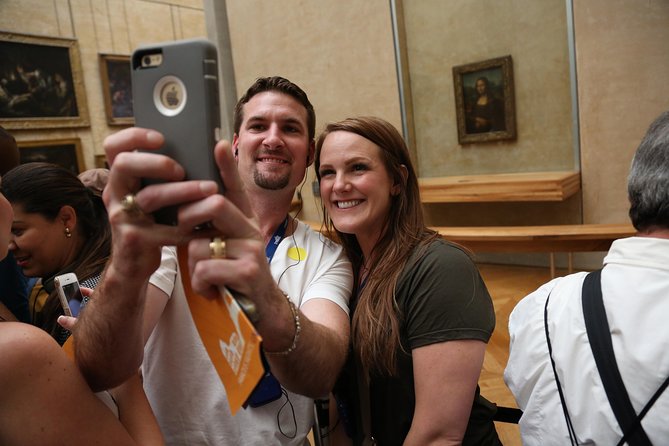
Leonardo is a major part of this visit, and the route includes five da Vinci paintings, with the Mona Lisa as the obvious center of attention. Seeing the portrait is possible, but you should prepare for a crowded scene rather than a quiet encounter.
The Mona Lisa is often surrounded by people holding phones and waiting for a place near the barrier. One guide reportedly used less crowded works to explain Leonardo’s methods before bringing the group toward the portrait. That is a smart way to use the time, since the crowd can make the actual viewing brief.
Do not judge the entire tour by how long you stand in front of the Mona Lisa. The painting is important, but the surrounding Leonardo works provide a fuller picture of his approach to faces, light, composition, and observation.
A guide may help you reach a reasonable viewing position, but no tour operator can control the crowd inside the room. At best, you get a more efficient approach and enough background to make the moment worthwhile.
What the small group really changes
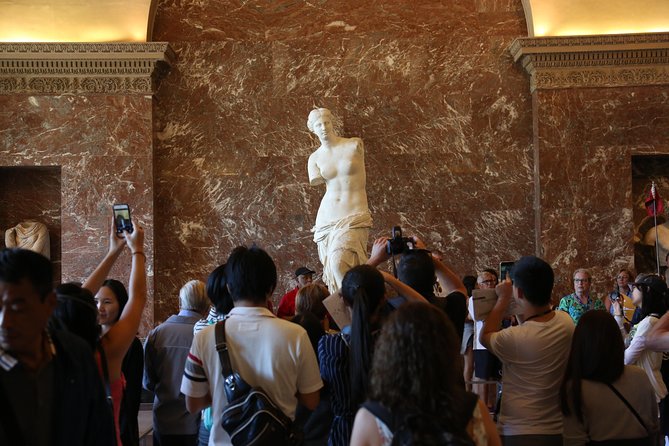
A group of 12 or fewer is a meaningful advantage in a museum this busy. You can usually stay close without blocking a whole corridor, hear the guide through the headset, and ask a question without shouting across a crowd.
The small size also lets the guide notice practical needs. Toni pointed out benches for a participant with a bad leg and found an elevator toward the exit. Florence was praised for checking on group members and adjusting her approach when needed.
Still, the advertised limit has not been guaranteed every time. In two cases, groups were merged after a guide became ill, creating groups of 25. The operator issued partial refunds in those cases, but a group that large is harder to follow and less pleasant around crowded artworks.
If your booking is advertised as semi-private, ask at the meeting point what the actual group size is. This is especially important if you are paying extra for a quieter, more personal format.
Pace, stairs, and mobility
Three hours sounds manageable, but the Louvre can make it feel much longer. The route covers several sections and includes many stairs. One participant with a serious knee problem completed the tour but warned that the pace and stair climbing were demanding.
This tour may work for you if you can walk steadily and keep up with a moving group. It is less suitable if you need frequent rests, avoid stairs, or require guaranteed step-free access. The guides may help when possible, but the general activity information warns that significant mobility limitations can be a problem.
Wear comfortable shoes and keep your attention on the guide’s location, not just the artwork in front of you. Crowds can separate a group quickly. The provided audio headset helps, but it does not replace staying within sight of the guide.
Families can do well on this tour if children enjoy stories and can manage three hours. A family with children aged 9 and 11 found the guided visit held their attention, which suggests that a lively guide can make the art accessible to younger minds.
Price and what you receive for $118.27
At $118.27 per person, this is not the cheapest way into the Louvre. The price includes the adult €22 admission ticket, a €70 reservation fee per group, an English-speaking art historian guide, the headset, and the guided route.
The value comes from time and decision-making. You are paying to avoid planning a route through an enormous museum, to hear explanations while standing before the art, and to keep exploring after the guided portion. For a first visit with limited time in Paris, that can be worth more than a lower-cost ticket that leaves you to find your way alone.
The price is less attractive if you already know the Louvre well or want to spend hours in one department. This is an edited highlights tour, not a specialist visit to Egyptian antiquities, Islamic art, or a particular painting school.
The booking information also notes free museum admission for visitors under 18 and residents of the European Economic Area under 26, with valid identification and proof of residency. Since the tour fee includes more than admission, check the final price and age conditions before booking.
The best way to use the extra time
The tour ends at the Louvre, and you can continue inside afterward. This is one of its strongest features. The guide gives you orientation and a first round of major works, then you can slow down.
Before the tour ends, ask the guide which nearby rooms are worth your remaining time. You might return to a painting you saw too quickly, revisit the sculpture hall, or choose a wing that was not part of the main route.
Do not plan a tight appointment immediately after the three-hour visit. Security, crowds, and the size of the building can affect the timing, and you may want to stay longer once you have your bearings.
Who should book this Louvre tour?
I would choose this tour for a first-time visitor who wants the major sights explained in plain English. It is also a good match for someone who feels overwhelmed by giant museums, or for a family that wants structure rather than a long, unplanned walk.
It suits you best if you can walk at a steady pace, handle stairs, and accept that famous works are shared with crowds. The guide can make the experience more orderly, but the Louvre will not become quiet just because you booked a tour.
I would think twice if you want a slow, scholarly look at one collection, need guaranteed accessibility, or dislike fixed routes. I would also confirm the group size if the small-group promise is central to your decision.
Should you book it?
Book it if this is your first Louvre visit and you want a practical introduction to the museum’s major works, royal rooms, and sculpture galleries. The guide quality appears to be a major strength, with Florence, Hamish, Nazli, Toni, Maryam, Addie, Maxim, Omar, and Séverine all singled out for clear explanations, warmth, humor, or careful group management.
The biggest risks are crowded galleries, stairs, meeting-point confusion, and the occasional oversized group. Arrive early, read the meeting instructions closely, and treat the Mona Lisa as one stop among many rather than the entire reason for going.
At $118.27, I see the tour as a convenience purchase. You pay for a sensible route, live interpretation, included entry, and the freedom to remain inside afterward. For a first visit, that is a fair trade. For a repeat visit, an independent museum plan may give you more control.
FAQ
How long does the Louvre tour last?
The guided tour lasts approximately three hours.
What time does the tour start?
The listed start time is 10:30 a.m. The experience is also described as offering morning or afternoon departures, so check your booking confirmation for the exact time.
Where do I meet the guide?
You meet at the Arc de Triomphe du Carrousel at Place du Carrousel, 75001 Paris. The end point is the Musée du Louvre.
Is museum admission included?
Yes. The €22 adult entrance ticket and the €70 reservation fee per group are included.
How large is the tour group?
The activity has a maximum of 12 travelers. On rare occasions, groups have been merged, creating a larger group.
Is the tour offered in English?
Yes. An English-speaking expert guide leads the tour, and audio headsets are provided.
Can I stay in the Louvre after the guided tour?
Yes. You can continue exploring the Louvre at your own pace after the guided portion ends.
Just listed in Paris
- Paris: Giverny & Versailles Small Group or Private Tour★ 4.5 · 49 reviews
- Chartres Cathedral 5 Hours Tour from Paris with Private Transport★ 4.5 · 49 reviews
- Paris: Louvre photoshoot or Seine bridges Eiffel Tower walk★ 5.0 · 49 reviews
- Paris: Choux Pastry and Chocolate Éclair Making Class★ 4.9 · 50 reviews
- Private tour of the Champagne area, meet local producers and taste their Champagne, start from your hotel in Paris.★ 5.0 · 50 reviews
- Paris Eternelle Notre-Dame Virtual Reality Tour★ 4.5 · 50 reviews
- Normandy D-Day Landing Beaches Private Day Trip from Paris★ 5.0 · 50 reviews
- Disneyland® Paris 1 Day with Round-Trip Train Tickets from Paris★ 4.0 · 50 reviews
Louvre Museum Tours, compared.


Louvre Guided Tour with Reserved Access & Boat Cruise
Read our review →
Louvre Museum Entry Ticket With Host and River Cruise
Read our review →
Mona Lisa & Louvre Masterpieces Tour with Reserved Access
Read our review →
Louvre Museum – Exclusive Guided Tour (Entry Included)
Read our review →
Louvre Museum Hosted Entry and Mona Lisa Audioguide
Read our review →
Louvre Priority Access with Mona Lisa Escort or Guided Option
Read our review →
Browse the lists this tour appears in