Reviewed · TICKETS
Chateau Gaillard Royal Domain Admission Ticket
Château Gaillard is not the Loire Valley’s grandest castle. That is part of its appeal. This compact royal residence leads you from Renaissance rooms to shaded gardens, old caves, and one of France’s earliest orangery sites. Dom Pacello da Mercoliano, the Neapolitan monk who helped shape the estate, is the key figure here.
I like the intimate scale and the chance to wander without the crush found at larger Loire chateaus. I also like the citrus theme: orange trees, greenhouses, orange blossom jelly, homemade cake, and freshly pressed juice give the visit a flavor beyond paintings and furniture. The main consideration is that the free guided tour is in French, and the restoration has a quaint, uneven character rather than the polished finish of a major royal palace.
Key points to know before you go
- The orangery has a royal origin: Charles VIII brought Dom Pacello from Naples in 1496, helping introduce orange trees to France.
- The visit takes about 2 to 3 hours: Allow time for the castle, seven walking paths, caves, gardens, greenhouses, and the citrus bar.
- The rooms mix art and royal stories: Look for Italian collections, period furniture, a room linked with Mary Stuart, and works attributed to artists such as Rembrandt and Titian.
- The optional guided tour is free but in French: An English-language booking option is available, yet the guided commentary itself is listed as French.
- The price is $24.14 per person: The value is strongest if you enjoy gardens, restoration, art, and a slower stop rather than a quick castle photo.
- Pedestrian access matters: The entrance is at 29 allée du Pont Moulin in Amboise, and transportation to the site is not included.
Why Château Gaillard feels different from the Loire’s major palaces

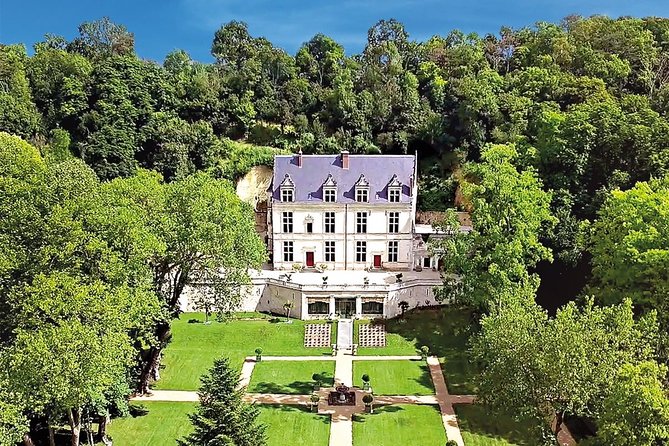
Many Loire Valley castles are built for ceremony. Château Gaillard feels more personal. Charles VIII wanted this palazotto, a smaller Italian-style residence, after his campaigns in Italy. Its story connects the French court with Italian design, garden planning, art, and horticulture.
The scale makes a difference. You are not trying to cover a vast palace in an hour. Instead, you can pause over a piece of furniture, look closely at a window, or follow a garden path without treating the entire visit like an indoor march.
The chateau has passed through the hands and stories of major Renaissance figures, including Louis XII, Anne de Bretagne, François I, Catherine de Medici, the Cardinal de Guise, and Mary Stuart. That list is impressive, but the setting remains approachable. The royal connection is present without turning every room into a formal state apartment.
The building has also received a major restoration carried out over five years by 300 Loire Valley artisans. That work gives the visit an important layer: you are seeing not only an old royal residence, but also a modern attempt to recover its character. The result may not look perfectly uniform. I would treat that as part of the experience rather than expect the spotless presentation of a top-tier national museum.
A few other Tours half-days to compare
- Paris: Louvre Masterpieces Tour with Pre-Reserved Tickets
★ 4.8 · 1,445 reviews - Paris: Louvre Museum Guided Tour with Skip-the-Ticket-Line
★ 4.6 · 1,407 reviews - Paris: Best of the Louvre Guided Tour with Pre-booked Ticket
★ 4.9 · 768 reviews
Entering the Renaissance rooms
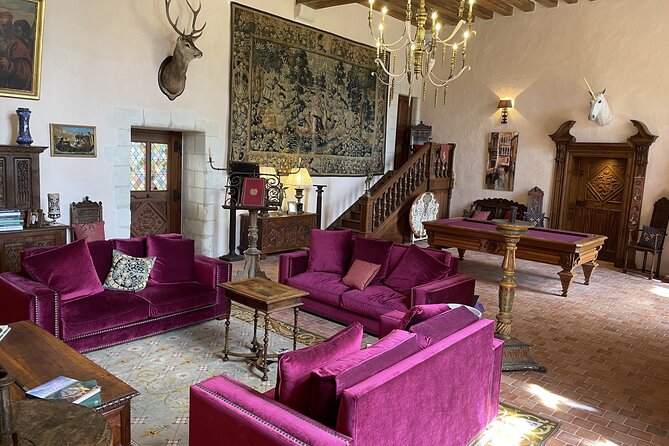
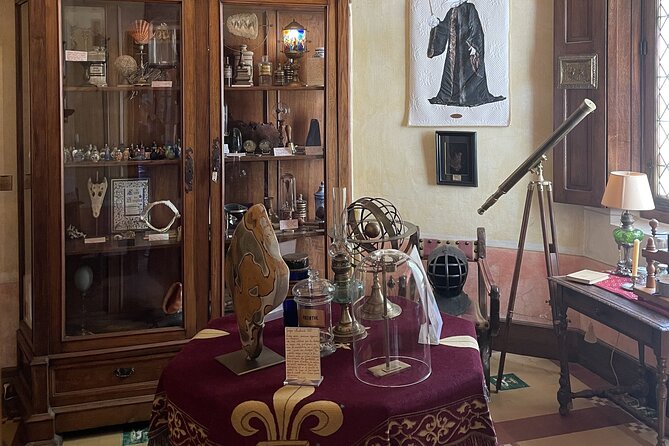
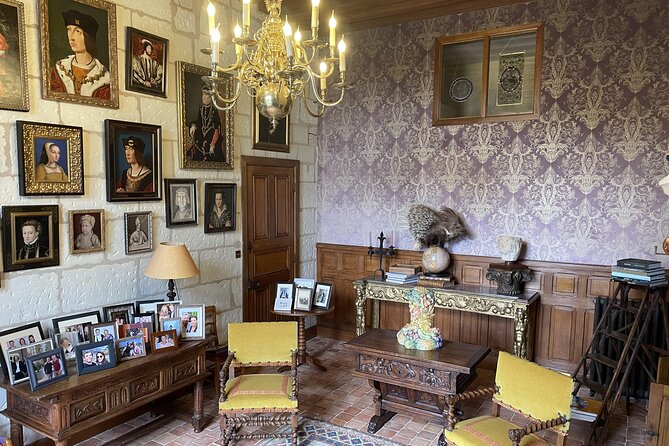
Inside, expect a mix of collections rather than a single narrow theme. The rooms include Renaissance material, Italian pieces, furniture from different periods, paintings, and distinctive decorative work. Around 8,000 handmade glass windows are part of the restored presentation, giving the building an unusual visual detail to notice as you move through it.
The collection includes works associated with Rembrandt and Titian, along with Italian items and a Commedia dell’Arte tapestry. The information provided does not give a room-by-room inventory, so I would not visit expecting a formal museum catalogue experience. Instead, come ready to look at the combination of architecture, furnishings, and objects.
One room tied to Mary Stuart is a particular point of interest. She is said to have lived there for three weeks after her marriage to François II of Valois. That detail gives the room a human scale. Rather than thinking only about royal dates, you can picture a young queen occupying a real room in a smaller residence.
A practical tip: do not rush indoors simply because the garden is the most famous part. The interior explains why the estate matters. The Italian influence, royal connections, restored craftsmanship, and changing furniture styles all help you understand Château Gaillard as a place of use, not just a decorative shell.
Following Dom Pacello’s orange trees
The strongest story here belongs to Dom Pacello da Mercoliano. Charles VIII brought the Neapolitan monk to France in 1496, along with expertise in garden design and citrus cultivation. This is not a minor footnote. It explains why the estate places such emphasis on orange trees, greenhouses, and fragrant plants.
In 1500, the property became known as Les Jardins du Roy. Pacello inherited the estate in exchange for an annual bouquet of orange blossoms for the king. That unusual arrangement says a lot about the value of citrus at the time. Orange trees were not simply garden decoration. They were exotic, difficult to protect, and closely linked with royal display.
Pacello worked across a 15-hectare park, developing early ideas connected with French-style gardens. He also helped develop the greengage plum, another reminder that the estate was a place for experiments in cultivation.
You will not need specialist gardening knowledge to enjoy this part of the visit. The story works because it is concrete. You can connect the royal court with the smell of citrus, the shelter of the orangery, and the careful work needed to grow plants that were not native to France.
Walking the seven Paths of Paradise
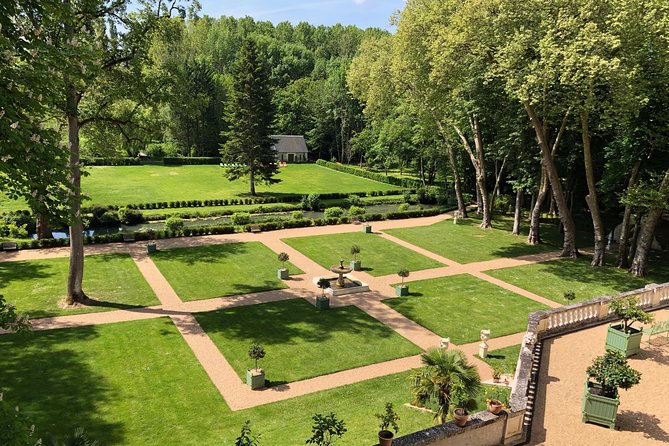
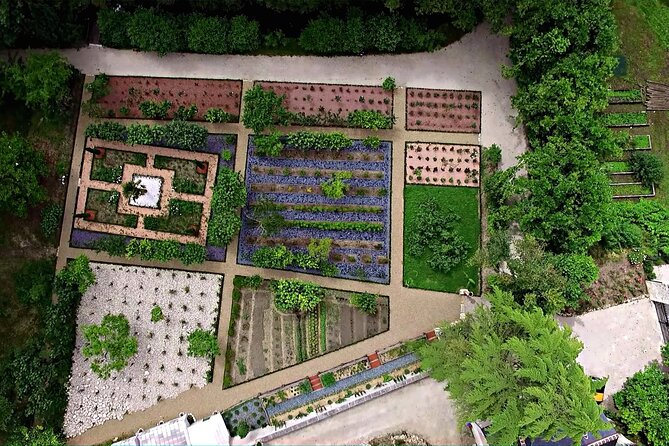
After the interior, give yourself time outside. Seven walking paths lead through the grounds, and the visit is best when you do not treat them as a quick route between the chateau and the exit.
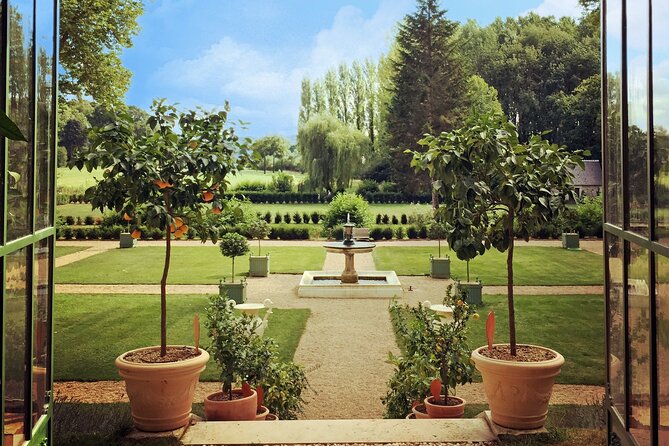
The mature trees provide shade and a calmer mood than the formal courtyards at many larger Loire sites. The gardens are described as pleasant rather than immense or heavily staged, so set your expectations accordingly. This is a place for a gentle walk, not a marathon garden tour.
The paths also make the visit useful for people who want a break from interiors. You can wander, stop under the trees, and take in the relationship between the building, hillside, and planted areas. Some paths lead toward caves in the hill, adding a rougher, more natural feature to the royal setting.
The caves are worth including because they change the rhythm of the visit. You move from restored rooms to cultivated gardens and then into spaces formed in the hill itself. Details about their exact layout are not provided, so allow for exploration without expecting a fully explained underground attraction.
Same city, a completely different afternoon:
- Paris: Louvre Guided Tour with Reserved Access & Boat Cruise
★ 4.3 · 16,353 reviews - Paris: Big Bus Hop-On Hop-Off Tour with Optional Cruise
★ 4.4 · 13,279 reviews - Louvre Museum Masterpieces Guided Tour with Access
★ 4.5 · 12,023 reviews - Versailles: Skip-the-Line Tour of Palace with Gardens Access
★ 4.7 · 9,778 reviews
The orangery, greenhouses, and citrus bar
The orangery is the emotional center of the estate. It tells the story of how the first orange trees were acclimatized in France and gives the garden its strongest sense of place.
You can smell citrus in the greenhouses, which makes this more than a display of plants behind glass. The scent is one of the small details that stays with you. It links the historical story to something direct and physical.
At the end, the citrus bar gives you a chance to taste the estate’s produce and related specialties. You might find honey from Heaven, orange blossom jelly, homemade orange cake, and freshly pressed orange juice. Blood orange wine is also available, and a bottle can be purchased to take away.
I would plan this stop near the end rather than treat it as an afterthought. The cake and juice provide a pleasant finish, especially after walking the paths. The food is not included as a separate meal, so think of it as a small tasting stop, not a replacement for lunch.
How much time you really need
The stated duration is approximately 2 to 3 hours. That is a sensible range if you want to see the castle, walk several or all of the seven paths, visit the caves, inspect the greenhouses, and stop at the citrus bar.
You could move faster, but doing so would weaken the point of the visit. Château Gaillard rewards attention to smaller details, particularly the windows, furnishings, garden routes, and citrus plants. I would allow closer to three hours if you enjoy gardens or want to take photographs without hurrying.
The optional guided tour is free and led by a professional art historian, but it is offered in French. If you understand French, this can add context to the rooms and restoration. If you do not, you can still explore independently, but you should not assume the free tour will be in English simply because English is listed among the available languages for the experience.
The group limit is 40 people. That is large enough for a scheduled visit but not so large that the site must feel like a major crowd. The attraction is often booked about 15 days ahead, so advance booking makes sense if Château Gaillard is important to your plans.
Is $24.14 a fair price?
At $24.14 per person, this is not a bargain-priced garden stroll. The value depends on how you use the visit.
I think the price is reasonable for a 2 to 3 hour stop that combines a royal residence, restored interiors, art, gardens, historic caves, greenhouses, and a distinctive orangery story. The free French guided tour adds value for French speakers, while the food and drinks at the citrus bar give the visit a memorable local touch.
The price may feel high if you want only a grand exterior or a large collection of famous paintings. Château Gaillard is smaller and less polished than the Loire’s headline castles. Its appeal comes from variety and atmosphere, not sheer size.
A useful comparison is time. At larger chateaus, you may spend much of your visit following a set route through packed rooms. Here, you get more freedom to walk and pause. If you value a quiet garden, unusual horticultural history, and a smaller royal residence, the admission earns its keep.
Getting there and planning your visit
The address is 29 allée du Pont Moulin, 37400 Amboise. Pedestrian access is specified, and transportation to or from the attraction is not included. You need to arrange your own way to the site.
The location is given in the Tours area, but the stated entrance address is in Amboise. Check your route carefully before setting out, particularly if you are building a day around several Loire Valley sights.
You receive confirmation at booking, and free cancellation is available until 24 hours before the experience start time. Cancellations made less than 24 hours before the start are not refunded, and late changes are not accepted. The cut-off uses local time.
Service animals are allowed, and the site is near public transportation. Most people can take part, though the pedestrian-access note means you should consider your own comfort with walking through gardens, paths, and caves.
Who will enjoy Château Gaillard most?
I would recommend this experience to you if you like smaller historic sites, garden design, royal anecdotes, restoration work, or food connected with a place. It is also a good choice if you have already seen one or two major Loire castles and want something less formal.
Families may appreciate the caves, paths, citrus smells, and cake more than a long sequence of grand rooms. People interested in horticulture will find the orangery story especially rewarding. Art lovers should enjoy the mix of paintings, Italian collections, furniture, glass windows, and decorative objects, though anyone seeking a large museum collection may want to temper expectations.
French speakers get the full benefit of the optional art historian tour. English speakers can book the experience in English, but the included guided tour is listed as French, so independent exploration may be the practical choice.
Should you book it?
Book Château Gaillard if you want a relaxed, varied visit with a clear Renaissance connection and a memorable citrus theme. The best reasons are the intimate scale, the seven garden paths, the old orangery, and the chance to finish with orange cake or fresh juice.
Skip it if your priority is a vast palace, perfectly uniform restoration, or a large collection displayed like a major museum. At $24.14, this is a considered purchase, but it offers enough indoor and outdoor material to fill two to three hours. I would reserve it in advance, especially if your Loire Valley schedule is fixed, and plan to linger rather than rush through.
FAQ
Where is Château Gaillard located?
The entrance address is 29 allée du Pont Moulin, 37400 Amboise, in the Tours area of France.
How long does the visit take?
The visit takes approximately 2 to 3 hours.
What is included in the admission?
Admission to Château Gaillard is included. A free guided tour led by a professional art historian is also offered in French.
Is the guided tour available in English?
The experience is offered in English, but the optional free guided tour is listed as being in French.
What can I see at Château Gaillard?
You can see Renaissance rooms, art and Italian collections, period furniture, handmade glass windows, a Commedia dell’Arte tapestry, gardens, caves, greenhouses, and the historic orangery.
Can I visit the gardens?
Yes. The estate includes seven walking paths, gardens, mature trees, caves in the hill, and greenhouses with citrus plants.
Is transportation included?
No. Transportation to and from the attraction is not included.
Can I cancel my booking?
Yes. You can cancel up to 24 hours before the experience start time for a full refund. Cancellations or changes made less than 24 hours before the start are not accepted or refunded.
Just listed in Tours
- Chartres Cathedral 5 Hours Tour from Paris with Private Transport★ 4.5 · 49 reviews
- Paris: Giverny & Versailles Small Group or Private Tour★ 4.5 · 49 reviews
- Half-Day Walking Food Tour in Nice with Lunch★ 5.0 · 49 reviews
- Private tour of the Champagne area, meet local producers and taste their Champagne, start from your hotel in Paris.★ 5.0 · 50 reviews
- Provencal Market Walking Tour with Tastings★ 4.6 · 50 reviews
- Annecy Segway Tour – 1h★ 5.0 · 50 reviews
- Paris Eternelle Notre-Dame Virtual Reality Tour★ 4.5 · 50 reviews
- Loire Valley Half Day : Villandry and Azay-le-Rideau from Tours★ 5.0 · 50 reviews
Tickets, compared.



Versailles Palace and Gardens Full Access Ticket
Read our review →
Eiffel Tower Entry Ticket with Optional Summit Access
Read our review →
Moulin Rouge Cabaret Show Ticket with Champagne
Read our review →
Montparnasse Tower Observation Deck Entry Ticket
Read our review →
Louvre Museum Entry Ticket With Host and River Cruise
Read our review →