
Reviewed · LOUVRE MUSEUM TOURS
Paris: Louvre Museum Guided Tour with Skip-the-Ticket-Line
The smartest part of this Louvre visit is not simply seeing the Mona Lisa. It is getting a clear route through a museum so huge that even a determined first-time visitor can quickly lose an afternoon, and still miss the works that matter most. Your guide leads you from the pyramid to the Louvre’s major rooms, explaining the art and the building as you go.
I like the small-group format, since it makes it easier to hear the guide and ask questions without relying on earbuds. I also like the mix of famous paintings, grand sculpture, and Louvre history. The main consideration is time: two to two and a half hours gives you a strong introduction, not a full survey of a museum holding more than 38,000 works.
Key points to know before booking
- Mona Lisa with context: Learn about Leonardo da Vinci’s portrait of Lisa Gherardini, including the long-running debate over her expression.
- The essential sculpture route: See the Venus de Milo and Winged Victory of Samothrace, two of the Louvre’s most memorable statues.
- Fast-track museum entry: Admission through the glass pyramid is included, though security can still take up to 20 minutes in high season.
- Guides who make art approachable: Guides including Joe, Avi, Martin, Astrid, Will, and Delly have been praised for clear explanations, humor, and family-friendly storytelling.
- A practical two-hour plan: The tour gives you the key sights first, then lets you stay inside the museum after the guide leaves.
- Pack light: Bags larger than 55 by 35 by 20 centimeters, luggage, tripods, umbrellas, and baby strollers are not allowed, and the small-group arrangement cannot use the Louvre lockers.
Why a guided Louvre visit makes sense

The Louvre is not one tidy gallery with a famous painting at the end. It is a former royal palace filled with long corridors, monumental staircases, sculpture courts, painted ceilings, and rooms from many periods. Without a plan, you can spend a great deal of energy finding your way and very little time understanding what you see.
This tour solves that first-visit problem. You meet at the equestrian statue of Louis XIV, near the Louvre Pyramid, then enter with your guide and follow a route built around the museum’s headline works. The guide supplies the thread that a map cannot: how a painting was made, why a statue matters, and how the Louvre changed from royal residence to public museum.
I especially like this approach for anyone who does not already know much about art. The explanations are designed to give you a way to look, not just a list of names and dates. One guide used comparisons to show why certain works influenced later artists, while another offered a history of how the Louvre developed into an art museum. That kind of context can turn a grand room full of objects into a collection with a story.
The tour is also useful for families. Astrid reportedly kept children aged six and four involved with treasure hunts and facts about the paintings, and Delly made a point of interacting with children. Your guide will vary, but the format allows room for questions and conversation rather than forcing you to follow a silent audio recording.
A few other Paris half-days to compare
- Paris: Louvre Museum Timed-Entrance Ticket
★ 4.6 · 71,977 reviews - Paris: Louvre Guided Tour with Reserved Access & Boat Cruise
★ 4.3 · 16,353 reviews - Louvre Museum Masterpieces Guided Tour with Access
★ 4.5 · 12,023 reviews
Meeting at the Louvre Pyramid
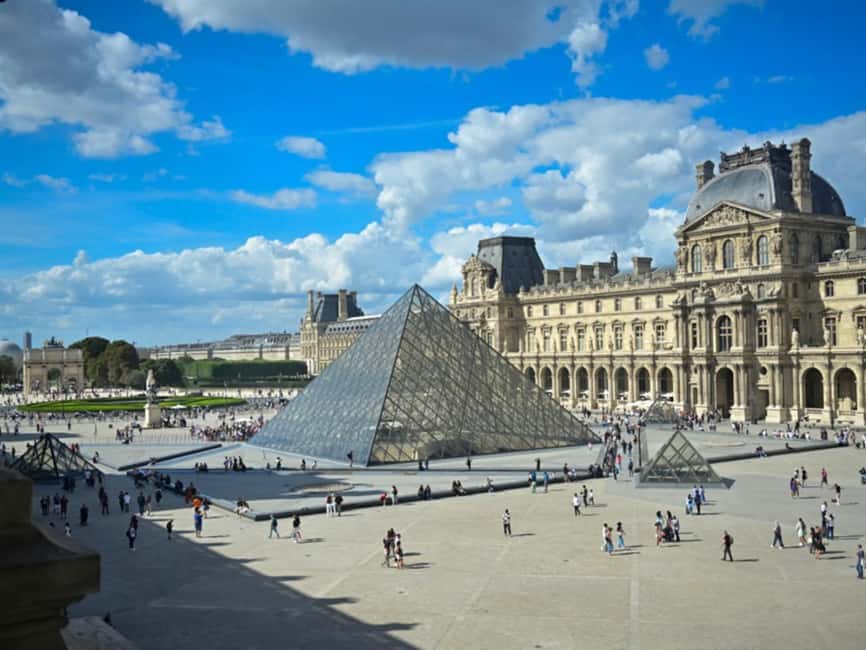
Your starting point is easy to identify, but do not arrive at the last second. Look for the guide holding a sign marked The Tour Guy beside the equestrian statue of Louis XIV, in front of the pyramid. The itinerary also refers to the statue as Louis XIV in the guise of Marcus Curtius, a copy, so the artwork may be easier to spot than the name is to remember.
The glass pyramid is more than a photo backdrop. It is the main visual gateway to the modern Louvre, and your entry is arranged through this area. Your ticket and admission are included, so you do not need to purchase a separate museum ticket for the tour.
Fast-track entry means you avoid the regular ticket line, which can save considerable time. It does not mean walking straight past every queue. Security remains necessary, and during the busiest periods it can take up to 20 minutes. Keep that in mind when planning a timed lunch, train, or another reservation after the tour.
The Louvre’s story before the paintings
A good guide does not treat the Louvre as a box for famous artworks. The building itself is part of the experience. The route presents the Louvre’s development across the centuries, helping you understand why the museum feels like several places joined together.
You will hear about its beginnings and its transformation into a public collection, then move through rooms where architecture, royal display, and fine art overlap. This historical frame matters because it gives the museum a sense of purpose. You are not just crossing a palace to reach one celebrity portrait.
The exact order can change based on crowd levels, gallery access, and the guide’s pacing. That flexibility is useful in a museum where certain rooms can become crowded. It also means you should treat the advertised highlights as the core of the visit, not a promise that every gallery or exhibition will be covered.
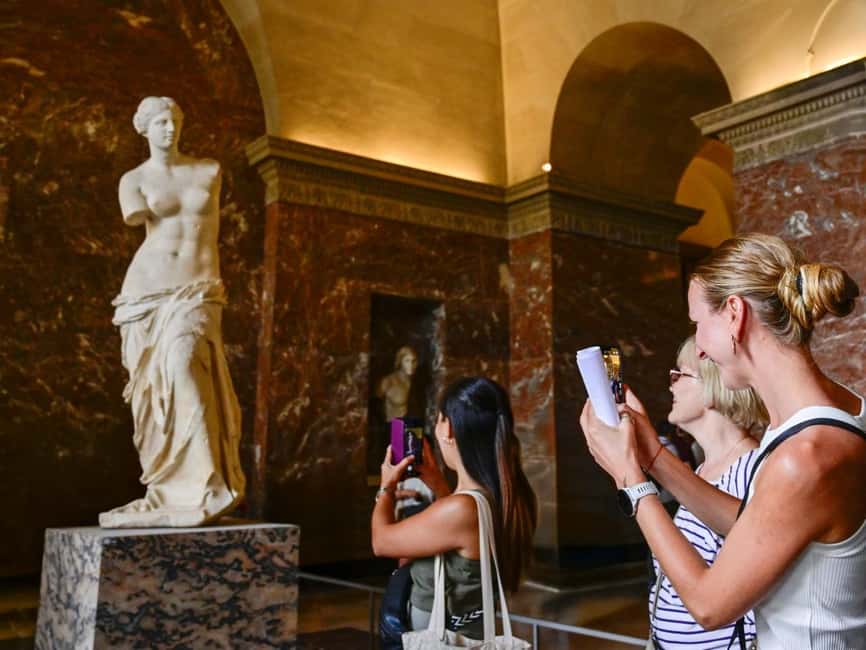
Meeting Venus de Milo in person
The Venus de Milo is one of the tour’s main sculpture stops. This ancient statue has inspired generations of artists, and seeing it in the Louvre gives you a chance to consider more than its familiar outline. Your guide can point out the features that made it so influential and explain how the work fits into the museum’s collection.
A guided explanation is particularly helpful with sculpture. A quick glance tells you that the figure is elegant, but it does not tell you why the pose, balance, missing arms, and presentation have held public attention for so long. The guide turns a famous object into a subject you can study.
Crowds can gather around major works, so do not expect a quiet private encounter. The small-group format helps your guide keep the explanation focused, but you may still need to wait for a clear view. Comfortable shoes matter here and throughout the museum, since the visit involves substantial walking and some stairs.
More museums in Paris:
- Paris: Louvre Museum Entry Ticket With Host and River Cruise
★ 4.6 · 9,926 reviews - Les Invalides: Napoleon’s Tomb & Army Museum Entry
★ 4.6 · 9,185 reviews - Louvre Museum – Exclusive Guided Tour (Entry Included)
★ 5.0 · 6,296 reviews - Paris: Louvre Museum Hosted Entry and Mona Lisa Audioguide
★ 4.6 · 5,235 reviews
Looking up at Winged Victory of Samothrace
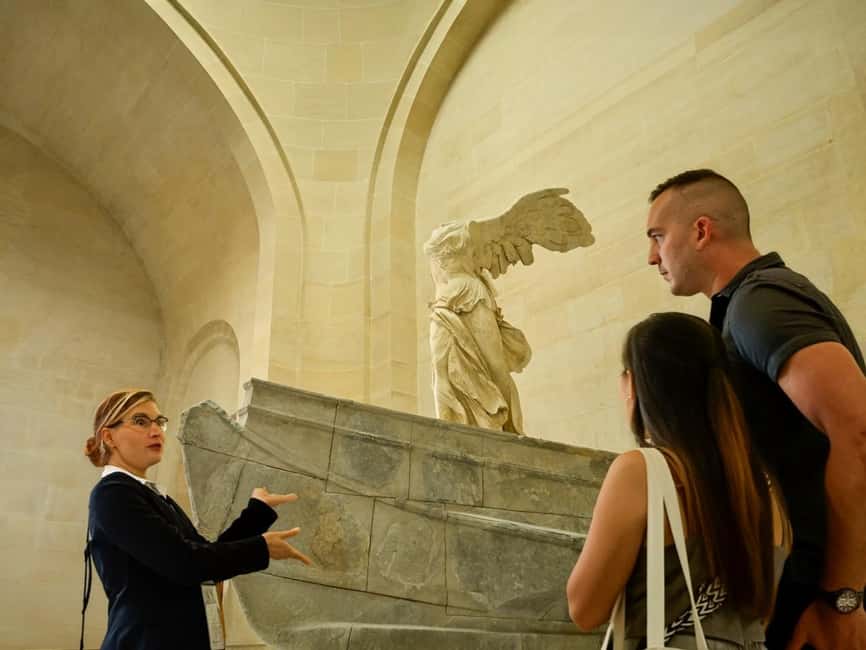
Winged Victory of Samothrace, also known as Nike, is another essential stop. The Hellenistic statue portrays the Greek goddess of victory, and its placement on a grand staircase gives the work a dramatic setting. Even before your guide speaks, the sculpture has strong visual impact.
Your guide adds the details that can be missed in a fast pass: the sense of movement, the treatment of fabric, and the way the figure appears to meet the viewer from above. This is one of those Louvre moments where the room and the object work together.
The staircase and walking route are worth considering if you have limited mobility. The experience is not considered suitable for people with mobility impairments, and one guide received praise for allowing time to manage stairs. That suggests some care in pacing, but it does not change the basic physical demands of the museum.
The Mona Lisa, fame, and the crowd
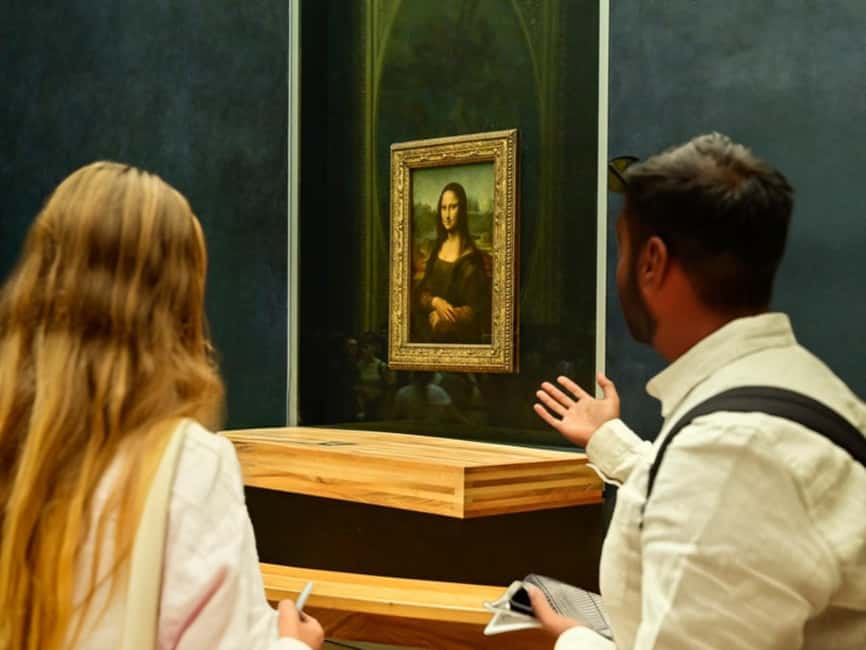
Leonardo da Vinci’s Mona Lisa is the emotional center of many first Louvre visits, and the tour explains the woman behind the portrait, Lisa Gherardini, along with the painting’s long fame. You will hear about the question that keeps the portrait alive in popular culture: does she look happy, sad, or something in between?
The guide’s role here is important because the viewing area can be crowded. Fast-track entry does not create a private lane to the painting, and it does not guarantee a close position at the front. A long queue or packed viewing space may keep you farther away than expected.
Set your expectations before you go. You will see one of the world’s most famous paintings, but the encounter can be brief and crowded. The better reward is the explanation around it, which helps you understand why a relatively small portrait has become such a large cultural event.
Photography is generally part of the museum experience, but filming and photography are strictly prohibited in temporary exhibition rooms. Follow the signs and your guide’s instructions, especially if the route passes through changing displays.
Italian Renaissance rooms beyond one famous portrait
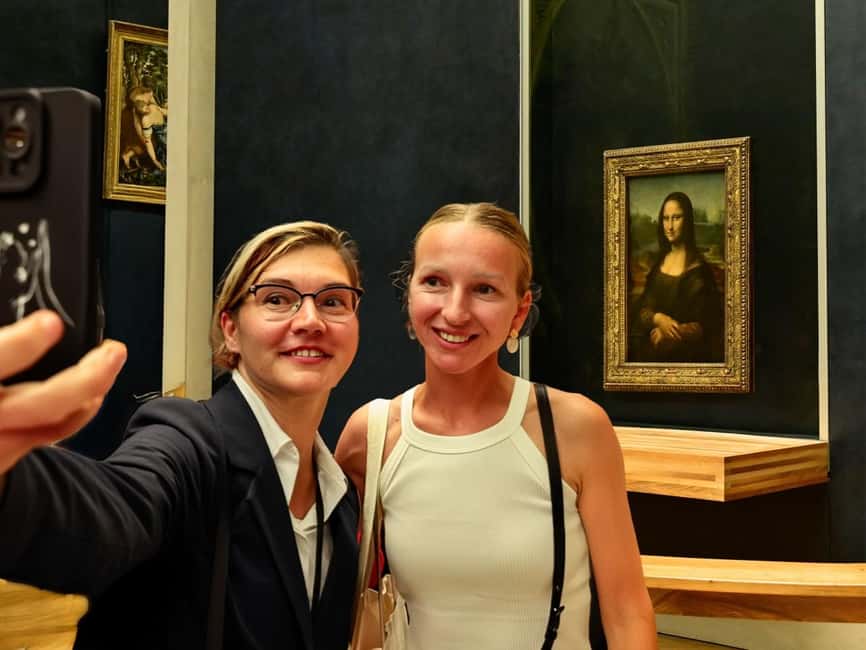
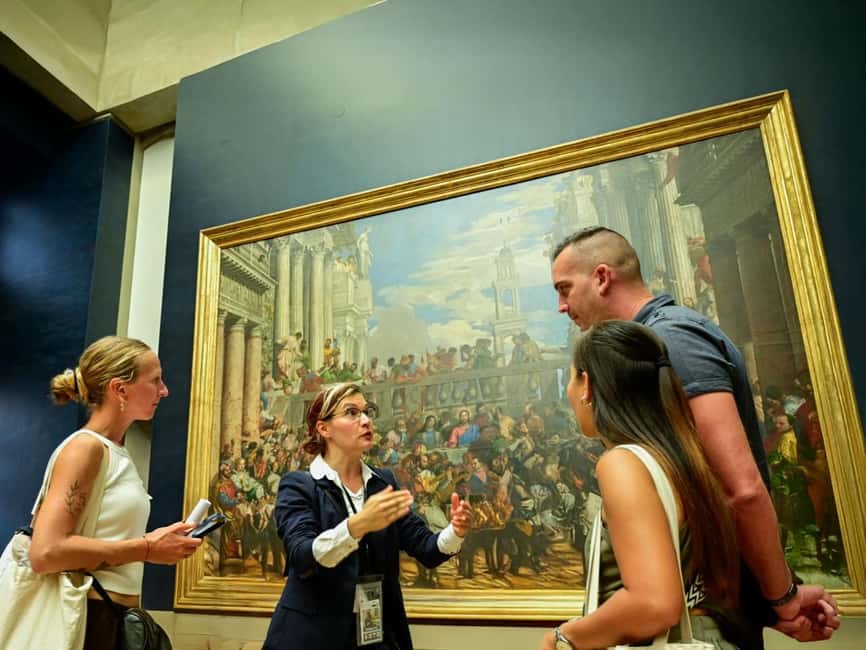
The Mona Lisa is only one part of the Italian Renaissance collection. The route also includes additional work by Leonardo da Vinci, as well as paintings by Botticelli, Veronese, and Raphael. This is where the tour can move beyond a checklist of celebrity objects.
Your guide can help you compare artists and notice choices that are easy to miss when you are moving quickly. Look for differences in composition, facial expression, color, gesture, and the way each painter tells a story. You do not need a background in art to follow along. The point is to give you a few useful questions to carry into the next room.
This section also explains why a short guided visit has limits. The Italian Renaissance collection alone could fill a much longer museum day, and the Louvre’s full holdings are vast. The guide selects the most useful examples, but you will not see everything. That is a strength if you want a focused first visit, and a limitation if you already have a long list of specific paintings.
The guide makes the difference
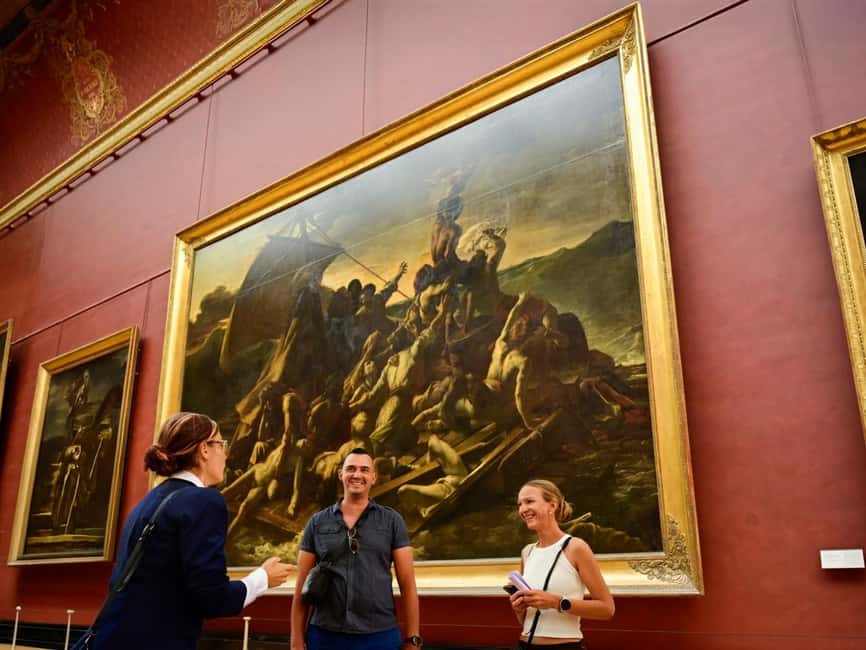
The strongest part of this experience is the person leading it. Names in the feedback include Joe, Avi, Martin, Will, Zic, Marianne, Carolina, Cosi, Flor, Eric, and Astrid. The repeated pattern is clear: the best guides explain art in plain language, answer questions, add humor, and keep the group moving.
Joe received praise for lively stories and strong art knowledge. Avi was repeatedly singled out for combining French history with humor and clear explanations. Martin was credited with organizing the visit around the Louvre’s own story, while Will was praised for expert detail and wit. These comments point to a guide-led experience that aims to entertain as well as inform.
Still, guide quality can vary from one departure to another. The published options include English and Spanish, with private or small-group formats available, but a particular guide cannot be guaranteed from the information provided. If you prefer a quieter pace or want to focus on one period, a private option may give you more room to shape the visit.
Two hours inside a very large museum
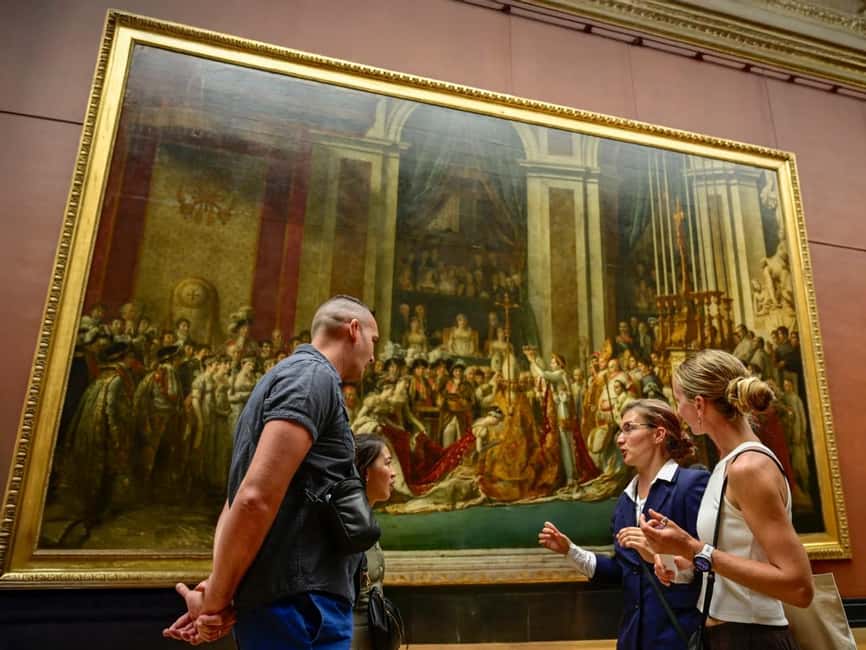
The stated duration is two to two and a half hours, with roughly two hours devoted to the museum tour. That is a sensible length for a first look. You get the major works without spending half a day on your feet, and you can use the remaining time in Paris for another sight.
The tradeoff is that the Louvre may leave you wanting more. One person felt the tour could be longer, while another found it perhaps 30 minutes too long because the group ran over the planned time. That difference is useful: the right length depends on your interest, energy, and how much you already know.
After the guide says goodbye, you may remain inside until closing time. This is a valuable feature if you want to revisit the Renaissance rooms, seek out a particular gallery, or simply slow down after the group route. Plan carefully, though. Once you leave the artwork area, you cannot re-enter.
Is $76 a fair price?
At $76 per person, this is not the cheapest way to enter the Louvre. You are paying for admission, reserved access through the ticket line, and a live English- or Spanish-speaking guide. The value comes from time saved and from having someone choose a sensible route through an enormous museum.
I think the price makes the most sense for a first Louvre visit, a short Paris stay, or anyone who finds major museums overwhelming. The convenience of moving past the regular ticket queue can be worth a great deal on a busy day, even with the possible security wait.
Independent visitors who already know exactly what they want to see may prefer a regular ticket and their own route. You will also get more time for specialized collections by visiting alone. But you will need to plan your path, interpret the works yourself, and manage the crowd flow without help.
What to bring and what to leave behind
Wear comfortable shoes. The route involves walking through a huge building, and the advice is practical rather than decorative. Bring a passport or identity card, since identification is listed among the required items.
Travel light. The Louvre does not allow large bags, backpacks, luggage, umbrellas, tripods, baby strollers, weapons, or sharp objects. Items over 55 by 35 by 20 centimeters are also prohibited. There is no coat check on site for this arrangement, and the lockers are not accessible to the small-group tour, so leave bulky belongings at your accommodation.
Food and drinks are not included. Plan them separately before or after the visit, but leave enough time to reach the meeting point and clear security. Free cancellation is available up to 24 hours in advance, and you can reserve now while paying later, useful if your Paris schedule is still changing.
Who should book this Louvre tour?
I would choose this tour for a first-time Louvre visit, couples or families who want a guided introduction, and anyone with only a few hours to spare. It is also a good fit if you want the major works explained in a way that does not require reading a guidebook while walking.
Families should consider it seriously, since the small-group setup and interactive storytelling can help children stay involved. Art lovers with a particular interest in one narrow collection may want a longer or more specialized option instead.
People with mobility impairments should look for a different format, since this experience is not considered suitable for them. Anyone carrying luggage or a large backpack should also make other arrangements before arriving.
Should you book it?
Book it if you want the Louvre’s essential works, a clear route, and useful stories in about two hours. The guide, rather than the ticket alone, is the main reason to pay $76. You will see Venus de Milo, Winged Victory, the Mona Lisa, and selected Renaissance works without trying to navigate the entire palace alone.
Skip it if you prefer a slow, self-directed museum day or already have a detailed plan. Just remember that the Louvre is easy to underestimate. For most first visits, this tour gives you a strong starting point, then leaves you inside to continue at your own speed.
FAQ
How long does the Louvre guided tour last?
The experience lasts about two to two and a half hours, with the guided museum visit taking about two hours.
What is included in the price?
Admission, skip-the-ticket-line access, and an English- or Spanish-speaking professional guide are included. Food and drinks are not included.
Where do I meet the guide?
Meet beside the equestrian statue of Louis XIV in front of the Louvre Pyramid. Look for a person holding a sign marked The Tour Guy.
Can I stay inside the Louvre after the tour?
Yes. After the guide leaves, you may remain inside until closing time. Once you exit the artwork area, you cannot re-enter.
Will I completely skip all lines?
You skip the regular ticket line, but security screening still applies. During high season, the security wait can be as long as 20 minutes.
Can I bring luggage or a large backpack?
No. Luggage, large bags, backpacks, umbrellas, tripods, and items larger than 55 by 35 by 20 centimeters are not allowed. The small-group tour cannot use the Louvre lockers, so leave these items at your accommodation.
Is the tour suitable for children or people with mobility impairments?
The tour can suit children, and guides have used treasure hunts and facts to keep young children involved. It is not considered suitable for people with mobility impairments, and comfortable shoes are recommended.
Just listed in Paris
- Chartres Cathedral 5 Hours Tour from Paris with Private Transport★ 4.5 · 49 reviews
- Paris: Giverny & Versailles Small Group or Private Tour★ 4.5 · 49 reviews
- Paris: Louvre photoshoot or Seine bridges Eiffel Tower walk★ 5.0 · 49 reviews
- Private tour of the Champagne area, meet local producers and taste their Champagne, start from your hotel in Paris.★ 5.0 · 50 reviews
- Paris: Choux Pastry and Chocolate Éclair Making Class★ 4.9 · 50 reviews
- Paris Eternelle Notre-Dame Virtual Reality Tour★ 4.5 · 50 reviews
- Normandy D-Day Landing Beaches Private Day Trip from Paris★ 5.0 · 50 reviews
- Disneyland® Paris 1 Day with Round-Trip Train Tickets from Paris★ 4.0 · 50 reviews
Louvre Museum Tours, compared.


Louvre Guided Tour with Reserved Access & Boat Cruise
Read our review →
Louvre Museum Entry Ticket With Host and River Cruise
Read our review →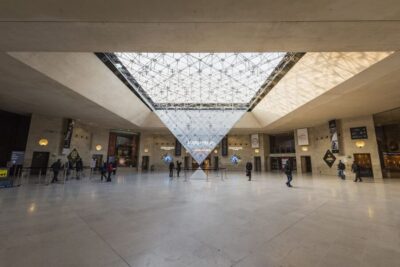
Mona Lisa & Louvre Masterpieces Tour with Reserved Access
Read our review →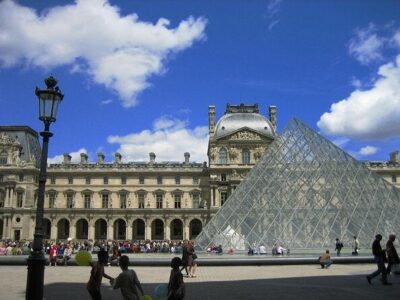
Louvre Museum – Exclusive Guided Tour (Entry Included)
Read our review →
Louvre Museum Hosted Entry and Mona Lisa Audioguide
Read our review →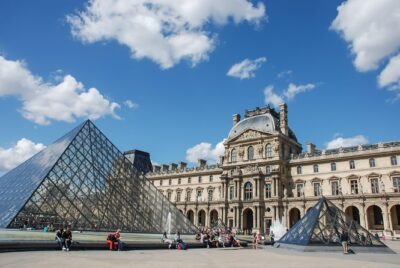
Louvre Priority Access with Mona Lisa Escort or Guided Option
Read our review →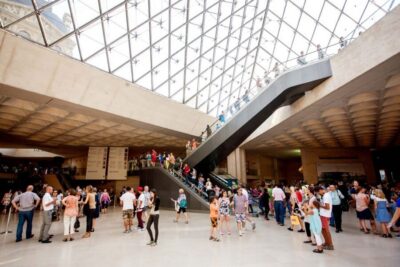
Browse the lists this tour appears in