
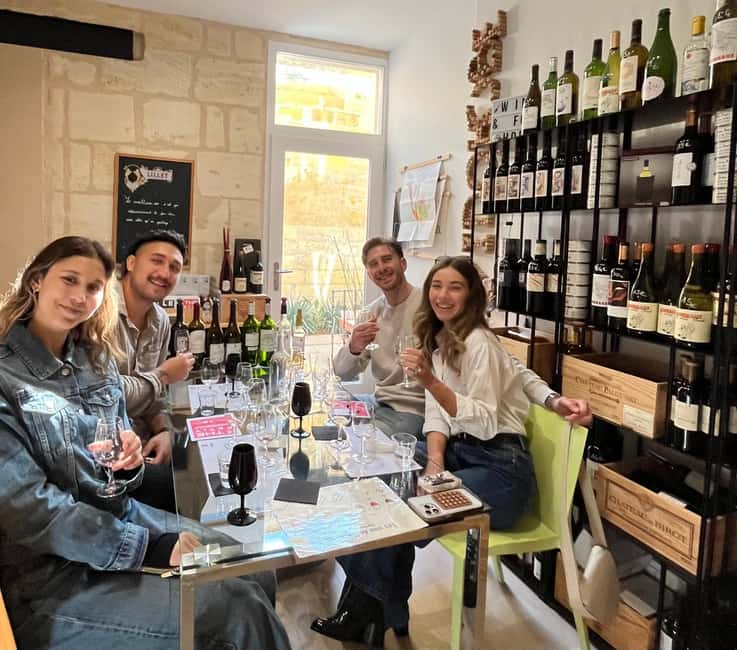
Reviewed · BORDEAUX TOURS
Bordeaux: Guided Bordeaux Wine Tasting Class with 6 Wines
Bordeaux wine can feel like a coded language: appellations, classifications, grape varieties, blends, and labels that assume you already know the rules. This small-group class gives you a friendly way in, with six wines and a guide who explains what is in your glass instead of simply pouring it.
I like the personal scale, limited to six people, and the practical food-pairing session. I also like the tasting booklet and aroma game, since they give you tools to use after the class. The main drawback is that the tasting room is discreet and not visible from the street, so you need to follow the meeting instructions carefully.
Key points at a glance
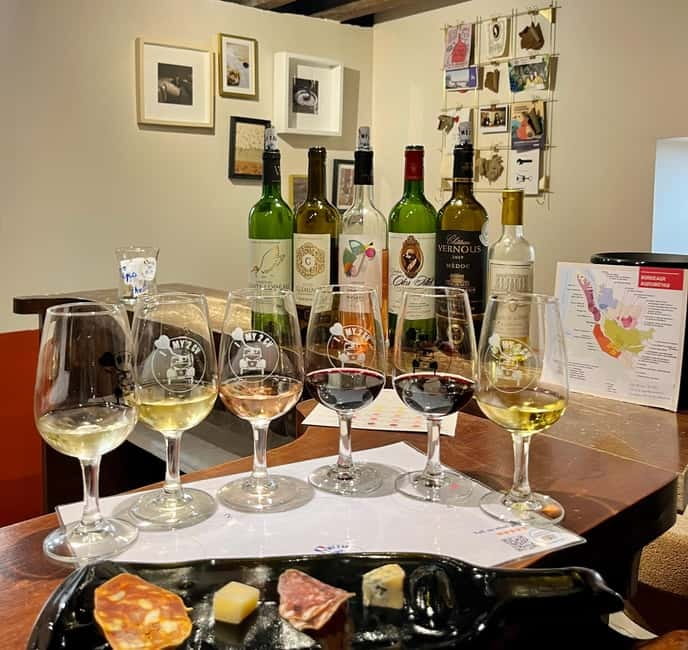
- Six Bordeaux wines in 90 minutes: You get a focused introduction rather than a long winery visit.
- A small group capped at six: The format leaves room for questions and personal advice.
- Cécilia, Ilona, Camille, and Mathilde may lead the class: Guides are praised for clear explanations, warmth, and strong wine knowledge.
- Aroma games make tasting less intimidating: You use your senses to identify scents and notice how wines differ.
- Food pairings are part of the lesson: Small tasting samples show how food can change your impression of a wine.
- A private cellar-style setting: The room is reached through a discreet entrance at number 25, marked by an I love ring.
Why this Bordeaux wine class works for beginners
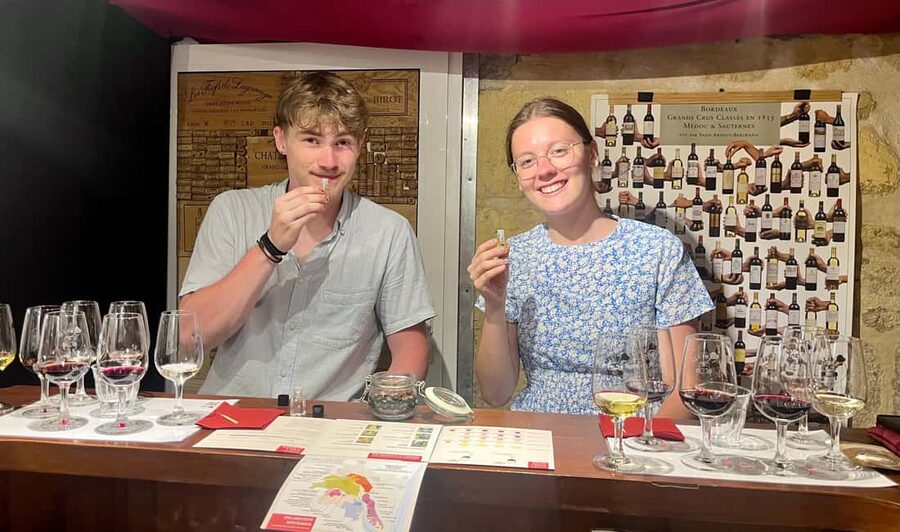
The best reason to book this experience is simple: it helps you understand Bordeaux before you face a wine shop, restaurant list, or cellar full of unfamiliar names.
The class covers the building blocks of Bordeaux wine: appellations, soils, grape varieties, blends, classifications, and the idea of terroir. That list may sound academic, but the tasting gives each subject a real purpose. You are not only hearing about Bordeaux wine. You are smelling it, tasting it, comparing it, and asking questions while the lesson is happening.
A guide trained at the Wine University leads the session. Cécilia is one of the guides associated with the experience, along with Ilona, Camille, and Mathilde. You cannot choose a particular guide unless the booking system allows it, but the names matter because the class is built around a person rather than a recorded presentation.
Cécilia is noted for adjusting the explanation to the group’s prior experience. That is useful if you know little about wine and do not want a lecture aimed at professionals. It also helps if you already enjoy wine and want to ask more detailed questions about Bordeaux regions, blending, or food.
Ilona is praised for patiently answering questions about tasting technique and Bordeaux wine types. Mathilde is described as fun and informed, while Camille is associated with a welcoming setting and practical pairing advice. The common thread is an engaging, conversational teaching style.
More wine tastings in Bordeaux:
- Bordeaux: Cité du Vin Entry Ticket and Wine Tasting
★ 4.6 · 3,885 reviews - From Bordeaux: Afternoon Saint-Emilion Wine Tasting & snack
★ 4.8 · 1,581 reviews - Medoc or Saint Emilion Wine Tasting and Chateau from Bordeaux
★ 5.0 · 1,415 reviews
Finding the discreet tasting room at number 25
The meeting point takes a little attention. The tasting room is not visible from the street, and the entrance at number 25 is marked by an I love ring. This is charming once you know the trick, but it is not the sort of place where you should arrive at the last second and expect to spot a large sign.
I would save the meeting instructions before leaving your hotel and allow a few extra minutes to find the door. The experience begins and ends at the same location, with no hotel pickup or drop-off.
The room itself is described as a charming private cellar-style space. That gives the class a more personal feel than a large commercial tasting hall. It also means the setting is compact, which suits the six-person limit but may not work for anyone who needs a spacious, fully accessible venue.
The activity is not suitable for people with mobility impairments. The supplied information does not give more detail about steps or the exact room layout, so ask the provider before booking if access is important for you.
The first pours: learning how to taste wine
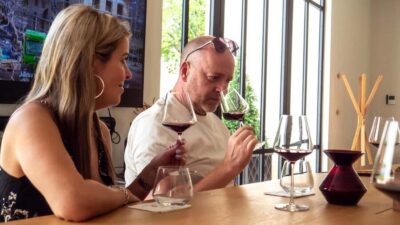
The class begins with an introduction to wine tasting. You are guided through the basic use of your senses, including how to notice aromas and how to assess what you are drinking.
This is particularly helpful if your usual wine routine is to take a sip and decide only whether you like it. The class gives you a more useful vocabulary and a method you can repeat at home. You may learn to pause before drinking, pay attention to scent, and compare one wine with the next.
The aroma game adds a playful touch. Instead of treating wine tasting as a test that you can fail, it encourages you to make guesses and trust your senses. You do not need an unusually sharp nose or a large wine vocabulary. The point is to notice differences and become more comfortable describing them.
That relaxed approach matters in Bordeaux. Wine culture can sometimes feel formal, especially when labels carry famous names and prices vary widely. A good first class should make the subject clearer, not make you feel that you need to pass an exam. This experience appears designed for that purpose.
You receive six glasses of Bordeaux wine during the session. The wines are selected to show typical expressions of the terroirs they come from, with selections linked to meetings with winegrowers. The exact bottles and vintages are not fixed in the information provided, so you should think of the tasting as a guided sample of Bordeaux styles rather than a guarantee of particular estates.
Terroir, appellations, and the Bordeaux blend
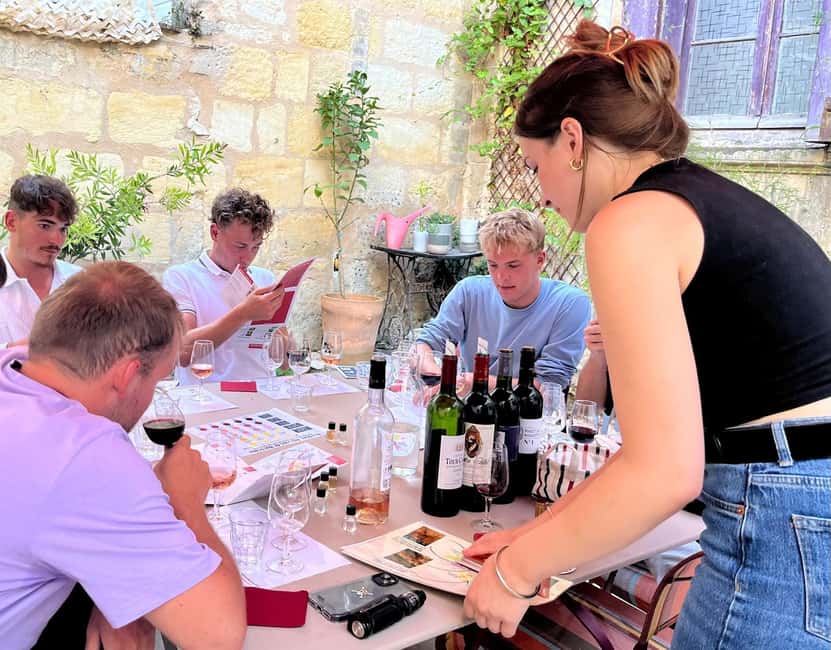
The central lesson is how Bordeaux gets its variety. You learn about the region’s different appellations, soils, grape varieties, blends, and classifications.
Terroir is not just a fancy word on a wine label. In this class, it gives you a way to connect place with taste. Two wines from the same broad region can feel different because of the soil, the appellation, the grape mix, and the choices made by the grower. Tasting six wines side by side gives you a better chance of noticing those contrasts than drinking one bottle on its own.
The class also covers the famous Bordeaux Blend. Bordeaux is strongly associated with blending, so this is an important subject for anyone planning to buy wine from the region. You learn how different grape varieties can be combined and how the blend affects aromas and character.
The information does not promise a complete technical course in viticulture, and the 90-minute format cannot cover every Bordeaux classification or appellation in depth. That is a fair trade. You get a clear framework that helps you make sense of the region, rather than a dense catalogue of every producer and vineyard.
The maps, guides, photos, and videos used during some sessions add useful context. Cécilia, in particular, is described as using visual material to explain the region. Those aids are valuable because Bordeaux names can be hard to remember when you hear them without seeing them.
A few other Bordeaux half-days to compare
- Saint Emilion Half-Day Trip with Wine Tasting & Winery Visit from Bordeaux
★ 4.5 · 1,034 reviews - From Bordeaux: Half-Day Saint-Émilion Tour and Wine Tasting
★ 4.6 · 657 reviews - Bordeaux Wine and Trade Museum Admission Ticket with Wine Tasting
★ 4.5 · 599 reviews - Bordeaux: Vineyards Wine Tasting Half-Day Trip
★ 4.2 · 470 reviews
Six wines, chosen to show Bordeaux differences
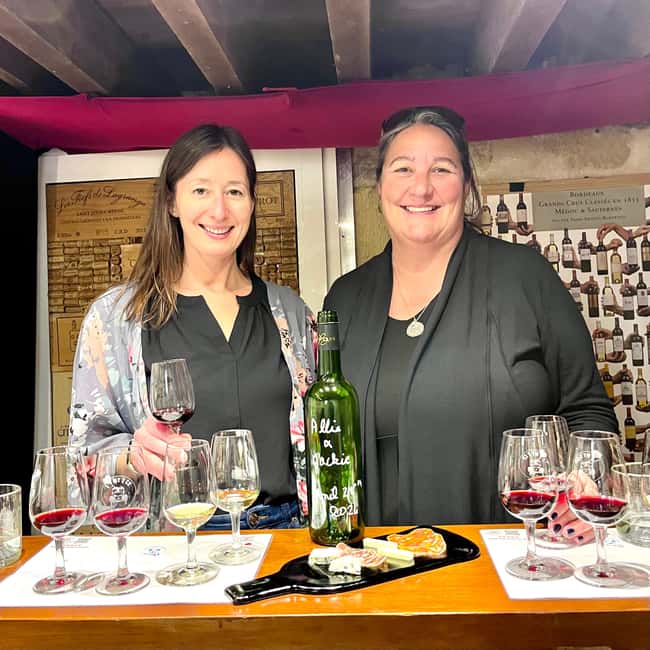
The six pours are the backbone of the class. You taste wines selected for typical expressions of their places, and the guide explains what to notice in each glass.
Do not expect six unrelated samples with a quick description before each one. The purpose is comparison. You may be asked to look for particular aromas, think about the structure of a wine, or consider how one example differs from another. The selection is meant to show the breadth of Bordeaux wine rather than focus on a single bottle.
This format is especially useful if you are spending only a short time in Bordeaux. A vineyard excursion can take much of a day and often centers on a particular area or producer. Here, you stay in the city and get a regional overview in one sitting.
The tradeoff is that you do not visit the vineyards or meet the growers in person. The connection to winegrowers comes through the selection of the bottles and the guide’s explanations. If your main goal is to walk through vines, tour a château, or see production facilities, choose a vineyard outing instead.
The tasting room sells the wines sampled at the end of the class. That is convenient if one bottle becomes your favorite. It also gives the lesson a practical finish: you can take home a wine you now understand instead of choosing at random from a shop shelf.
Check current transport and luggage rules before buying bottles, especially if you are flying soon. The experience provides the opportunity to purchase, but it does not include shipping or airport arrangements.
Food pairings that turn theory into practice
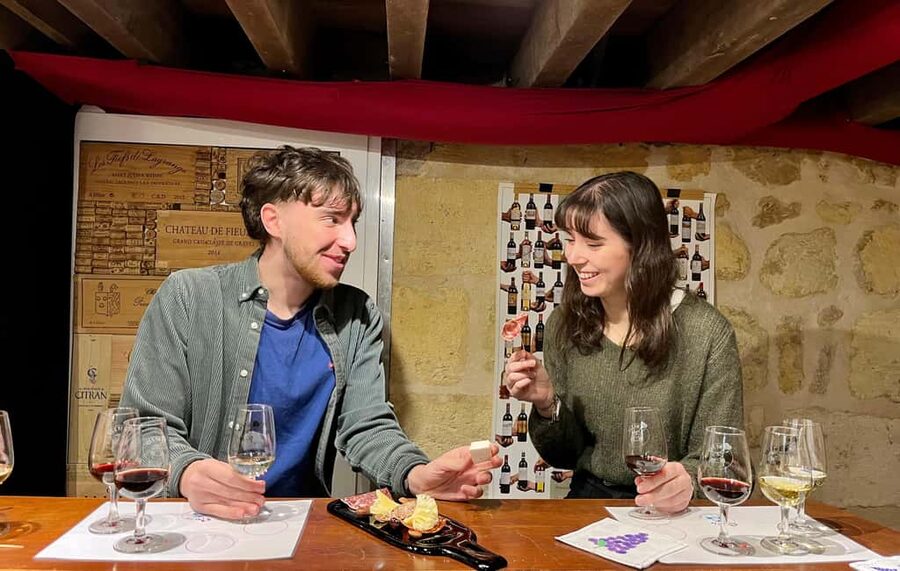
Food and wine pairing is not treated as an optional extra. It is built into the session, with small tasting samples used to show how food can affect wine.
This is one of the most useful parts for an ordinary holiday. You do not need to memorize a long list of rules. Instead, you get a chance to taste a wine with food and notice what changes. A wine that seems sharp or heavy on its own may feel different with a suitable bite.
The guides give practical advice rather than treating pairing as a set of rigid commandments. One session included enough cooking and pairing conversation that the host even shared a chicken recipe. That kind of exchange is a sign of the class’s personal character, though the exact food samples and recipes may vary.
I would pay attention to this section if you plan to eat well in Bordeaux. Restaurants in the city offer plenty of chances to order local food, and a little understanding can help you choose a bottle with more confidence. You may also come away with ideas for pairing Bordeaux wine at home.
The food component is modest, not a full meal. Eat beforehand if you need lunch or dinner. The class includes tasting portions, not a substitute for a restaurant visit.
A personal lesson instead of a crowded wine lecture
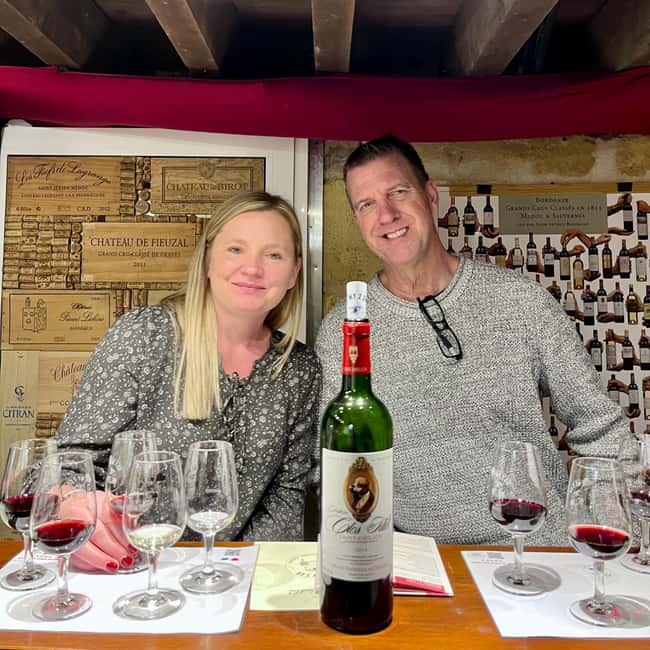
The group limit is six participants. That changes the experience in a practical way. You can ask why one wine smells different from another, admit that you cannot identify an aroma, or ask for help reading a label without waiting for a large group to move on.
Some bookings may be particularly small. A class with only two people can feel close to a private tasting, while a full group of six still remains manageable. The setting and guide-led format encourage conversation.
The personal attention is also useful for choosing future activities. Guides have offered advice about what to do in the Bordeaux area, and the class can help you decide whether a vineyard visit suits your interests. If you are in Bordeaux for only one night, the 90-minute length fits neatly into a short stay.
The atmosphere is not formal in the stiff sense. It is still educational, but the guides are described as kind, funny, and easy to talk with. That combination matters. Wine information is easier to remember when you feel comfortable asking basic questions.
What the $51 price buys you
At $51 per person, the class is not the cheapest way to drink six glasses of wine. Its value comes from the instruction, the small group, the food pairings, and the chance to compare wines selected for a purpose.
You are paying for a compact lesson, not just a flight of pours. The trained guide explains Bordeaux’s system, introduces tasting technique, runs the aroma activity, discusses pairing, and gives you a booklet to keep. The booklet is a useful extra because it lets you practice after the visit and record ideas while they are fresh.
Compared with a full day in the vineyards, the price is modest and the time commitment is much lower. Compared with an unhosted tasting at a bar, you get more explanation and a clearer regional picture. The best value comes if you are curious about wine but do not yet know how to approach Bordeaux.
If you already have strong wine training, the class may cover familiar material. You might still enjoy the personal discussion and the bottle selection, but you should not book it expecting an advanced sommelier qualification.
The six-wine format also places a natural limit on the depth of the lesson. You will learn the main ideas, not master every appellation or classification in Bordeaux in one afternoon.
Timing, languages, and booking flexibility
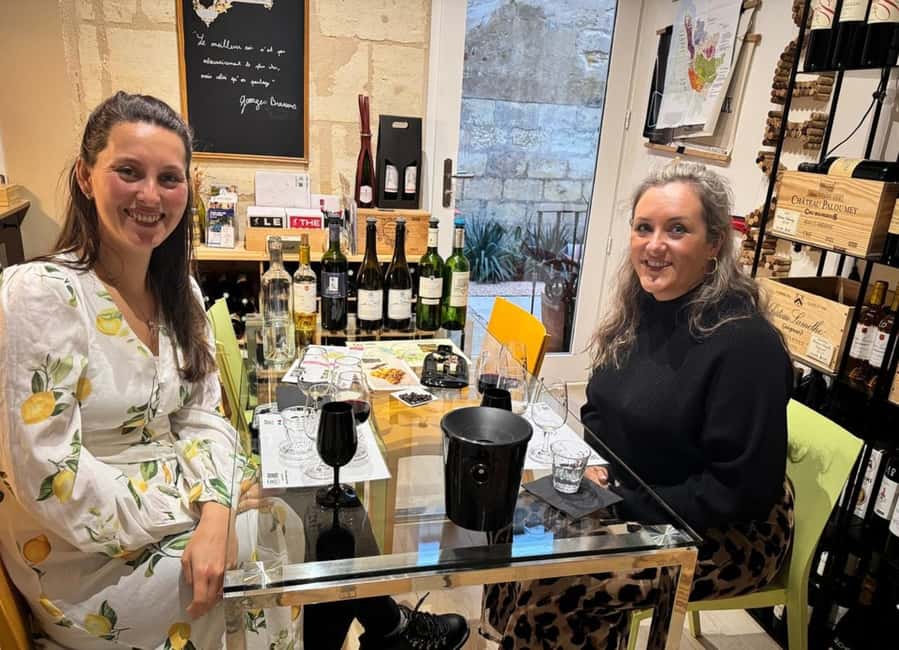
The experience lasts 1.5 hours, with several possible starting times depending on availability. That makes it easy to place before dinner, between sightseeing plans, or near the end of a short Bordeaux visit.
Live guidance is available in English, French, and Spanish. Confirm your preferred language when booking, since the quality of a wine lesson depends heavily on how comfortably you can discuss aromas and flavors.
You can cancel up to 24 hours before the start for a full refund. The reserve-now, pay-later option also helps if your schedule is still changing. Those terms are useful for a trip with uncertain arrival times, though you should still allow enough time to reach the discreet entrance.
Who should book this class?
I would recommend it most strongly to:
- First-time Bordeaux wine drinkers who want a clear introduction
- Couples or friends looking for a compact cultural activity
- People staying in Bordeaux city without time for a vineyard day trip
- Food lovers who want practical pairing ideas
- Wine drinkers who feel lost when faced with Bordeaux labels
- Small groups who prefer questions and conversation over a large lecture
It is also a good choice for a one-night stay. The class can make the rest of your Bordeaux meals more interesting because you will have a better sense of what to look for on a wine list.
I would be more cautious if you want a visit to a working château, a walk through vineyards, or a full meal. None of those are part of this class. I would also check access details in advance if you have limited mobility.
Should you book the Bordeaux wine tasting class?
Book it if you want an approachable, well-paced introduction to Bordeaux wine without giving up half a day to transport. The small group, six-wine comparison, aroma game, food pairings, and tasting booklet give you more than a simple pour-and-leave session.
The strongest reason to choose it is the guide-led format. Cécilia, Ilona, Camille, and Mathilde are associated with a warm, personal style that suits beginners and leaves room for detailed questions. You should also consider buying a favorite bottle at the end if you have the luggage space and transport plan for it.
Skip it if your priority is vineyard scenery or a château tour. For everyone else, especially anyone who wants to understand Bordeaux rather than merely sample it, this is a sensible use of 90 minutes and $51.
FAQ
How long does the Bordeaux wine tasting class last?
The class lasts 1.5 hours. Starting times vary, so check availability when booking.
How many wines are included?
The experience includes six glasses of Bordeaux wine, selected to show typical expressions of different terroirs.
What topics does the class cover?
You learn about Bordeaux appellations, soils, grape varieties, blends, classifications, aromas, tasting technique, and food and wine pairings.
Is food included?
Food and wine pairing is included, with tasting samples used to demonstrate how food affects the wine. It is not described as a full meal.
What languages are available?
The live guide can lead the class in English, French, or Spanish.
How large is the group?
The experience is limited to six participants. Depending on the booking, the group may be smaller.
Where does the class meet?
The meeting point is at number 25 on the street. The tasting room is not visible from outside, and the entrance is marked by an I love ring. The class ends at the same location.
More Workshops in Bordeaux
- Bordeaux: Introduction to Bordeaux Wines Tasting Workshop
★ 4.8 · 196 reviews - Bordeaux Super Saver Wine Tasting class and St Emilion region
★ 5.0 · 184 reviews - Bordeaux Wine Masterclass: Blending workshop with appetizer
★ 5.0 · 113 reviews - Workshop Bordeaux wine tasting: 4 reds & charcuterie pairing
★ 5.0 · 72 reviews
Just listed in Bordeaux
- Bordeaux: Exclusive Private Guided Walking Tour★ 4.6 · 50 reviews
- Bordeaux:Wine Masterclass & Blending workshop with appetizer★ 4.8 · 54 reviews
- From Bordeaux: Essential Morning Tour with Wine Tasting★ 4.8 · 55 reviews
- Full-day Saint-Emilion: Village, Undergrounds and Châteaux★ 4.5 · 55 reviews
- Bordeaux Old Town & Market Local Food with Wine Tastings Tour★ 4.0 · 56 reviews
- Bordeaux: Saint-Emilion Village Day Trip, 2 Chateaux & Lunch★ 4.8 · 57 reviews
- Bordeaux Free Walking Tour (Tips-Based)★ 4.5 · 57 reviews
- The Ultimate Bordeaux Food Tour: Full Meal & Fine Wines★ 4.8 · 61 reviews
Bordeaux Tours, compared.
River Garonne Cruise with Glass of Wine and Canelé
Read our review →
Afternoon Saint-Emilion Wine Tasting & snack
Read our review →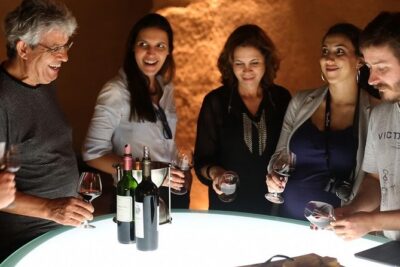
Medoc or Saint Emilion Wine Tasting and Chateau from Bordeaux
Read our review →
Saint Emilion Day Trip with Sightseeing Tour & Wine Tastings from Bordeaux
Read our review →
Saint Emilion Half-Day Trip with Wine Tasting & Winery Visit from Bordeaux
Read our review →
Browse the lists this tour appears in