
Reviewed · LOUVRE MUSEUM TOURS
Closing Time at the Louvre: The Mona Lisa at her Most Peaceful
The best part of this Louvre tour comes late: you reach the Mona Lisa near closing time, when the crush around her may finally loosen. The timing does not promise an empty gallery, but it gives you a better shot at seeing her from the front instead of over a forest of raised phones.
I like the focused route through a huge museum and the chance to hear why the art matters, not just see a list of famous names. I also like the small-group format, with a maximum of 20 people and a headset that lets you hear the guide clearly. The main drawback is the title’s promise of peace: in June, during holidays, or at other busy times, the museum and Mona Lisa room can still be noisy and crowded.
Key points at a glance
- Mona Lisa near closing: The late timing can mean lighter crowds, especially in winter or on a quiet evening.
- Three hours, carefully planned: You see major highlights rather than trying to cover every gallery in the Louvre.
- Art history with context: The route connects the palace, its foundations, and its masterpieces.
- Guides make the difference: Adam, Julie, Nancy, Felix, Nazli, and others have been praised for humor, clear explanations, and good pacing.
- Small group with headsets: A maximum of 20 people makes questions easier and helps you follow the guide in busy rooms.
- No wandering afterward: Because the tour ends at closing time, you should not expect extra time to explore alone.
Why the late Louvre visit matters
The Louvre is so large that a first visit can feel like being handed a city map with no directions. You can spend half a day walking and still miss the works you came to see. This tour solves that problem by giving you a route and a guide who decides where to spend your limited time.
The timing is the central idea. The tour aims for the final part of the museum’s opening hours, when some daytime crowds have thinned. That can make a major difference at the Mona Lisa. You still cannot walk right up to Leonardo’s painting or treat the room as a private viewing, but a smaller crowd may let you reach the front rail and look without craning over a packed group.
The result depends on the date. Quiet winter evenings have produced especially open galleries, with enough room to sit near works and talk. Summer, June, and holiday periods can remain busy. I would book this for the best chance of a calmer visit, not for a guarantee of solitude.
A few other Paris half-days to compare
- Paris: Louvre Museum Timed-Entrance Ticket
★ 4.6 · 71,977 reviews - Paris: Louvre Guided Tour with Reserved Access & Boat Cruise
★ 4.3 · 16,353 reviews - Louvre Museum Masterpieces Guided Tour with Access
★ 4.5 · 12,023 reviews
Meeting at the Carrousel
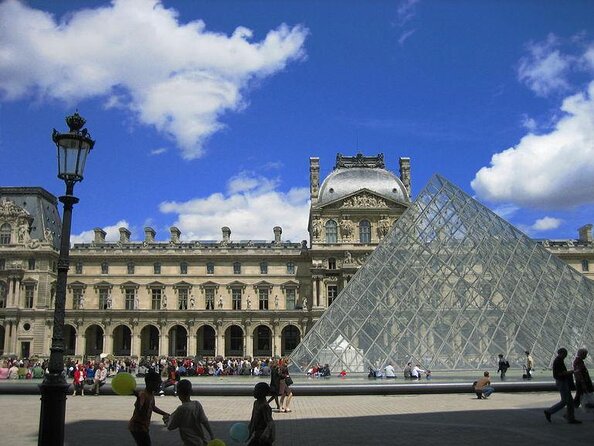
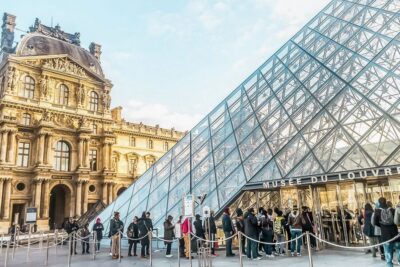
The tour begins at the Arc de Triomphe du Carrousel, at Place du Carrousel, 75001 Paris. This is in the Louvre complex, near the glass Pyramid and the open courtyard, so give yourself time to identify the exact meeting point rather than assuming every guide gathers at the Pyramid.
The practical lesson is simple: read the meeting instructions carefully and arrive early. One person missed the group after moving back and forth between the Louvre and the stated meeting place, creating a costly and frustrating no-show situation. The operator’s policy in that case was that the guide and group had been present and had departed after the waiting period. Do not rely on finding a green sign at the last second.
The end point is the Louvre Museum itself. Hotel pickup and drop-off are not included, so you handle your own way to and from the museum. The meeting area is near public transportation, which makes the start reasonably easy to reach within central Paris.
Beneath the palace: the Louvre’s foundations
Before the famous paintings and statues, the route introduces the building itself. You may see the palace foundations and moat, reminders that the Louvre began as a fortified medieval structure before becoming a royal residence and then a museum.
This is one of the tour’s smartest features. The building is not just a container for art. Its grand corridors, courtyards, staircases, and older stonework help explain why the collection feels so sprawling. A painting can be easier to understand when you know the room, palace, or former royal setting around it.
The foundations also provide a change of pace from the crowds gathered around headline works. You are not simply rushing from Mona Lisa to Venus de Milo. You get a brief look at the layers of the site itself, which gives the visit a stronger sense of place.
Greek sculpture and two unforgettable figures
The route then moves through Classical Greek sculpture, where two of the Louvre’s most recognizable works take center stage: the Venus de Milo and the Winged Victory of Samothrace.
The Venus de Milo is famous for her missing arms, but a good guide can shift your attention from the absent pieces to the statue’s posture, balance, and presentation. Her mystery is part of the appeal, though the room can draw a dense crowd.
Winged Victory is a different kind of spectacle. Positioned dramatically at the top of the Daru staircase, she appears to surge forward despite having no head or arms. The setting matters here. You see the statue not as an isolated object but as a commanding arrival point, with the staircase adding to its effect.
This part of the visit can move quickly. The Louvre contains far more sculpture than any three-hour route can cover, so you will get the main stories and visual details rather than a full survey of Greek art. If sculpture is your main interest, you may want a separate museum visit later.
Same city, a completely different afternoon:
- Disneyland® Paris 1-Day Ticket
★ 4.6 · 49,412 reviews - Paris: Versailles Palace and Gardens Full Access Ticket
★ 4.6 · 41,579 reviews - Paris: Evening River Cruise with Music
★ 4.4 · 22,721 reviews - Paris: Eiffel Tower Entry Ticket with Optional Summit Access
★ 4.4 · 20,035 reviews
The painting route: famous names with useful context
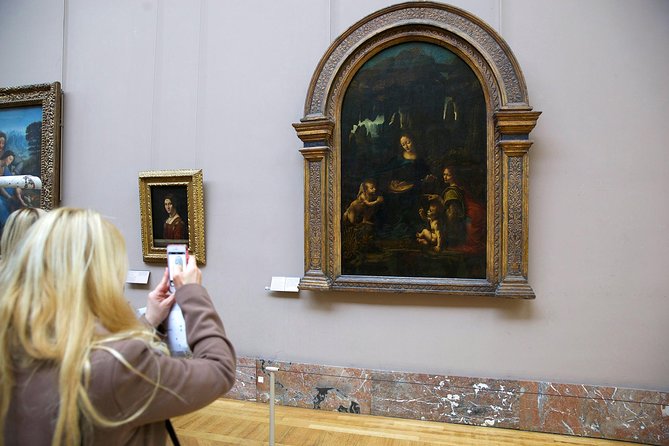
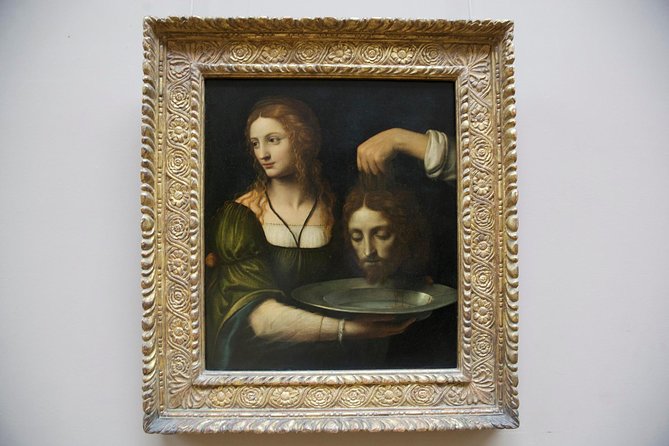
The tour includes major paintings by Caravaggio, Raphael, and Leonardo da Vinci, along with Théodore Géricault’s The Raft of Medusa. These are not just photo stops. The guide’s job is to point out details and explain how the works fit into larger artistic and political ideas.
That extra layer is where a guided Louvre visit earns its keep. You can recognize The Raft of Medusa, but you may not notice how the composition directs your eye through desperation toward a distant rescue. You can admire Raphael’s polish, but a guide can help you see why the arrangement of figures and gestures matters.
Caravaggio’s work benefits from close looking. His sharp light and forceful figures are easy to spot, but the drama becomes stronger when someone directs you to the faces, hands, and dark areas that frame the action.
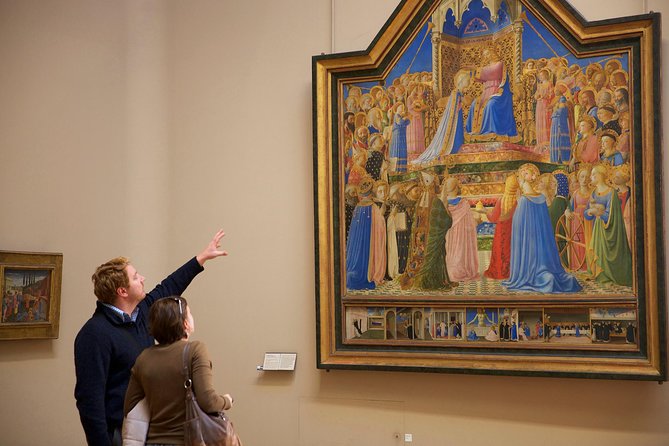
The route may also include less famous works along the way. One guide used an iPad to show related examples, which helped connect what was on the wall to wider artistic ideas. Another guide added galleries beyond the central highlights when the group showed interest. Those touches depend on the person leading your visit, but they show why the guide’s style matters as much as the printed itinerary.
The Mona Lisa at the front of the crowd
The final approach to the Mona Lisa is the emotional payoff. Leonardo’s painting is small, famous, and protected behind a barrier. Even when the room is relatively quiet, you cannot stand inches from the canvas or linger indefinitely in front of it.
At a good moment, though, you may reach the front and get a direct view. That is a different experience from seeing the painting far away through a wall of people. You can study the landscape behind her, the famous expression, and the subtle transitions in the face without spending your entire visit trying to find a gap.
Photography is possible according to the experiences described, but your time at the front depends on the crowd and museum rules that day. The tour ends at closing, so you should not plan to stay behind and return to the painting after the guide finishes.
I would set your expectations properly. The title points to the ideal condition, not a guarantee. On one June visit, the crowd in front of Mona Lisa remained heavy. On a winter evening, the experience was far more open. If this painting is your main reason for booking, choose the latest available time and avoid assuming that every late afternoon is equally calm.
Guides who shape the experience
The company assigns different English-speaking guides, so you cannot count on one particular person unless the booking allows you to choose. Several guides have made a strong impression through a mix of art expertise, humor, and group care.
Adam has been especially praised for making people think about the art rather than simply memorizing facts. He has also been described as funny and engaging, a useful combination in a museum that can wear down younger visitors.
Julie brought a warm, conversational style and gave her group room to sit, look, and talk when the museum was quiet. Nancy combined strong subject knowledge with an entertaining manner, while Felix was praised for a relaxed delivery that held attention.
Other guides, including Nazli, Felicia, Laurence, Omar, Ahmed, Antoine, Aurelia, Stephanie, Lee, and Daniel, have been noted for clear explanations, strong pacing, or the ability to keep children and teenagers involved. Those names do not promise your assigned guide, but they show the range of people leading the tour.
The best guides do three things well: choose what to skip, explain why a work matters, and keep the group moving without turning the visit into a race. One guide was described as a speed walker, so tell yourself to wear comfortable shoes and stay alert when the group changes rooms.
Pace, group size, and comfort
Three hours is long enough to cover the essential route but short enough to leave you wanting more. That is a good trade at the Louvre. You will walk at a moderate pace, pause for explanations, and move through several sections of the building.
The tour has a maximum of 20 people. That is not a private tour, but it is more manageable than a large crowd. You can ask questions, and the guide has a better chance of noticing if someone falls behind.
A headset is included. This matters in grand galleries where sound carries poorly and other groups compete for attention. Clear equipment was specifically useful during visits with larger crowds.
Restroom stops can be requested, and guides have made pauses when needed. Still, you should arrive prepared for a walking tour. Anyone who finds moderate walking difficult may struggle with the distance and the constant movement between galleries.
The Louvre can also feel warm. The building has limited air conditioning, so hot days may be uncomfortable inside. Dress for walking and changing indoor conditions rather than for a formal evening out.
Is $101.58 a fair price?
At $101.58 per person, this is not a budget museum ticket. The adult museum admission alone is €22, and the tour price also covers the English-speaking guide, guided entry, and headset.
The value comes from time and direction. If you would otherwise spend hours studying a map, waiting at the entrance, and wandering past rooms without knowing what you are seeing, the guide can make your limited Paris time work harder. The group entrance is also useful, and several visits have moved through entry and security without the usual wait.
The price makes less sense if you love exploring alone and already know the Louvre well. You may prefer buying admission, choosing a few wings, and returning at your own pace. You also lose the chance to continue browsing after the tour because it finishes at closing.
For a first Louvre visit, I think the cost is easier to justify. You get the building’s foundations, major sculpture, key paintings, and Mona Lisa in one organized outing. For a second visit, the tour is most useful if you want fresh context or need a clear route through the highlights.
Who should book this tour?
This suits first-time Louvre visitors who want the major works without trying to see everything. It also works well for couples and solo visitors who appreciate a small group and a guide’s interpretation.
Families can do well here, especially with a guide who uses humor and asks questions. Daniel and Antoine, for example, were praised for keeping children and teenagers involved. Still, the three-hour pace and art discussions may be tiring for very young children.
Art lovers should appreciate the range, from Greek sculpture to Renaissance painting, Baroque drama, and French Romanticism. You will not receive a full art-history course, but you will get a thoughtful sample of major periods and works.
This is less suitable if you want quiet time alone, a slow study of one gallery, or a chance to remain in the museum after the guide departs. It is also not the right choice if the phrase most peaceful makes you expect an empty Mona Lisa room.
Booking and cancellation details
The tour is offered in English and is often reserved well ahead of time, with an average booking lead of about 68 days. That suggests you should plan early if your Paris dates are fixed, especially during popular travel periods.
Confirmation is provided at booking. Free cancellation is available until 24 hours before the start time for a full refund. Changes or cancellations made inside that 24-hour window are not accepted for a refund, and the cut-off follows local Paris time.
Museum rooms can close without warning, and the route may change. Strikes can also close the Louvre. If a last-minute closure happens, information may be given at the meeting point, so keep your schedule flexible.
My booking verdict
I would book this tour if you want a well-chosen first look at the Louvre and care about seeing the Mona Lisa with the smallest crowd the timing can provide. The guides are the real strength, especially when someone like Adam, Julie, Nancy, or Felix turns a fast route into a conversation about what you are seeing.
I would skip it if you prefer total independence or plan to spend an entire day in one museum. Go in expecting a brisk, selective visit, not a private gallery and not a complete tour of the Louvre. With that expectation, the late timing, expert commentary, and group entry make this a sensible way to meet Paris’s most famous museum.
FAQ
How long does the Louvre tour last?
The tour lasts approximately three hours.
What language is the tour offered in?
The tour is offered in English with a local English-speaking guide.
What is included in the price?
The price includes the €22 adult museum admission, guided walking tour, English-speaking guide, and headset.
Is hotel pickup included?
No. Hotel pickup and drop-off are not included.
Where does the tour begin?
The tour begins at the Arc de Triomphe du Carrousel, Place du Carrousel, 75001 Paris, France.
Where does the tour end?
The tour ends at the Louvre Museum.
Does the tour include the Mona Lisa?
Yes. The route is timed to reach the Mona Lisa near the museum’s closing time.
Can the Mona Lisa area still be crowded?
Yes. Late timing may reduce crowds, but busy dates such as June or holiday periods can still be crowded.
What is the maximum group size?
The tour has a maximum of 20 people.
Can I cancel for a full refund?
Yes. You can cancel at least 24 hours before the start time for a full refund. Cancellations made less than 24 hours before the tour are not refunded.
Just listed in Paris
- Chartres Cathedral 5 Hours Tour from Paris with Private Transport★ 4.5 · 49 reviews
- Paris: Giverny & Versailles Small Group or Private Tour★ 4.5 · 49 reviews
- Paris: Louvre photoshoot or Seine bridges Eiffel Tower walk★ 5.0 · 49 reviews
- Private tour of the Champagne area, meet local producers and taste their Champagne, start from your hotel in Paris.★ 5.0 · 50 reviews
- Paris: Choux Pastry and Chocolate Éclair Making Class★ 4.9 · 50 reviews
- Paris Eternelle Notre-Dame Virtual Reality Tour★ 4.5 · 50 reviews
- Normandy D-Day Landing Beaches Private Day Trip from Paris★ 5.0 · 50 reviews
- Disneyland® Paris 1 Day with Round-Trip Train Tickets from Paris★ 4.0 · 50 reviews
Louvre Museum Tours, compared.

Louvre Guided Tour with Reserved Access & Boat Cruise
Read our review →
Louvre Museum Entry Ticket With Host and River Cruise
Read our review →
Mona Lisa & Louvre Masterpieces Tour with Reserved Access
Read our review →
Louvre Museum – Exclusive Guided Tour (Entry Included)
Read our review →
Louvre Museum Hosted Entry and Mona Lisa Audioguide
Read our review →
Louvre Priority Access with Mona Lisa Escort or Guided Option
Read our review →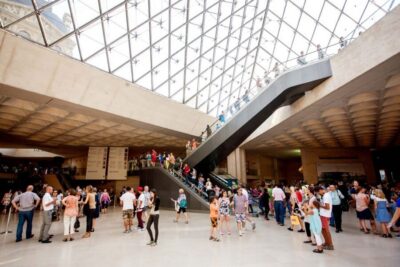
Browse the lists this tour appears in