
Reviewed · PARIS TOURS
Croissant Baking Class, Mastering the Art with a Pastry Chef
The best part of this Paris class is that you do not just watch a chef make croissants. You handle the dough, fold in the butter, roll out the layers, and shape the crescents yourself. By the end, you understand why a proper croissant takes patience, strength, and a surprising amount of measuring.
I like the maximum group size of eight, which gives the chef room to correct your technique instead of calling instructions across a crowded room. I also like the friendly teaching style associated with chefs such as Leo and Maria, plus the useful home-baking advice, including recipes and measurements.
The main consideration is that this is real pastry work, not a quick demonstration. You will knead and roll dough, and the class notes that strength is needed. At $143.92 per person, it makes sense for someone who wants a hands-on food lesson, not simply a pastry tasting.
Key points at a glance
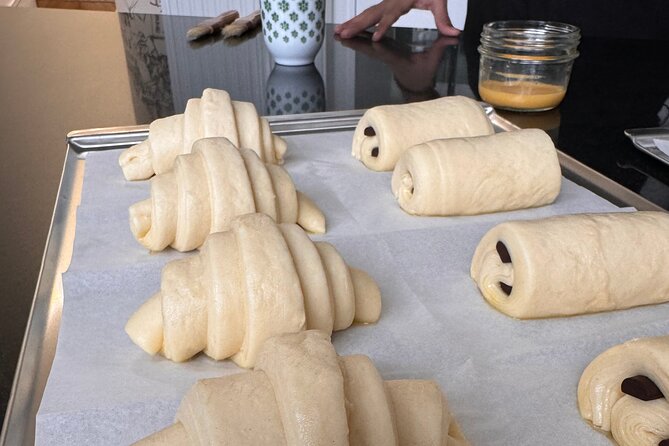
- A true hands-on class: You prepare dough, work with butter, laminate layers, roll pastry, and shape croissants and pain au chocolat.
- Small by Paris cooking-class standards: The group is capped at eight, allowing for personal help from the chef.
- Three hours well spent: The lesson has enough time for instruction, practice, baking, and tasting the results.
- Chef-led and relaxed: Leo and Maria are among the instructors, with a teaching style built around clear steps, patience, and humor.
- Useful for home bakers: You learn why flour, butter, measurements, folding, and proofing matter, with recipes shared after class.
- A practical Paris address: The studio is at 85 Rue de Rome in the 17th arrondissement, near public transportation.
Why croissant making makes a good Paris experience
Paris offers plenty of ways to eat a croissant. This class shows you why the good ones are not as simple as they look.
A croissant is built from dough and butter, but the craft lies in keeping those two elements in balance. You learn how the dough must be rolled to the right size, how the butter is folded in, and how repeated folds create thin layers. One class participant described working toward a 16-layer pastry, which gives you a sense of the precision involved.
That detail matters. A factory pastry can be tasty, but it does not teach you anything. Here, each stage explains the texture you later taste: crisp outside, soft interior, and buttery layers that pull apart rather than crumble into one solid piece.
You also get a small slice of French food culture without needing a full cooking holiday. The class is taught in English, so you can ask questions as you work. The setting is described as laidback and welcoming, which helps if you are a beginner or if your baking skills stop at toast and boxed cake mix.
More Cooking Classes in Paris
- Paris Cooking Class and Lunch with Wine plus Market Visit Option
★ 5.0 · 1,024 reviews - Paris Croissant Small-Group Baking Class with a Chef
★ 5.0 · 910 reviews - Paris: French Croissant Baking Class with a Chef
★ 4.9 · 712 reviews
Arriving at Studio Pâtisserie on Rue de Rome
The class begins at Studio Pâtisserie, 85 Rue de Rome, 75017 Paris. The address is near public transportation, and the meeting point is also where the experience ends. That makes the outing easy to fit into a Paris day since you do not need to arrange a second pickup point afterward.
The 17th arrondissement is not the first area most people picture when they think of classic sightseeing in Paris. That is part of the appeal. You are heading to a working neighborhood rather than a grand monument, and the activity gives you a reason to spend time outside the usual museum and boulevard circuit.
Allow enough time to find Rue de Rome and the studio without rushing. A baking class starts with practical instructions, and arriving flustered is no help when the first job may involve weighing ingredients and preparing dough.
The booking includes a mobile ticket, and confirmation is provided at the time of booking. The class is offered in English. Participants must be at least 17 years old, so this is not a children’s workshop, even though one family planned to return with older children.
The opening lesson: flour, butter, and careful measurements
Your chef begins with an introduction to French pastry making. This opening is not filler. Croissant dough rewards accuracy, and the chef explains why the quality of the ingredients, precise measurements, and correct handling all affect the final pastry.
You learn about flour and butter before the more physical work starts. That foundation is useful because it turns a recipe into a process you can understand. If the dough is too warm, too dry, or rolled unevenly, the later layers will suffer.
The class format is step by step. Chefs such as Leo and Maria have been praised for giving clear explanations, demonstrating each stage, and helping when someone runs into trouble. That matters in a group setting. You can make a mistake without feeling left behind.
This is also where the class earns its value for home bakers. You are not simply memorizing a list of ingredients. You are learning what the dough should feel like and what the folding process is trying to achieve. Those are the details that a printed recipe often fails to explain.
Kneading and rolling: the work behind the flaky layers
Next comes the part that makes this a physical activity. You knead and roll the dough, then work with the butter for lamination. The class information specifically notes that strength is needed to knead the dough, so do not expect a passive demonstration with a few token turns at the worktable.
The rolling is repeated. You may handle several rectangles for the butter, the lamination, the final rollout, and the cutting stage. This can be a little demanding, but it is also where you begin to understand the pastry.
A useful tip for taking the lesson home is to write down the dimensions of those rectangles. One participant also pointed out that bakers using US measurements should be ready to convert metric lengths, weights, and volumes. Your phone can handle the conversions, but recording the measurements during class will make the recipe much easier to repeat later.
The small group helps here. With no more than eight people, the chef can watch how you roll and offer corrections. A large class might show you the same technique, but it would be harder to get help with uneven edges, butter that shifts, or dough that needs more pressure.
Same city, a completely different afternoon:
- Paris: Louvre Museum Timed-Entrance Ticket
★ 4.6 · 71,977 reviews - Disneyland® Paris 1-Day Ticket
★ 4.6 · 49,412 reviews - Paris: Versailles Palace and Gardens Full Access Ticket
★ 4.6 · 41,579 reviews - Paris: Evening River Cruise with Music
★ 4.4 · 22,721 reviews
Lamination and shaping the classic crescent
Lamination is the heart of the class. You fold butter into the dough and roll it out in stages so the finished pastry has its familiar layers. The process looks simple when a pastry chef does it quickly. At the table, you see why careful pressure and patience matter.
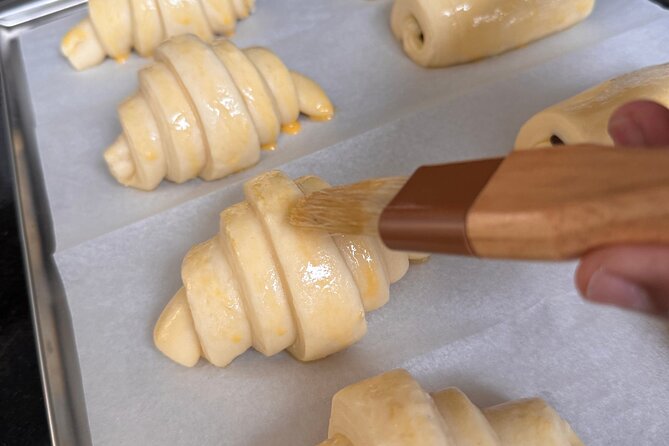
The chef guides you through the folds and explains how the layers develop. You then cut and shape the dough into the familiar crescent form. This is the point when your work begins to look like a croissant rather than a stack of pastry rectangles.
You also make pain au chocolat. The contrast is useful. The croissant demands shaping into a curved form, while pain au chocolat gives you another way to work with the laminated dough. The final result is more varied than a class devoted to one shape alone.
I would not book this expecting every pastry to look identical. You are learning, not working on a commercial production line. A slightly lopsided crescent is part of the fun, and the chef’s help should keep small mistakes from ruining the batch.
Baking, tasting, and the payoff at the end
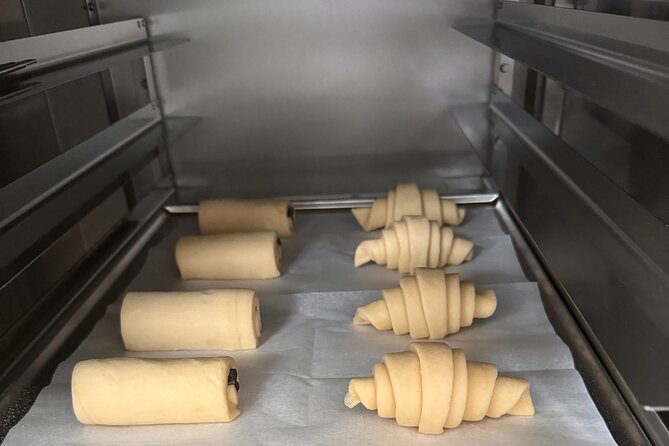
Once the pastries go into the oven, the pace changes. You get a moment to look at the results, talk with the other people in the class, and compare the shapes you made. The social side is simple but enjoyable: you are sharing a worktable with other baking enthusiasts and have an easy subject for conversation.
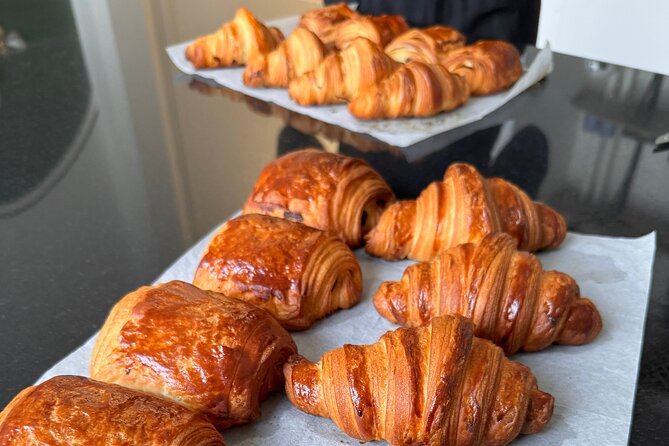
The payoff is the smell and taste of freshly baked pastry. Several class accounts describe the croissants as buttery, delicious, and among the best they had during their time in Paris. That is a high bar, but fresh pastry made minutes earlier has an advantage no packaged snack can match.
The exact amount you take home may depend on the class setup. One pair reported leaving with four croissants and four pain au chocolat each, while another described a final batch of eight pastries. Treat those numbers as examples rather than a guaranteed quantity unless the operator confirms the current arrangement.
The more important result is confidence. The class is structured so that dough made by one session can be used by a later session after proper proofing. That approach helps the timing work within a three-hour lesson and gives you a better chance of tasting properly prepared pastry. It also shows why croissants are a planned process, not something you casually throw together before breakfast.
The chefs: Leo, Maria, and the value of good instruction
The chef can make or break a practical class. Here, Leo is repeatedly described as patient, easygoing, funny, and generous with baking advice. He also adds Paris tips to the conversation, which gives the class a little more local flavor than a purely technical lesson.
Maria is also praised for being friendly, clear, and interactive. You may not know in advance which instructor will teach your session, so it is best to think of the teaching style as chef-led rather than booking solely around one name.
The common thread is personal attention. You are shown a technique, then given time to try it. If your dough needs help, the chef can step in. That is more useful than a polished lecture because the lesson responds to what is happening at your work surface.
The tone is lighthearted. That helps during the less glamorous parts of pastry making, such as repeated rolling and measuring. You still have to do the work, but the class does not treat baking like an exam.
Is $143.92 a fair price?
At $143.92 per person, this is not a budget breakfast activity. You can buy several croissants in Paris for much less. The question is what you are paying for.
The price covers about three hours of instruction, ingredients, hands-on work, oven time, and a small group limited to eight people. You are also paying for the chance to ask questions and receive help while making the pastry yourself. For someone who already wants a cooking lesson, the personal instruction makes the price easier to justify.
The value is weaker if your main goal is simply to eat a pastry. Paris bakeries do that job better and cheaper. The class makes more sense if you want a skill, a social activity, and a food memory that continues after you leave France.
Recipes and baking tips add value for anyone who plans to try the process at home. Croissants require more time and equipment than a simple loaf, so you should be ready for a project later. Still, learning the proper folding and shaping method can save you from guessing your way through the first attempt.
The activity is often booked well ahead, with an average booking lead time of 47 days. That does not guarantee that every date sells out, but it is a useful warning for a Paris itinerary. If this is important to you, reserve before your schedule fills with museum times and restaurant bookings.
Who will enjoy this class most
I would recommend it to adults who like doing things rather than only looking at them. Couples, friends, parent and adult-child pairs, and solo visitors can all fit the format. The class also suits a small group that wants a shared activity with a clear result at the end.
You do not need to be an experienced baker. The instruction is designed to guide beginners through the process, and the chef helps with problems as they appear. A basic willingness to follow measurements and work with dough matters more than advanced pastry skill.
It is a good choice for someone who wants a relaxed food experience in English. The class gives you conversation, technique, and something to taste, all in one stop.
It is less suitable if you have limited hand strength or dislike repetitive work. Kneading and rolling are part of the lesson, and the activity is not built around watching someone else do everything. Participants must be 17 or older.
Service animals are allowed, and the studio is near public transportation. The provided details do not specify other accessibility arrangements, so contact Studio Pâtisserie directly if you need particular support.
Booking, cancellation, and practical planning
The activity ends back at the Rue de Rome meeting point. Since the start and finish are in the same place, you can plan another activity afterward without arranging a return transfer, though I would avoid booking anything that begins immediately after the class.
You can cancel for a full refund if you do so at least 24 hours before the start time. Cancellations or changes made less than 24 hours ahead are not refunded or accepted, and the cut-off follows Paris local time.
Wear something comfortable for a work session. The provided details do not list a dress code, but you should expect to stand, knead, roll, and shape pastry for much of the class. Bring your phone if you need metric conversions, and note the measurements you will want when baking at home.
Should you book the croissant class?
Book it if you want more than a quick taste of Paris. The small group, clear instruction, and hands-on lamination make this a proper pastry lesson, while the relaxed tone keeps it from feeling stiff or overly formal.
I especially like it for a couple or parent and adult child who want a shared memory with a useful result. Leo and Maria bring the kind of patient, funny guidance that helps beginners relax, and the finished croissants and pain au chocolat give you an immediate reward.
Skip it if you are watching every euro, have no interest in baking again, or would rather spend three hours visiting a museum or bakery-hopping. At this price, the experience earns its keep through instruction and participation, not through the food alone.
For an activity that lets you work with French ingredients, meet a small group of fellow bakers, and leave with pastry-making skills, this is a strong Paris pick. Just reserve early, bring some muscle, and remember to write down those rolling dimensions.
FAQ
Where does the croissant baking class take place?
The class takes place at Studio Pâtisserie, 85 Rue de Rome, 75017 Paris, France.
How long does the class last?
The experience lasts approximately three hours.
Is the class taught in English?
Yes. The class is offered in English.
How many people can join the class?
The maximum group size is eight participants.
Who teaches the class?
The instructors include pastry chefs such as Leo and Maria. The specific chef may vary by session.
What pastries will I make?
You will learn to make croissants and pain au chocolat, including the dough, butter lamination, rolling, and shaping.
Do I need baking experience?
No specific baking experience is required in the provided details. The chef guides you through the process step by step and offers individual help.
Is the class physically demanding?
Some strength is needed to knead and roll the dough. The activity involves hands-on pastry work.
What is the minimum age?
Participants must be at least 17 years old.
Can I cancel for a full refund?
Yes. You can cancel at least 24 hours before the start time for a full refund. Cancellations or changes made less than 24 hours before the start time are not refunded or accepted.
More Workshops in Paris
- Fragonard Paris: Mini Perfume Workshop
★ 4.5 · 1,924 reviews - Paris: Macaron Class at Galeries Lafayette
★ 4.3 · 905 reviews - Paris: 2-Hour Perfume Creation Workshop
★ 4.8 · 731 reviews - Paris Cooking Class: Learn How to Make Macarons
★ 5.0 · 634 reviews
Just listed in Paris
- Chartres Cathedral 5 Hours Tour from Paris with Private Transport★ 4.5 · 49 reviews
- Paris: Giverny & Versailles Small Group or Private Tour★ 4.5 · 49 reviews
- Paris: Louvre photoshoot or Seine bridges Eiffel Tower walk★ 5.0 · 49 reviews
- Paris: Choux Pastry and Chocolate Éclair Making Class★ 4.9 · 50 reviews
- Private tour of the Champagne area, meet local producers and taste their Champagne, start from your hotel in Paris.★ 5.0 · 50 reviews
- Paris Eternelle Notre-Dame Virtual Reality Tour★ 4.5 · 50 reviews
- Normandy D-Day Landing Beaches Private Day Trip from Paris★ 5.0 · 50 reviews
- Disneyland® Paris 1 Day with Round-Trip Train Tickets from Paris★ 4.0 · 50 reviews
Paris Tours, compared.



Versailles Palace and Gardens Full Access Ticket
Read our review →

Eiffel Tower Entry Ticket with Optional Summit Access
Read our review →

Louvre Guided Tour with Reserved Access & Boat Cruise
Read our review →
Moulin Rouge Cabaret Show Ticket with Champagne
Read our review →Browse the lists this tour appears in