
Reviewed · BAYEUX TOURS
Historic Bayeux Daily Group City Tour In English 2 hrs (Apr-Sept)
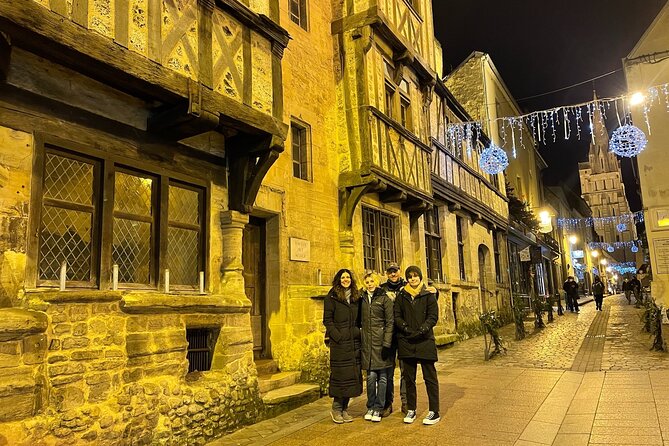
Bayeux reveals itself best on foot, one small street and old stone detail at a time. This two-hour English walk moves from medieval river trades to Roman ruins, the cathedral, the famous 11th-century embroidery, and the town’s liberation in 1944. It also points out corners you could easily miss alone.
I like the small maximum group of 20 and the way guides such as Christèle and Marie-Noëlle use old photographs, stories, and humor rather than simply reciting dates. I also like the low price, $24.20, for a useful first look at town. The catch is simple: you will stand often, and you will not go inside the cathedral or any museum.
Key points to know before you book
- More than 20 stops: The route includes medieval streets, the River Aure, the cathedral exterior, Roman remains, and Liberation Square.
- A good first morning activity: The 9:30 a.m. start leaves you with useful ideas for museums, restaurants, and further exploring.
- English only: You need to follow a full spoken tour in English. Simultaneous translation is not allowed.
- Strong local storytelling: Christèle and Marie-Noëlle are praised for clear explanations, humor, anecdotes, and practical local tips.
- Plan for standing: Comfortable shoes are essential, and a foldable stool may help if standing is difficult.
- Seasonal operation: The tour is described as running from March through September, while the title specifies April through September. Confirm your date before booking.
Why this two-hour walk works in Bayeux
Bayeux is compact, but its story is not. Celtic beginnings, Roman rule, medieval crafts, religious power, the Norman conquest of England, the French Revolution, and the Allied advance through Normandy all meet within a manageable town center.
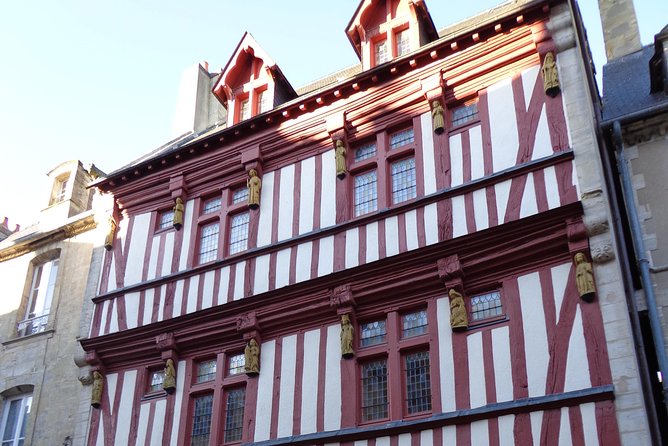
That can make independent sightseeing oddly tricky. You may see a handsome half-timbered building without knowing why it matters, pass the River Aure without realizing it powered local trades, or admire the cathedral without understanding that it was built in stages over a long period.
This tour gives you a framework. The guide connects places that otherwise feel separate. A photograph of an older street or building can make a present-day view easier to read, and a short story about a person or local custom can make the town feel less like a collection of monuments.
The two-hour length is sensible. You get enough time to understand Bayeux without spending half a day on your feet. The walk is also broad rather than narrowly focused. It is not only about the 1944 invasion, and it is not only about medieval Normandy. You get a quick trip through many centuries.
I would take it near the start of a Bayeux stay. The route ends near the cathedral, the closed embroidery museum, and other museums, so you can continue sightseeing afterward. It can also help you choose which places deserve a longer visit.
More historic sites in Bayeux:
- Mont Saint Michel: Village History and Legends Walking Tour
★ 4.8 · 96 reviews - Paris: Louvre Museum Entry with History of Mona Lisa
★ 3.9 · 2,823 reviews - Paris: Dark History and Ghostly Guided Walking Tour
★ 4.7 · 1,000 reviews
Starting at the tourist office on Rue Saint-Jean
The meeting point is at 3 Rue Saint-Jean, by the Bayeux tourist office. The stated start time is 9:30 a.m., a useful hour for making the tour the first serious activity of your day.
The opening section introduces the town and sets up the walking route. Not every stop is listed in advance, which is part of the appeal. You should expect a steady series of brief pauses rather than a few long lectures.
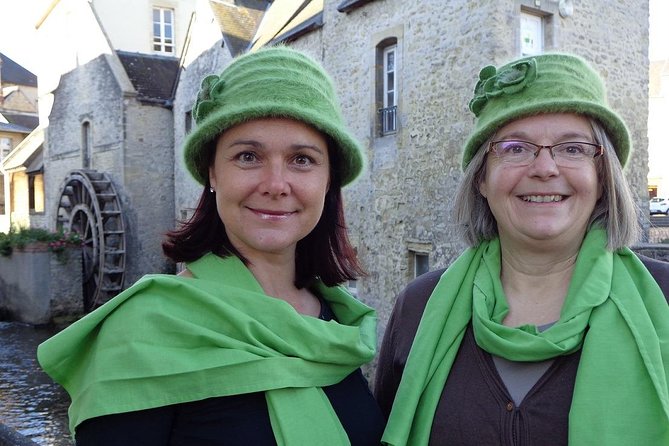
The guide’s approach is interactive and light. Christèle is praised for her storytelling, clear English, and amusing anecdotes, while Marie-Noëlle is described as a long-time Bayeux resident with a strong grasp of local history. Guides can vary, but the experience is built around a personal, spoken explanation rather than an audio device or printed route.
Bring only what you need. There is no luggage storage at the tourist office, and only backpacks can be taken on the tour. Service animals are allowed, and the meeting point is near public transportation.
Rue des Teinturiers and the River Aure
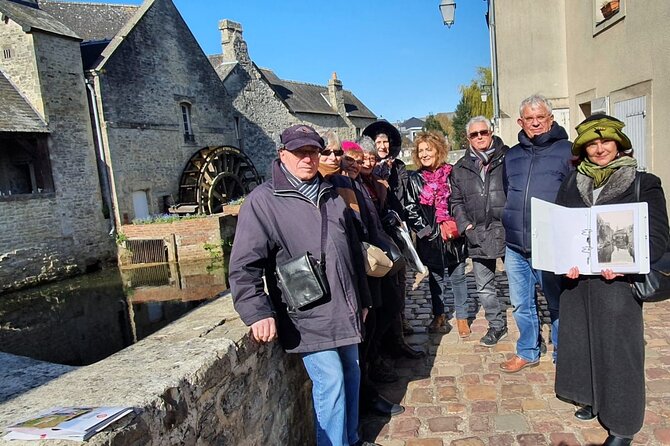
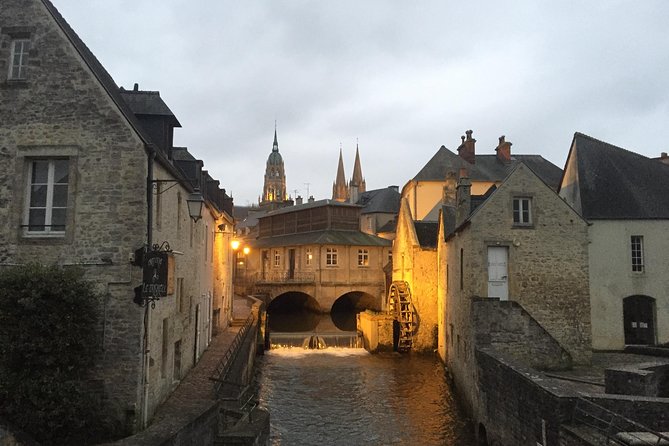
One of the most useful early stops is Rue des Teinturiers. Here, the guide explains medieval industries such as tanning and dyeing, with the River Aure at the center of the story.
This is the kind of stop that makes a city walk worthwhile. A river in an old town is easy to treat as scenery, but it often explains why a settlement grew where it did and how people made a living. The route uses the street and waterway to show you the working side of medieval Bayeux, not just its grand religious buildings.
You should not expect a preserved workshop visit or an indoor demonstration. The value comes from learning how the river shaped local activity and from noticing features you might otherwise pass without a thought.
The Augustinian sisters and the closed embroidery museum
The Allée des Augustines offers two very different pieces of Bayeux’s story. First, you learn about the impact of the Augustinian sisters on the local community. One sister also left her mark in what is now Canada, an unexpected link that widens the story beyond Normandy.
The guide then stops outside the Bayeux embroidery museum. The museum is closed until October 2027, so this tour cannot provide an interior visit or a close look at the display. Instead, the guide explains the famous 11th-century work from outside, using photographs and spoken context.
That explanation covers the Battle of Hastings and William the Conqueror’s rise to the English throne. You also hear about the work’s historical importance, how it was made, and related facts and figures. This is especially useful if the closure has disrupted your plans. You can still understand why the embroidery matters, even though you will not see it inside the museum.
I would treat this as an introduction, not a substitute for viewing the original. If the museum is central to your Bayeux plans, check its reopening information separately and remember that the stated closure lasts until October 2027.
A few other Bayeux half-days to compare
- Marseille: City Sightseeing Hop-On Hop-Off Bus Tour
★ 3.8 · 2,820 reviews - Eiffel Tower Summit Option with Seine River Cruise and City Tour
★ 3.5 · 2,176 reviews - Paris in a Day: Louvre or Orsay, Eiffel Tower, City Walk & Cruise
★ 5.0 · 1,956 reviews - Paris: City Highlights Bike Tour
★ 4.7 · 1,835 reviews
The Liberty Tree and the French Revolution
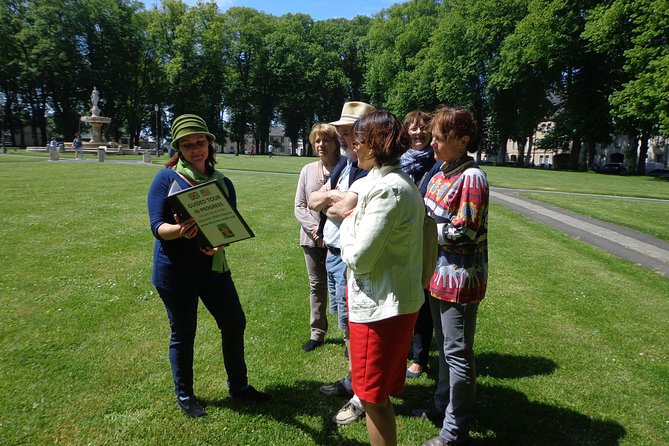
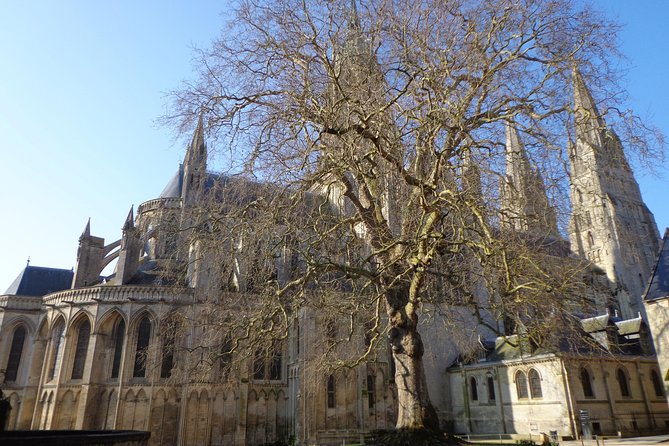
At the Arbre de la Liberté, the guide explains why this sycamore is known as the Liberty Tree and connects it to the French Revolution.
A tree may sound like a small stop, but it gives the tour a welcome change of pace. After medieval trades and Norman history, this living landmark shifts your attention to the political upheaval of late 18th-century France.
The stop lasts about ten minutes. That is long enough for the story and a few questions without turning a simple public square into a drawn-out lecture. You will remain outside, so the interest comes from the tree, the setting, and the explanation rather than from an indoor site.
Reading Bayeux Cathedral from the outside
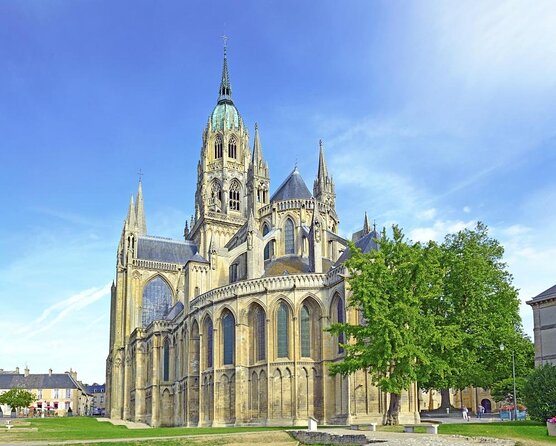
The cathedral stop lasts around 20 minutes and focuses on the different stages of construction and the building’s architectural features.
This is an important distinction: the tour does not include entry into Notre-Dame de Bayeux. If you want to inspect the interior, pray, attend a service, or spend time with the stained glass and furnishings, you will need to return on your own.
The exterior discussion can still add a lot. Large churches often look like one unified building, but centuries of work can leave clues in the stone, towers, arches, and changes in style. A guide can point out those shifts more clearly than a quick pass through the square.
You may also appreciate the timing. Twenty minutes is enough to learn how the cathedral developed, but not so much that the walking tour becomes a cathedral lecture. Plan a separate visit if the interior matters to you.
Celtic origins and the Roman castrum
On Rue Léonard Lambert Leforestier, the route reaches the origins of Bayeux, dating back to Celtic times, and the ruins of the Roman castrum.
This stop gives you the oldest layer of the town. The Roman remains are not presented as a full archaeological site visit, and you should not expect an indoor exhibition. Instead, the guide helps you locate the ruins and understand what they reveal about Bayeux’s early form.
I particularly like this part of the route because it keeps the town’s story from beginning with William the Conqueror or the Second World War. Bayeux had a long life before either, and the Roman foundations help explain its lasting importance.
The stop lasts about 15 minutes. Wear shoes with a firm sole, since this is a walking route through historic streets rather than a smooth museum circuit.
Place Charles de Gaulle and Bayeux in June 1944
The final listed stop is Place Charles de Gaulle, where the guide discusses Bayeux’s liberation on June 7 and General de Gaulle’s first visit to the square.
This is one of the most important modern chapters in the tour. Bayeux sits close to the Normandy invasion beaches, and many people arrive focused on military sites outside town. The square brings that wartime story into the town center.
The stop also helps you see Bayeux as a place with living civic memory, not only as a medieval backdrop. General de Gaulle’s visit gives the square a direct link to postwar France and the country’s return to self-rule.
The tour ends at Au Comptoir des Saveurs, 45 Rue Saint-Martin. That puts you in the center of Bayeux, close to the cathedral and museums devoted to the embroidery, art, history, and lace. It is a practical finish, especially if you want to continue on foot.
What the guides add to the route
The strongest part of this experience is the human delivery. The guides are not simply there to point at buildings. They explain linguistic expressions, old habits, famous figures, architecture, and local events, often with humor.
Christèle is repeatedly praised for making history easy to follow and for using a binder of old photographs to support the commentary. That detail matters. A photograph can show how a street, building, or square changed over time more clearly than a paragraph in a guidebook.
Marie-Noëlle brings a different strength. Her connection to Bayeux as a long-time resident helps place the town’s history in a local setting. One small-group tour even continued beyond the planned hour when only two people remained, though you should not count on extra time.
The commentary is designed for English speakers. You cannot record or tape the guide, and simultaneous translation is not permitted. You should have a good level of English to follow the details and humor.
The real cost: $24.20 for a useful orientation
At $24.20 per person, I see this as good value if you want context, not admission tickets. The fee covers a two-hour guided walk, an English-speaking guide, old photographs, and a route through more than 20 points of interest.
The price looks even better if you use the tour to shape the rest of your day. You can identify the cathedral details you want to revisit, decide if the art and history museum suits your interests, and note places to eat or local shops to explore. One of the practical benefits is simply learning how Bayeux fits together.
It is less good value if you want long stops, private attention, or interior access. You will not enter the cathedral or museums, and the group can include up to 20 people. That is still a modest group for the price, but it is not a private tour.
Free cancellation is available up to 24 hours before the start time. Changes or cancellations made less than 24 hours before the start are not accepted for a refund.
Comfort, weather, and the pace of the walk
This is an easy urban walk in length, but it is not a seated sightseeing tour. Many stops involve standing, and there are no planned restroom breaks during the two hours.
Wear comfortable shoes and dress for Normandy’s changeable weather. An umbrella is a sensible addition. Public benches are used where possible, but anyone with back problems or anyone who is pregnant may find the standing tiring. A foldable stool is specifically recommended for that reason.
The tour is suitable for most people, but the operator’s advice is worth taking seriously. Plan a restroom visit before the 9:30 start, and avoid bringing a suitcase or large bag. A small backpack is the practical choice.
The seasonal dates also deserve attention. The experience information describes operation from March through September, while the title says April through September. Because those dates do not match perfectly, confirm availability for your intended day before arranging your schedule.
Who should take this Bayeux tour?
I would recommend it to you if:
- You are visiting Bayeux for the first time.
- You want an English tour with a lively human guide.
- You like architecture, local stories, and history in equal measure.
- You want to understand the town before visiting museums or Normandy battle sites.
- You prefer a two-hour walk to a full-day excursion.
- You appreciate small details, old photographs, and anecdotes.
It is also a good choice if the embroidery museum closure has left you unsure how to approach Bayeux. The guide can explain the work’s place in Norman and English history, even though you cannot see it inside the museum.
I would hesitate if you need frequent seating, cannot follow spoken English comfortably, or want to spend most of your time inside monuments. The route is also not designed as a dedicated D-Day tour. It covers the liberation of Bayeux, but it does not replace a visit to the landing beaches or a military museum.
Should you book the Historic Bayeux walking tour?
Book it if you want a friendly, affordable orientation before exploring on your own. The combination of medieval industries, the River Aure, Augustinian history, cathedral architecture, Roman remains, Revolution-era symbolism, and the 1944 liberation gives you a surprisingly full picture in two hours.
The best plan is to take it early, wear good shoes, use the restroom beforehand, and keep the rest of your morning open for the cathedral and other museums. Skip it only if you require indoor sightseeing, frequent breaks, or a tour devoted solely to the Normandy invasion.
For most first visits, $24.20 buys something more useful than a list of sights: it gives you the story that ties Bayeux together.
FAQ
How long is the Historic Bayeux walking tour?
The tour lasts approximately two hours and starts at 9:30 a.m.
Where does the tour start?
It starts at 3 Rue Saint-Jean, 14400 Bayeux, France, at the Bayeux tourist office.
Where does the tour end?
The tour ends at Au Comptoir des Saveurs, 45 Rue Saint-Martin, in central Bayeux, near the cathedral and several museums.
Is the tour offered in English?
Yes. It is an English-only walking tour, and participants should have a good level of English. Simultaneous translation is not permitted.
Does the tour include the cathedral or museums?
No. The tour discusses the exterior of Notre-Dame de Bayeux and explains the famous 11th-century embroidery from outside the museum, but museum admission and entry to the cathedral are not included.
Can I cancel for a full refund?
Yes, if you cancel at least 24 hours before the experience start time. Cancellations or changes made less than 24 hours before the start are not accepted for a refund.
Just listed in Bayeux
- WW2 Jeep or Dodge truck tour of the Omaha Beach site★ 5.0 · 51 reviews
- Private Tour of American Sites with an Expert Guide from DDAY★ 5.0 · 51 reviews
- Mont Saint Michel Full Day Tour from Bayeux★ 5.0 · 52 reviews
- Private Day Tour including Normandy Landing Beaches & Battlefields from Caen★ 5.0 · 53 reviews
- Bayeux: Band Of Brothers Full-Day Tour★ 4.9 · 53 reviews
- From Bayeux: D-Day American Beaches and US Airborne Day Tour★ 4.8 · 56 reviews
- Le Havre Shore Excursion: Private Day Tour with Omaha Beach & American Cemetery★ 5.0 · 57 reviews
- From Bayeux: 2-hour private sidecar tour in Normandy★ 5.0 · 58 reviews
Bayeux Tours, compared.
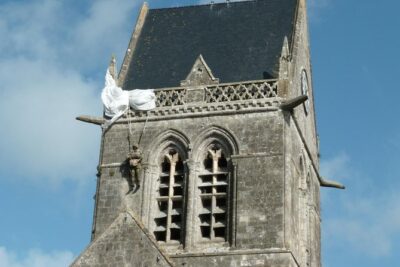
Normandy American D-Day Beaches Full Day Tour from Bayeux
Read our review →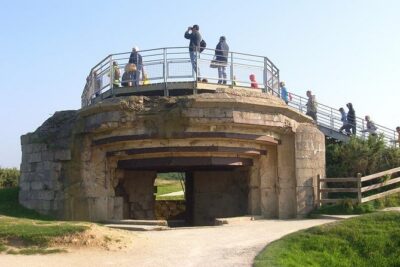
Normandy American D-Day Experience – Group tour from Bayeux
Read our review →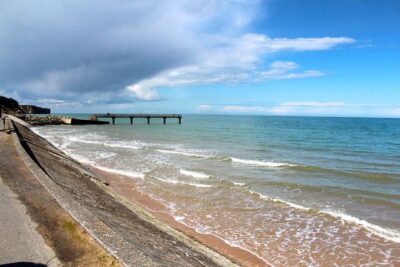
Normandy Beaches Half-Day Afternoon Trip from Bayeux (A2)
Read our review →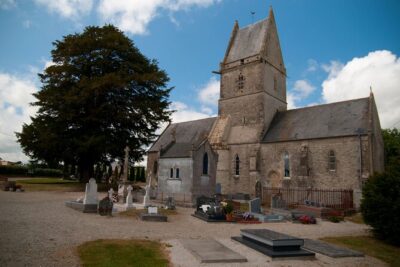
Omaha Beach D-Day Experience – Afternoon group tour from Bayeux
Read our review →

Normandy Battlefields Tour – American Sites (A3)
Read our review →
American D-Day Sites in Normandy Half-Day Tour
Read our review →Browse the lists this tour appears in