
Reviewed · LOUVRE MUSEUM TOURS
Louvre Museum Masterpieces Guided Tour
The Louvre is too large to conquer in one visit. This two-hour highlights tour gives you a sensible first look at its biggest treasures, from the soaring Winged Victory of Samothrace to the Mona Lisa’s famously crowded viewing area. You enter with a guide, hear the story behind each stop, and finish inside the museum with time to continue alone.
I like the small group limit of six, which makes it easier to hear explanations and ask questions. I also like the practical finish: your guide can point you toward the Egyptian galleries, more Leonardo works, or other rooms that fit your interests. The main catch is that skip-the-line entry does not mean instant entry every day. Crowds, security, strikes, and closed entrances can still cause delays.
Key points to know
- Three essential masterpieces: See the Venus de Milo, Winged Victory, and Mona Lisa in a focused route.
- Groups of six or fewer: A small party makes it easier to stay close to the guide in crowded galleries.
- English explanations: Guides such as Emmanuel, Julie, Walter, Laura, and Neils have led tours praised for clear storytelling and helpful museum advice.
- Two hours, then more on your own: The guided portion gets you oriented without taking your entire day.
- Early times are worth considering: Morning visits may mean quicker security and somewhat easier movement.
- Expect stairs and plenty of walking: This is not a wheelchair-accessible activity and requires a strong level of physical fitness.
Why a short Louvre tour can be the right choice
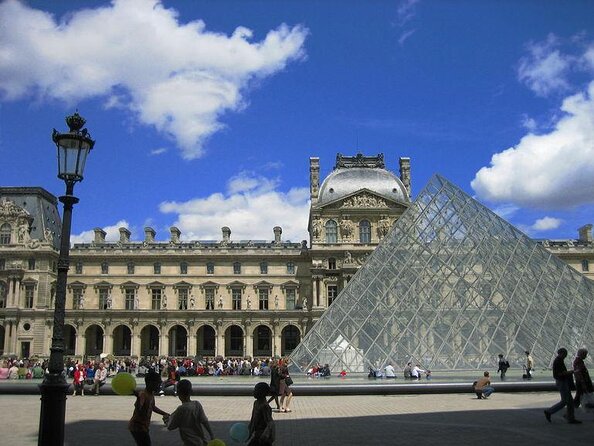
The Louvre is not simply a museum with a long list of paintings. It is a former royal palace with vast wings, grand staircases, sculpture halls, and rooms that can make even a well-planned visit feel confusing. If you walk in without a plan, you can spend much of your morning finding the famous works instead of looking at them.
This tour solves that problem by giving you a direct route to the core sights. You are not promised every famous object in the museum, and two hours cannot cover the Louvre in full. What you get is a clear introduction, useful context, and a map in your head for the rest of your visit.
The six-person limit matters here. In a huge museum, a large group can stretch across a staircase or lose time gathering at each room. A group of six lets the guide keep the pace more personal. It also makes it easier to ask why a work matters, how it was found, or where to go next.
A few other Paris half-days to compare
- Paris: Louvre Museum Timed-Entrance Ticket
★ 4.6 · 71,977 reviews - Paris: Louvre Guided Tour with Reserved Access & Boat Cruise
★ 4.3 · 16,353 reviews - Louvre Museum Masterpieces Guided Tour with Access
★ 4.5 · 12,023 reviews
Meeting near the Louvre and getting inside
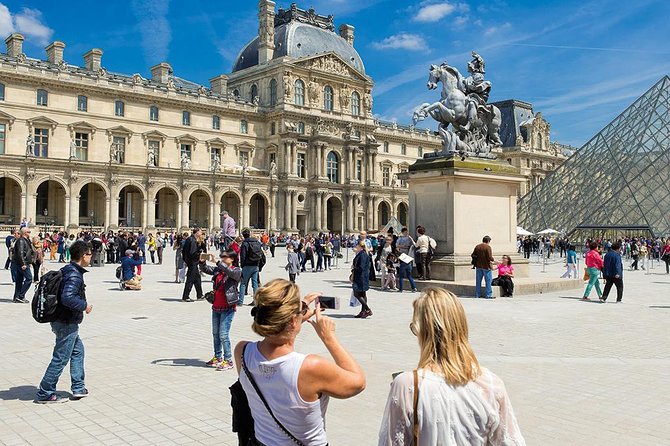
The meeting point is Librairie Delamain at 155 Rue Saint-Honoré, in the 1st arrondissement. You make your own way there, so this is not a hotel pickup tour. The location is near public transportation, which helps if you are coming from another part of Paris.
Plan to arrive early. One person who arrived five minutes late reported that the group had already left, and the tour’s museum entry rules make it difficult to wait or bring late arrivals inside. Arriving 10 to 15 minutes before the start is the sensible approach, even if that extra time is not formally part of the experience.
The tour includes the museum admission ticket, listed as €28, along with a professional English-speaking guide. The advertised benefit is skip-the-line entry through the access available to the group. In practice, you should treat this as expedited access, not a magic pass through every queue.
This distinction is important. Some visits have faced long waits because a dedicated entrance was closed for maintenance, while strikes and holiday crowds have also slowed entry. One morning tour did not enter until 10:30 because of a strike. These situations are not normal sightseeing conditions, but the Louvre is a working public institution, and access can change.
The Louvre from fortress to palace to museum
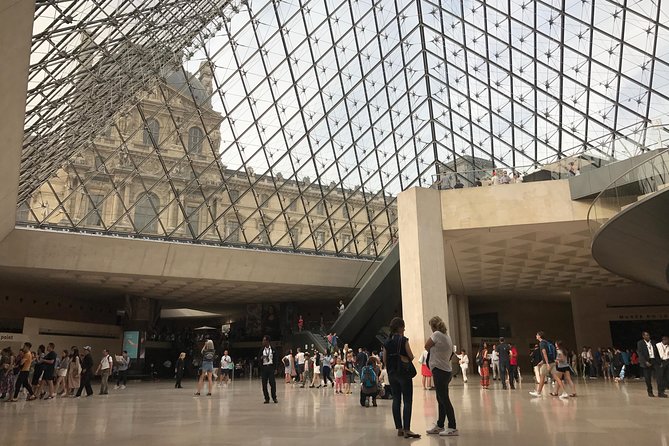
Once inside, your guide begins with the building itself. The Louvre started as a medieval fortress, later became a royal residence, and eventually turned into the museum you see today. That transformation helps explain why the complex feels less like a single gallery and more like a small city of art.
This opening history is useful because it gives shape to the building. You begin to understand why one hallway leads to a grand state room, another to ancient sculpture, and another to paintings arranged by school and period.
Guides bring different strengths to this part of the visit. Walter, for example, has been praised for explaining the Louvre’s change from fort to fortress, palace, and museum before moving into the sculpture halls. Another guide, described as having a Sorbonne art history master’s degree, brought an academic background to the explanations without losing the human side of the stories.
You should expect a prepared highlights route rather than a custom museum seminar. The guide selects the major works that fit the time available. Some guides ask about interests and include a few personal favorites, but the central route remains focused on the best-known sights.
Winged Victory of Samothrace and the drama of movement
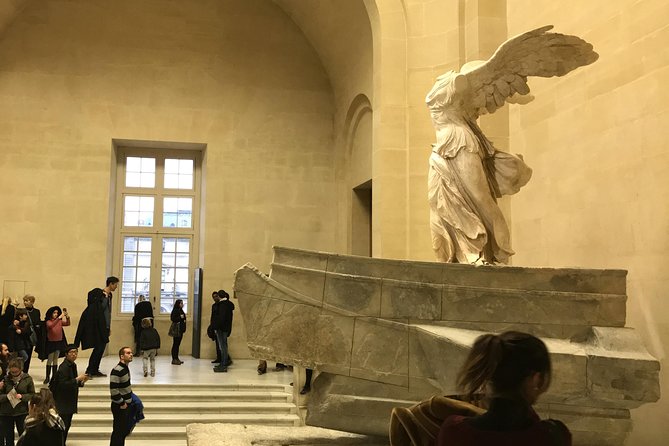
The first major sculpture is the Nike of Samothrace, often called Winged Victory. It represents Victory, the messenger goddess, and stands at the top of a monumental staircase. Even without its head and arms, the figure feels active rather than still.
The flowing cloak appears to press against the body as if caught by wind. The muscular form and forward movement give the statue a sense of arrival. Your guide explains how an artwork more than 2,000 years old can still seem full of energy.
This is a good example of what a guide adds. You can certainly walk past the sculpture and admire its scale. A clear explanation helps you notice the way the stone suggests fabric, motion, and a body advancing into space.
The staircase also sets the tone for the physical side of the tour. You will walk through large galleries and use stairs. If you have foot or mobility problems, tell the guide at the beginning. Guides have helped people find places to sit and have adjusted the pace when someone was recovering from foot surgery, but the activity itself is not wheelchair accessible.
More museums in Paris:
- Paris: Louvre Museum Entry Ticket With Host and River Cruise
★ 4.6 · 9,926 reviews - Les Invalides: Napoleon’s Tomb & Army Museum Entry
★ 4.6 · 9,185 reviews - Louvre Museum – Exclusive Guided Tour (Entry Included)
★ 5.0 · 6,296 reviews - Paris: Louvre Museum Hosted Entry and Mona Lisa Audioguide
★ 4.6 · 5,235 reviews
Venus de Milo and the story behind the missing arms
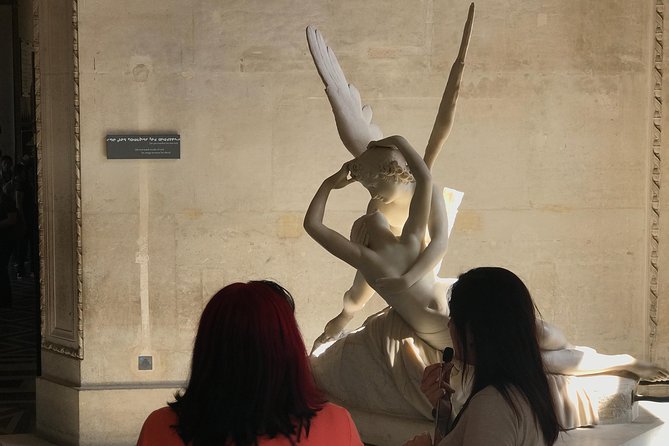
Next comes the Venus de Milo, one of the most famous surviving statues from ancient Greece. The figure’s missing arms are part of the mystery and part of the reason the sculpture has such a strong presence. Rather than presenting the statue as a perfect, untouched object, the guide explains how it was lost and found on the Aegean island of Milos.
That story gives you something to look for beyond the familiar shape of the sculpture. You can study the turn of the body, the drapery, and the balance of the figure while considering how much of its original form has been lost.
For a first Louvre visit, Winged Victory and the Venus de Milo make a strong pair. One is about movement and dramatic setting. The other is about balance, beauty, and the effect of absence. Together, they offer a quick lesson in why ancient sculpture remains central to the museum’s identity.
The Mona Lisa and the reality of the crowd
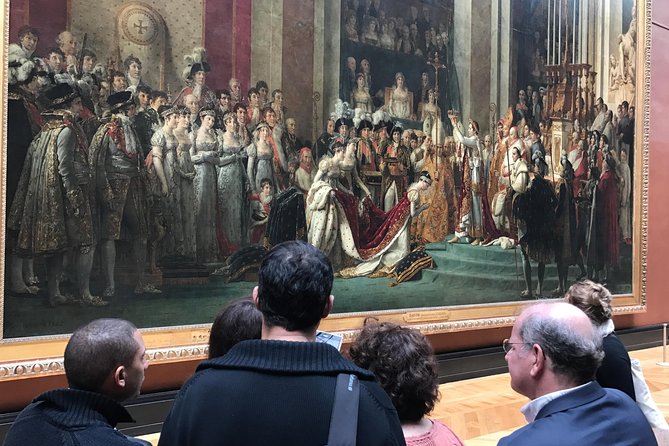
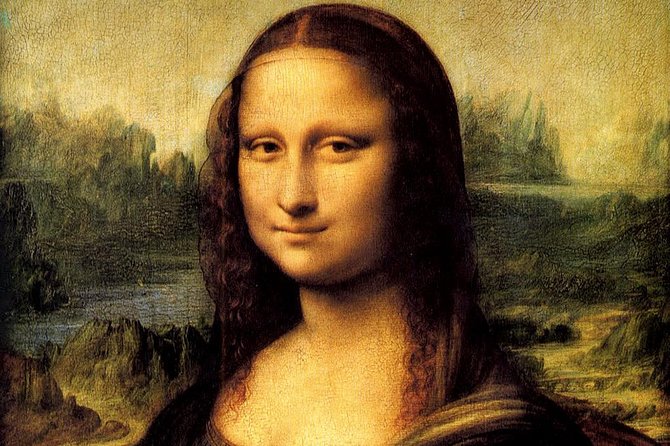
The final headline stop is Leonardo da Vinci’s Mona Lisa. Your guide discusses what is known about the portrait, what remains uncertain, and why this relatively small painting became one of the best-known works in the world.
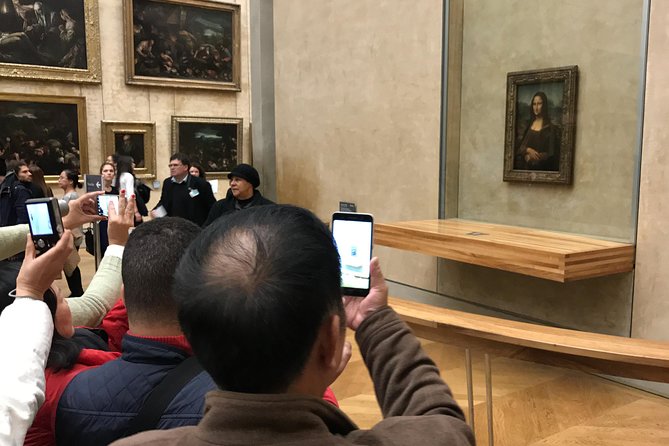
The viewing area is the tour’s biggest practical challenge. Even with early access, the room can be packed. Some people have found it difficult to get near enough for a close look, and the crowd around the painting can feel more like a photo queue than a quiet art encounter.
Your guide can still add value here. By explaining Leonardo, the portrait, and the many questions around the sitter and expression, the guide gives you something to think about while you wait for a viewing position. Guides have also helped groups reach better vantage points when conditions allow.
Keep your expectations realistic. Skip-the-line access helps with entering the museum, but it does not guarantee an empty Mona Lisa room. The museum can be crowded even during early morning visits, and communication is harder when hundreds of people are moving around you. If you want a calm, private moment with the painting, this is not the setting to expect.
Other works along the route
The tour is not limited to three stops. The main promise is an introduction to the Louvre’s masterpieces, and guides lead groups through other major French and Italian paintings and sculptures along the way.
The exact path can vary by guide, crowd levels, and museum conditions. Laura has been praised for using stories to make the art easier to follow, while Julie has included personal favorites and made stops for water and rest. Neils has been singled out for bringing individual works to life and answering questions in detail.
That variation can be a strength. You receive the essential route, but the personality of the guide shapes the experience. One guide may focus on art history. Another may spend more time on palace life, unusual facts, or the best way to continue through the museum after the tour.
It also means you should not expect a fixed checklist of every famous painting. One guide set expectations around three main masterpieces, then added more explanation and helped the group find good viewing spots. That is a fair way to approach a two-hour visit in a museum this large.
Finishing inside the Louvre with time to explore
The tour ends inside the Louvre, which is a useful advantage. You do not have to exit immediately after the guided portion, and you can continue looking around independently.
This extra time is where the tour becomes more than a quick photo stop. A guide can suggest rooms based on your interests. The Egyptian galleries have been singled out as a rewarding place to continue, and Leonardo’s other works are a good choice if the Mona Lisa leaves you curious about the artist rather than satisfied.
You may also want to see more sculpture, French painting, or the palace interiors. Ask before the tour ends. Guides have helped people plan the rest of their route, pointed out escalators, and explained how to reach other sections.
Allow for lower energy after two hours. The Louvre asks a lot of your feet and attention, and some people find that they need a break before continuing. There is no food or drink inside the museum, so plan those needs around your visit.
Price, group size, and what you are paying for
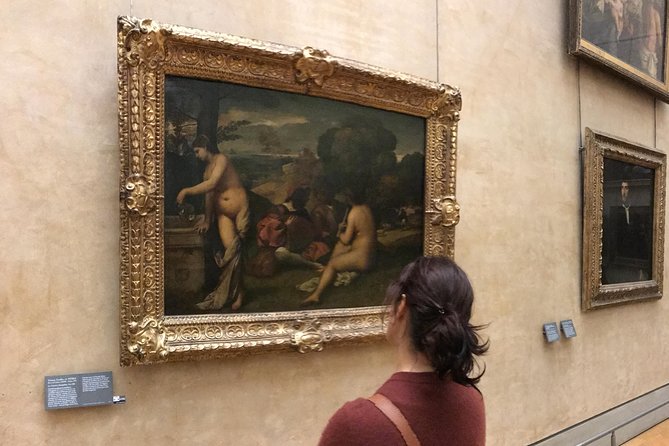
At $121.72 per person, this is not a cheap museum entry. The included €28 admission ticket accounts for part of the cost, but the main value lies in the guide, the small group, and the time saved finding the major works.
I think the price makes the most sense for a first visit, a family with limited museum patience, or anyone who feels overwhelmed by the Louvre’s size. A guide can turn a confusing morning into a clear two-hour route, then help you use the rest of your admission more wisely.
The value is less obvious if you already know the Louvre well or prefer to wander without a plan. You might cover more rooms independently, and you will not be tied to the guide’s chosen highlights. The tour also becomes poor value if you miss it because you arrived late or if a long entrance delay cuts into the guided time.
Families can be a particularly good match. Guides have kept teenagers interested, even when the group included two teens more interested in making TikTok videos than studying paintings. The short length, stories, and famous works create a manageable introduction for children and adults.
The tour is also a good fit for people who want a compact start to the day. After the guided portion, you can stop for a break outside and return to other Paris plans, or keep exploring the museum while the route is fresh in your mind.
How to make the two hours work better
Choose the earliest available time if your schedule allows. Morning conditions are not guaranteed to be quiet, but early visits have been associated with quicker security and somewhat easier movement through the museum.
Wear comfortable shoes. The route includes significant walking and stairs, and the museum is large even when the guide keeps the tour focused. If you have a physical limitation, consider carefully that the activity is not wheelchair accessible and calls for a strong fitness level.
Before the tour begins, think of one or two areas you might want to see afterward. Tell the guide. You may receive better advice about the Egyptian collection, additional Leonardo works, or another section that fits your interests.
Do not build a tight appointment immediately after the tour. Entry problems, crowds, and the museum’s size can affect the schedule. If the tour starts late because of a strike or access issue, you will want some breathing room.
The tour is offered in English and accepts a maximum of six people. It is often booked about 33 days ahead, so planning early is sensible if your Paris dates are fixed. Free cancellation is available until 24 hours before the start time. Changes or cancellations inside that window are not refunded.
Should you book the Louvre Masterpieces Guided Tour?
I would book this tour if you are visiting the Louvre for the first time and want to see the essential works without spending your first hour lost in the corridors. The small group, English guide, included admission, and extra time inside make it a useful orientation rather than just a quick escorted walk.
I would hesitate if your main goal is a quiet look at the Mona Lisa, complete control over the route, or the lowest possible price. The museum can still be crowded, skip-the-line access can be delayed, and two hours only scratches the surface.
For most first-time visitors, especially families and people who want structure, this is a practical choice. Arrive early, wear good shoes, expect crowds, and save extra time afterward for the rooms you want to explore at your own pace.
FAQ
How long does the Louvre Masterpieces Guided Tour last?
The guided visit lasts approximately two hours. Afterward, you can continue exploring the Louvre independently because the tour ends inside the museum.
What works of art will I see?
The main highlights include the Nike of Samothrace, also called Winged Victory, the Venus de Milo, and Leonardo da Vinci’s Mona Lisa. The route also includes other major paintings and sculptures.
Is museum admission included?
Yes. The experience includes a €28 museum entrance ticket and a professional guide.
How large is the tour group?
The activity has a maximum of six people. It may sometimes operate as a private experience if only your own party is booked.
Is the tour offered in English?
Yes. The tour is offered in English.
Is the tour wheelchair accessible?
No. The activity is not wheelchair accessible and requires a strong level of physical fitness. It includes considerable walking and stairs.
Where does the tour begin and end?
You meet at Librairie Delamain, 155 Rue Saint-Honoré, 75001 Paris. The tour ends inside the Louvre in the 1st arrondissement.
What happens if I need to cancel?
You can receive a full refund if you cancel at least 24 hours before the experience starts. Cancellations or changes made less than 24 hours in advance are not refunded, and the activity may be rescheduled or refunded if its minimum group size is not met.
Just listed in Paris
- Chartres Cathedral 5 Hours Tour from Paris with Private Transport★ 4.5 · 49 reviews
- Paris: Giverny & Versailles Small Group or Private Tour★ 4.5 · 49 reviews
- Paris: Louvre photoshoot or Seine bridges Eiffel Tower walk★ 5.0 · 49 reviews
- Private tour of the Champagne area, meet local producers and taste their Champagne, start from your hotel in Paris.★ 5.0 · 50 reviews
- Paris: Choux Pastry and Chocolate Éclair Making Class★ 4.9 · 50 reviews
- Paris Eternelle Notre-Dame Virtual Reality Tour★ 4.5 · 50 reviews
- Normandy D-Day Landing Beaches Private Day Trip from Paris★ 5.0 · 50 reviews
- Disneyland® Paris 1 Day with Round-Trip Train Tickets from Paris★ 4.0 · 50 reviews
Louvre Museum Tours, compared.


Louvre Guided Tour with Reserved Access & Boat Cruise
Read our review →
Louvre Museum Entry Ticket With Host and River Cruise
Read our review →
Mona Lisa & Louvre Masterpieces Tour with Reserved Access
Read our review →
Louvre Museum – Exclusive Guided Tour (Entry Included)
Read our review →
Louvre Museum Hosted Entry and Mona Lisa Audioguide
Read our review →
Louvre Priority Access with Mona Lisa Escort or Guided Option
Read our review →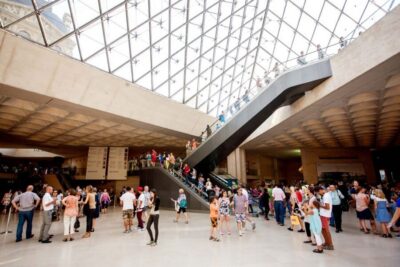
Browse the lists this tour appears in