
Reviewed · LOUVRE MUSEUM TOURS
Louvre Museum: Mona Lisa Without the Crowds Last Entry Tour
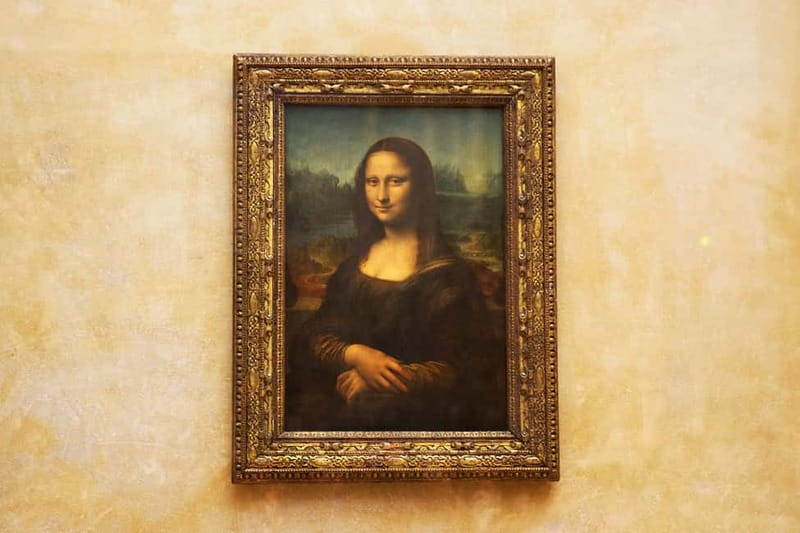
Seeing the Mona Lisa without a wall of people between you and the painting is the main draw here. This three-hour closing-time tour takes you through major Louvre highlights first, then saves Leonardo’s small, famous portrait for the final half hour, when the museum is quieter.
I like the small groups of up to 15 and the guide-led route through a museum that can otherwise feel like an indoor city. I also like the late timing: you get a focused introduction to the Louvre without spending your best morning hours in a crowd. The drawback is that this is a brisk walking tour, not a slow visit to every room, and the museum can still be busy even near closing.
Key points to know before you book
- The Mona Lisa comes last: You spend about 30 minutes in the Mona Lisa room after touring the Louvre’s main highlights.
- The route covers famous works fast: Expect Venus de Milo, Winged Victory, Michelangelo’s Slaves, Liberty Leading the People, The Raft of Medusa, and more.
- Late entry helps with crowds: The final-entry timing can make the Mona Lisa experience calmer, though it does not guarantee an empty room.
- Guides shape the experience: Guides such as Hugo, Laurence, Violette, Antoine, Claire, Adam, and Abby have led this experience, but your assigned guide will vary.
- You need good walking stamina: Strollers, wheelchairs, large luggage, and oversize bags are not allowed, and the route is not suitable for people with mobility impairments.
- The meeting point needs care: Meet at the winged statue beside the Arc de Triomphe du Carrousel, not at the Arc de Triomphe de l’Étoile.
Why the last Louvre entry matters
The Louvre is enormous, and the Mona Lisa is its most famous traffic jam. At the busiest times, you may spend more energy managing the crowd than looking at Leonardo’s painting. A late visit does not turn the room into a private gallery, but it can give you more breathing room and a better chance to study the portrait.
The timing is especially useful if you have only one visit to Paris and want a guided introduction without giving up an entire day. The tour lasts three hours, with roughly two and a half hours in the main museum route and about 30 minutes devoted to the Mona Lisa.
The exact start time changes, so you need to check availability for your date. That matters because this experience is built around the museum’s final admission period. Arriving too late is not a small mistake here.
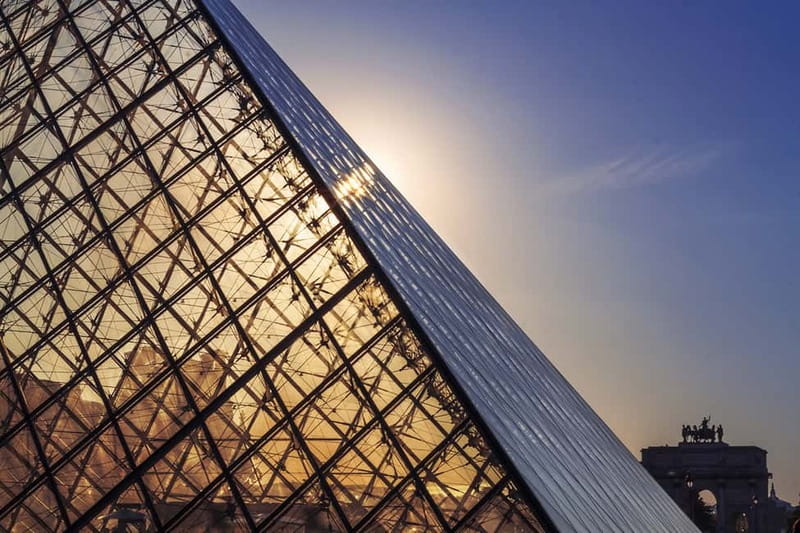
You should arrive 15 minutes early. The guide carries a green Walks sign and meets you beside the statue next to the Arc de Triomphe du Carrousel. When you face the arch, use the winged statue on the left. This is in front of the Louvre, opposite the pyramid at the entrance to the Tuileries Gardens.
Do not go to the Arc de Triomphe at the top of the Champs-Élysées. Paris has more than one famous arch, and this is an easy place to start on the wrong side of town.
A few other Paris half-days to compare
- Paris: Louvre Museum Timed-Entrance Ticket
★ 4.6 · 71,977 reviews - Paris: Louvre Guided Tour with Reserved Access & Boat Cruise
★ 4.3 · 16,353 reviews - Louvre Museum Masterpieces Guided Tour with Access
★ 4.5 · 12,023 reviews
From the Carrousel arch into the Louvre
The tour begins outside, at a point that helps connect the modern museum with its older setting. From the Carrousel arch, your guide brings you toward the Louvre and enters with skip-the-line admission.
Skip-the-line entry is valuable here because the Louvre’s normal entry process can eat into a short evening. It does not mean you skip every security check, and you should still expect museum controls. One guide explained the route through several security points, so pack lightly and allow time for the process.
Once inside, the guide helps you get oriented. That is one of the best reasons to choose a tour rather than simply buying admission and wandering in. The Louvre is a former palace turned museum, with corridors, wings, grand staircases, and galleries that can quickly blur together.
A guide also gives you a sensible order. Instead of chasing isolated famous names on a map, you move through a connected selection of works and hear how art, French history, palace life, and European culture fit together.
Headsets are included. They matter when the museum is noisy or when your group is spread around a painting. You can stay with the guide’s explanation without needing to stand shoulder to shoulder.
Greek sculpture and the Louvre’s oldest foundations
One early section reveals the Louvre’s foundations at the moat. This is a useful stop because the building is not just a container for art. Its earlier defensive role helps explain why the museum feels more like a palace complex than a straightforward gallery.
You then move among Classical Greek sculptures, including the Venus de Milo and the Winged Victory of Samothrace. These are not quick filler stops. They show two very different kinds of power: Venus is famous for her calm, enigmatic presence, while Winged Victory is all movement and drama.
The route makes sense for a first visit because these works are so recognizable, yet they can be hard to find on your own. A guide can point out what to watch for in the sculpture, explain why each work matters, and keep the group moving before the schedule slips.
Expect people around the major sculptures. The late hour can reduce pressure, but these are permanent favorites. You will not have the galleries to yourself.
Cupid, Psyche, and Michelangelo’s Slaves
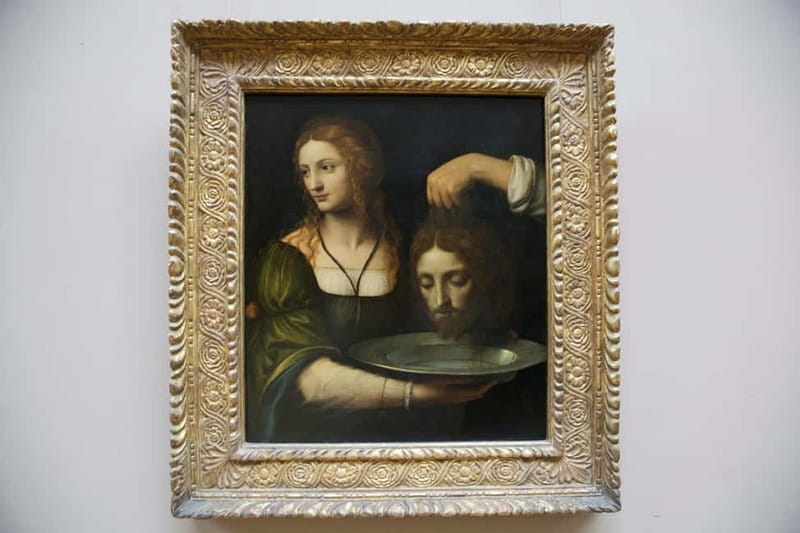
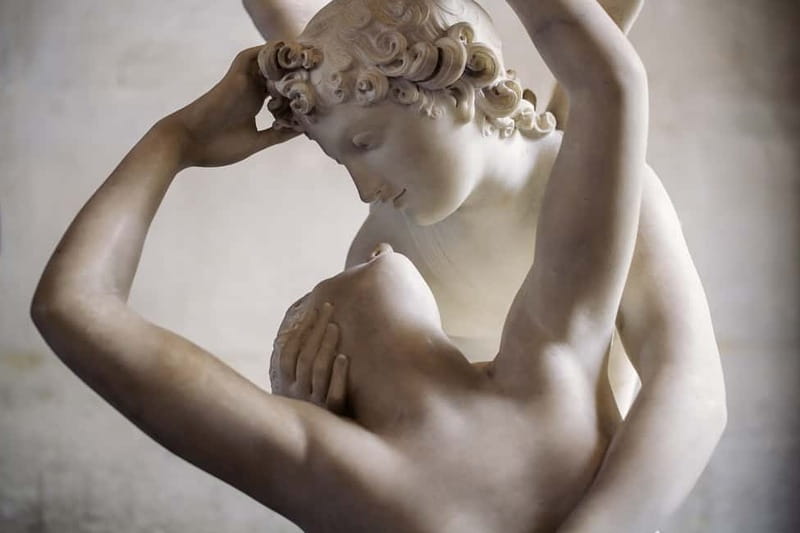
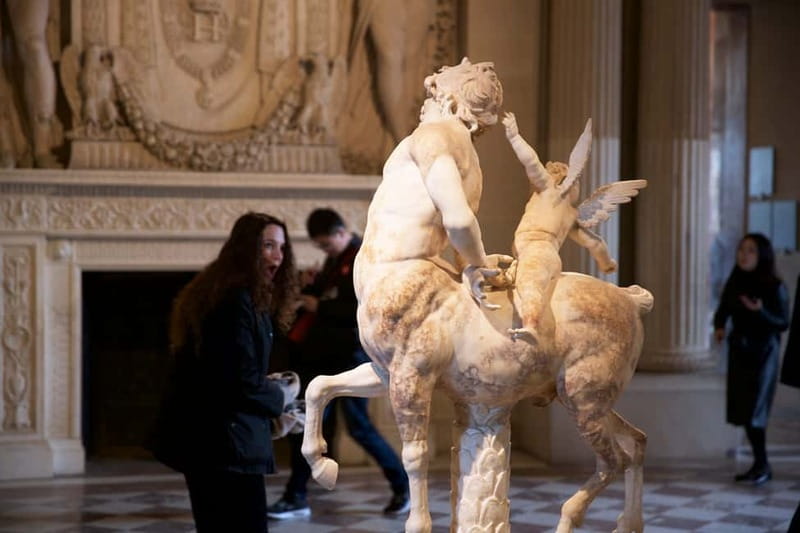
The tour continues to works that reward close attention to the human body and emotion. Cupid and Psyche is a good example of sculpture designed to be seen from several angles. As you walk around it, the figures’ embrace and the polished marble create a sense of movement that a quick photograph cannot capture.
Michelangelo’s Slaves offer a different experience. The unfinished quality is part of their force, with figures appearing to struggle out of the stone. Your guide can help you look past the famous name and notice how the incomplete surfaces shape your response.
This is where an art historian adds real value. You are not only told who made the work. You are encouraged to think about technique, social setting, artistic influence, and the way later viewers interpreted the piece.
The best guides on this tour use stories rather than lectures. Hugo has been praised for mixing art knowledge with humor and even occasional music clips. Violette has been described as lively and animated, while Adam has a high-energy approach that connects the art with Paris and wider history.
The guide assignment is not guaranteed, but the experience depends heavily on this person’s skill. A strong guide makes the three hours feel purposeful. A less engaging one would leave you wishing for more time on your own.
More museums in Paris:
- Paris: Louvre Museum Entry Ticket With Host and River Cruise
★ 4.6 · 9,926 reviews - Les Invalides: Napoleon’s Tomb & Army Museum Entry
★ 4.6 · 9,185 reviews - Louvre Museum – Exclusive Guided Tour (Entry Included)
★ 5.0 · 6,296 reviews - Paris: Louvre Museum Hosted Entry and Mona Lisa Audioguide
★ 4.6 · 5,235 reviews
French history through Delacroix and Géricault
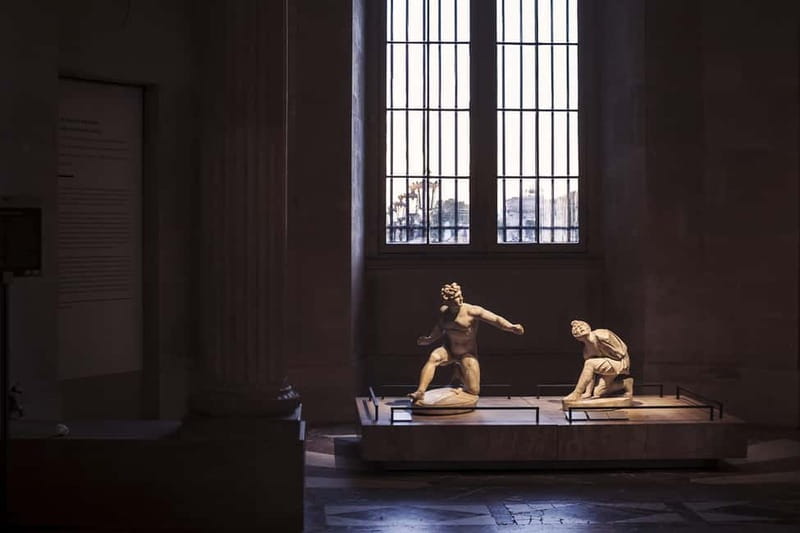
The Louvre’s French paintings provide some of the tour’s strongest historical connections. Eugène Delacroix’s Liberty Leading the People is more than a large, dramatic canvas. It carries the force of revolution, political symbolism, and national identity.
The painting is packed with visual signals, from the central figure of Liberty to the people following her through the smoke. This is the sort of work that benefits from a guide who can explain the political moment and the choices Delacroix made without turning the stop into a school lesson.
You also see Théodore Géricault’s The Raft of Medusa, a Romantic painting filled with desperation, physical strain, and theatrical light. Its scale can overwhelm you at first. A good explanation helps you notice how the figures lead your eye toward the distant ship and the fragile hope at the edge of the scene.
This part of the visit gives the tour more balance. You are not simply ticking off Italian masters and celebrity objects. You are also looking at how art responded to conflict, public events, and changing ideas about power.
Leonardo, Raphael, Caravaggio, and the Italian galleries
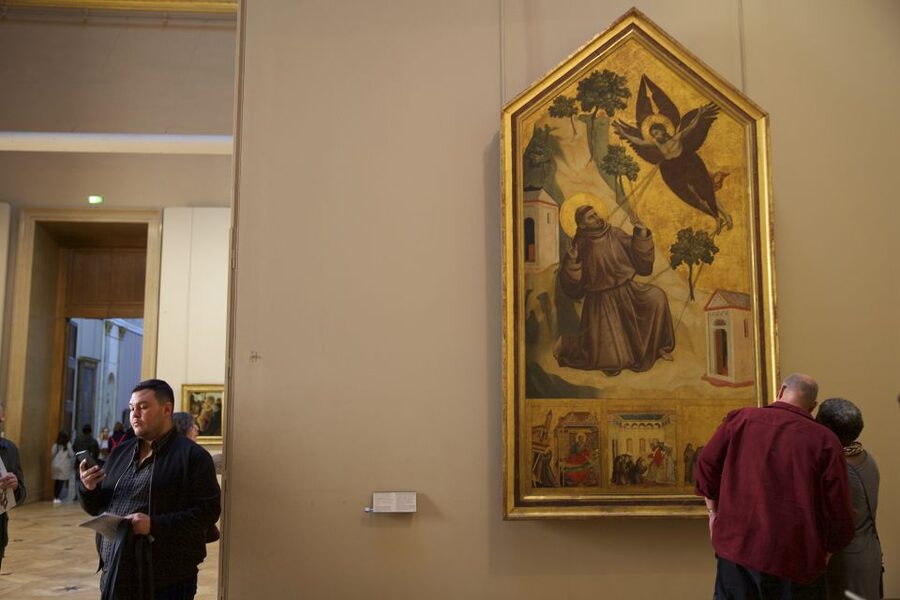
The Italian paintings form another major part of the route. You can expect stops connected with Leonardo da Vinci, Raphael, and Caravaggio, with the guide explaining both the works and the period around them.
Leonardo’s presence naturally prepares you for the Mona Lisa, but it is useful to see his work in a wider setting first. The point is not only that he painted the world’s most famous portrait. His careful handling of expression, composition, and human observation shaped the way many people think about Renaissance art.
Raphael offers another view of the period, with his refined compositions and clear control of figures. Caravaggio brings a sharper contrast through strong light, dark shadows, and emotionally direct scenes.
The exact works discussed can depend on the route and gallery conditions. Museum rooms sometimes close, and the guide may need to adjust the plan. That flexibility is worth expecting. You receive a thoughtful selection, not a fixed guarantee that every listed room will be open on your date.
The tour moves at a moderate pace. You will stop for explanations, but you will not spend 20 minutes at each painting. If one particular work matters most to you, tell the guide early and ask if there is time to return to it.
Crown Jewels and the palace atmosphere
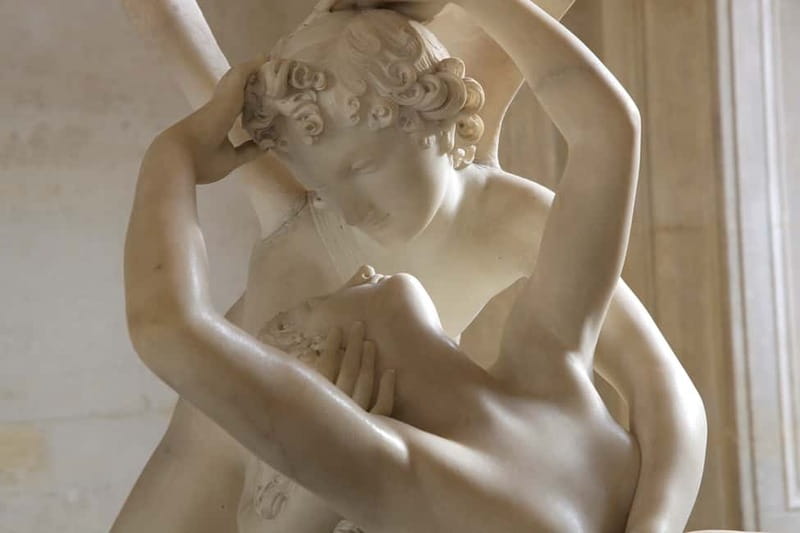
The route includes a room sparkling with Crown Jewels. This changes the mood again, moving from painted stories and marble bodies to royal display.
The jewels help you picture the Louvre as a palace connected with monarchy and ceremony. They also give the tour visual variety after several galleries of paintings and sculpture. Even if royal objects are not your main reason for coming, this stop explains why the museum feels tied to French power as much as to art.
Some visitors particularly enjoy seeing rooms such as the newly opened Financial Minister’s Apartments, when they are accessible. Since museum access can change, do not treat any particular room beyond the main route as guaranteed.
The Mona Lisa at closing time
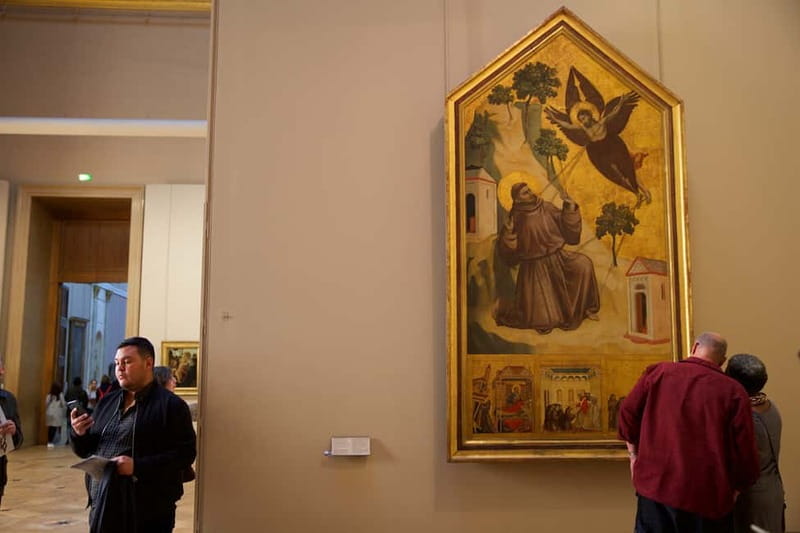
The final destination is the Mona Lisa room. This is the tour’s payoff, and the late timing gives it a different feel from a midday visit.
The painting is smaller than many first-time visitors expect. Its fame comes partly from the direct gaze and ambiguous expression, but the experience also includes the room, the barriers, the other people, and the strange energy created by a painting everyone has come to see.
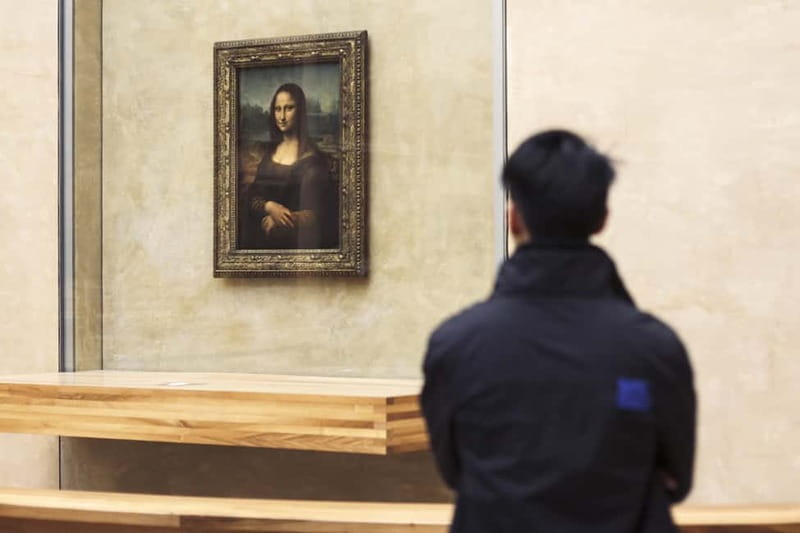
Your guide brings the group close enough to view the work, then gives you time to take it in. The advertised goal is an unobstructed view without the usual crowd pressing around you. In practice, the room can still have other visitors, and no tour can promise complete solitude. The advantage is that the final-entry window may let you stand back, look carefully, and take a photo without the worst daytime crush.
Do not rush this last stop. Look at the face, the hands, the landscape behind her, and the way the expression changes depending on where you stand. You might decide the painting’s small size is part of its power, since the room makes you approach it with unusual focus.
The visit ends back at the Louvre meeting point. The group does not include hotel pickup or drop-off, so you arrange your own way onward after the museum closes.
What the $97 price really buys
At $97 per person, this is not the cheapest way to enter the Louvre. You are paying for skip-the-line access, an English-speaking art historian, headsets, and a planned route through a difficult museum.
The value is strongest if you are visiting the Louvre for the first time, have limited time, or feel uneasy about finding the famous works on your own. A guide can prevent wasted minutes, provide context, and keep the group on schedule for the Mona Lisa.
The price is less attractive if you already know the Louvre well or want to spend the whole evening with one painting or one department. You also give up freedom to wander. This is a highlights tour, not an open-ended museum session.
Small-group size helps justify the cost. With a maximum of 15 people, you have a better chance of hearing the guide and asking questions than on a large coach-style visit. Still, the group must move together through busy galleries, so this is not a private tour.
Practical limits and who should book
Wear comfortable shoes. Three hours of walking through a huge museum is tiring, and the pace is steady.
Bring a passport or ID card. Do not bring luggage, oversize bags, or a baby stroller. The experience is not suitable for wheelchair users, people with mobility impairments, or strollers, and you should be able to walk at a moderate pace without difficulty.
The tour is in English only. That makes it a good choice if you want art history explained in clear spoken English, but not if you need another language.
I would recommend it to:
- First-time Louvre visitors who want the major works without getting lost
- People with a tight Paris schedule
- Families with teenagers who benefit from stories and clear movement through the museum
- Art lovers who want context rather than a simple audio guide
- Anyone who cares more about a calmer Mona Lisa visit than a full day inside the Louvre
I would choose another format if you need step-free access, want to browse slowly, dislike group schedules, or hope to cover every department.
Should you book the Louvre last-entry tour?
Book this tour if the Mona Lisa is high on your Paris list and you want help making sense of the Louvre’s enormous collection. The late timing, skip-the-line entry, headsets, and small group work well together, while guides such as Claire, Laurence, Violette, Hugo, and Adam have shown how much a lively art historian can add.
Go in with sensible expectations. You will see famous highlights, not the entire museum. The Mona Lisa may still have a crowd, rooms may change, and the walking is real. But for $97, you get a focused introduction, a clear route, and a better shot at enjoying Leonardo’s portrait without spending your whole visit in a queue.
FAQ
How long does the Louvre Mona Lisa last-entry tour last?
The tour lasts three hours. About two and a half hours are spent touring the Louvre, followed by roughly 30 minutes in the Mona Lisa room.
What time does the tour start?
Starting times vary by date. Check availability when booking because the experience is designed around the Louvre’s final entry period.
Where does the tour meet?
It meets at the statue beside the Arc de Triomphe du Carrousel in front of the Louvre, opposite the pyramid at the entrance to the Tuileries Gardens. Face the arch and meet at the winged statue on the left.
Is this the Arc de Triomphe on the Champs-Élysées?
No. The meeting point is at the Arc de Triomphe du Carrousel beside the Louvre, not the Arc de Triomphe de l’Étoile on the Champs-Élysées.
Is skip-the-line Louvre entry included?
Yes. Skip-the-line entry to the Louvre is included, along with a local guide and headsets.
Is the tour conducted in English?
Yes. The live tour guide and tour commentary are in English.
Can I bring a stroller or large bag?
No. Baby strollers, luggage, large bags, and oversize luggage are not allowed on this experience.
Is the tour accessible for wheelchair users?
No. The tour is not suitable for wheelchair users or people with mobility impairments. You should be able to walk at a moderate pace without difficulty.
Just listed in Paris
- Paris: Giverny & Versailles Small Group or Private Tour★ 4.5 · 49 reviews
- Chartres Cathedral 5 Hours Tour from Paris with Private Transport★ 4.5 · 49 reviews
- Paris: Louvre photoshoot or Seine bridges Eiffel Tower walk★ 5.0 · 49 reviews
- Private tour of the Champagne area, meet local producers and taste their Champagne, start from your hotel in Paris.★ 5.0 · 50 reviews
- Paris: Choux Pastry and Chocolate Éclair Making Class★ 4.9 · 50 reviews
- Paris Eternelle Notre-Dame Virtual Reality Tour★ 4.5 · 50 reviews
- Normandy D-Day Landing Beaches Private Day Trip from Paris★ 5.0 · 50 reviews
- Disneyland® Paris 1 Day with Round-Trip Train Tickets from Paris★ 4.0 · 50 reviews
Louvre Museum Tours, compared.


Louvre Guided Tour with Reserved Access & Boat Cruise
Read our review →
Louvre Museum Entry Ticket With Host and River Cruise
Read our review →
Mona Lisa & Louvre Masterpieces Tour with Reserved Access
Read our review →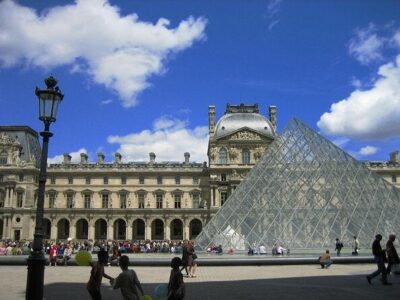
Louvre Museum – Exclusive Guided Tour (Entry Included)
Read our review →
Louvre Museum Hosted Entry and Mona Lisa Audioguide
Read our review →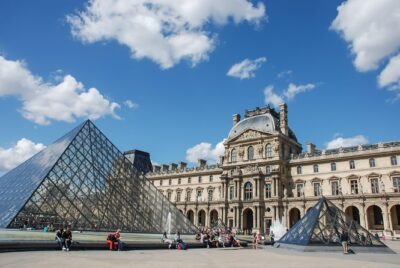
Louvre Priority Access with Mona Lisa Escort or Guided Option
Read our review →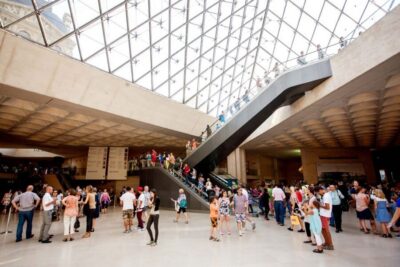
Browse the lists this tour appears in