
Reviewed · LYON TOURS
Lyon: Private Walking Tour of “Traboules” in the Old Town
Lyon’s traboules are not grand monuments you spot from a riverboat. They are quiet passageways behind ordinary doors, linking streets, courtyards, stairways, and old buildings in Vieux Lyon. With the right guide, you begin to see how these corridors shaped work, religion, politics, and daily life.
I like this tour for two clear reasons: Yannick’s storytelling gives the walk a human face, and the small group, capped at 10 people, leaves room for questions. You also visit lesser-known traboules that are easy to miss if you explore alone.
The main drawback is physical. The route includes stairs and uneven passageways, and it is not suitable for wheelchair users or people with mobility impairments. Strollers can also be awkward. In cold weather, the 2.5-hour walk may feel long, so dress for the day and wear solid shoes.
Key points at a glance
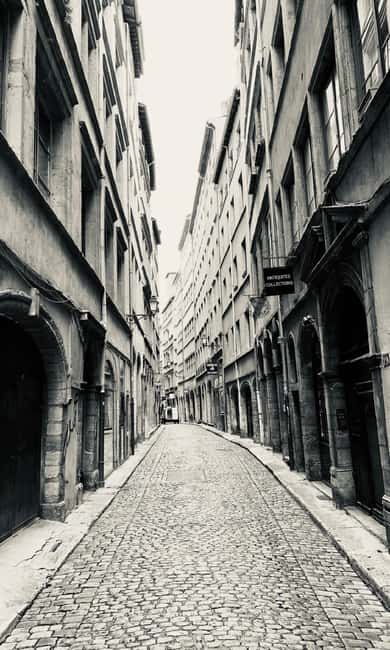
- Secret routes in Vieux Lyon: Enter some of the roughly 50 traboules still open to the public.
- A local guide with 25 years in the neighborhood: Yannick brings personal familiarity and strong knowledge of Lyon’s past.
- More than an architecture walk: The tour connects the passageways with silk workers, church power, commerce, and the French Resistance.
- Small groups up to 10 people: You can hear the guide clearly and ask questions without shouting across a crowd.
- A lively 150-minute route: Expect history, architecture, jokes, and local advice about traditional Lyon dining.
- Plan for stairs: Comfortable shoes are essential, and the walk is not accessible for wheelchairs.
Why Lyon’s traboules are worth your time
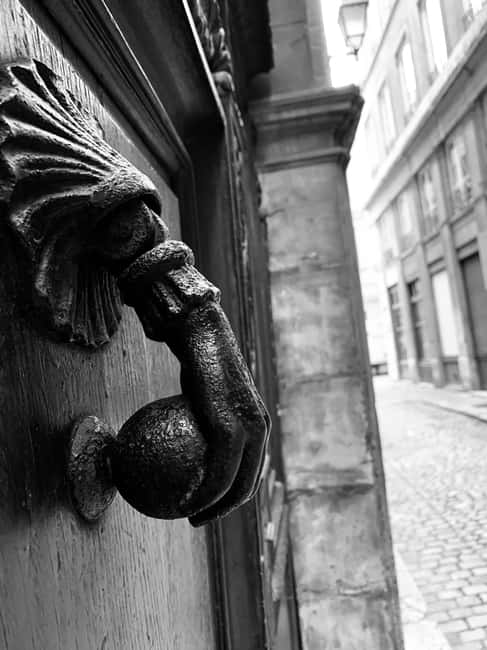
A traboule is a passage through or between buildings. In Vieux Lyon, these routes often lead from a street into a courtyard and out onto another street. Some have vaulted ceilings, some contain staircases, and others are so discreet that you might walk past the entrance without noticing it.
The appeal is not simply the thrill of finding a door that opens. These corridors explain how Lyon worked. The district grew as a place of trade, worship, residence, and craft. The buildings were not isolated facades. Their courtyards and passageways formed a practical network that helped people move through a dense part of the city.
That makes a guided walk more useful than a list of addresses. You can see a staircase, an arch, or a courtyard and then move on. Yannick gives those features a purpose. He explains how architecture reflected social rank, how buildings served workers and merchants, and how the city’s spaces changed over several centuries.
I particularly like that the walk treats the traboules as part of a larger Lyon story. The route is not a collection of pretty doorways. It reaches into silk production, religion, politics, commerce, and the Second World War. You leave with a better sense of why these corridors mattered, not just where they are.
More Walking Tours in Lyon
- Vieux Lyon Cultural & Historical Walking Guided Tour (English)
★ 5.0 · 942 reviews - Lyon: City Highlights Walking Tour
★ 4.9 · 847 reviews - Lyon Highlights & Secrets Walking Guided Tour (small group) including Funicular
★ 5.0 · 831 reviews
Meeting the guide in cathedral square
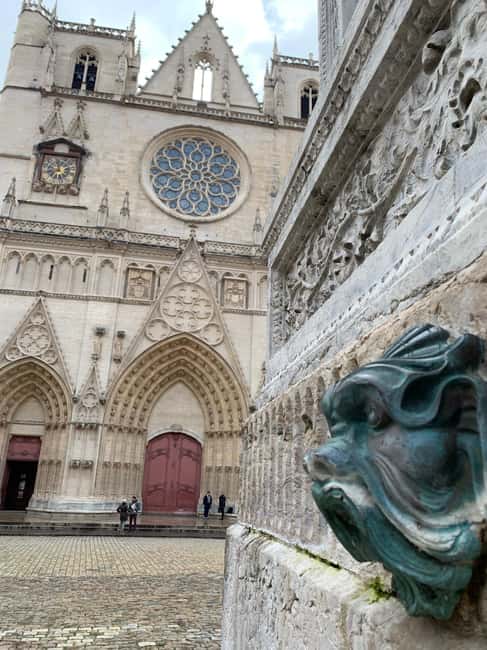
The meeting point is in front of the old fountain in the middle of the cathedral square. That makes the start fairly easy to locate, but give yourself enough time to reach the square without rushing. The tour begins on foot, so there is no transport to arrange once you meet the guide.
Yannick has lived in the Vieux Lyon neighborhood for more than 25 years. That long connection matters because he does not present the district as a museum frozen in the past. He talks about the people who still live around the passageways and the need to move through them quietly.
The request not to make noise is practical, not fussy. Many traboules pass through residential buildings. You are entering shared spaces, not abandoned tunnels designed for sightseeing. Keep voices low, listen when the guide asks the group to pause, and avoid treating private doorways like photo props.
The tour is offered in English or French. Since the group is small, you should have a better chance of following the explanation and asking for clarification than you would on a large city walk. The format is described as a private walking tour, with groups limited to 10 participants, so check the exact booking arrangement if you specifically want an exclusive tour for only your own party.
The first courtyards and Renaissance streets
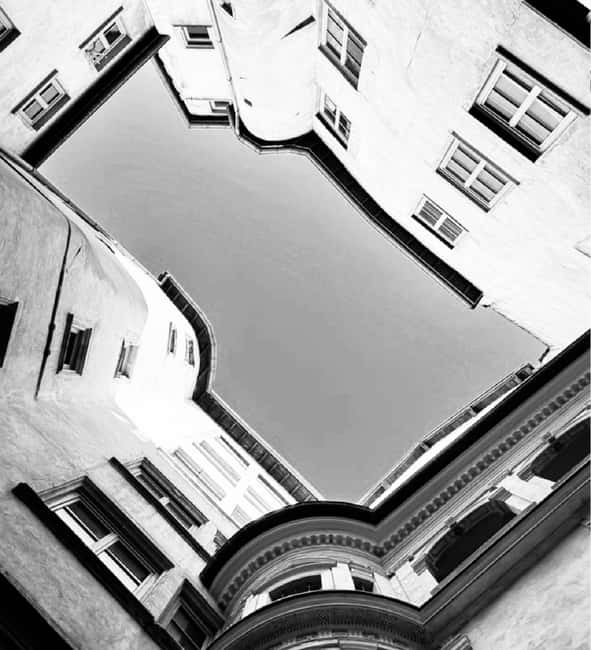
The route takes you through Vieux Lyon, the largest Renaissance district in Lyon. That setting gives the walk plenty of visual variety before you even enter a passageway. You move through old streets, building fronts, courtyards, vaulted sections, and stairways while the guide explains how the neighborhood developed.
The architecture is best understood in small details. A courtyard can reveal how several buildings shared access and light. A staircase can hint at how people moved between floors. A passage can show how the city connected one street to another without cutting a new road through the district.
You should not expect every stop to be a dramatic reveal. Some traboules are narrow or plain. Their value often comes from the explanation around them. Yannick points out details that would be easy to overlook and connects them to the people who used the buildings.
This is where the walk’s pacing earns its keep. You are not simply stopping for a fact, taking a picture, and marching on. The guide builds a story about the district, then uses the next courtyard or corridor to add another piece. Several people describe the storytelling as funny and engaging, which is useful on a tour with a lot of dates, names, and political change.
Following the silk trade through Vieux Lyon
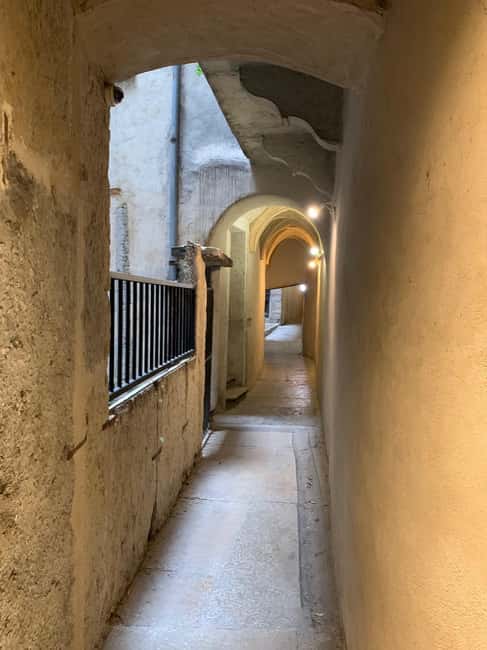
Lyon’s silk trade is one of the central threads of the walk. The traboules make more sense when you consider the needs of workers, merchants, and businesses in a dense urban quarter.
The tour explains Lyon as a city of silk workers and shows how the built environment supported that world. You learn about ordinary workers as well as people with money and influence. This social focus is valuable because it moves beyond royal names and famous buildings. You get a sense of how work and class affected where people lived and how they used the neighborhood.
Architecture also becomes a record of social status. A doorway, courtyard, or stairway was not just a practical feature. It could express who owned a building, who was expected to use a particular entrance, and how different levels of society shared or separated space.
Yannick is especially effective when he turns these subjects into stories. His humor keeps the material from becoming dry, while his explanations connect old events to modern life. That balance is a major reason the 150 minutes can pass quickly for people who enjoy history.
If you prefer a quick photo walk with little commentary, this may feel information-heavy. The tour is built around context. You will hear a lot about the city’s political, religious, and commercial past, so come ready to listen rather than simply collect doorways.
Same city, a completely different afternoon:
- Lyon City Hop-on Hop-off Sightseeing Bus Tour
★ 4.0 · 1,614 reviews - Lyon: Musée de l’illusion Entrance Ticket
★ 3.9 · 1,023 reviews - Highlights and Hidden Gems of Lyon Guided Walking Tour (English)
★ 5.0 · 750 reviews - Food Tour in Lyon – A Full Taste of France by Do Eat Better
★ 5.0 · 603 reviews
Church power, politics, and the Medici connection
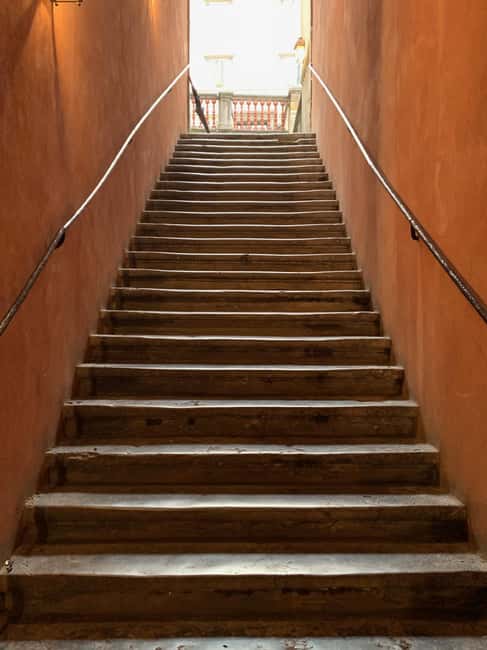
The walk also examines the rivalry between religious and civic power in Lyon. The bishop and the governor had competing influence, and the city’s development was shaped by that tension. You do not need a specialist’s background to follow the story. The guide lays out the conflict while showing you the physical setting where Lyon’s power structures operated.
The route brings in the Medici family as part of Lyon’s wider European connections. This is a useful reminder that the city was not cut off from the rest of France or from international trade. Money, politics, religion, and commerce crossed through Lyon, just as people crossed through its corridors.
These sections are strongest when you pay attention to the links between events and buildings. The traboules are not the only subject. They become a way to understand who controlled space, who made money, and how status showed itself in stone.
I would not choose this tour if you want a narrow architectural survey with technical detail only. It is broader and more human than that. You may hear about battles, church authority, commerce, and class in the same walk. For most visitors, that wider frame is a strength, but it does require concentration.
The wartime side of the passageways
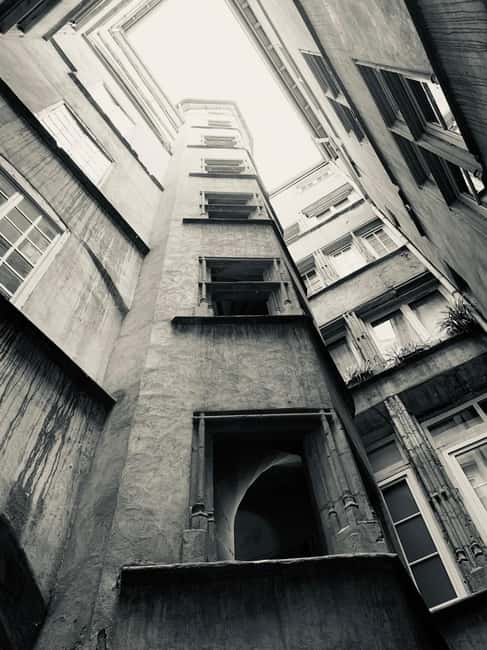
The traboules also carry a more recent and darker role. During the Second World War, the maze of corridors helped support French Resistance meetings. The passageways offered routes and places that were harder for outsiders to understand, especially when you knew the neighborhood well.
The tour uses this part of Lyon’s past to show that the traboules were not only medieval or Renaissance curiosities. Their practical value continued into the modern era. A corridor designed for movement between streets could take on a different purpose during danger.
This section adds weight to the walk. You begin with courtyards and architecture, then realize that the same urban design affected real decisions in wartime. I appreciate that the tour does not present the passageways as a gimmick. It shows how ordinary city spaces can become important when circumstances change.
The guide also discusses the people who lived and worked in the area. That attention to daily life helps balance the larger political stories. Lyon’s past comes through as complicated, with power, religion, commerce, class, and survival all sharing the same streets.
The lesser-known traboules are the real prize
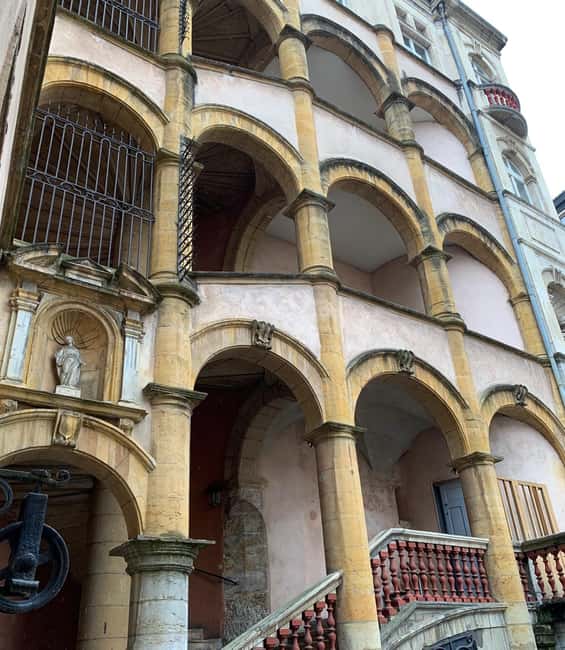
Many visitors can find famous points in Vieux Lyon on their own. The stronger reason to book this walk is access to less obvious passageways and the ability to understand what you are seeing.
The group enters traboules that you might not identify from the street. Some are tucked into active residential areas, so the guide’s local awareness is important. You learn where to look, how to recognize entrances, and why some routes remain open while others are not available for casual access.
Do not expect a theatrical attraction with lights, displays, or staff at every door. These are working parts of an old neighborhood. A passage may be dim, quiet, or modest. That plainness is part of the experience. You are seeing a piece of Lyon that still functions as part of the city.
The best approach is to let the guide set the pace. Stop when asked, keep noise down, and avoid blocking an entrance. You will get more from the walk if you treat the traboules as living spaces rather than a scavenger hunt.
What the 10-person limit changes
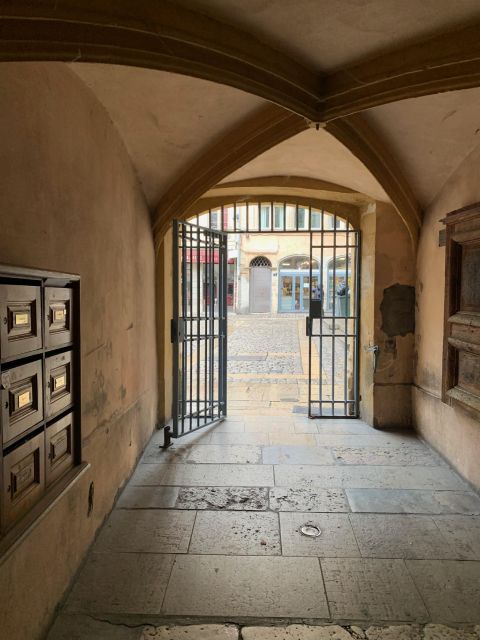
A group of up to 10 is a good fit for this type of route. Passageways and courtyards can feel cramped when a large crowd gathers inside them. With fewer people, you can stay close to the guide and hear the explanation without competing with another group.
The size also makes questions easier. If you want to ask about a building detail, a local custom, or the difference between a public and less accessible corridor, there is a realistic chance to do so.
The small format does not mean the walk will be private in every practical sense. Vieux Lyon is a popular district, and you may encounter other groups on the streets. Still, the limit of 10 keeps your own group manageable and helps the tour feel more personal.
Timing can matter too. One July group began early enough to avoid some very large groups arriving from cruise boats. Starting times vary, so check availability and consider choosing an earlier slot if you prefer quieter streets.
Price, pace, and overall value
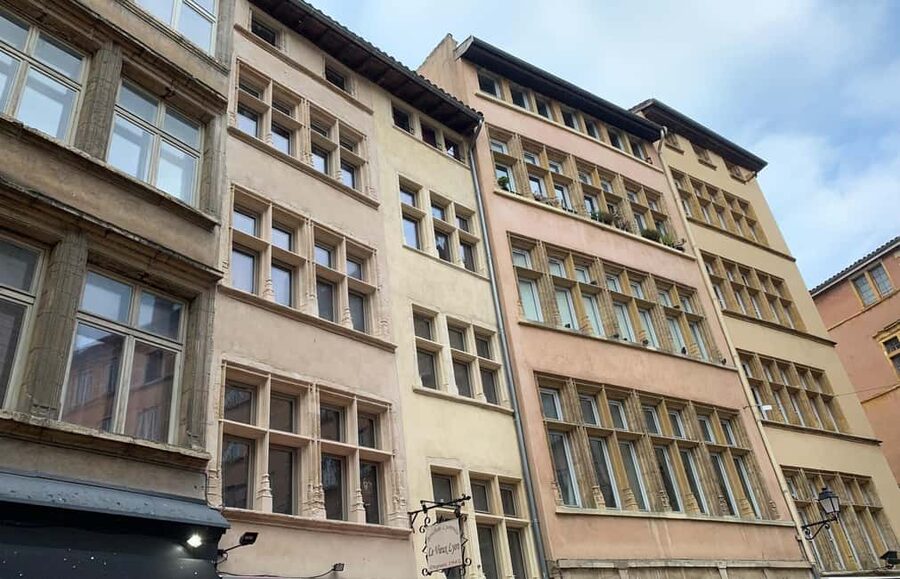
At $43 per person, the tour sits in a reasonable range for a 150-minute guided walk. You are paying for a local guide, a small group, and access to places that are difficult to interpret on your own. The value is strongest if you enjoy history and want more than a quick look at Vieux Lyon’s facades.
A self-guided walk costs less, of course. You could wander the district freely and enter some public traboules. But you would miss the connections between the silk trade, social class, religious authority, wartime activity, and architecture. You might also pass several entrances without knowing they were there.
The price is less compelling if you plan to spend only a short time in Lyon or dislike long explanations. At two and a half hours, this is a substantial commitment. In cold weather, the duration may feel longer, especially because you spend much of the time outdoors or in unheated passageways.
The booking terms add flexibility. You can cancel up to 24 hours before the tour for a full refund, and you can reserve now and pay later. Those policies are useful if your Lyon schedule depends on weather or a changing rail itinerary.
Who should book this walk
I would recommend it most strongly to:
- First-time visitors to Lyon: The tour gives you a framework for understanding Vieux Lyon before you explore alone.
- History and architecture fans: You get political, religious, commercial, and social context alongside the buildings.
- Curious families with older children: Several families found the storytelling accessible to children and teenagers, though the stairways still require care.
- Visitors who prefer small groups: Ten people is the maximum, and the format encourages questions.
- People interested in local food and customs: Yannick has also offered practical advice about traditional bouchons and how to avoid tourist traps.
I would hesitate if you use a wheelchair, have a mobility impairment, or need a stroller-friendly route. Stairs and stairways make the traboules difficult to manage. Comfortable shoes are not optional, and anyone with a mobility concern should choose another way to see Vieux Lyon.
Practical tips for a better 150 minutes
Wear shoes with good grip. You will be walking for 150 minutes and moving through stairs, corridors, and old surfaces.
Arrive at the cathedral square with a little time to spare. The meeting point is the old fountain in the middle of the square, not a transport terminal or separate visitor center.
Bring questions. The small group makes this a good setting to ask about architecture, local life, silk production, politics, or the Resistance.
Keep your voice low inside residential traboules. Respect for residents is part of seeing these places properly.
Consider taking the tour early in your Lyon stay. Once you understand the signs, entrances, and building details, your later walks through Vieux Lyon should become more rewarding.
Do not plan a tight appointment immediately afterward. The walk lasts 2.5 hours, and the route may take longer in practice if the group stops for questions or moves carefully through stairs.
Should you book the Lyon traboules tour?
Book it if you want Lyon’s Old Town explained by someone who cares about the place, not just displayed as a series of old buildings. Yannick’s mix of humor, local familiarity, and historical detail is the heart of the experience. The strongest moments come when an ordinary corridor turns into a clue about silk workers, church power, wartime meetings, or the way status shaped a home.
Skip it if you want a short, flat, fully accessible walk. For everyone else, the $43 price is fair, the 10-person limit is useful, and the lesser-known passageways give you a side of Vieux Lyon you are unlikely to find by wandering without guidance.
FAQ
Where does the tour meet?
Meet the guide in front of the old fountain in the middle of the cathedral square.
How long does the walking tour last?
The tour lasts 150 minutes, or about two and a half hours.
How much does the tour cost?
The listed price is $43 per person.
What languages are available?
The live tour guide is available in English and French.
How large is the group?
The tour is limited to 10 participants.
Is the tour suitable for wheelchair users?
No. The tour is not suitable for wheelchair users or people with mobility impairments because the traboules include stairs and stairways.
Can I bring a stroller?
Strollers can be hard to manage inside the traboules because of the stairs and stairways.
What should I bring?
Bring comfortable shoes. You should also keep noise low while passing through the residential traboules.
Just listed in Lyon
- Gourmet Vegan Private Tour of Lyon 3 hours★ 5.0 · 52 reviews
- Beaujolais & Perouges Medieval Town (9:00 am to 5:15 pm – Small Group Tour Lyon★ 5.0 · 53 reviews
- Lyon Old Town Food & Wine Tasting Tour including a Bouchon Lyonnais★ 4.0 · 59 reviews
- Storytelling tour of the Vieux-Lyon for children in French★ 4.8 · 60 reviews
- Lyon UNESCO: Private walking tour★ 5.0 · 61 reviews
- 4h Complete Lyon Experience – E-Bike, Tasting & Walk★ 4.8 · 62 reviews
- Beaujolais Half Day Wine Tasting Tour★ 4.5 · 62 reviews
- Make French Pastries with Professional Chef in Private Atelier★ 5.0 · 66 reviews
Lyon Tours, compared.
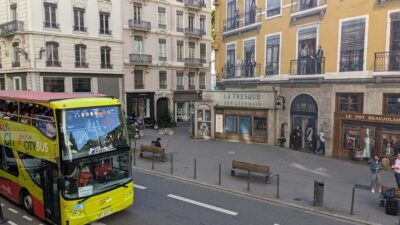
Lyon City Hop-on Hop-off Sightseeing Bus Tour
Read our review →
Vieux Lyon Cultural & Historical Walking Guided Tour (English)
Read our review →
Lyon Highlights & Secrets Walking Guided Tour (small group) including Funicular
Read our review →
Highlights and Hidden Gems of Lyon Guided Walking Tour (English)
Read our review →
Food Tour in Lyon – A Full Taste of France by Do Eat Better
Read our review →
Lyon Old Town Food Tour with 6 French Delicacies & Fine Wine
Read our review →Browse the lists this tour appears in