
Reviewed · LYON TOURS
Vieux Lyon Cultural & Historical Walking Guided Tour (English)
Lyon’s best stories are tucked behind ordinary doors. On this two-hour walk, guide Paul leads you through Vieux Lyon’s traboules, the covered passageways that once helped silk workers move through the old quarter and later served the Resistance during World War II. You also get a quick look at Saint-Jean Cathedral, the Tour Rose, Lyon’s silk trade, and the grand Hôtel Dieu.
I like two things right away: the route connects old and modern Lyon, and Paul adds practical advice on restaurants, coffee, museums, and places to explore after the walk. At $6.05 per person, the value is hard to beat, though you should know that a busy group can spread out and make it difficult to hear without audio devices.
Key points to know before you book
- Paul brings Lyon to life with stories: Expect history, food, local customs, and wartime events explained with humor and energy.
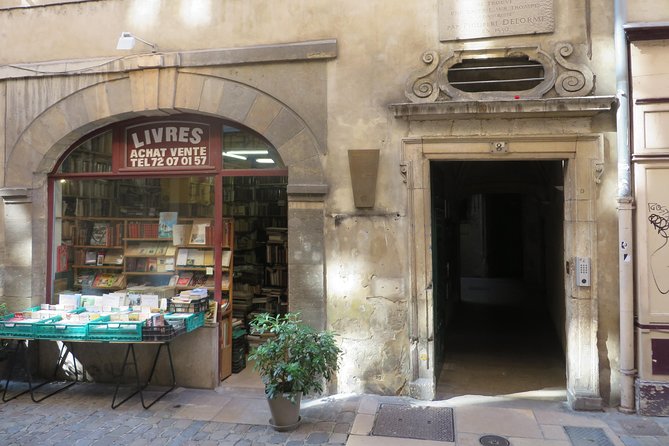
- The traboules are the main event: You’ll enter several passageways in Vieux Lyon and see how easily Lyon hides its past in plain sight.
- The route covers more than the old quarter: The walk finishes at Hôtel Dieu, linking medieval Lyon with its modern shopping and food areas.
- The silk stop is unusually hands-on: Brochier Soieries may have live silkworms in season and a model Jacquard loom.
- It is a strong first-day orientation: You’ll get suggestions for restaurants, coffee, museums, and further walks.
- Keep the schedule in perspective: Several stops are brief, and the cathedral or other sites may have access limits depending on opening conditions.
Why this two-hour Lyon walk works so well
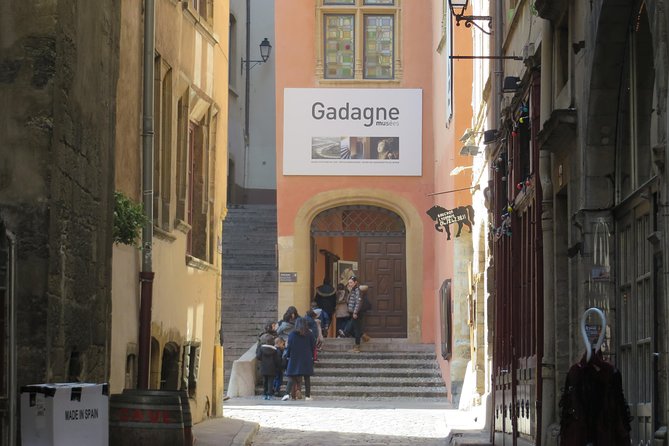
This is not a museum-heavy outing. It is a brisk introduction to Lyon on foot, using streets, courtyards, façades, passageways, and a few carefully chosen interiors to explain how the city developed.
You begin at Place Saint-Jean in front of Saint-Jean Cathedral at 10:00 a.m. From there, the route moves through Vieux Lyon and then heads toward the Presqu’île, ending at Place de l’Hôpital inside Hôtel Dieu. That start-to-finish design matters. You do not simply return to the place where you began. Instead, you finish in one of Lyon’s most useful areas for food, shopping, and further sightseeing.
Paul is the guide most often identified with this experience. His approach combines solid facts with stories and jokes, so the two hours do not feel like a long lecture. He is also easy to spot because he is very tall, a practical detail when several groups gather around Place Saint-Jean.
The group is listed at a maximum of 18 people. That is a reasonable size for narrow lanes and small passageways, though you still need to stay close. One person found a larger group hard to hear, especially when the walk stretched out. Paul generally speaks clearly and loudly, but standing near the front is smart if you want every detail.
More Walking Tours in Lyon
- Lyon: Private Walking Tour of “Traboules” in the Old Town
★ 5.0 · 866 reviews - Lyon: City Highlights Walking Tour
★ 4.9 · 847 reviews - Lyon Highlights & Secrets Walking Guided Tour (small group) including Funicular
★ 5.0 · 831 reviews
Saint-Jean Cathedral and its astronomical clock
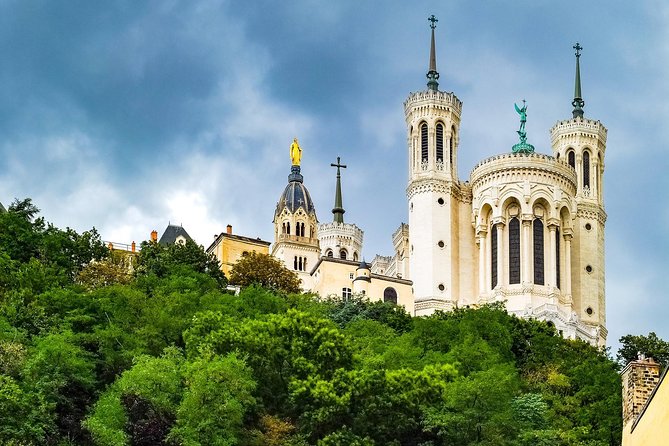
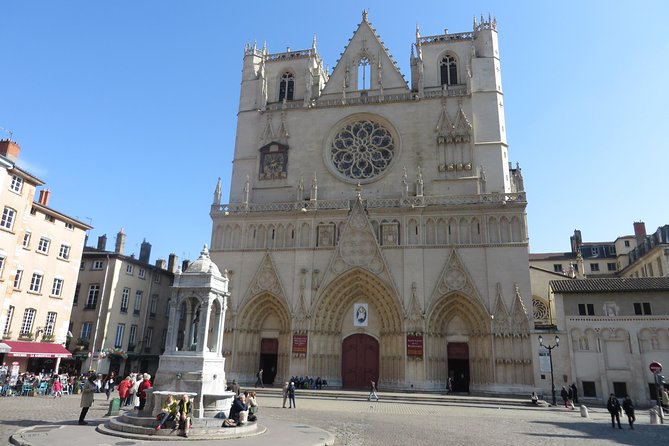
The first stop is Saint-Jean-Baptiste Cathedral, one of the visual anchors of Vieux Lyon. The visit is planned for about 15 minutes, enough for a quick look inside and an explanation of the astronomical clock.
The clock is the kind of detail that rewards a guide. Rather than simply pointing at an old mechanism, Paul uses it to place the cathedral in Lyon’s wider story of religion, science, and civic life. You should expect an overview rather than a full architectural tour.
There is one important practical catch. Access is not guaranteed at every time or on every day. A Monday visit, for example, may find the church closed, so the guide may need to explain the site from outside. The tour information lists admission as included, but opening conditions can still affect what you actually see. If entering the cathedral is especially important to you, check the day before booking.
Traboules: Lyon’s secret doors and wartime routes
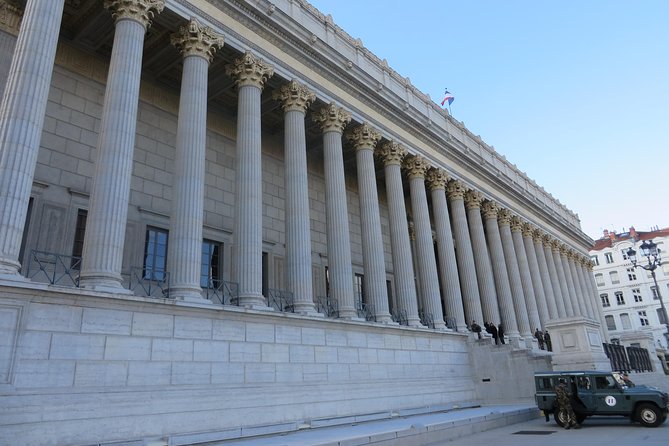
The traboules are the heart of the walk. These passageways cut through buildings and courtyards, allowing people to move between streets without taking the longer route around a block.
In Lyon, traboules are closely tied to the silk trade. Silk workers needed ways to carry cloth through the old quarter while protecting it from rain. Centuries later, the passageways gained another role during the Resistance in World War II. Their twists, shared courtyards, and multiple exits made them useful for moving through the city discreetly.
You will visit several traboules in Vieux Lyon, not just one famous doorway. The experience is less about grand decoration than about the surprise of finding a public route concealed behind a residential entrance. A plain door opens, and suddenly you are in a stone corridor or courtyard with a very different sense of the neighborhood.
Because many traboules pass through private buildings, you need to follow the guide’s instructions and keep noise down. The 15-minute scheduled stop is short, but it gives you enough context to notice how these routes fit into the city rather than treating them as a quick photo stop.
Miniatures, the Tour Rose, and a glimpse of Lyon’s character
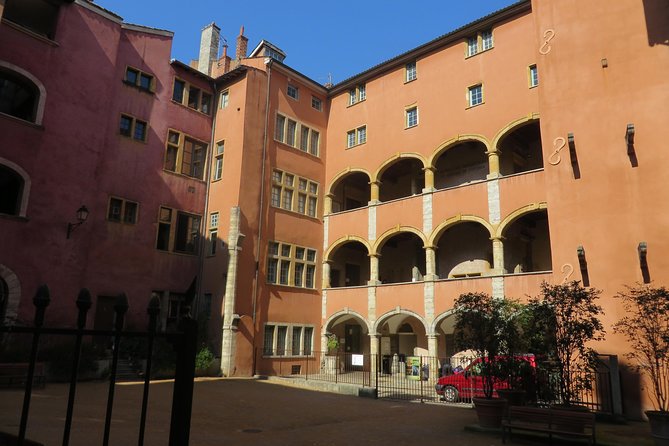
The Musée du Cinéma et de la Miniature provides a brief visual pause. The tour does not include a full museum visit. Instead, you look at miniatures in the museum’s free courtyard for about 10 minutes.
That distinction is worth noting before you reserve. If you want the museum’s full collection, you will need separate time and admission. On this walk, the courtyard stop is a sampler, giving you another look at Lyon’s fondness for craftsmanship and detailed scale models without turning the tour into an indoor museum visit.
Next comes Maison du Crible and the Tour Rose, one of the most recognizable pieces of Vieux Lyon architecture. The stop lasts only about five minutes, so Paul’s explanation is likely to be quick. Still, the tower gives you a clear image of the old quarter’s character: warm-colored façades, enclosed courtyards, and architectural surprises tucked along narrow streets.
This is a good example of how the tour works. You do not spend half an hour at every landmark. You collect a series of connected details, then get suggestions for returning to the places that catch your interest.
More historic sites in Lyon:
- Lyon’s History and Must-Sees with a Local! (English Walking Tour)
★ 5.0 · 86 reviews - Paris: Louvre Museum Entry with History of Mona Lisa
★ 3.9 · 2,823 reviews - Paris: Dark History and Ghostly Guided Walking Tour
★ 4.7 · 1,000 reviews - Bordeaux: Historic Center & Chartrons District Bike Tour
★ 4.8 · 709 reviews
Lyon silk at Brochier Soieries
Lyon’s silk industry is not treated as a dry economic footnote. At Brochier Soieries Vieux Lyon, you get a short visit to a working silk shop, scheduled for about five minutes.
During silk season, you may see live silkworms. You might also see a model of a Jacquard loom, the machinery associated with the precise patterning that helped make Lyon a major silk center. The visit adds a physical sense of the trade: thread, machinery, pattern, labor, and the shop floor all become part of the story.
Five minutes is not enough for a long demonstration, and the availability of silkworms or the loom model can vary. Still, this is one of the more distinctive stops because it connects the old streets to a craft that shaped Lyon’s economy and identity.
If you are interested in buying silk, the stop also helps you understand why the city still presents silk as part of its cultural character. The tour is not primarily a shopping trip, so expect context first and browsing second.
Courthouses and Lyon’s World War II past
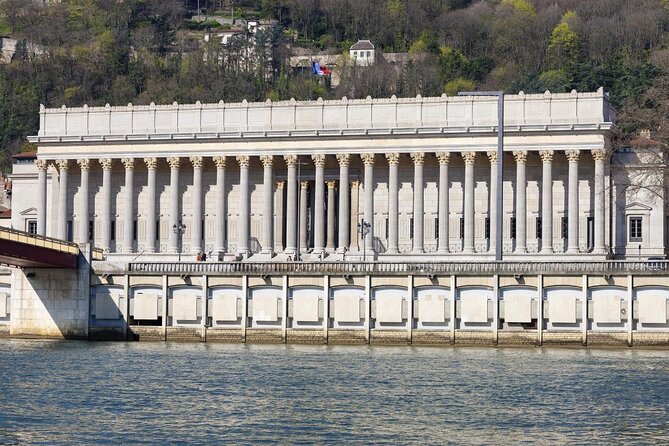
The walk also passes Lyon’s impressive courthouses, associated with the trial of Klaus Barbie. This is where the route shifts from medieval streets and trade to the difficult modern history of the city.
The subject is serious, and it gives the tour useful balance. Lyon is often introduced through food, silk, and handsome old buildings, but the city also played a major role in the Resistance and later became the setting for a significant war-crimes trial. Paul’s broader route connects the wartime use of traboules with this legal and civic setting.
The courthouse stop is described as part of the walk rather than a full courtroom visit. You should expect to see the buildings and hear their historical context, not enter every room or tour an active legal facility.
Théâtre des Célestins and the city beneath the square
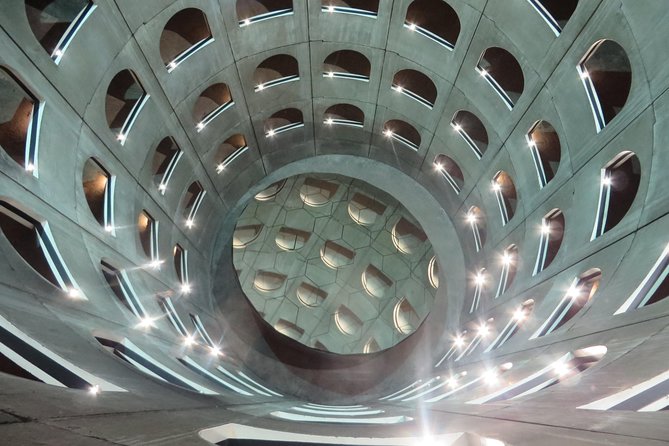
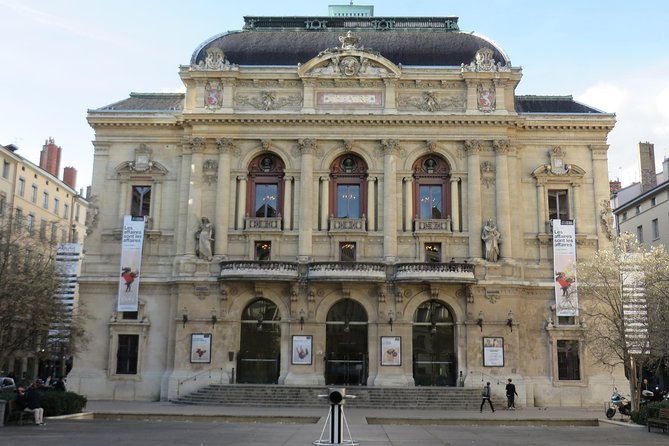
At Théâtre des Célestins, the tour pauses for about 10 minutes to view the theatre façade. Depending on conditions, you may also descend toward modern artwork beneath the square.
This stop widens the picture of Lyon again. After the cathedral, medieval passageways, and silk shop, you see a theatre and a piece of contemporary public art. It is a reminder that Lyon is not only an old town preserved for sightseeing. It is also a living city that keeps adding new layers.
The word maybe matters here. The underground artwork is not presented as a guaranteed visit every time, so treat it as a possible extra rather than the reason to book the tour. The façade itself is the dependable part of the stop.
From here, the route passes along Lyon’s main shopping street. This is a useful transition between the old quarter and the newer commercial center, and Paul’s advice can help you decide where to spend your remaining hours.
Hôtel Dieu: an elegant finish with food nearby
The final major stop is Grand Hôtel Dieu, where the tour ends after about 10 minutes. Once a hospital, the complex has been transformed into a mix of shopping, a luxury hotel, and a food court.
This is an excellent endpoint for a short city orientation. You finish in a beautiful, central place with food options and easy access to other parts of Lyon. The former hospital also helps you understand how the city reuses historic buildings rather than leaving them frozen in the past.
The end point is Place de l’Hôpital, inside Hôtel Dieu. That means you should not expect a return walk to Saint-Jean. If you are meeting someone afterward or need to catch transport, plan from the finishing location, not the starting point.
Food advice is part of the real value
Lyon is famous for its food, and Paul treats eating as part of understanding the city. The walk includes suggestions for restaurants and coffee, along with ideas for museums and further sightseeing.
I would take this advice seriously, especially if you are booking near the start of your stay. A two-hour walk cannot cover every neighborhood or restaurant, but it can save you time later. Several people used Paul’s suggestions to shape the rest of their day, including a meal at a recommended restaurant.
This is also where the tour gives you more than a list of landmarks. You get a sense of how to continue exploring after the guide leaves. If you have only one day in Lyon, the walk can help you build a sensible plan. If you have several days, it can point you toward places worth a return visit.
Price, pace, and what the $6.05 really buys
At $6.05 per person, this is remarkable value for a two-hour guided introduction. The listed price covers fees and taxes, and there are no separate entry charges stated for the included stops.
The tour is also available directly through Free Tour Lyon without the same booking charge, according to the information provided. In that model, the guide relies on tips, so bring cash if you book through that route. Even at the listed price, you should think of the payment as a small access fee rather than the full measure of the guide’s work.
The pace is relaxed enough for most people, and the route is not described as especially long. Still, it is a walking tour over old streets and passageways, so comfortable shoes make sense. You will be outdoors much of the time, and rain can change the feel of the experience. Paul has used sheltered spots during wet weather, but you should dress for conditions.
The tour is offered in English, uses a mobile ticket, and is near public transportation. Service animals are allowed, and most people can participate. Confirmation arrives at booking. Free cancellation is available up to 24 hours before the 10:00 a.m. start, while later cancellations and changes are not accepted.
Who should book this Lyon experience?
I would choose this tour for a first visit, especially if you want a quick orientation before exploring on your own. It suits people who like history told through streets and buildings rather than a long indoor presentation.
It is also a good fit if you care about food. Paul’s restaurant and coffee suggestions add practical value that a standard sightseeing route may skip. The mix of cathedral, silk, wartime history, theatre, shopping, and Hôtel Dieu gives you a useful first picture of Lyon.
You may want something else if you expect full museum entry, long visits inside each landmark, or detailed architectural study. The museum stop is only in the free courtyard, the cathedral can be closed, and several landmarks receive just five to 15 minutes.
Should you book the Vieux Lyon walking tour?
Yes, if you want a low-cost, story-driven introduction to Lyon and can accept a few brief stops. Paul’s clear speaking style, humor, local recommendations, and strong grasp of Lyon’s past make the tour especially useful at the beginning of your stay.
Book it early in your visit so you can use the food and sightseeing advice afterward. Stand close to the guide, confirm the meeting point at Place Saint-Jean, and remember that the walk ends at Hôtel Dieu. If you want a full cathedral or museum visit, plan those separately.
FAQ
Where does the tour start?
The tour starts at Place Saint-Jean, Place Saint-Jean, 69005 Lyon, France.
What time does the tour begin?
The scheduled start time is 10:00 a.m.
Where does the tour finish?
The tour finishes at Place de l’Hôpital, 69002 Lyon, inside Hôtel Dieu.
How long does the experience last?
The walking tour lasts approximately two hours.
Is the tour offered in English?
Yes. The tour is offered in English.
What is the price?
The listed price is $6.05 per person.
Are entry fees included?
All fees and taxes are included. The museum stop uses the free courtyard, not a full museum admission.
Will I enter Saint-Jean Cathedral?
The plan includes a quick cathedral visit and a look at its astronomical clock, but access can depend on opening conditions. The cathedral may be closed on some days, including Mondays.
How many people can join the tour?
The experience has a maximum group size of 18 people.
Can I cancel for a full refund?
Yes. You can cancel at least 24 hours before the local start time for a full refund. Later cancellations and changes are not accepted.
Just listed in Lyon
- Gourmet Vegan Private Tour of Lyon 3 hours★ 5.0 · 52 reviews
- Beaujolais & Perouges Medieval Town (9:00 am to 5:15 pm – Small Group Tour Lyon★ 5.0 · 53 reviews
- Lyon Old Town Food & Wine Tasting Tour including a Bouchon Lyonnais★ 4.0 · 59 reviews
- Storytelling tour of the Vieux-Lyon for children in French★ 4.8 · 60 reviews
- Lyon UNESCO: Private walking tour★ 5.0 · 61 reviews
- 4h Complete Lyon Experience – E-Bike, Tasting & Walk★ 4.8 · 62 reviews
- Beaujolais Half Day Wine Tasting Tour★ 4.5 · 62 reviews
- Make French Pastries with Professional Chef in Private Atelier★ 5.0 · 66 reviews
Lyon Tours, compared.
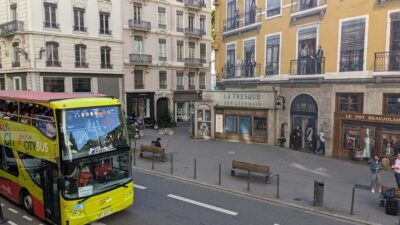
Lyon City Hop-on Hop-off Sightseeing Bus Tour
Read our review →
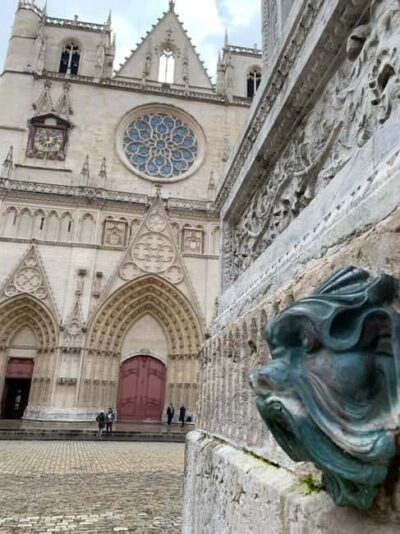
Private Walking Tour of “Traboules” in the Old Town
Read our review →
Lyon Highlights & Secrets Walking Guided Tour (small group) including Funicular
Read our review →
Highlights and Hidden Gems of Lyon Guided Walking Tour (English)
Read our review →
Food Tour in Lyon – A Full Taste of France by Do Eat Better
Read our review →
Lyon Old Town Food Tour with 6 French Delicacies & Fine Wine
Read our review →Browse the lists this tour appears in