
Reviewed · MUSEE D ORSAY & ORANGERIE TOURS
Orsay Museum – Exclusive Guided Tour (Reserved Entry Included)
The Musée d’Orsay gives you Paris’s best answer to the Louvre. Inside a grand former Beaux-Arts train station, you follow the art world’s turn from formal nineteenth-century painting to the bold color and loose brushwork of Impressionism. A guide such as Christophe, Dina, Lili, or Romain can turn a famous painting into a story about risk, rivalry, and changing taste.
I like the reserved museum entry, since the Orsay’s lines can grow long as the day goes on. I also like the focused route: you see Manet, Monet, Renoir, Van Gogh, and their artistic forebears without trying to conquer every gallery in one tiring march. The main drawback is cost. At $144.21 per person, this makes the most sense if you want a guided introduction, not simply a quick look at the pictures.
Key points to know before booking
- A two-and-a-half-hour route through Impressionism: You follow the movement from earlier artists such as Millet to Manet, Monet, Renoir, and Van Gogh.
- Reserved entry is included: You do not buy a separate museum admission ticket, though security checks can still create short waits.
- Private and semi-private choices: The private option gives your group its own guide. The lower-priced semi-private choice does not provide an exclusive guide or the same wheelchair-friendly terms.
- Several start times: Morning, afternoon, and evening departures make it easier to fit the museum into a full Paris schedule.
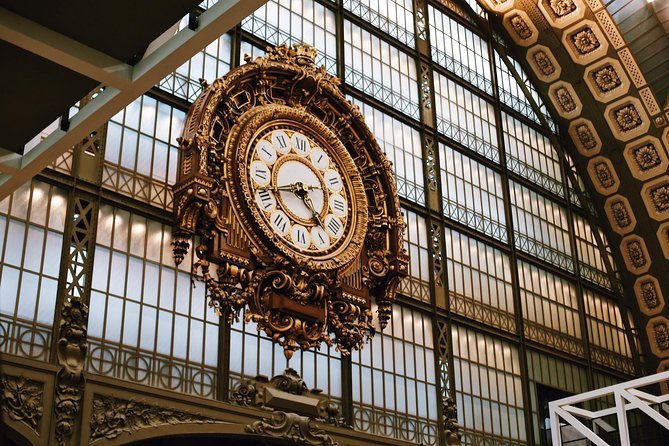
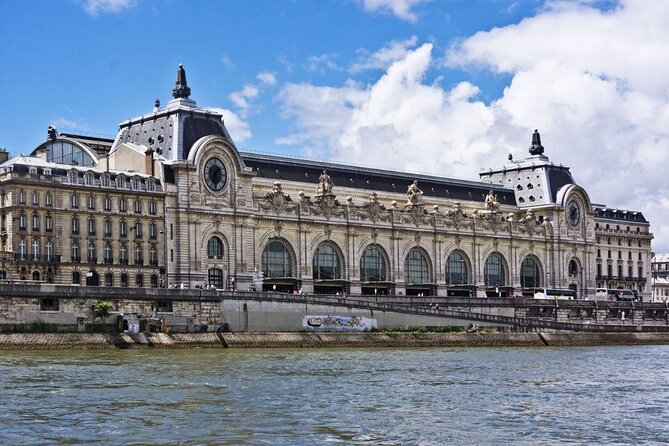
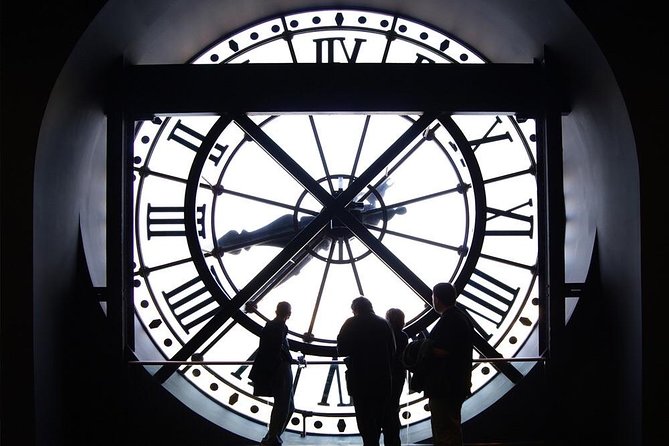
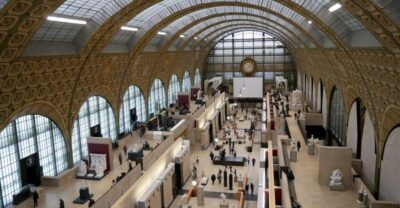
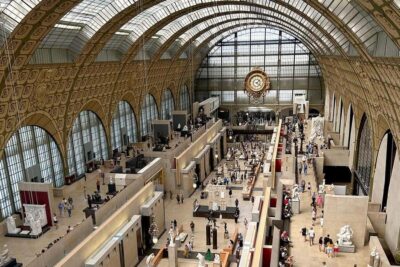
- The building is part of the experience: The converted train station, giant clock, and open interior deserve attention alongside the paintings.
- Guide quality matters: Guides including Dina, Christophe, Lili, Paloma, Romain, and Ugo are praised for making the art personal, clear, and engaging.
Why the Musée d’Orsay works so well with a guide
The Orsay is not as enormous as the Louvre, but it is still easy to lose your way. Its collection covers sculpture, painting, decorative arts, photography, and several artistic periods. If you simply wander in, you may recognize the big names yet miss the chain of ideas connecting them.
This tour gives you that chain. You start with the artists who came before Impressionism, then see how Manet challenged accepted rules, how Monet and Renoir made ordinary life worthy of serious painting, and how Van Gogh pushed color and brushwork in new directions.
That order is useful. Impressionism can look simple at first glance: a sunlit field, a café, a dance, a group of people outdoors. Your guide explains why these works caused such a stir. You learn to look at the handling of paint, the choice of subject, the unusual framing, and the sense of a moment caught rather than a scene carefully staged.
I especially like this approach for anyone who already knows the famous names but wants more than a postcard view of the art. Guides have explained the connections between artists, their personal stories, and the changes in taste that made the movement possible. A strong guide does not just point at a painting. The guide helps you see why it mattered.
A few other Paris half-days to compare
- Paris: Musée d’Orsay Entry Ticket and Seine River Cruise
★ 4.6 · 1,344 reviews - Paris: Musée d’Orsay Skip-the-Line Tour with Expert Guide
★ 4.5 · 1,145 reviews - Musée d’Orsay Skip-the-Line Tour with Expert Guide
★ 4.8 · 1,088 reviews
Entering the former train station
Your meeting point is the Musée d’Orsay at 75007 Paris, and the tour ends there. The museum is near public transportation, and you should plan to arrive ready for a security check rather than assuming reserved entry means walking straight through every barrier.
The building deserves a few minutes of your attention. The Orsay occupies a former Beaux-Arts railway station, and its grand proportions give the visit a different feel from the Louvre. The enormous clock is one of the memorable visual details, and the open design helps you understand how the museum is arranged.
The setting also suits the collection. This was a period of movement, machines, new city life, rail travel, changing class structures, and faster communication. The old station provides a fitting home for art that broke away from older rules and looked at modern life with fresh eyes.
Do not bring a large suitcase or oversized bag. Only handbags and small, thin backpacks are allowed through museum security. That is a small point, but it can save you an awkward detour before your tour begins.
The route from Millet to Manet
The tour begins before full Impressionism. You look at artists such as Jean-François Millet, including The Gleaners, to understand the shift in subject matter and attitude.
Millet’s rural workers were not merely decorative figures placed in a pretty countryside. Their presence gave dignity and weight to ordinary labor. This helps set up the changes that followed, because the new painters were also interested in everyday people and modern life rather than only grand historical scenes or mythological subjects.
Then comes Manet, whose Luncheon on the Grass remains one of the Orsay’s essential stops. The work was scandalous in its day, not because it was simply a picture of people outdoors, but because it broke with the polished conventions expected of serious painting.
A good guide can show you where the trouble lies. The painting’s directness, strange mixture of figures, and visible brushwork challenged the old system. Manet was not yet an Impressionist in the strict sense, but he helped clear the road for the artists who followed.
This part of the tour is valuable because it prevents Impressionism from seeming to appear out of nowhere. You see an argument developing across the galleries. Older traditions are still present, but younger artists are testing how much a painting can leave unfinished, how directly it can address the viewer, and which subjects deserve the canvas.
Renoir, Monet, and the Impressionist breakthrough
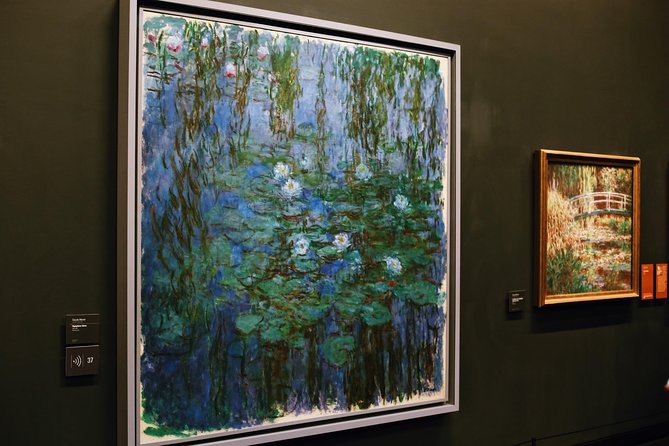
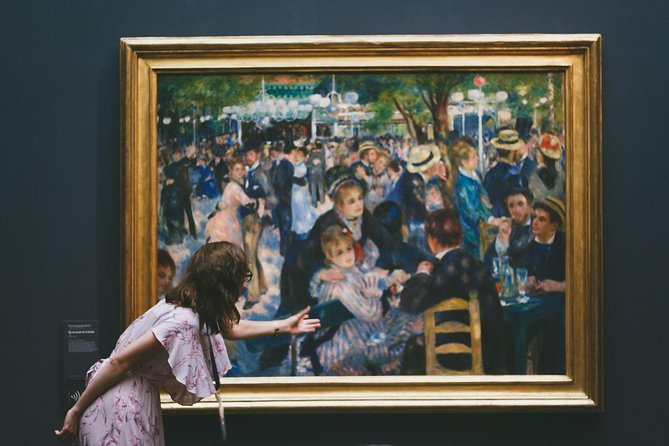
The tour then moves toward the brighter, more immediate world associated with Impressionism. Renoir’s Dance at Le Moulin de la Galette gives you a chance to look at the movement at full strength.
The painting captures a crowded outdoor dance and the effect of shifting light on faces, clothing, and movement. Your guide may draw your attention to the way the scene feels observed in the moment rather than arranged like a formal portrait. That sense of passing time is central to the Impressionist project.
Monet’s paintings provide another key point. His poppies are a clear example of how color and light can carry the scene. Instead of treating every flower as a precisely outlined object, Monet builds an overall impression through patches of color and changing tones.
This is where a guide can help you slow down. From across the gallery, you may first see a pleasing field of red. Up close, the painting becomes a set of separate marks that your eyes combine. The technique is not careless. It asks you to participate in making sense of the image.
The best guides keep this visual lesson connected to the artists’ lives and friendships. Names and dates alone can make a museum tour feel like school. Guides praised for their lively approach, including Dina, Beatrice, Nadia, and Romain, are described as making the subject interactive and easy to follow. That matters if you are visiting with family members who do not normally spend hours in museums.
More museums in Paris:
- Paris: Louvre Museum Timed-Entrance Ticket
★ 4.6 · 71,977 reviews - Louvre Museum Masterpieces Guided Tour with Access
★ 4.5 · 12,023 reviews - Paris: Louvre Museum Entry Ticket With Host and River Cruise
★ 4.6 · 9,926 reviews - Les Invalides: Napoleon’s Tomb & Army Museum Entry
★ 4.6 · 9,185 reviews
Van Gogh and the road beyond Impressionism
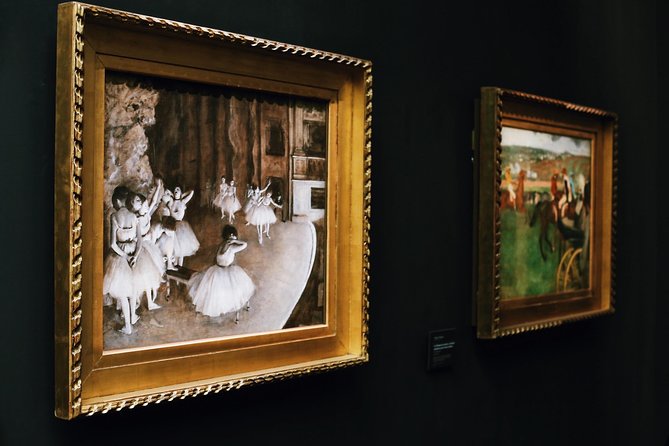
The route does not stop with Monet and Renoir. You also see artists who carried the new ideas in different directions, including Vincent van Gogh and Bedroom in Arles.
Van Gogh’s work gives the tour a strong change of mood. His color, outlines, and energetic brushwork do not simply repeat Impressionism. They push painting toward a more personal and expressive language.
The value here is comparison. After seeing Monet’s concern with changing light, Van Gogh’s painting can make you think about how color might express feeling rather than just describe a room. The guide can also show you how movements overlap. Art does not change overnight from one neat category to another.
This section is especially useful if Van Gogh is the artist you came to see. You get the famous work, but you also learn what came before it. That context gives the painting more force and keeps the visit from becoming a checklist of famous names.
What the two-and-a-half-hour pace feels like
The advertised duration is about two hours to two hours and thirty minutes, with the tour built around a two-and-a-half-hour visit. That is long enough for a clear introduction but short enough to leave room for lunch, another museum, or a walk along the Seine.
The Orsay could easily absorb an entire day. You will not see every room on this tour, and that is not a flaw. A focused route protects you from the common museum mistake of trying to cover everything and remembering almost nothing.
The pace can vary with the guide and the size of your group. A strong guide pauses for questions, adjusts the route to your interests, and gives you time to look. Guides such as Paloma and Dunja are praised for being attentive and spending the full allotted time, while one less successful experience involved a guide moving too quickly and giving little space for questions.
That is worth keeping in mind when you choose between private and semi-private. A private tour gives your group more room to shape the conversation. The semi-private option may save money, but it can offer less control over the pace and discussion.
Headphones can be useful in crowded galleries. One guide specifically received praise for helping the group hear clearly despite busy conditions. Still, the museum can be crowded, and reserved entry does not promise an empty building or instant access past every security measure.
Private or semi-private: which choice fits you?
The private option is the clearest match if you value flexibility. Your guide works only with your group, so you can ask more questions about a particular artist, spend longer with a favorite painting, or adjust the level of detail for children and adults.
The private experience is also the option identified as wheelchair friendly. The semi-private choice does not carry that same stated provision, so anyone with mobility concerns should confirm the arrangement before booking.
The lower-cost semi-private choice may appeal to solo visitors or couples who want a guide without paying for a fully exclusive visit. The supplied details indicate groups of up to six on the small-group format, which keeps the experience more personal than a large coach tour.
At $144.21 per person, the price is not a bargain admission ticket. You are paying for reserved entry, an English-speaking guide, and a structured art lesson lasting roughly two and a half hours. For a private group splitting the cost, the value improves. For one person who prefers to read labels and wander alone, the price may feel steep.
The guides who make the difference
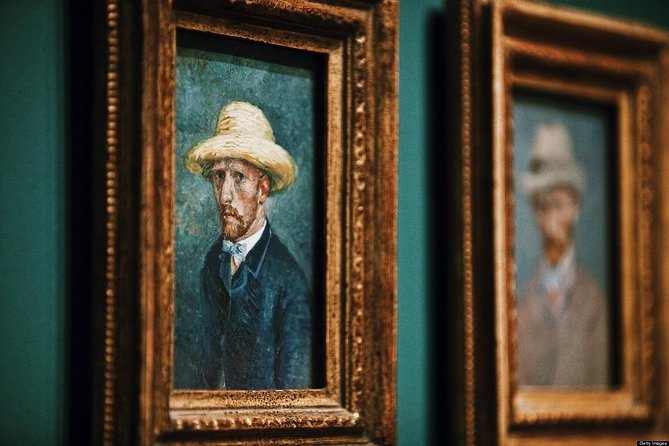
The strongest part of this experience is the guide’s ability to connect visual details with human stories. Christophe is praised for explaining the paintings in chronological order and for adding depth to familiar works. Lili is noted for making the visit interactive, while Hugo is described as both educational and funny.
Other names repeatedly associated with a strong experience include Dina, Ugo, Romain, Beatrice, Mathieu, Malaika, Miriam, Nancy, and Paloma. The descriptions point to a useful mix of qualities: clear English, good pacing, humor, patience, and real enthusiasm for the art.
The guide also helps with the practical side of the visit. Nancy assisted with a portable chair when a cane was left in a taxi. Christophe sent tickets electronically when a taxi arrived late, helping the group find the meeting arrangement. These details do not replace good art instruction, but they show why a private guide can be useful in a busy city.
You cannot guarantee a particular guide unless the operator confirms it. If one name is important to you, you can request that person, but you should treat the request as a preference rather than a promise.
Timing, entry, and small practical details
You can select a morning, afternoon, or evening start time. Morning is a sensible choice if you want the museum before a full day of sightseeing. Afternoon works well after a nearby lunch, while an evening departure can help you fit the Orsay around other Paris plans.
The museum may occasionally close without advance warning. If the opening is delayed by more than an hour after the scheduled start, an alternative is offered, but the stated conditions do not provide a refund or discount in that situation.
Wear appropriate clothing for museum entry, keep your bags small, and provide a mobile phone number with country code when booking. Hotel pickup and drop-off are not included, so plan to reach the museum by public transportation, taxi, or Uber.
Gratuities are optional and not included. Temporary exhibitions are also excluded, so you should not book this tour expecting access to every special show in the building.
The cancellation terms are fair but firm: cancel at least 24 hours before the local start time for a full refund. Changes or cancellations inside that window are not accepted for a refund.
Who should book this Orsay tour?
I would choose this experience if you are visiting the Orsay for the first time, want the main works explained in context, or feel unsure about how to approach nineteenth-century art. It also suits families, mixed-interest groups, and anyone who wants to save energy for the rest of the day.
It is a good fit for serious art fans who want to request a focus on Impressionism, Post-Impressionism, or the move from academic painting to modern art. The private format gives you the best chance of shaping the visit around those interests.
I would think twice if you already know the collection well and prefer a slow, self-directed visit. You will see selected works rather than the whole museum, and the cost is high compared with buying admission alone. You also need to accept that security checks and crowded rooms can still affect the experience.
Should you book it?
Book this tour if reserved entry and a clear art story are worth paying for. The Orsay is far easier to appreciate when someone explains how Millet leads toward Manet, how Manet unsettles convention, how Monet and Renoir reshape light and modern life, and how Van Gogh carries those ideas somewhere more personal.
Choose the private option if you want questions, flexible pacing, or a wheelchair-friendly arrangement. Choose semi-private if saving money matters more and you are comfortable sharing the route. Either way, keep your bag small, arrive at the museum meeting point on time, and leave room in your schedule for the building itself. The paintings are the reason you come, but the old station is part of the reward.
FAQ
How long does the Musée d’Orsay guided tour last?
The experience lasts approximately two hours to two hours and thirty minutes, with the stated tour duration being two and a half hours.
Is museum admission included?
Yes. All entrance fees and reserved museum entry are included. Temporary exhibitions are not included.
Is the tour offered in English?
Yes. The tour is offered in English.
Can I choose a private tour?
Yes. You can choose the private experience, where the guide is exclusively for your group. A lower-priced semi-private option is also available, but it does not include an exclusive guide.
Where does the tour begin and end?
It begins at the Musée d’Orsay, 75007 Paris, France, and ends back at the meeting point.
Are hotel pickup and drop-off included?
No. Hotel transportation is not included. The tour recommends using Uber or a taxi, and the museum is near public transportation.
What happens if I need to cancel?
You can cancel at least 24 hours before the local start time for a full refund. Cancellations or changes made less than 24 hours before the start time are not accepted for a refund.
Just listed in Paris
- Chartres Cathedral 5 Hours Tour from Paris with Private Transport★ 4.5 · 49 reviews
- Paris: Giverny & Versailles Small Group or Private Tour★ 4.5 · 49 reviews
- Paris: Louvre photoshoot or Seine bridges Eiffel Tower walk★ 5.0 · 49 reviews
- Private tour of the Champagne area, meet local producers and taste their Champagne, start from your hotel in Paris.★ 5.0 · 50 reviews
- Paris: Choux Pastry and Chocolate Éclair Making Class★ 4.9 · 50 reviews
- Paris Eternelle Notre-Dame Virtual Reality Tour★ 4.5 · 50 reviews
- Normandy D-Day Landing Beaches Private Day Trip from Paris★ 5.0 · 50 reviews
- Disneyland® Paris 1 Day with Round-Trip Train Tickets from Paris★ 4.0 · 50 reviews
Musee d Orsay & Orangerie Tours, compared.
Musée d’Orsay Entry Ticket and Seine River Cruise
Read our review →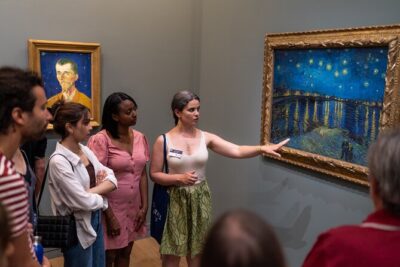
Musée d’Orsay Skip-the-Line Tour with Expert Guide
Read our review →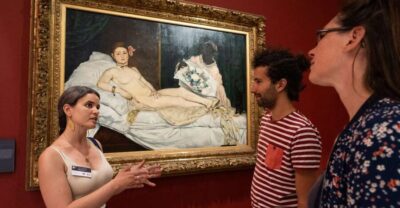
Musée d’Orsay Skip-the-Line Tour with Expert Guide
Read our review →
The Musée d’Orsay Guided Tour Orsay Museum Semi-Private 6ppl Max
Read our review →
Louvre & Musée d’Orsay Guided Museum Tour Semi-Private 6ppl Max
Read our review →
Orsay Museum and Rodin Museum Combo Entry Ticket
Read our review →Browse the lists this tour appears in