
Reviewed · PARIS TOURS
Paris French Baking Class Baguettes and Croissants in a Bakery
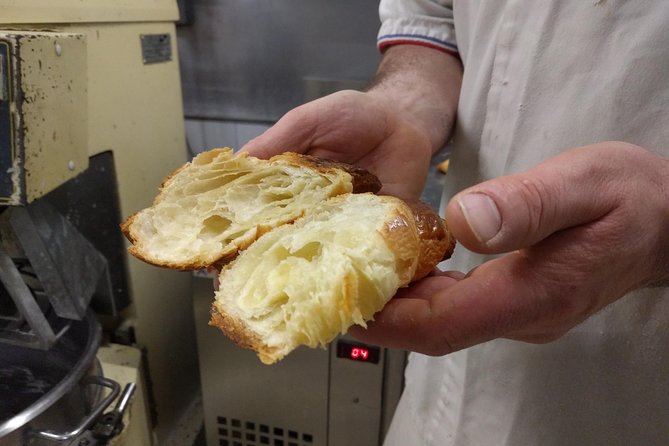
The best part of this Paris class happens behind the bakery counter, where baker Didier shows you how French bread is shaped, scored, baked, and judged. You work with baguette dough, roll croissant dough, and may also prepare pain au chocolat before tasting the results warm from the oven.
I like the small group, capped at 10, and the personal teaching from a baker who mills his own flour and talks about ingredients with real care. I also like the English translation, provided throughout by a guide such as Luz, which makes Didier’s French instruction easy to follow. The main thing to know is that this is more hands-on for baguettes than croissants. You learn how croissants are made and practice rolling or shaping them, but you may not make the full dough from scratch.
Key points
- Learn inside a working Paris bakery: The class takes place at Boulangerie Pâtisserie Le Petit Mitron at 8 Rue Oberkampf, near Bastille and Oberkampf.
- Focus on baguette technique: Expect detailed instruction on shaping, scoring, handling, and baking French bread.
- Croissants are part of the lesson: You learn about lamination and roll croissant dough, with pain au chocolat sometimes included.
- Didier brings the personality: His humor, flour-making process, baking stories, and close-up demonstrations give the class its character.
- Small groups help: With no more than 10 people, you have a better chance to ask questions and get help.
- You eat the results: Warm baguette and pastries are included, along with recipes for home baking.
Inside Le Petit Mitron at Oberkampf Bastille
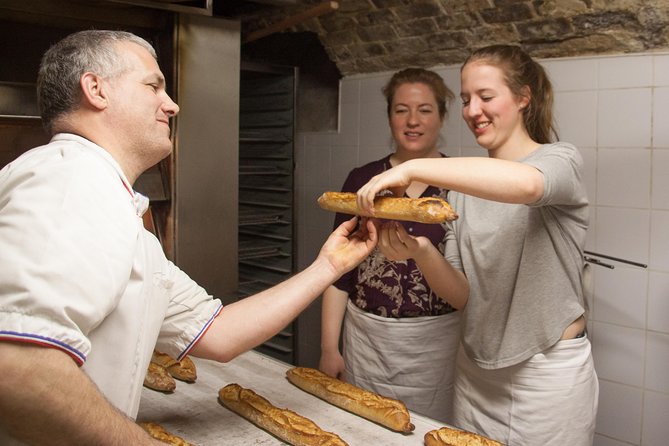
You meet at Boulangerie Pâtisserie Le Petit Mitron, 8 Rue Oberkampf, in Paris’s 11th arrondissement. The address is close to public transportation, so you can reach it without arranging a hotel transfer. You make your own way there, and the class ends at the same bakery.
The setting matters. This is not simply a cooking studio dressed up to look French. You enter the kitchen of a traditional bakery and see the equipment, work surfaces, ovens, and tools used for professional production. The atmosphere is practical and close to the work, which gives the lesson more weight than a standard demonstration.
The class lasts about two and a half hours. That is long enough to cover ingredients, techniques, baking history, and tasting, but you should arrive ready to stand, watch, listen, and work for most of the session. Families have found the pace manageable for children, but younger students need to focus for the full period.
The minimum age is 6, and anyone under 18 must attend with an adult. The maximum group size is 10. A smaller class may feel almost private, while a full group will still be compact enough for the baker and translator to interact with everyone.
More Cooking Classes in Paris
- Paris Cooking Class and Lunch with Wine plus Market Visit Option
★ 5.0 · 1,024 reviews - Paris Croissant Small-Group Baking Class with a Chef
★ 5.0 · 910 reviews - Paris: French Croissant Baking Class with a Chef
★ 4.9 · 712 reviews
Meeting Didier, the baker behind the lesson
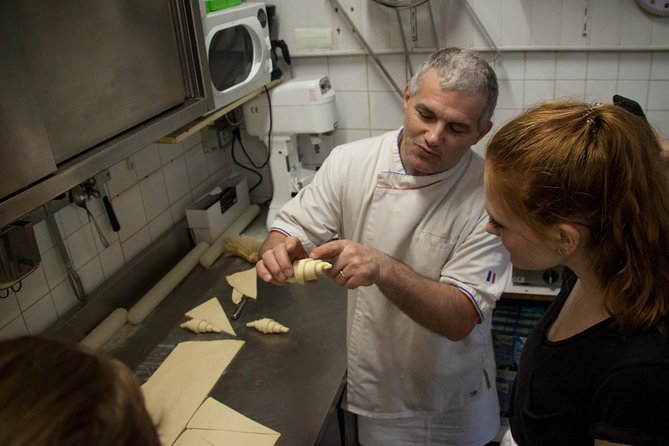
The class is led by Didier, whose teaching style is a major reason this experience feels different from a basic pastry demonstration. He is described as funny, warm, energetic, and deeply attached to his craft. He does not speak English, so an English-speaking translator works alongside him.
That arrangement is worth understanding before booking. Didier demonstrates and explains in French, while the translator relays the lesson. This creates a little more back-and-forth than a class taught directly in English, but the translation makes the technical points accessible. It also lets you hear the baker’s own voice and personality rather than receiving a polished script from a generic instructor.
Luz has been singled out as a friendly and effective translator, helping with questions and keeping the class moving. The translation is not just a short introduction. It is used throughout the experience, including the explanations about flour, dough handling, equipment, and baking methods.
Didier also takes time to ask about your own baking background. If you already bake bread, you can raise more specific questions. If you are starting from zero, you can watch his hands closely and copy the basic movements. The class works best when you participate rather than simply stand back and take photographs.
The baguette lesson is the most hands-on part
The baguette section takes up most of the class. This is useful to know because the title gives equal billing to baguettes and croissants, but the practical balance leans toward bread.
You watch Didier handle the dough and explain how flour, water, yeast, salt, fermentation, and technique affect the final loaf. He discusses the role of flour and, unusually, shows how he mills his own grain. That detail gives the lesson a clear point of view. You are not just learning a recipe. You are hearing why an artisan baker chooses particular ingredients and how those choices affect flavor and texture.
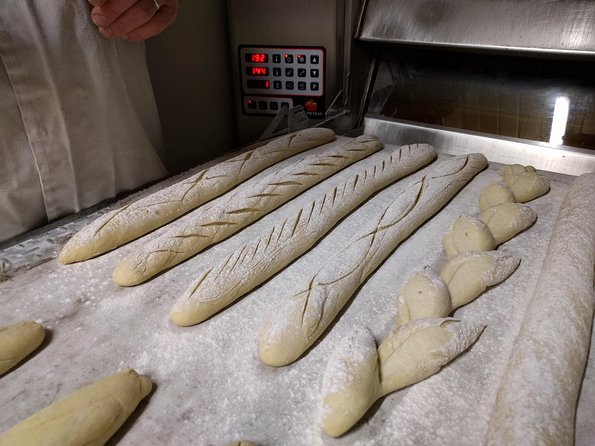
The working portion centers on shaping baguettes. You handle the dough, roll or stretch it into form, and learn to create the right surface tension without crushing the air inside. You may also practice scoring patterns before the loaves go into the oven. One memorable task is using the long wooden paddle to help take bread from the oven, a small professional touch that makes the bakery setting feel real.
The baker’s demonstrations happen close enough for you to see the movement of his hands. That is valuable because bread shaping can sound simple in a recipe but feel awkward at home. The class gives you a chance to see pressure, speed, and dough texture rather than relying only on written instructions.
You should not expect to produce a perfect bakery loaf on your first try. The value is learning what to look for: how the dough feels, how firmly to shape it, where to score it, and how a trained baker corrects small mistakes. This is the part of the class most likely to help you at home.
Croissants, lamination, and pain au chocolat
Croissant instruction is included, but it is more of a guided introduction than a complete pastry apprenticeship. The baker explains the process, demonstrates the handling of laminated dough, and gives you a chance to roll or shape it.
Lamination is the method of layering butter and dough through repeated rolling and folding. It is what creates the flaky structure of a croissant. The class helps you understand the process, but the time limit means you should not expect to complete every stage of a traditional croissant recipe from start to finish.
This distinction is important for experienced bakers. If your main goal is to learn full croissant production, including making, resting, laminating, shaping, proofing, and baking the dough yourself, this class may feel less thorough than you expect. If you want a clear look at the method and a chance to handle the pastry, it offers a satisfying introduction.
Pain au chocolat may also be included, adding a welcome variation to the plain croissant. You work with the dough and shape the pastry before the final bake. The warm tasting at the end is the payoff, with buttery croissants and possibly chocolate-filled pastries joining the baguette.
The class may show you more than the sample menu lists. Baguettes, croissants, and recipes are the stated core, while specific pastry variations can depend on the session. Consider the chocolate pastry a pleasant possibility, not a guaranteed separate course.
Same city, a completely different afternoon:
- Paris: Louvre Museum Timed-Entrance Ticket
★ 4.6 · 71,977 reviews - Disneyland® Paris 1-Day Ticket
★ 4.6 · 49,412 reviews - Paris: Versailles Palace and Gardens Full Access Ticket
★ 4.6 · 41,579 reviews - Paris: Evening River Cruise with Music
★ 4.4 · 22,721 reviews
French bread history adds meaning to the recipes
This is not a class made up only of measurements and motions. Didier talks about the origins and development of the baguette and croissant, along with stories about French food and baking.
That context makes the techniques easier to remember. A baguette is not just a long loaf, and a croissant is not simply a breakfast pastry. Their shapes, ingredients, and place in daily French life have a story behind them. Didier’s anecdotes also give the class an informal, human feel.
The historical material will appeal most to anyone who likes to understand the food on the plate. It may feel like extra talk if you want nonstop practical work, but it helps explain why French baking traditions place such importance on flour, fermentation, texture, and freshness.
The baker’s passion comes through in the details. He discusses his ingredients, his flour, and the way professional equipment affects the finished product. You leave with more than a list of instructions. You have a better sense of what French bakers are trying to achieve.
Warm bread at the end is part of the value
The class includes tasting, and you get to eat the results while they are still warm. That changes the experience from a lesson into a meal-sized break in your sightseeing day.
Fresh bread is also a useful teacher. You can compare the crisp crust, open crumb, and aroma of the baguette with the buttery layers of the pastry. The taste gives you a clear target for your own attempts at home.
You also take a baguette with you, according to the experience details and participant accounts. Pack it carefully if you plan to continue sightseeing. A loaf is an excellent picnic starter, especially if you stop at a cheese shop afterward, but the bakery does not provide hotel delivery or transport.
Recipes are included so you can try the techniques again. The advice also covers practical home adjustments when you lack professional ovens, mixers, or bakery tools. That may be the most useful souvenir of all, since the lesson continues after you leave Paris.
Is $264.95 a fair price?
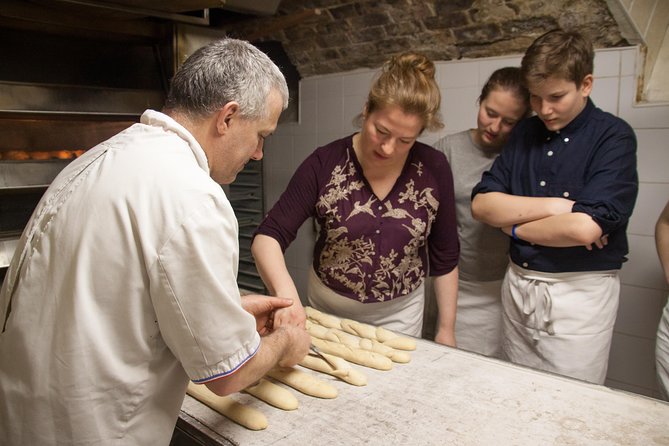
At $264.95 per person, this is an expensive two-and-a-half-hour activity. You are paying much more than the cost of a baguette and croissant, so the value depends on how much you want personal instruction and access to a working bakery.
The price includes the cooking class, bread and pastry tasting, and recipes. It does not include hotel pickup or drop-off, so transportation costs and time are yours. The small group helps justify the rate, since a maximum of 10 allows more direct attention than a large demonstration.
I would see this as a special-interest experience rather than a budget meal. It makes sense for a family seeking one hands-on activity, a serious home baker, or someone who wants a break from museums and monuments. It makes less sense if you mainly want to eat a famous pastry and take a quick photograph.
The strongest value comes from Didier’s personal approach, the flour-milling discussion, the close demonstrations, and the chance to ask questions. If you will actually use the recipes at home, the cost becomes easier to defend. If you are looking for a full professional pastry course, the limited croissant practice may leave you wanting more.
Timing, group size, and practical planning
You can choose a morning or afternoon session, which helps fit the class around a museum visit or neighborhood walk. The experience is offered in English through translation, and you should allow enough time to reach the bakery at 8 Rue Oberkampf before the start.
The class is usually booked well ahead, with an average booking lead of about 43 days. That suggests planning early if your Paris dates are fixed, especially for a small group experience.
There is one important operational concern. The activity requires a minimum number of participants, and a session can be canceled after confirmation if that minimum is not reached or if a booking creates an overcapacity problem. In one reported case, a lone participant was offered another date because the class required at least two people.
Check your final time and confirmation carefully, particularly if the provider offers an alternative session. A separate complaint involved a time change that was accepted by email but not reflected clearly on the ticket. That problem was tied to booking communication, not to the baking instruction, but it is a good reason to confirm the current date, time, and meeting point before you set out.
Free cancellation is available up to 24 hours before the start time. Cancellations or changes inside that 24-hour window are not refunded or accepted. If the provider cancels because the minimum number is not met, you should be offered another date or a full refund.
Who will enjoy this Paris baking class?
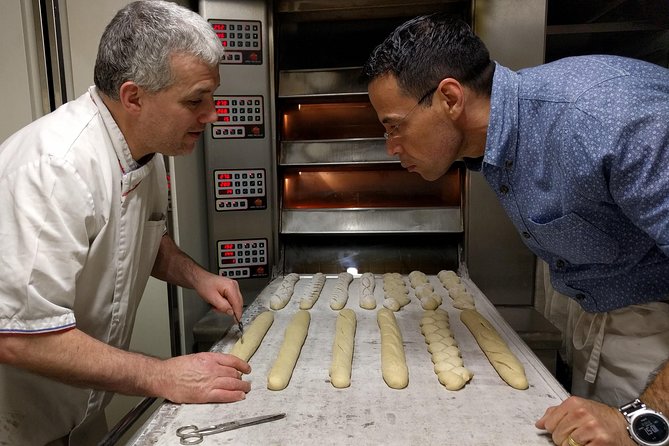
This is a strong choice for families with children age 6 and older, provided they can stay engaged for roughly two and a half hours. Children receive hands-on tasks and often get extra attention from Didier, while adults gain practical bread advice and a taste of French food culture.
It also suits couples and friends who want a quieter, more personal activity. The small group and warm food create an easy social setting without the rush of a large tour.
Home bakers will get the most from the lesson. You can ask about flour, shaping, lamination, and equipment, then apply the ideas in your own kitchen. Beginners are welcome too, but you should understand that watching skilled work is part of the learning.
The class is not recommended for people with sensitive airborne allergies. Flour is central to the entire session, and the bakery environment may expose you to airborne ingredients.
Should you book it?
Book this class if you want to understand why French bread tastes and feels different, not just buy a pastry on the way to your next sight. Didier’s humor, flour-making process, bread stories, and close demonstrations give the experience a strong personal stamp.
Go in with the right expectation: baguettes receive the deepest hands-on treatment, while croissants are explained, demonstrated, and shaped within a shorter lesson. If that balance suits you, the warm tasting, take-home bread, recipes, and small group make this one of Paris’s more memorable food activities.
Skip it if you need a fully English-speaking instructor, have a strict allergy concern, or want advanced croissant production from raw ingredients to final bake. For most families, curious beginners, and bread-minded visitors, the class earns its place in a Paris itinerary.
FAQ
Where does the baking class take place?
The class starts and ends at Boulangerie Pâtisserie Le Petit Mitron, 8 Rue Oberkampf, 75011 Paris, France.
How long does the class last?
The experience lasts approximately 2 hours and 30 minutes.
Is the class offered in English?
Yes. The class is offered in English through an English-speaking translator who works with the French baker during the lesson.
What will I learn to make?
You learn about making French baguettes and croissants. Pain au chocolat may also be included during the pastry portion.
Do I get to eat the food I make?
Yes. Tasting of baguettes and pastries is included, and you can taste the baked goods while they are warm.
Are recipes included?
Yes. Recipes are included so you can recreate the baguettes and pastries at home.
What is the minimum age?
The minimum age is 6 years old. Minors must be accompanied by an adult.
Can I cancel for a refund?
You can cancel up to 24 hours before the experience start time for a full refund. Cancellations or changes made less than 24 hours before the start are not accepted, and the amount paid is not refunded.
More Workshops in Paris
- Fragonard Paris: Mini Perfume Workshop
★ 4.5 · 1,924 reviews - Paris: Macaron Class at Galeries Lafayette
★ 4.3 · 905 reviews - Paris: 2-Hour Perfume Creation Workshop
★ 4.8 · 731 reviews - Paris Cooking Class: Learn How to Make Macarons
★ 5.0 · 634 reviews
Just listed in Paris
- Chartres Cathedral 5 Hours Tour from Paris with Private Transport★ 4.5 · 49 reviews
- Paris: Giverny & Versailles Small Group or Private Tour★ 4.5 · 49 reviews
- Paris: Louvre photoshoot or Seine bridges Eiffel Tower walk★ 5.0 · 49 reviews
- Paris: Choux Pastry and Chocolate Éclair Making Class★ 4.9 · 50 reviews
- Private tour of the Champagne area, meet local producers and taste their Champagne, start from your hotel in Paris.★ 5.0 · 50 reviews
- Paris Eternelle Notre-Dame Virtual Reality Tour★ 4.5 · 50 reviews
- Normandy D-Day Landing Beaches Private Day Trip from Paris★ 5.0 · 50 reviews
- Disneyland® Paris 1 Day with Round-Trip Train Tickets from Paris★ 4.0 · 50 reviews
Paris Tours, compared.



Versailles Palace and Gardens Full Access Ticket
Read our review →

Eiffel Tower Entry Ticket with Optional Summit Access
Read our review →

Louvre Guided Tour with Reserved Access & Boat Cruise
Read our review →
Moulin Rouge Cabaret Show Ticket with Champagne
Read our review →Browse the lists this tour appears in