
Reviewed · MUSEE D ORSAY & ORANGERIE TOURS
Paris: Best of Orsay Museum Small Group Tour with Tickets
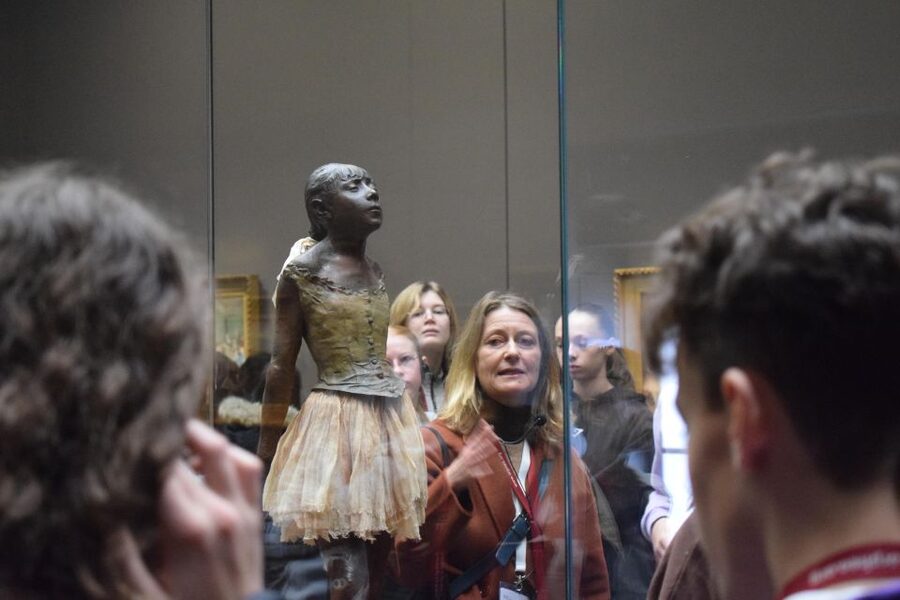
The most fascinating part of this tour begins before you see a single painting: the museum occupies a former railway station. Inside, your guide connects the building’s unusual past with the bold art of Manet, Monet, Renoir, Degas, Van Gogh, and Cézanne. I like the small groups, which make it easier to hear, and the way guides such as Olga, Blerta, and Vanina tie art to politics and social change. The main drawback is crowding, which can make some galleries noisy and hard to navigate.
I also like that the two-hour route gives you a clear story instead of a random march past famous canvases. You’ll see major works such as Renoir’s Dance at Le Moulin de la Galette, while learning how Realism led into Impressionism and later modern art. The $102 price is fair if you want structure and expert commentary, but less attractive if you prefer to wander alone.
Key points at a glance
- A former railway station: Learn how the grand Orsay building became a museum.
- A focused two-hour route: See major Impressionist and post-Impressionist works without trying to cover every room.
- Small-group attention: Groups can be as small as three or six, with private tours also available.
- Art tied to social change: Follow the shift from academic painting and Realism to Impressionism and modern art.
- Major names and overlooked artists: See Monet, Renoir, Van Gogh, Cézanne, Degas, Manet, Gauguin, Matisse, Morisot, Rodin, and others.
- Practical entry advantage: Your ticket gives quick access to the collections, though security screening still applies.
Why the Orsay Station Story Matters

Musée d’Orsay is not simply a container for paintings. The building itself helps explain the period you’re about to explore. Your meeting point is in front of the museum at 1 Rue de la Légion d’Honneur, beside the large elephant statue. Look for the guide holding a Connecting France sign.
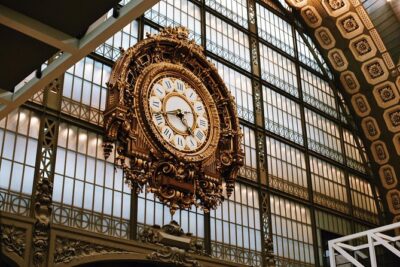
The tour begins with an introduction to the building and its change from railway station to fine arts museum. That setting gives the visit a useful starting point. The museum was created only a few decades ago, yet the structure recalls the age of rail travel, new technology, urban growth, and fast-changing Paris.
I like this opening because it puts the art in a real setting. The artists inside were not working in an isolated world. They were responding to new city life, changing social classes, political unrest, and a public that was slowly becoming more open to fresh ideas.
The building is also worth looking at as you move through it. One guide, Crystall, was praised for pointing out architectural features as well as paintings. That is a good reason to avoid spending the entire tour with your eyes fixed only on the walls.
A few other Paris half-days to compare
- Paris: Musée d’Orsay Entry Ticket and Seine River Cruise
★ 4.6 · 1,344 reviews - Paris: Musée d’Orsay Skip-the-Line Tour with Expert Guide
★ 4.5 · 1,145 reviews - Musée d’Orsay Skip-the-Line Tour with Expert Guide
★ 4.8 · 1,088 reviews
Meeting Your Guide by the Elephant
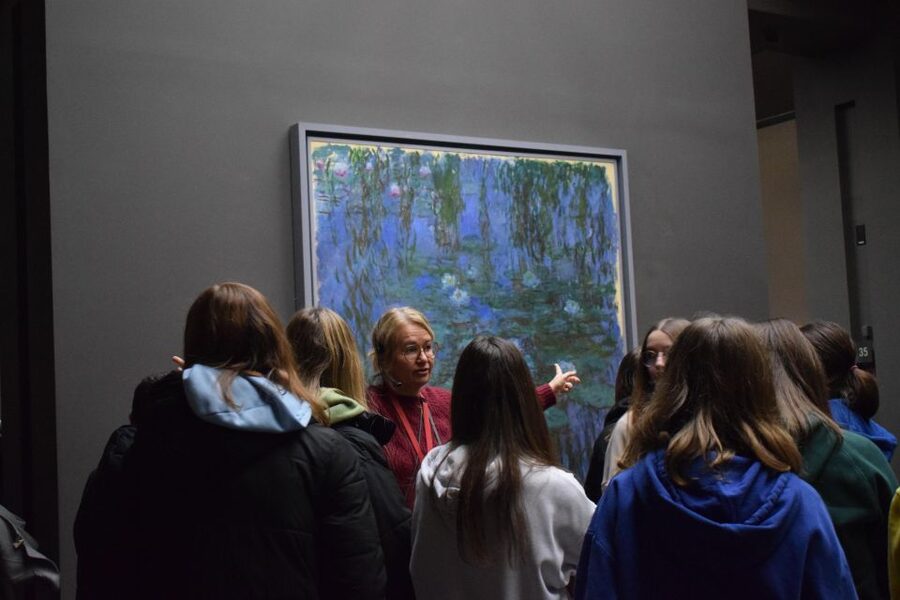
The meeting point is simple, but Paris can be hectic around major museums, so give yourself time to find the elephant statue. Your guide will be holding a Connecting France sign. Bring your passport or another ID card, especially if anyone in your party is under 18.
The group format is one of the strongest reasons to book. The tour is offered as a private or small-group experience, and many departures have only a handful of people. Groups of three, four, or six are small enough for questions and close listening.
That matters inside Orsay. A large group can clog a gallery and leave you trying to hear a guide over nearby conversations. A small group lets the guide stop at a painting, point out a detail, and check that everyone is following.
The experience is not always quiet. One person found the surrounding crowd noise made it difficult to hear, and another noted that a speaking device would have helped. Still, the small format reduces the problem. On a crowded day, guides such as Olga and Blerta were especially useful because they could move the group toward the key paintings and keep the route moving.
From Academic Rules to Impressionism
The tour’s central thread is the change from traditional academic painting to Impressionism and then to later modern styles. This is where a guide adds real value.
You begin with Realist artists such as Édouard Manet, who challenged the strict standards of academic art. From there, the discussion moves toward Degas, Pissarro, Renoir, Monet, and Sisley, artists who changed the way modern life could appear on canvas.
I like this chronological approach because it answers the question many first-time museum visitors have: why did these paintings look so radical at the time? The tour explains that Impressionism did not appear from nowhere. It grew out of arguments about what deserved to be painted, how a painting should be finished, and who had the authority to decide what counted as serious art.
The guides also connect artistic changes to political and practical realities. Geraldine praised Olga for explaining both the painters’ ideas and the social conditions around them. David liked the way his guide connected art to social changes. These are useful links because a painting becomes easier to understand when you know what its creator was pushing against.
Vanina’s approach, described by one visitor, began with the rigid academic standards that Impressionists rebelled against. She also brought in female artists such as Berthe Morisot, helping broaden the story beyond the most familiar male names.
Renoir, Monet, and the Social World on Canvas
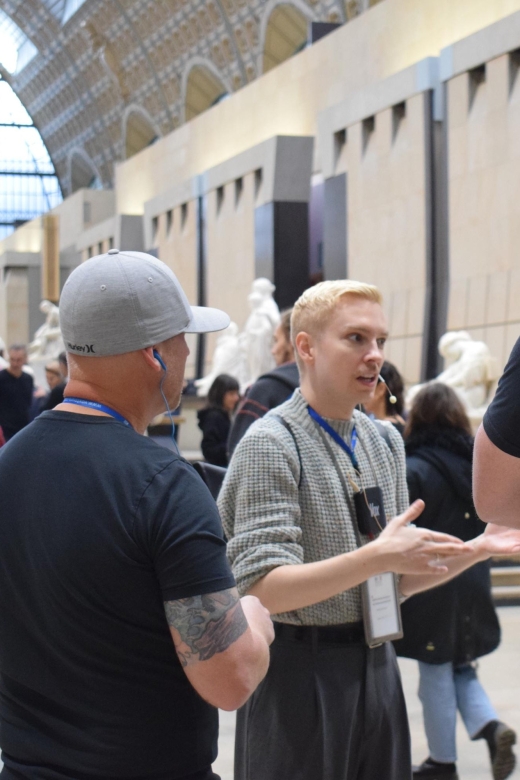
One major stop is Renoir’s Dance at Le Moulin de la Galette. It is a good example of the kind of painting that benefits from a guide. You are not only looking at brushwork and color. You are also looking at leisure, nightlife, crowds, fashion, and the changing social life of Paris.
A guide can help you notice the clues in the scene rather than treating it as a pretty picture and moving on. Alison particularly valued Marine’s habit of pointing out symbols and small details to look for. That kind of instruction can change how you view the rest of the museum after the tour ends.
The same is true of Monet and the other Impressionists. Instead of presenting each artist as a separate genius, the tour explains the exchanges and disagreements among them. You hear how one painter influenced another, how styles shifted, and how artists responded to earlier work.
That story-based method is more useful than a list of dates. It gives you a way to remember what you see. You may not retain every year or technical term, but you’ll understand why a particular painting feels different from the one beside it.
More museums in Paris:
- Paris: Louvre Museum Timed-Entrance Ticket
★ 4.6 · 71,977 reviews - Louvre Museum Masterpieces Guided Tour with Access
★ 4.5 · 12,023 reviews - Paris: Louvre Museum Entry Ticket With Host and River Cruise
★ 4.6 · 9,926 reviews - Les Invalides: Napoleon’s Tomb & Army Museum Entry
★ 4.6 · 9,185 reviews
Van Gogh, Cézanne, Gauguin, and Matisse
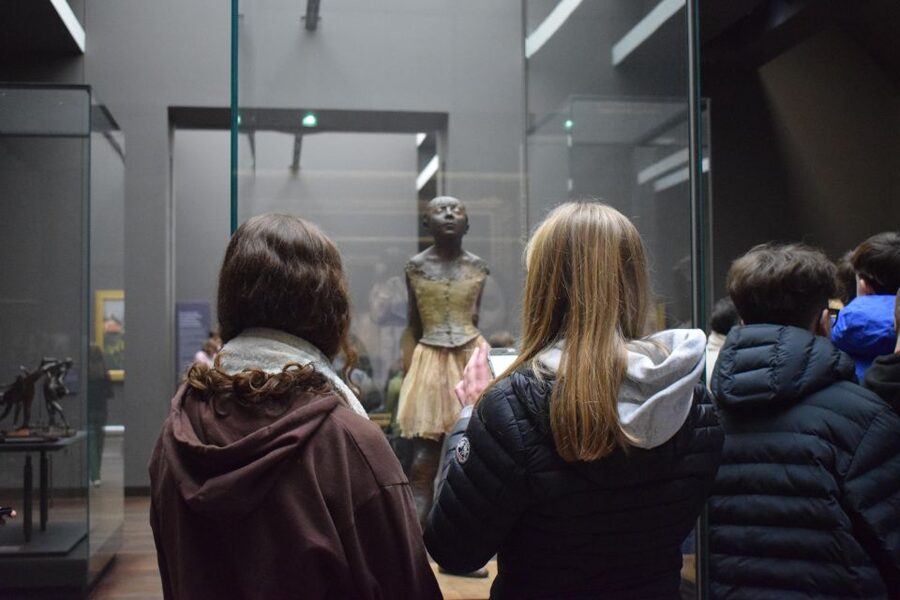
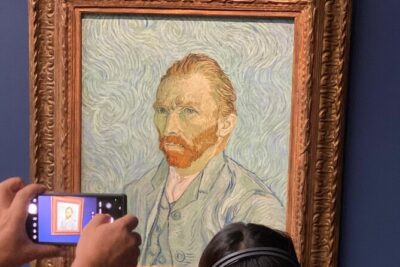
The route continues into post-Impressionism, with works by Van Gogh, Cézanne, Gauguin, and Matisse. These artists pushed beyond the quick visual impressions associated with Monet and Renoir.
The guide explains artistic techniques and the influence of one movement on the next. This can help you see that post-Impressionism was not one neat style. It was a set of different responses to the limits of Impressionism.
Van Gogh, Cézanne, Gauguin, and Matisse each took art in a different direction. A strong guide gives you enough context to compare them without turning the tour into a lecture. That balance seems to be a strength of this experience. Several guides were praised for giving plenty of information without droning on.
The tour may also include discussions of Art Nouveau, Rodin’s sculpture, and an original Lady Liberty. These stops add variety after a long run of paintings. The sculptures give you a chance to change your focus, while the Art Nouveau material links the museum’s art to design and decorative forms.
You should not expect to study every room in detail. Two hours is enough for a guided introduction to the main works, not a complete survey of the museum. At the end, you can remain inside and look around on your own, an especially useful option if one room has caught your attention.
What the Two-Hour Pace Feels Like
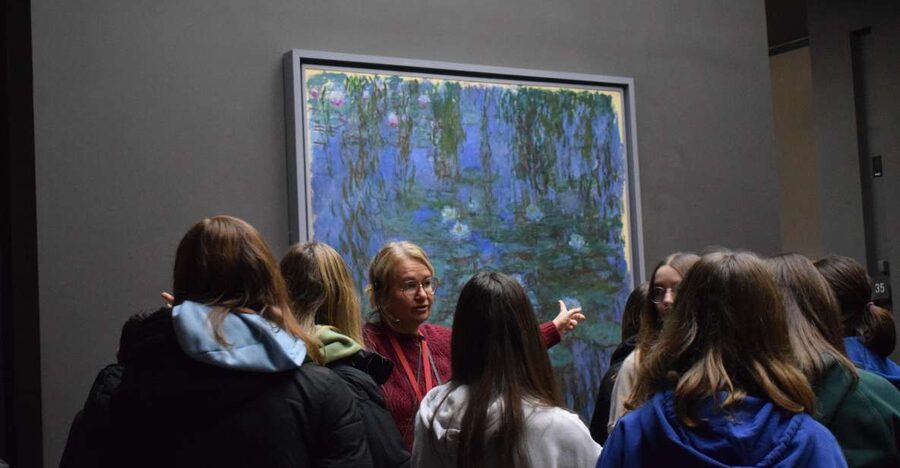
Two hours is a sensible length for this kind of museum visit. Orsay has enough material to occupy most of a day, but a long guided route can leave you tired and overloaded.
The pace is designed around major works and key movements. You’ll get the building’s story, a framework for 19th-century art, and stops at important paintings and sculptures. Guides often adapt explanations to the group. Emily, Max, and Sarah were each praised for shaping the tour around the interests and questions of the people with them.
That flexibility is valuable for families and mixed-experience groups. Children may respond better to stories and visual clues than to a long discussion of artistic theory. One guide, Blerta, was specifically praised for using engaging stories and lessons with children.
Crowds can affect the pace. On days when the Louvre is closed, Orsay may become especially packed. One visitor went on a Tuesday and found the museum very crowded, while still crediting Olga with getting the group close to the major works.
Security is another practical point. The included ticket gives you quick access to the collections, but it does not let you skip the security line. That distinction matters on a busy day. You should still expect a screening delay before entering.
Is $102 a Fair Price?
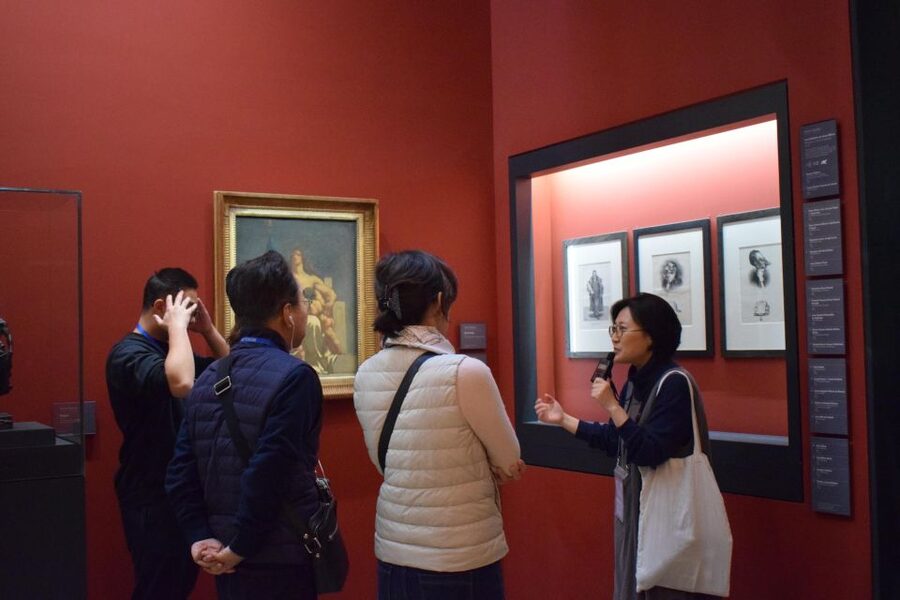
At $102 per person, this is not a budget museum ticket. You are paying for entry, a live guide, and a focused two-hour route. The value depends on how much help you want making sense of the collection.
I consider it good value for a first visit, especially if you have limited time in Paris. Orsay’s famous works are spread through a large museum, and it is easy to wander past important paintings without understanding how they fit together. A guide gives you a route and a story, saving the time you might otherwise spend trying to organize the collection yourself.
The small group also adds value. You can ask questions, stay near the guide, and benefit from explanations tailored to the people in the room. Several groups were particularly small, and some departures became private tours when no other people booked.
The price is harder to justify if you already have strong art-history knowledge or enjoy reading labels at your own speed. You may prefer to buy admission alone and spend several hours exploring. The two-hour format also means that independent visitors who want to see every gallery will need extra time after the guided portion.
Practical Rules Before You Book
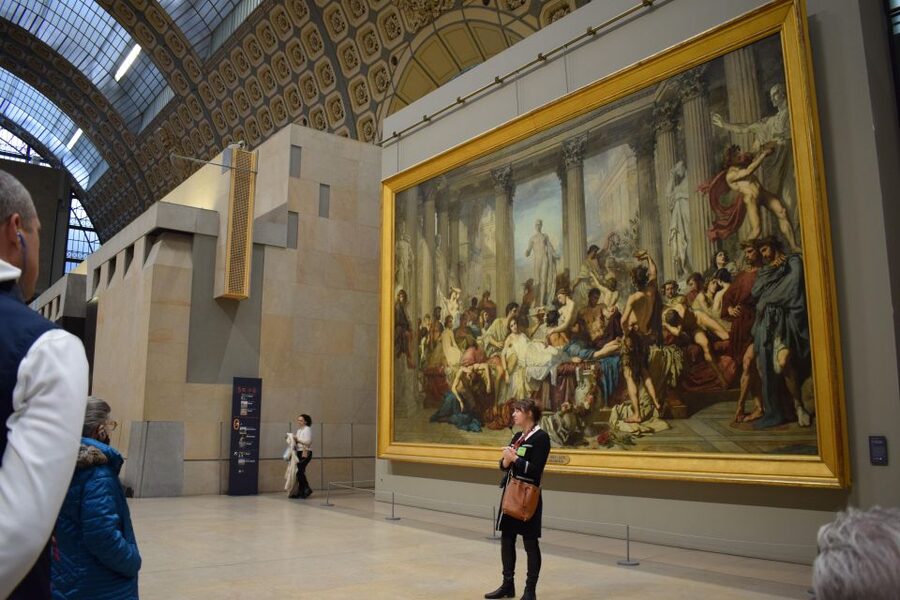
Pack light. Large bags, backpacks, luggage, and umbrellas are not allowed. That restriction can affect your plans if you are arriving directly from a train station or hotel checkout.
Bring a passport or photo ID card. Tickets are personal, and anyone up to age 17 must have a photo ID card. It is a small detail, but failing to bring the right document can create a serious problem at entry.
The tour is offered in English, French, Spanish, Italian, and German. Check the available departure before booking, since language and start times depend on availability.
The museum can close unexpectedly during strikes or other disruptions. In that case, the provider may offer another available time or a walking tour. If the alternative does not suit you, the booking can be canceled for a refund. Free cancellation is available up to 24 hours before the start time, and you can reserve now while paying later.
Mobility is the biggest limitation. The shared semi-private tour cannot change its pace for people with mobility impairments, and the experience is not suitable for wheelchair users. A private tour may be possible for people with mobility needs, but you should arrange that option rather than assuming the standard group can adapt.
Some rooms have restrictions on speaking. Your guide will warn you when that applies, so do not expect a running explanation in every gallery.
The Guides Make the Difference
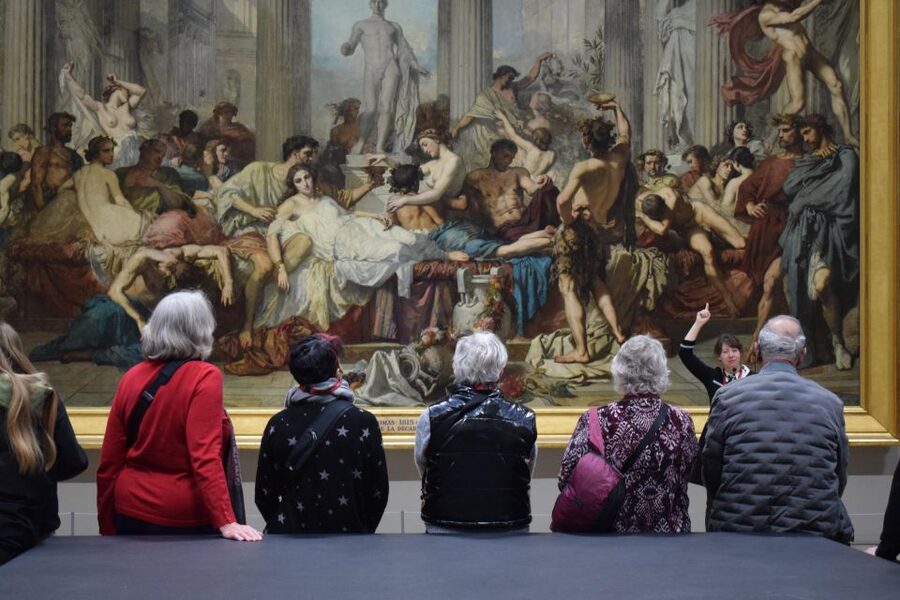
The provider uses different guides, so the exact personality and emphasis will vary. That is normal for a museum tour, and the pattern here is clear: the best part is the guide’s ability to turn names and dates into a story.
Miriam was praised for calm expertise and clear insights. Marine used an iPad to add information and made it easier to spot clues in paintings. Nadia connected art with social change, while Antoine was valued for giving broad context before moving into details.
Olga received especially strong praise for combining art history with the political and practical realities of the period. Blerta was repeatedly noted for her command of the museum, her enthusiasm, and her ability to keep the tour moving through crowds.
You should still remember that hearing can depend on gallery conditions. If your guide is speaking while another group is nearby, move closer and ask for repetition when needed. The small group makes that easier, but it cannot remove every sound problem.
Who Should Book This Orsay Tour?
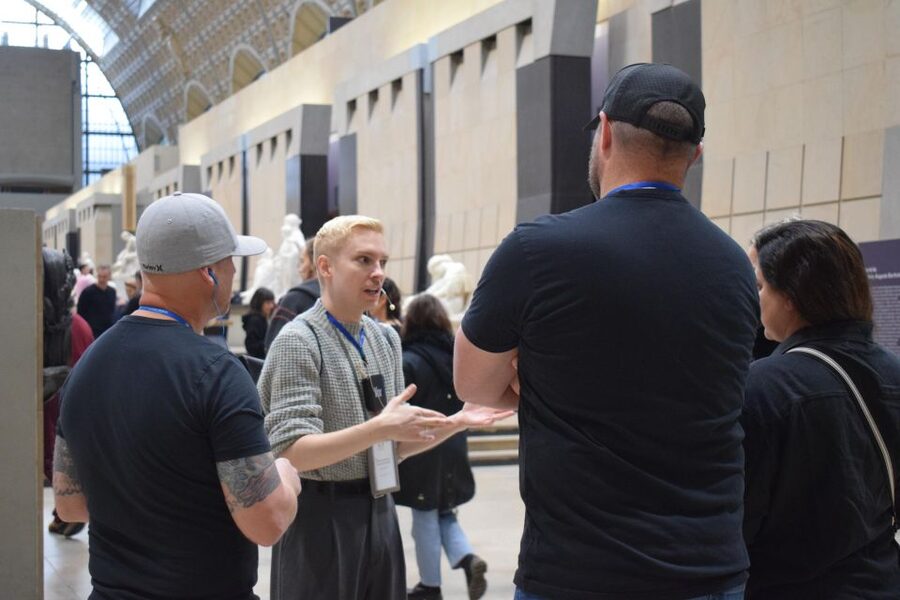
I would choose this tour if you are visiting Orsay for the first time, have about two hours, or want a clear introduction to Impressionism. It is also a good fit if your group includes people with different levels of interest. A thoughtful guide can keep beginners involved while giving more curious visitors enough context to ask questions.
Families may appreciate the short length and the storytelling. Couples and solo visitors who dislike wandering without a plan will also get practical value from the route.
I would hesitate if you want complete freedom to linger at one painting for twenty minutes, sketch, or move at a slow personal pace. The shared tour has a set rhythm, and the museum’s crowds may make long stops difficult. Anyone using a wheelchair or needing a slower pace should ask about a private option before booking.
Final Decision: Book It for Context and Time
Book this experience if you want the Orsay’s famous works explained as part of a larger story. The former station, the shift from academic art to Impressionism, the connections to politics and social life, and the move toward modern art all make more sense with a good guide.
The strongest reasons to book are the small group, included museum entry, and focused two-hour route. The main cautions are the $102 price, security screening, crowd noise, and mobility limits.
If you want to see Renoir, Monet, Van Gogh, and Cézanne but are unsure how to approach the museum, this is a practical choice. If you already know exactly what you want to see and prefer complete independence, buy a ticket and explore on your own.
FAQ
How long is the Musée d’Orsay tour?
The guided museum visit lasts two hours.
Where do I meet the guide?
Meet in front of Musée d’Orsay at 1 Rue de la Légion d’Honneur, beside the large elephant statue. The guide will hold a Connecting France sign.
Are museum tickets included?
Yes. Entrance tickets to Musée d’Orsay and the museum tour are included.
Can I skip the security line?
The ticket provides quick access to the collections, but you cannot skip the museum’s security line.
What languages are available?
Live guides are available in English, French, Spanish, Italian, and German.
Is the tour suitable for wheelchair users?
The shared tour is not suitable for wheelchair users or people with mobility impairments. A private tour may be booked for people who need a different pace.
Just listed in Paris
- Chartres Cathedral 5 Hours Tour from Paris with Private Transport★ 4.5 · 49 reviews
- Paris: Giverny & Versailles Small Group or Private Tour★ 4.5 · 49 reviews
- Paris: Louvre photoshoot or Seine bridges Eiffel Tower walk★ 5.0 · 49 reviews
- Private tour of the Champagne area, meet local producers and taste their Champagne, start from your hotel in Paris.★ 5.0 · 50 reviews
- Paris: Choux Pastry and Chocolate Éclair Making Class★ 4.9 · 50 reviews
- Paris Eternelle Notre-Dame Virtual Reality Tour★ 4.5 · 50 reviews
- Normandy D-Day Landing Beaches Private Day Trip from Paris★ 5.0 · 50 reviews
- Disneyland® Paris 1 Day with Round-Trip Train Tickets from Paris★ 4.0 · 50 reviews
Musee d Orsay & Orangerie Tours, compared.
Musée d’Orsay Entry Ticket and Seine River Cruise
Read our review →
Musée d’Orsay Skip-the-Line Tour with Expert Guide
Read our review →
Musée d’Orsay Skip-the-Line Tour with Expert Guide
Read our review →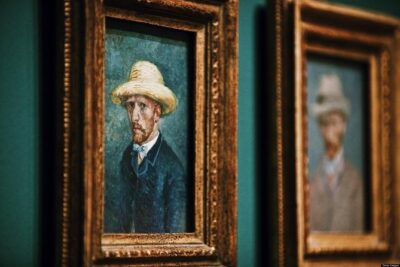
The Musée d’Orsay Guided Tour Orsay Museum Semi-Private 6ppl Max
Read our review →
Louvre & Musée d’Orsay Guided Museum Tour Semi-Private 6ppl Max
Read our review →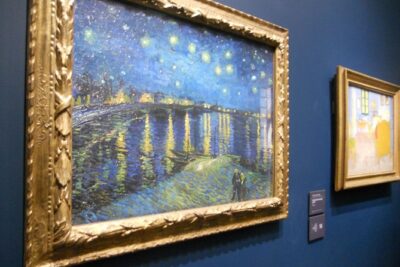
Orsay Museum – Exclusive Guided Tour (Reserved Entry Included)
Read our review →Browse the lists this tour appears in