
Reviewed · EPERNAY TOURS
Bubble Champagne Tour from Epernay (Small group half day tour)
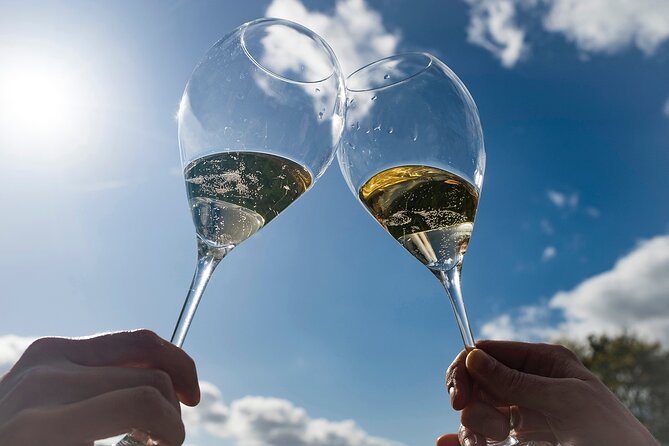
Champagne’s best story is not told only in grand cellars. This half-day tour takes you from Dom Pérignon’s village in Hautvillers to the Côte des Blancs, where a family grower explains how Champagne is made and pours three Grand Cru wines. I love the mix of famous places and small-scale production, and I love that the group never exceeds eight people. The main trade-off is pace: you cover several villages and viewpoints in just three and a half hours, so photo stops are brief.
I also like the extra tasting of Ratafia, Fine de la Marne, and Marc de Champagne. These local drinks give you a wider view of Champagne culture than a standard tasting of sparkling wine alone. Just keep your expectations clear: this is a compact introduction, not a long cellar tour or a leisurely day among vineyards.
Key points to know before you book
- Hautvillers begins the story: Visit the church and the grave of Dom Pérignon, then hear how much of the famous invention tale is fact and how much is legend.
- Two major Champagne areas: See the Pinot Noir vineyards of the Marne Valley and the Chardonnay-focused Grand Cru villages of the Côte des Blancs.
- A family grower replaces the big-brand script: In Oger, tour a multigenerational estate, its press, winery, and cellar.
- Three Grand Cru Champagnes: Taste styles that may include a wine without dosage, a Brut, a vintage, or a cuvée aged in oak.
- Local aperitifs add variety: Try Ratafia Champenois, Fine de la Marne, and Marc de Champagne.
- Designed for a short visit: The tour starts and ends at the Épernay tourism office and works well if you arrive by train for the day.
Why this Épernay tour feels different from a big Champagne house visit
The Champagne region is full of famous names, polished reception rooms, and enormous underground cellars. Those visits can be worthwhile, but they often explain Champagne from the viewpoint of a major house. This tour gives you that wider regional setting first, then puts you in front of an independent producer.
That difference matters. A family estate can show you how grapes, harvest decisions, pressing, blending, aging, and dosage connect in a smaller operation. You are not simply tasting a label. You are tasting the work of one estate and learning how its choices shape the wine.
The group size is another real advantage. With two to eight people and a guide in an air-conditioned vehicle, the outing should feel more personal than a large coach excursion. Guides named in past bookings include Isabelle, Philippe, Marine, Charlotte, Nina, and Victoria. The exact guide is not fixed, but the strong pattern is clear: the tour depends heavily on a personable guide who can explain the region in English and adjust the conversation to the group.
At $187.06 per person, this is not the cheapest way to drink Champagne. The value comes from combining transport between rural villages, a regional overview, a family producer visit, three Grand Cru tastings, and three additional local drinks in a short period. If you would otherwise pay separately for taxis, tastings, and a winery visit, the price becomes easier to justify.
A few other Epernay half-days to compare
- From Reims: Champagne and Family-Run Wineries Tour
★ 4.8 · 671 reviews - Champagne: Champagne Tasting Class with Lunch
★ 4.9 · 384 reviews - Aÿ-Champagne: Pressoria Champagne Museum with Tasting
★ 4.7 · 239 reviews
Hautvillers and the Dom Pérignon question
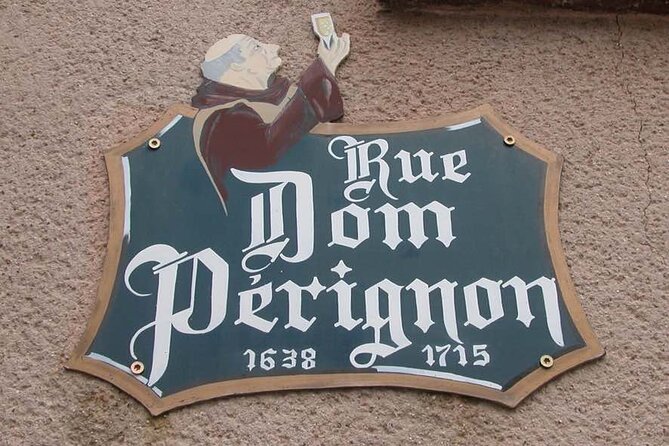
Your first stop is Abbaye Saint-Pierre d’Hautvillers, in the village widely called the cradle of Champagne. The church contains the grave of Dom Pérignon, the Benedictine monk closely linked with the development of Champagne wine.
The guide explains his role and addresses the familiar question: did Dom Pérignon actually invent Champagne? The useful answer is more nuanced than the old legend. This stop gives you the background needed to understand why his name became so closely tied to the region and to one of its most prestigious labels.
The church visit lasts about 30 minutes and has no separate admission charge. It is a quiet beginning, and it adds a human figure to what can otherwise seem like a story about brands, bottles, and technical production.
I would not book this tour solely for the abbey. The church is a short visit, not a full religious monument tour, and the larger value lies in the guide’s explanation. If you enjoy wine history, local stories, and the way regional myths are built, you will get more from this stop than someone looking only for grand architecture.
The Marne Valley viewpoint above the vineyards
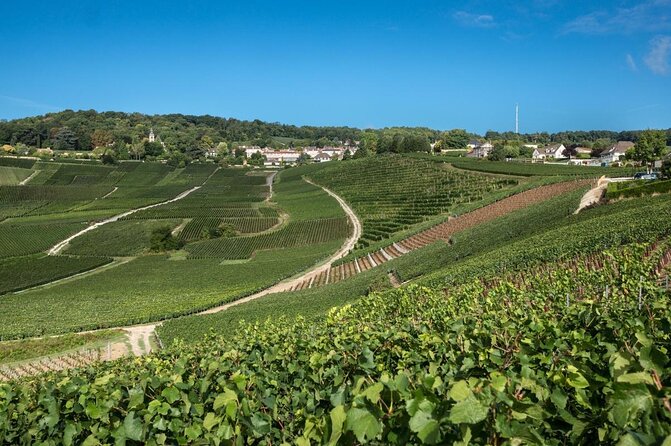
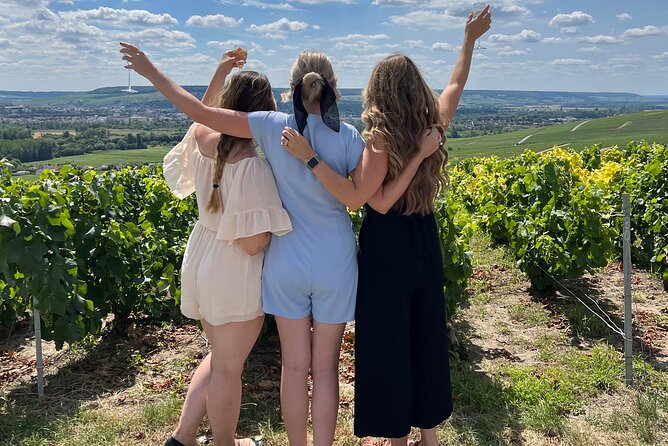
Hautvillers also gives you a broad view over the Marne Valley. This is one of the tour’s strongest visual moments, with vineyard-covered slopes and the river valley spreading below. It is a good place to take photographs and to understand the physical setting of Champagne rather than seeing the region only through a tasting glass.
The vineyards here are mainly planted with Pinot Noir. Your guide explains the three main grape varieties used in Champagne, the work required in the vines, the local soil, and the principles of sustainable viticulture. That information is practical because it helps you understand why two Champagnes can taste different even when they come from the same broad region.
The stop lasts around 45 minutes. That is enough for an explanation and photographs, but it is not a long walk through the vines. One past booking found the photo stops limited and felt that the selected viewpoints could have been better. That is a fair caution. This is a driving tour with planned stops, not a hiking outing where you can wander until the light is perfect.
Still, this section gives the tour its sense of place. The famous bottles sold around the world come from specific hills, exposures, villages, and grape-growing decisions. Seeing the vineyards from above makes the regional map easier to grasp.
From Pinot Noir country to the Côte des Blancs
After Hautvillers, the route heads south of Épernay toward the Côte des Blancs. This area is known as the kingdom of Chardonnay, especially in the Grand Cru villages of Cramant, Avize, and Oger.
In Champagne, Grand Cru is the highest village classification within the appellation. It does not mean every bottle from a Grand Cru village will suit your taste, but it signals that the fruit comes from one of the region’s most highly regarded vineyard areas. The guide helps connect that classification to the wine in your glass.
The route also passes several major Champagne-related sights. You may see the large bottle factory, Château de Saran, and the Montaigu site associated with Moët & Chandon. Château de Saran is a private LVMH property used for important customers and VIP visits, so this is a passing view rather than an interior tour.
This portion is mainly a commented drive. You see several well-known villages, but you should not expect to stop at every one. The route also uses some of the same roads on the way back, which can feel repetitive if you want a changing sequence of scenery. The benefit is efficiency: you get a quick introduction to both the Marne Valley and the Côte des Blancs within a half-day schedule.
Same city, a completely different afternoon:
- Aÿ-Champagne: Champagne House Tour and Tasting Class
★ 4.9 · 209 reviews - The Essential Tour from Epernay with Champagne Tasting
★ 4.9 · 120 reviews - From Epernay : Bubble Champagne Tour 6 tastings
★ 4.7 · 108 reviews - Champagne experience with a vintage van from Epernay – 3 hours
★ 5.0 · 108 reviews
Oger and the family estate visit
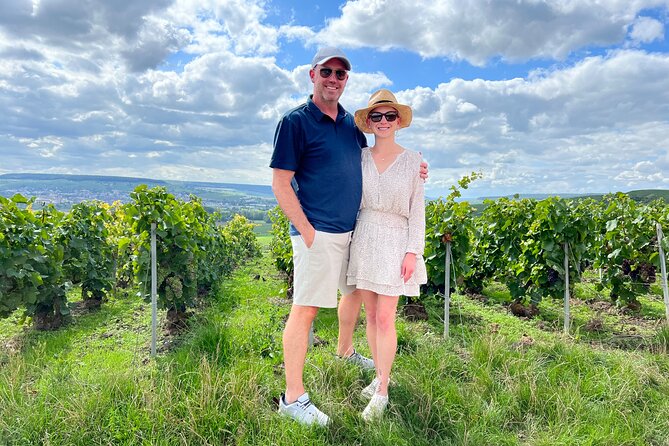
The central stop is in Oger, another Grand Cru village known for Blanc de Blancs Champagne made entirely from Chardonnay. Here, you visit an independent producer and family estate that has been in the same family since 1864.
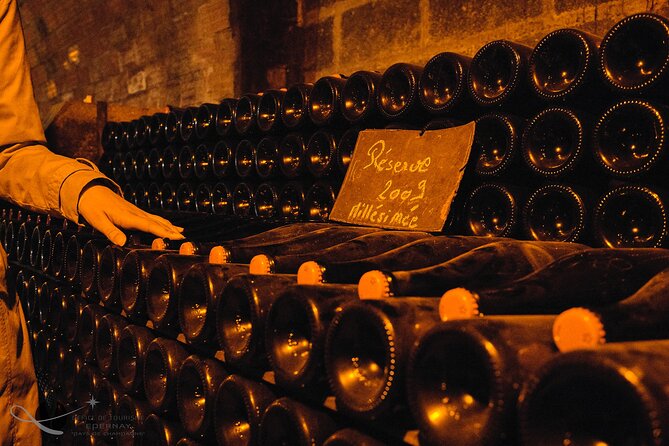
This is where the tour moves beyond sightseeing. You see the press, winery, and cellar, while the guide or producer explains the process from grape to bottle. The multigenerational setting helps you understand that Champagne is not simply made in a famous house and sold under a famous name. Many smaller growers farm their own vineyards and produce wines that reflect a much more specific slice of the region.
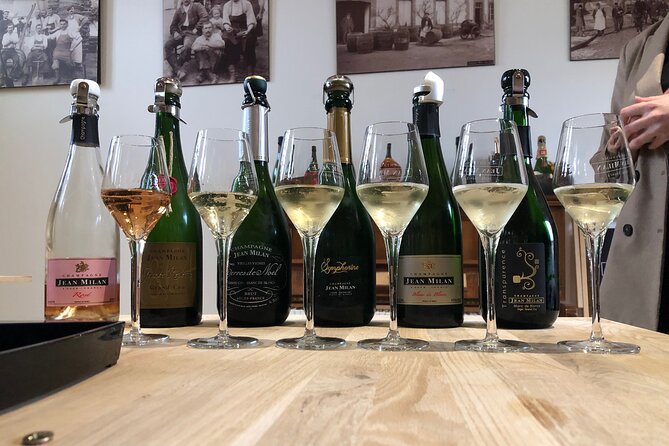
The estate visit and tasting take about 90 minutes. That is a useful amount of time for questions, technical explanations, and a proper look at the production spaces. The tasting includes three 100 percent Grand Cru Champagnes, with advice on how to compare them.
The exact selection can include a Champagne without dosage, a Brut, a vintage wine, or a cuvée aged in oak barrels. These terms are worth paying attention to. Dosage refers to the small addition made after the wine’s final disgorgement, and a wine without dosage will usually show the grape and site with less sweetness added. A vintage wine comes from a single harvest year, while oak aging can bring a different texture and flavor from the usual stainless steel or bottle-aging profile.
One practical criticism deserves attention. A past booking reported that the same glass was used for all three Champagnes, with the next wine poured into it before the previous one was finished. That is not the ideal setup for careful tasting. If you want to compare wines precisely, ask politely about fresh glasses or take notes before the next pour. The tasting is designed to teach differences, but the glassware may not match the standards of a formal wine class.
You can buy bottles and souvenirs at the estate. This is convenient, but remember that suitcases are not allowed on the tour vehicle. If you arrive with luggage, make arrangements before meeting the group. Purchases may also make your return journey heavier, as one couple discovered after bringing bottles home.
Ratafia, Fine, and Marc: Champagne beyond bubbles
The final tasting broadens the experience beyond sparkling wine. At or near the family estate, depending on weather and season, you sample three traditional Champagne spirits and aperitifs from Goyard Distillery in Aÿ, founded in 1911.
The best-known is Ratafia Champenois. It is a sweet wine made from the same grape varieties used for Champagne and may be served as an aperitif, digestif, or with food. Because it is not exported as widely, many people encounter it here for the first time.
Fine de la Marne and Marc de Champagne are brandies, generally enjoyed as digestifs. They are stronger and more warming than the sparkling wines, so this section changes the rhythm of the tasting. You move from freshness and acidity to sweetness and spirit.
Weather affects the setting. You may taste outdoors with a panoramic view of the vineyards, or inside at the family estate. The tasting itself is included, but the setting is not guaranteed. I like this addition because it gives you something distinctive to seek out later in restaurants or wine shops in the region.
Avenue de Champagne, a final look at Épernay
Back in Épernay, the vehicle makes a commented pass along the Avenue de Champagne. This grand avenue is lined with mansions and production buildings belonging to famous houses such as Moët & Chandon, Perrier-Jouët, and Pol Roger.
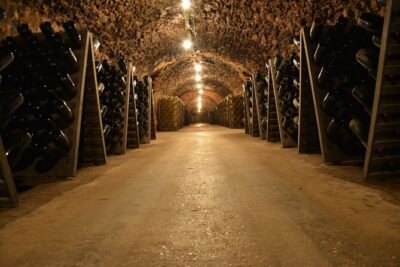
Beneath the avenue are about 100 kilometers of cellars holding an estimated 200 million bottles. You do not tour those cellars on this experience, but the drive helps explain why Épernay is considered the capital of the Champagne vineyard. It also gives you useful orientation if you plan to return for a separate cellar visit.
The avenue is impressive, but it can feel like a brief finale rather than a full stop. The tour’s real focus is the countryside and family producer. If your priority is a grand house cellar, choose a dedicated visit in Reims or Épernay as well.
Timing, meeting point, and who should book
The tour lasts approximately three hours and 30 minutes. It begins and ends at the Office de Tourisme d’Épernay en Champagne, 7 Avenue de Champagne. Hotel transfers are not included, so you need to reach the meeting point yourself.
The schedule suits a day trip from Paris or a short stay in Épernay. One booking paired a morning train from Paris with lunch in Épernay before joining the afternoon outing. Check your own train timing carefully, since the tour ends back at the same meeting point and the duration is approximate.
Most people can participate, and the meeting point is near public transportation. Suitcases and luggage are not permitted in the vehicle. The experience is offered in English and confirmed at booking.
I would choose this tour if you want regional context, a small group, and a family producer rather than only a polished Champagne brand. It is also a good fit for solo visitors, including those who want the comfort of a small organized group. The compact format lets you see a lot without giving up personal contact with the guide.
I would look elsewhere if you want a long vineyard walk, extensive time at each viewpoint, multiple large Champagne houses, or a highly formal tasting with a fresh glass for every wine. This is a brisk introduction with several short chapters.
The experience has a 4.8 rating from 58 reviews, with 93 percent recommending it. That matches the main strengths: warm guides, strong regional explanations, attractive countryside, and the chance to meet a smaller producer. The occasional weak point is not the subject matter but the tight format and tasting setup.
Should you book the Bubble Champagne Tour from Épernay?
Book it if you want to understand how the famous avenue, vineyards, villages, and independent producers fit together in one manageable outing. The best parts are the Hautvillers viewpoint, the Oger family estate, and the chance to taste Grand Cru Chardonnay alongside Ratafia and local brandies.
Skip it if you already know Champagne well and need a long, technical cellar visit with extensive time for photography. For most first-time visitors with half a day, the tour offers a useful balance of scenery, history, production, and tasting. Just arrive without luggage, allow for a brisk pace, and treat the three wines as a guided comparison rather than a formal professional tasting.
FAQ
How long does the Bubble Champagne Tour from Épernay last?
The tour lasts approximately three hours and 30 minutes.
Where does the tour start and finish?
It starts and ends at the Office de Tourisme d’Épernay en Champagne, located at 7 Avenue de Champagne in Épernay.
How many people can join the tour?
The group is limited to a maximum of eight participants, with tours operating for groups of two to eight people.
Is hotel pickup included?
No. Hotel transfers are not included, so you must make your own way to the Épernay tourism office.
What Champagne is included in the tasting?
You taste three 100 percent Grand Cru Champagnes at an independent family estate in Oger. The selection may include a wine without dosage, a Brut, a vintage, or a Champagne aged in oak barrels.
Are other drinks included?
Yes. The tour includes tastings of Ratafia Champenois, Fine de la Marne, and Marc de Champagne from Goyard Distillery in Aÿ.
Are suitcases allowed in the vehicle?
No. Luggage and suitcases are not allowed on the tour.
Can I cancel for a full refund?
Yes. You can cancel at least 24 hours before the local start time for a full refund. Cancellations or changes made less than 24 hours before the start time are not accepted for a refund.
Just listed in Epernay
- Champagne Munoz Bruneau : Half Day Visit and Tasting★ 5.0 · 50 reviews
- Champagne Vineyard Experience: Delve into the terroir★ 4.4 · 52 reviews
- Champagne Munoz Bruneau : Half Day Visit and Tasting★ 4.9 · 53 reviews
- Champagne Tasting Class and Lunch near Epernay★ 5.0 · 53 reviews
- The Connoisseurs from Epernay (Private Half day Champagne Tour)★ 5.0 · 59 reviews
- Discovery tour (2 tastings)★ 5.0 · 77 reviews
- From Epernay: Champagne Small-Group tour with tastings & Lunch★ 5.0 · 93 reviews
- From Epernay : Bubble Champagne Tour 6 tastings★ 4.7 · 108 reviews
Epernay Tours, compared.

The Essential Tour from Epernay with Champagne Tasting
Read our review →
Champagne experience with a vintage van from Epernay – 3 hours
Read our review →
Champagne Small-Group tour with tastings & Lunch
Read our review →
Browse the lists this tour appears in