
Reviewed · MUSEUMS
Cave Museum Village Troglodyte of Rochemenier Admission Ticket
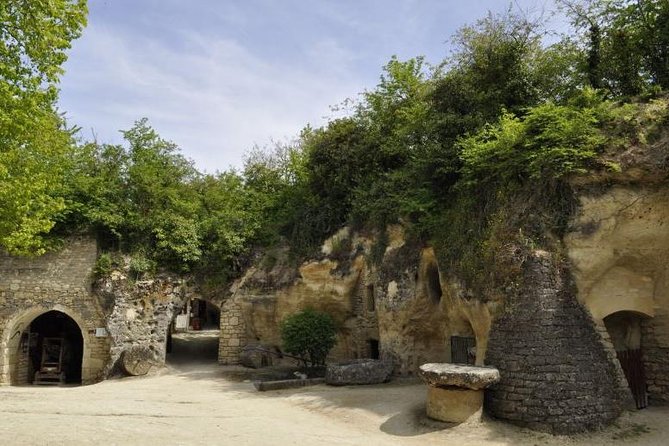
Rochemenier is a village built below ground, not in the usual storybook sense of stone houses clustered around a church. Here, farmers carved homes, barns, and work rooms into soft sandstone, creating about 250 underground rooms spread among roughly 40 farms. The oldest known dwelling dates from the 13th century, and the village continued growing until the 19th century.
I like the clear link between the rooms and everyday rural life, with old furniture, tools, and photographs showing how the final residents lived. I also like the freedom of a self-guided visit, especially with explanations available in 18 languages. The main drawback is that the regular visit is not guided in English. A French guided visit is offered at certain times, but you will need the multilingual leaflet for an English explanation.
Key points to know before you go
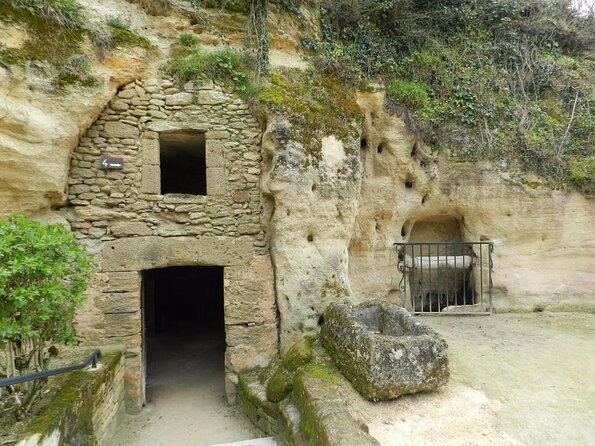
- Two former farms are open to the public: These abandoned homes give you a direct look at underground domestic and farm life.
- Around 250 rooms make up the former village: The scale is much larger than a single cave house or isolated cellar.
- The oldest habitation dates from the 13th century: The site shows how the settlement grew over many centuries.
- The sandstone contains sea shells: Farmers used the calcareous sand to reduce acidity in their fields.
- Plan on one to three hours: Your pace depends on how closely you study the objects and photographs.
- Bring a sweater: The underground rooms stay cool, even when the weather outside is warm.
Why Rochemenier was built below the ground
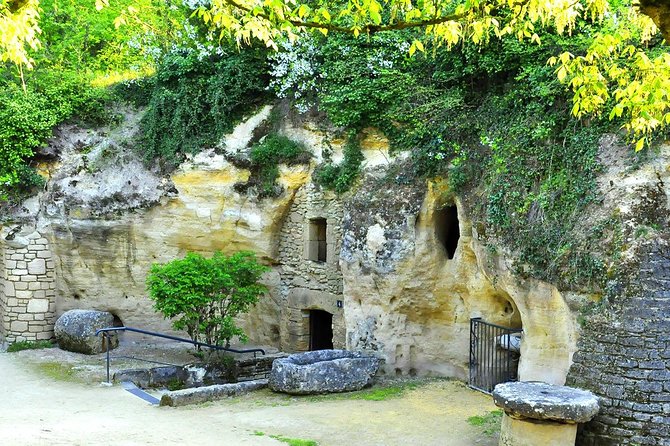
At Rochemenier, the rock itself shaped village life. Residents excavated rooms from sandstone containing sea shells. This material is a form of calcareous sand, and farmers also used it to neutralize acidic soil, so the rock had value both as building material and as an agricultural resource.
The underground setting was not created as a novelty for sightseers. It grew from practical needs. As the population increased, residents added more rooms and expanded the farms. The settlement developed gradually from the 13th century through the 19th century, producing a network of homes and agricultural spaces rather than one isolated cave.
That history matters because the rooms are easier to understand when you see them as working homes. You are not simply walking through unusual stone chambers. You are seeing a village adapted to the material beneath its fields.
The site open to the public represents part of this larger settlement. Two farms, abandoned around the beginning of the 20th century, were opened for visitors in 1967. Their abandonment helped preserve the arrangement of the rooms and many of the objects connected with daily life.
More museums in France:
- Paris: Louvre Museum Timed-Entrance Ticket
★ 4.6 · 71,977 reviews - Louvre Museum Masterpieces Guided Tour with Access
★ 4.5 · 12,023 reviews - Paris: Louvre Museum Entry Ticket With Host and River Cruise
★ 4.6 · 9,926 reviews
Entering the two abandoned underground farms
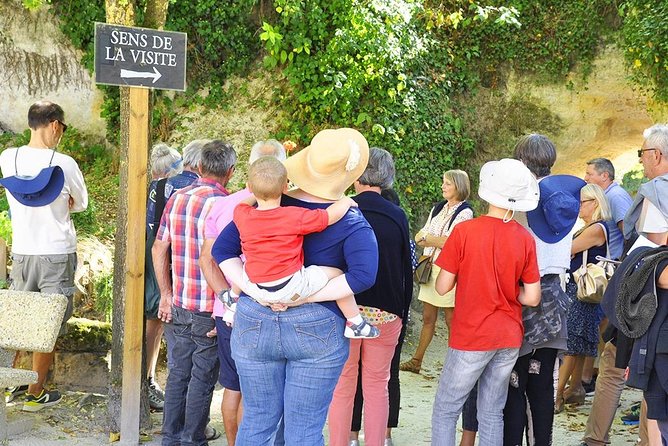
Your visit centers on the two former farms. Instead of following a guide from room to room, you move through the spaces at your own pace, using the explanatory leaflet to understand what you are seeing.
That freedom works well here. You can pause beside an old tool, study a photograph, or take extra time in a room that catches your attention without holding up a group. If you are visiting with children, the underground setting gives the tour a sense of discovery, while the furniture and farm equipment provide concrete details to discuss.
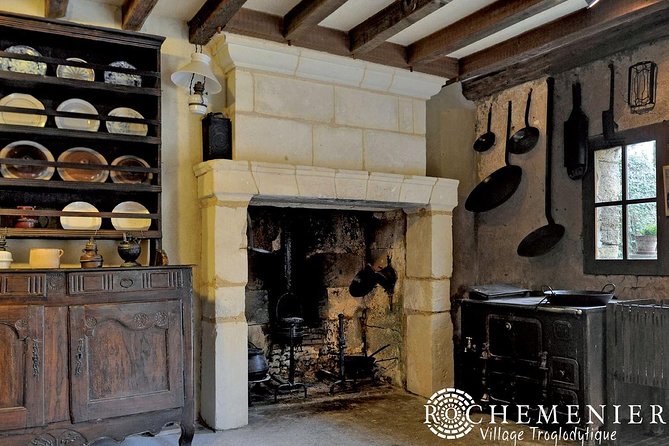
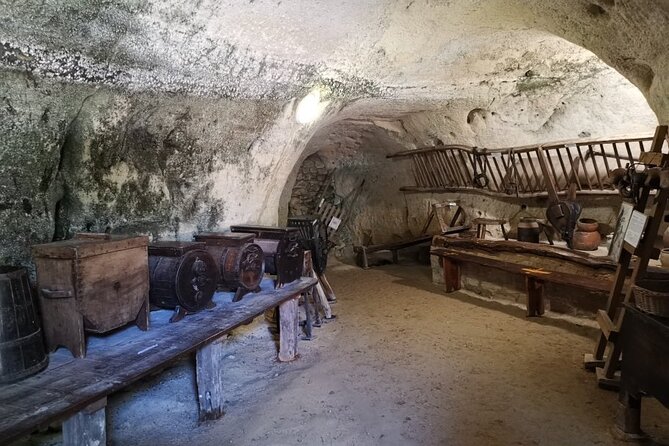
The rooms show how the last inhabitants used the site. Furniture helps you picture domestic routines. Tools point to farm work and household chores. Photographs connect the bare rock and preserved objects with actual people who lived there, keeping the visit from becoming a simple geological display.
The presentation is carefully maintained, which helps the objects do their job. You will not need specialist knowledge to follow the story. The leaflet supplies the basic context, and the arrangement of the homes lets you see how underground space was divided and reused.
Because the former farms were left behind early in the 20th century, the visit also gives you a look at a rural way of life that changed as modern homes and farming methods took hold. The site does not present French history as a list of dates. It shows change through rooms, possessions, and work tools.
A village of 250 rooms, not just a single cave
The phrase troglodyte village can sound as if you are visiting one cave or a few rooms cut into a hillside. Rochemenier is bigger than that. The village once contained about 250 underground rooms, distributed over approximately 40 farms.
Only part of the settlement is included in the public visit, but knowing the full scale changes the way you read the site. The two farms are examples of a much wider community. Their rooms were part of a network of domestic and agricultural spaces shaped by the growth of the population.
The layout also explains why the visit can take anywhere from one to three hours. You can make a quick pass through the principal rooms in about an hour, or slow down to read the leaflet carefully and examine the objects and photographs. There is no fixed performance to catch during the self-guided visit.
I would allow closer to two hours if you enjoy historic homes and want to read the explanations. If you are fitting Rochemenier into a busy day, the visit can still work as a shorter stop. The price of $10.26 per person is reasonable for that flexibility, particularly if you use the full opening period rather than rushing through.
What the furniture and tools tell you
The strongest part of Rochemenier is its ordinary detail. Furniture, tools, and photographs belonged to the last residents, so the display focuses on how people used the rooms rather than on decorative showpieces.
A tool can tell you more about rural life than a long paragraph on a wall. It suggests the work needed to maintain a farm, prepare food, manage animals, or care for a household. Furniture shows how rooms served practical purposes, often with several uses packed into limited underground space.
The photographs add another layer. They help bridge the gap between the preserved rooms and the people who occupied them. You can look at the excavated walls and then connect them with the families and routines represented in the images.
This is where I find the admission fee especially fair. You are paying for a historic site with substantial preserved space, not simply a small exhibit of old objects. The displays give the rooms a human scale, while the rooms give the objects a setting.
The visit is also suitable for a wide age range. Children may respond first to the unusual underground setting. Adults interested in French rural traditions will likely spend more time with the tools, photographs, and explanations. No one needs a background in architecture or farming to make sense of the visit.
A few other France half-days to compare
- Disneyland® Paris 1-Day Ticket
★ 4.6 · 49,412 reviews - Paris: Versailles Palace and Gardens Full Access Ticket
★ 4.6 · 41,579 reviews - Paris: Eiffel Tower Entry Ticket with Optional Summit Access
★ 4.4 · 20,035 reviews - Paris: Moulin Rouge Cabaret Show Ticket with Champagne
★ 4.7 · 16,088 reviews
The sandstone and its unexpected farming use
One of Rochemenier’s most interesting details is the double use of the sandstone. The rock contains sea shells and is a kind of calcareous sand. Residents excavated it for rooms, while farmers used the material to neutralize acidity in the soil.
That small fact gives the site a wider purpose. The ground was not just something to remove when making a home. It was part of the local economy and agriculture. The village depended on the same material for shelter and for improving farmland.
You may find this detail easy to miss if you move quickly from room to room, so take time with the explanations. It is one of the best examples of how Rochemenier connects geology, farming, and settlement.
The site is valuable for the same reason many good small museums are valuable: it explains a local solution to local conditions. Rather than showing an idealized version of rural France, it presents a community making use of the material available under its feet.
How the self-guided format works
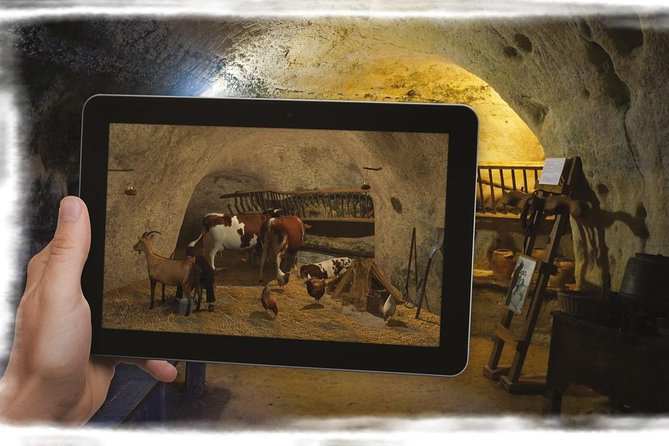
The standard visit is self-guided, with an explanatory leaflet available in 18 languages. That is the practical choice for most English-speaking visitors, since a guided visit in English is not included.
A self-guided format has clear advantages. You can read at your own speed, linger over the rooms that interest you, and keep the visit short if you have other plans. It also avoids the pressure of matching a guide’s pace.
The tradeoff is that you must build the story yourself. A guide might connect the rooms and objects as you go, while the leaflet asks you to stop, read, and make those connections independently. If you prefer lively spoken interpretation, this may feel less engaging.
A guided visit is available at a specific time, but it is in French only. If you understand French, check the timing when you arrive. If not, rely on the leaflet rather than expecting an English-speaking guide.
The maximum group size is listed as 15 people. Since the normal format is self-guided, that limit should help keep the visit manageable, though the experience remains more independent than a conventional tour.
Planning your time and handling the underground temperature
The underground rooms are cool, and the practical advice is simple: bring a sweater. This is worth taking seriously even during a warm-weather visit. You may start in sunshine and then spend much of your time in a chilly stone environment.
Opening hours change by season in 2026:
- From January 2 through April 15, the museum is open Tuesday through Sunday, 10:00 a.m. to 5:00 p.m.
- From April 16 through September 15, it is open every day, 9:30 a.m. to 5:30 p.m.
- From September 16 through November 20, it is open Tuesday through Sunday, 10:00 a.m. to 5:00 p.m.
The seasonal schedule matters if you are visiting outside summer. Monday is included during the April 16 through September 15 period, but not during the other listed periods.
The experience is usually booked about 16 days in advance, so planning ahead makes sense during popular periods. Confirmation is provided when you book. Food and drinks are not included, so plan those separately rather than expecting a café stop to be part of the admission.
Stroller access is possible, although the underground chapel is the exception. Service animals are allowed, and most people can participate. These details make the site workable for families, but the chapel restriction is worth remembering if you need a stroller throughout the entire visit.
Who will enjoy Rochemenier most
I would recommend Rochemenier to you if you like historic homes, rural traditions, unusual architecture, or small museums that explain how ordinary people lived. It also works well for families because the underground rooms provide an immediate point of interest, while the objects and photographs add substance for adults.
The site suits independent visitors particularly well. You do not need to commit to a long guided program, and you can fit the visit into a broader day in the French countryside. The one to three hour range gives you room to choose between a quick look and a careful reading of the exhibits.
It may be less satisfying if you want a fully narrated English tour or a highly dramatic presentation. The English option is written rather than spoken, and the attraction’s strength is its preserved setting and practical detail, not theatrical storytelling.
I would also avoid treating it as a five-minute photo stop. The underground rooms are the point, but the photographs, tools, and farming explanation are what turn the unusual setting into a meaningful visit.
Is the $10.26 admission good value?
At $10.26 per person, the admission is modest for a site that can occupy one to three hours. The value improves if you enjoy reading at your own speed and take time to examine the preserved farms rather than simply walking through them.
The price includes entry to the Cave Museum and the self-guided visit. It does not include food, drinks, or an English-speaking guide. Since the standard visit already provides a leaflet in 18 languages, the lack of an English guide is a limitation but not a barrier for most English-speaking visitors.
The experience also offers something difficult to reproduce elsewhere in a standard museum. You are seeing the actual underground rooms, not only objects removed from their original setting. The combination of space, furniture, tools, and photographs gives you more context for the money.
The best value comes when you have enough time to slow down. If you are nearby and can spare about two hours, I think the admission is easily justified. If you are looking only for a quick landmark and do not enjoy self-guided historic sites, the price may feel less important than the format.
Should you book the Cave Museum Village Troglodyte of Rochemenier?
Book this experience if you want a quiet, practical look at French rural life in a genuinely unusual setting. The two abandoned farms, the 250-room history of the village, and the shell-filled sandstone make Rochemenier more than a standard museum visit.
Bring a sweater, allow at least an hour, and use the multilingual leaflet carefully. I would choose it especially for families, history-minded visitors, and anyone who prefers to explore independently.
Skip it only if you need an English-speaking guide or dislike reading your way through a museum. For everyone else, the $10.26 admission offers a well-presented look at homes, work, and farming beneath the surface of the French countryside.
FAQ
How long does the Rochemenier Cave Museum visit take?
The visit takes approximately one to three hours. You can make a shorter visit or spend longer reading the explanations and examining the furniture, tools, and photographs.
Is the visit guided in English?
No. The included self-guided visit comes with an explanatory leaflet available in 18 languages. Guided visits are offered at specific times in French only.
What does the admission ticket include?
The ticket includes admission to the Cave Museum and the self-guided visit. Food, drinks, and a guided visit in English are not included.
How much does admission cost?
The listed price is $10.26 per person.
How many underground rooms are in Rochemenier?
The village consists of approximately 250 underground rooms distributed over around 40 farms.
When is the museum open in 2026?
From January 2 through April 15, it is open Tuesday through Sunday from 10:00 a.m. to 5:00 p.m. From April 16 through September 15, it is open daily from 9:30 a.m. to 5:30 p.m. From September 16 through November 20, it is open Tuesday through Sunday from 10:00 a.m. to 5:00 p.m.
Is the museum suitable for children and stroller users?
The self-guided visit is suitable for people of all ages. Strollers can access the site, but the underground chapel is not accessible to strollers.
Should I bring warm clothing?
Yes. The underground rooms are fresh and cool, so you should bring a sweater.
Just listed in France
- Paris: Giverny & Versailles Small Group or Private Tour★ 4.5 · 49 reviews
- Half-Day Walking Food Tour in Nice with Lunch★ 5.0 · 49 reviews
- Chartres Cathedral 5 Hours Tour from Paris with Private Transport★ 4.5 · 49 reviews
- Marseille: Frioul Archipelago Catamaran Cruise with Lunch★ 4.4 · 49 reviews
- Paris: Louvre photoshoot or Seine bridges Eiffel Tower walk★ 5.0 · 49 reviews
- Bonifacio: sunset catamaran trip and aperitif★ 4.6 · 50 reviews
- Paris: Choux Pastry and Chocolate Éclair Making Class★ 4.9 · 50 reviews
- Private tour of the Champagne area, meet local producers and taste their Champagne, start from your hotel in Paris.★ 5.0 · 50 reviews
Museums, compared.


Louvre Museum Entry Ticket With Host and River Cruise
Read our review →
Louvre Museum – Exclusive Guided Tour (Entry Included)
Read our review →
Louvre Museum Hosted Entry and Mona Lisa Audioguide
Read our review →

Louvre Museum Guided Tour with Skip-the-Ticket-Line
Read our review →Browse the lists this tour appears in