
Reviewed · MUSEE D ORSAY & ORANGERIE TOURS
Musée d’Orsay & Montmartre Tour Semi-Private Guided Tour 8ppl Max
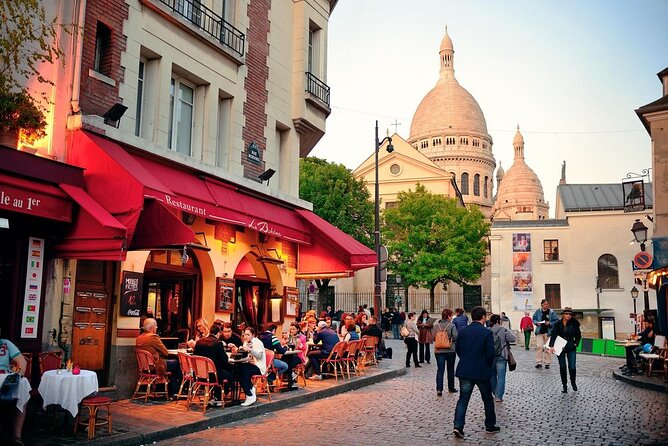
The clever idea here is to connect the art inside the Musée d’Orsay with the Montmartre streets where many of its artists lived, worked, and argued over absinthe. You see Manet, Renoir, Monet, and Van Gogh in the museum, then walk past places tied to Van Gogh, Picasso, Dalida, and the old cabaret world.
I like the small eight-person limit and the reserved museum entry. I also like the private car between the Orsay and Montmartre, since it saves you a tiring cross-town transfer. The main caution is physical: Montmartre means steep streets, stairs, and cobblestones, so this is not a good choice if walking is difficult.
Key points to know before booking
- Two major Paris experiences in one afternoon: Start with Impressionist art at the Musée d’Orsay, then move into Montmartre’s streets and Belle Epoque stories.
- A true small-group format: The group never exceeds eight people, and on some dates the tour has operated as a private outing when only two people booked.
- Private transport between districts: A car transfer follows the museum visit, with a short break before the walking tour begins.
- Strong guide-led art interpretation: Guides such as Marcel, Nancy, Matthew, Belen, Lily, and Christofer have been praised for making paintings and artists easier to understand.
- Montmartre requires real effort: The route climbs the butte toward Sacré-Coeur and includes cobbled streets, so wear supportive shoes.
- The price buys structure and access: At $259.59 per person, this is expensive, but it includes a professional guide, reserved museum entry, and private transport.
Why this Orsay and Montmartre pairing works
Paris has plenty of art tours and plenty of Montmartre walks. This one makes a useful connection between them.
At the Musée d’Orsay, you are not simply shown a row of famous paintings. The guide places Impressionism in the larger sequence of French art, beginning with artists who came before it and continuing to the Post-Impressionists who pushed the style in new directions.
Then you leave the museum and see the neighborhood associated with many of those painters. The change of setting matters. A painting becomes easier to picture when you have also walked the streets, cafés, squares, and hillside where artists lived and met.
I especially like this format for a first or second day in Paris. You get a firm introduction to one of the city’s best museums, then spend the rest of the tour outdoors with views, local landmarks, and a bit of old Paris atmosphere.
The schedule begins at 1:30 p.m. at the Musée d’Orsay and lasts about five and a half hours. That makes it a substantial afternoon and evening outing. If the Montmartre portion is offered later in the day, you may catch sunset from the hill, depending on the season and the timing.
A few other Paris half-days to compare
- Paris: Musée d’Orsay Entry Ticket and Seine River Cruise
★ 4.6 · 1,344 reviews - Paris: Musée d’Orsay Skip-the-Line Tour with Expert Guide
★ 4.5 · 1,145 reviews - Musée d’Orsay Skip-the-Line Tour with Expert Guide
★ 4.8 · 1,088 reviews
Inside the Musée d’Orsay: a guided route through modern art
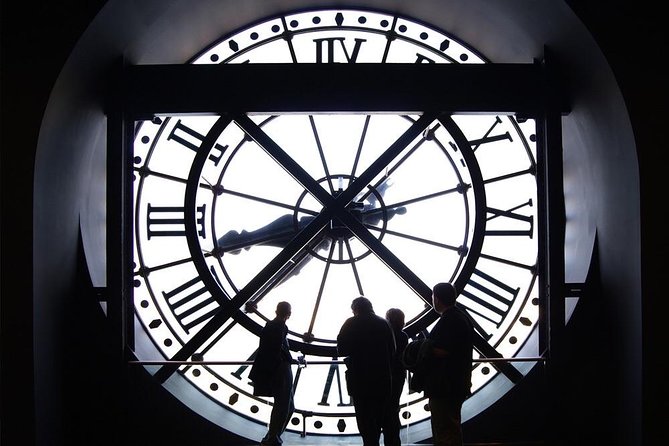
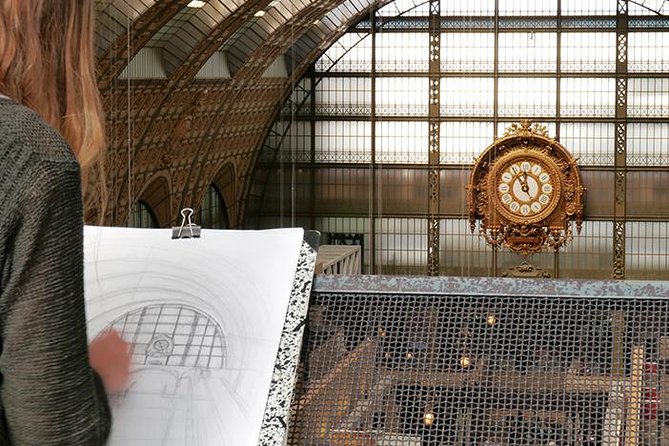
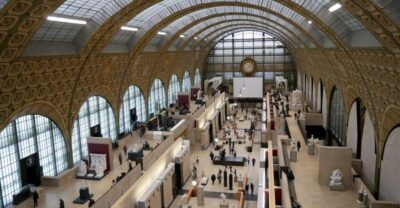
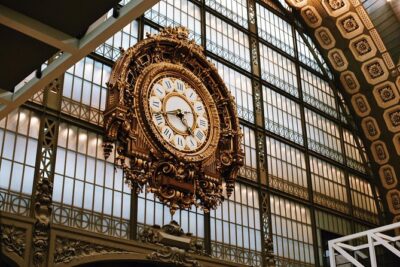
The Musée d’Orsay occupies a converted Beaux-Arts railway station, and the building itself is part of the experience. Its grand proportions and former station design give the visit a very different feel from a traditional palace museum.
The museum portion lasts about two and a half hours. That is enough time for a thoughtful route through the main movements without trying to see every room.
Your guide begins with the artists and ideas that led toward Impressionism. This background helps explain why the later paintings caused such a stir. The movement can look simple at first glance, with loose brushwork and ordinary outdoor scenes, but the guide explains what made those choices radical in their own time.
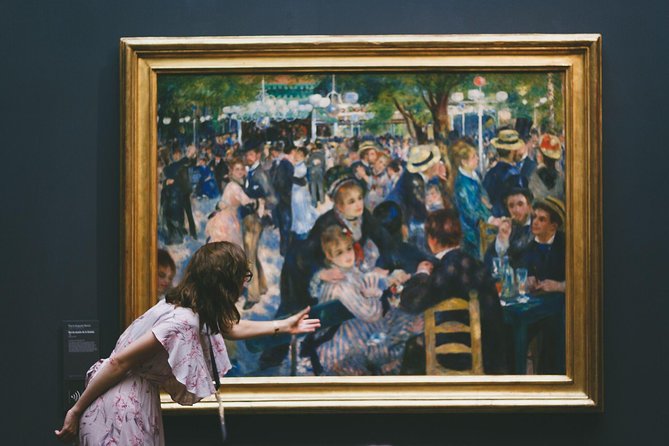
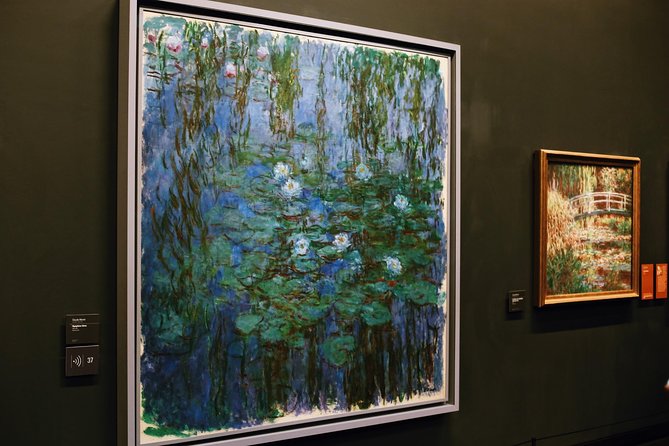
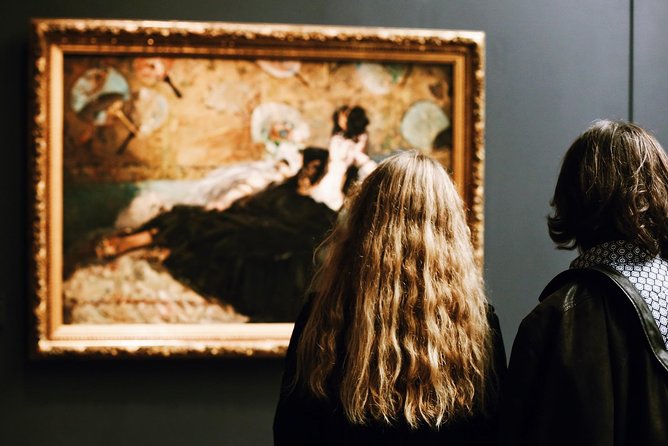
You will see Manet’s Luncheon on the Grass, a painting that challenged accepted ideas about subject matter and presentation. You will also see Renoir’s Dance at Le Moulin de la Galette, with its lively social scene and broken patches of color.
Monet receives proper attention as one of the central figures of Impressionism. His poppy painting shows how color, light, and quick brushwork can carry the subject. The guide’s job here is important. A good explanation can help you notice how the paint is applied, not just what the picture depicts.
The route also reaches further back to artists such as Jean-François Millet and his Gleaners. That stop gives you a useful point of comparison. Millet’s rural workers and serious social tone belong to an earlier tradition, while the Impressionists changed the focus toward modern life, shifting light, and the sensation of a moment.
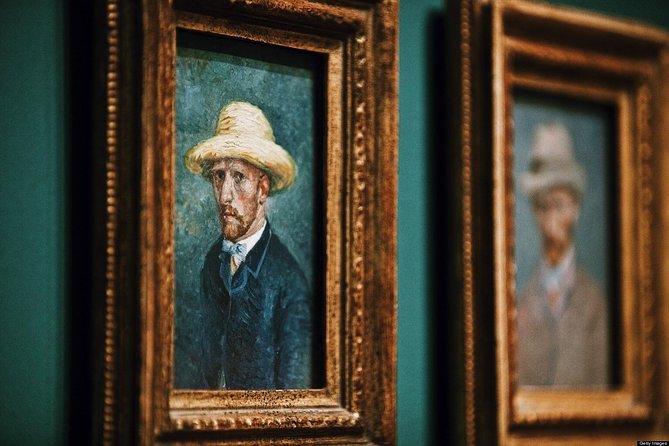
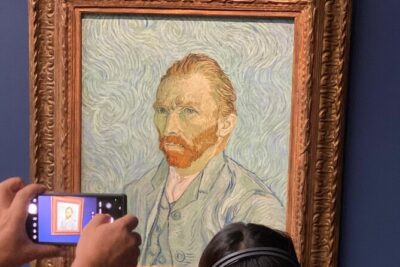
Van Gogh provides another change in direction. His Bedroom in Arles belongs to the Post-Impressionist period, after Impressionism had already altered the rules. You can compare his stronger outlines and intense color with Monet’s approach to light.
I like that this route includes both famous works and less familiar pieces. The famous paintings give you the landmarks you came to see. The additional works help you understand that art movements are not neat boxes, and that artists often borrowed from, resisted, and extended one another.
A guide may also explain the personalities behind the movement. This is where names and dates become human. The tour focuses on the artists’ lives and the social conditions around them, rather than treating each canvas as an isolated object.
The museum has some quiet or restricted areas where the guide may need to explain things before entering. Some collections can change during the year, and temporary exhibitions are not included. Large bags and suitcases are not allowed, so bring only a handbag or small, thin backpack.
The private transfer to Montmartre
After the museum, the tour uses private transport to reach Montmartre. This is a practical feature, not just a comfort perk.
The Musée d’Orsay and Montmartre sit in different parts of Paris. Moving between them by public transport would add another set of directions, stairs, and waiting time to a long day. The private car keeps the group together and gives you a short pause before climbing the hill.
Hotel pickup and drop-off are not included. You need to reach the Musée d’Orsay on your own, and the tour ends in Montmartre. The start is near public transportation, and using a taxi or Uber for the beginning is suggested in the tour information.
Montmartre from Moulin Rouge to Sacré-Coeur
The Montmartre section begins near the Moulin Rouge and works uphill toward Sacré-Coeur. The Moulin Rouge stop is brief and focused on the Belle Epoque setting, when cancan dancers, cafés, artists, and nightlife helped shape the district’s popular image.
You do not enter the Moulin Rouge as part of this tour, and admission there is not included. Think of it as an exterior landmark and a starting point for the walk.
From there, the route climbs through Montmartre’s cobbled streets. The guide connects the district to the artists seen earlier at the museum, including Van Gogh and Picasso. You may pass the house associated with Van Gogh and see the places where artists gathered and worked.
This is also the part of the tour where the pace matters. One guide, Marcel, was praised for keeping the climb reasonable while explaining the district’s past and its changing cost of living. Nancy was described as flexible when snow made walking harder. Those details point to something worth asking about when you meet your guide: the route can be adjusted in pace, but the hills cannot be removed.
Place Dalida is a quick but memorable stop. The statue honors the singer who became closely linked with Montmartre. It is a popular photo point, and the surrounding streets help show the mix of old village character and modern Paris life.
The Moulin de la Galette recalls Montmartre’s former dance hall and social life. It also connects neatly with Renoir’s painting at the Orsay, making the museum and walking portions feel like one story rather than two unrelated stops.
The Jardin Sauvage de Saint-Vincent offers a quieter change of mood. The route also passes Au Lapin Agile, one of Montmartre’s old cabaret landmarks. Admission to some of these sites is not included, but the tour is designed around seeing them from the street and learning their place in the district.
Same city, a completely different afternoon:
- Paris: Louvre Museum Timed-Entrance Ticket
★ 4.6 · 71,977 reviews - Disneyland® Paris 1-Day Ticket
★ 4.6 · 49,412 reviews - Paris: Versailles Palace and Gardens Full Access Ticket
★ 4.6 · 41,579 reviews - Paris: Evening River Cruise with Music
★ 4.4 · 22,721 reviews
Sacré-Coeur and the view from the hill
At the top of Montmartre, the tour enters the Basilique du Sacré-Coeur. Admission is free, and time is allowed to look inside.
The white basilica is one of Paris’s most recognizable sights, but the view outside is the real reward after the climb. From one of the city’s highest points, you get a broad look across Paris and a strong photo opportunity.
The route does not promise a particular sunset. If you choose an evening option, the timing and season may work in your favor, but treat that as a possibility rather than a guarantee.
You should also expect crowds around the basilica and the upper hill. The guide can help you move through the main sights while pointing out practical concerns. One guide gave specific warnings about fake taxi drivers and people asking you to sign petitions, who may be trying to distract you while taking your wallet.
That kind of street advice adds real value in Montmartre. The district is enjoyable, but its most famous areas attract aggressive sellers and petty scams. Keep your phone and wallet secure, and do not stop for a stranger who pressures you into an odd transaction.
Place du Tertre, Dalí, and the artists’ quarter
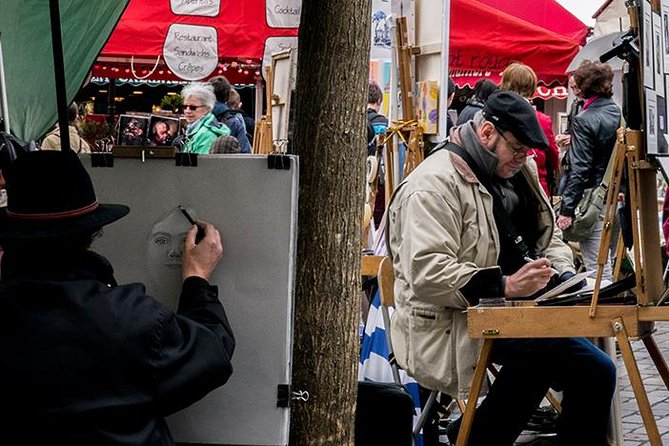
Place du Tertre is the classic artists’ square near the top of the hill. You can expect outdoor portrait artists, souvenir shops, and a more commercial side of Montmartre.
The square is worth seeing, but it is not a quiet time capsule. The guide helps you understand how the area became linked with artists while also showing you what it is like today.
The route may include the Dalí Museum Paris, La Maison de Dalida, and Le Bateau-Lavoir. These stops are generally short and may be viewed from outside, since admission is not included for every attraction.
Le Bateau-Lavoir is especially relevant to the story of artists gathering in Montmartre. The tour does not turn every stop into a long museum visit. Instead, it gives you a connected walk through places associated with the area’s creative life.
Fans of Amélie will recognize several corners and may enjoy the references to locations used in the film. The tour also leaves you in a good position to browse for affordable souvenirs or find a meal. One guide helped a family locate a restaurant suitable for a gluten-free diner, which is useful if food restrictions are part of your planning.
The guides make the difference
The strongest part of this experience is the guide’s ability to explain rather than simply point.
Marcel was praised for organizing the Orsay’s art movements in a clear sequence and showing how styles developed. He also kept the Montmartre climb at a manageable pace.
Nancy was noted for adapting the walking section to snowy conditions. Matthew was praised for pacing the full route well and handling both the museum and Montmartre with confidence.
Belen led a tour that became private when only two people booked. That can happen with a small-group product, though it is not something you should count on. Lily was praised for combining art history, facts, and local context, while Christofer was described as well prepared and able to answer questions.
The guide assigned to your date can be different. Still, the repeated pattern is clear: this tour works best when you want interpretation, conversation, and a human pace rather than an audio guide and a checklist.
Is $259.59 a fair price?
At $259.59 per person, this is not a budget tour. You are paying for a professional guide, reserved entry to the Musée d’Orsay, private transport between the museum and Montmartre, and five and a half hours of organized sightseeing.
The value improves if you would otherwise buy separate museum and walking tours. It also improves for a small party that wants to stay together and avoid the hassle of arranging transport across Paris.
The price is harder to justify if you prefer exploring alone, already know the Orsay well, or want to spend a full day at the museum. Two and a half hours gives you a well-planned introduction, but not enough time for every gallery.
Group discounts are available, and the maximum is eight people. That cap is important. An eight-person group can still feel fairly personal, especially compared with a large bus tour, and the guide has more room to answer questions.
Walking, timing, and practical limits
You need moderate physical fitness for this outing. Montmartre includes uphill walking on cobbled streets, and the route is not suitable for someone with walking disabilities or someone using a wheelchair.
Wear comfortable shoes and keep your belongings light. Large bags and suitcases cannot enter the Orsay, and security checks may still create a short wait even with reserved entry.
The tour starts at 1:30 p.m. at the Musée d’Orsay and ends in Montmartre. Plan your route to the starting point carefully, since hotel pickup is not included.
The Orsay can occasionally close without much warning. If the opening is delayed by more than an hour, an alternative may be offered, but the stated terms do not promise a refund or discount in that situation.
Free cancellation is available up to 24 hours before the start time. After that point, the price is not refunded, and changes are not accepted. Gratuities are optional and not included.
Who should book this tour?
I would choose this for a first-time Paris visitor who wants a strong introduction to Impressionism and Montmartre without managing several reservations and transfers.
It also suits couples, families with older children, and small groups who appreciate a guide’s personal attention. The art portion is best for anyone who wants help understanding why the paintings matter, not just a list of famous names.
I would be more cautious if you have limited mobility, dislike hills, or want a slow museum day. The tour covers a lot in one afternoon, and Montmartre’s streets can be tiring after two and a half hours indoors.
Final verdict: a strong choice for art and neighborhood context
Book this tour if you want the Musée d’Orsay and Montmartre explained as parts of the same Paris story. The small group, private transfer, reserved museum entry, and guide-led interpretation make the high price easier to accept.
Skip it if you want maximum free time, a wheelchair-friendly route, or a full day inside the museum. For everyone else, the combination of Manet, Monet, Renoir, Van Gogh, Sacré-Coeur, artist cafés, and hillside views offers a focused way to understand how art and place shaped one another in Paris.
FAQ
How long does the Musée d’Orsay and Montmartre tour last?
The tour lasts approximately five hours and 30 minutes.
Where does the tour begin and end?
It begins at the Musée d’Orsay in Paris and ends in Montmartre. Hotel pickup and drop-off are not included.
What time does the tour start?
The stated start time is 1:30 p.m.
How many people can join the tour?
The group is limited to a maximum of eight people.
Is transportation between the Musée d’Orsay and Montmartre included?
Yes. Private transport from the Musée d’Orsay to Montmartre is included, along with a short break before the walking portion.
Are museum admission and reserved entry included?
Reserved entry and the Musée d’Orsay admission fee are included. Temporary exhibitions are not included, and admission to some Montmartre attractions listed along the route is also not included.
Is the tour suitable for wheelchair users?
No. The tour is not available for people with walking disabilities or people using a wheelchair. A moderate level of physical fitness is required because the Montmartre route includes uphill walking and cobbled streets.
Just listed in Paris
- Chartres Cathedral 5 Hours Tour from Paris with Private Transport★ 4.5 · 49 reviews
- Paris: Giverny & Versailles Small Group or Private Tour★ 4.5 · 49 reviews
- Paris: Louvre photoshoot or Seine bridges Eiffel Tower walk★ 5.0 · 49 reviews
- Paris: Choux Pastry and Chocolate Éclair Making Class★ 4.9 · 50 reviews
- Private tour of the Champagne area, meet local producers and taste their Champagne, start from your hotel in Paris.★ 5.0 · 50 reviews
- Paris Eternelle Notre-Dame Virtual Reality Tour★ 4.5 · 50 reviews
- Normandy D-Day Landing Beaches Private Day Trip from Paris★ 5.0 · 50 reviews
- Disneyland® Paris 1 Day with Round-Trip Train Tickets from Paris★ 4.0 · 50 reviews
Musee d Orsay & Orangerie Tours, compared.
Musée d’Orsay Entry Ticket and Seine River Cruise
Read our review →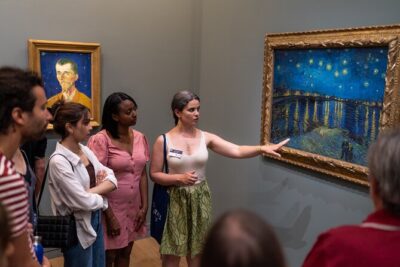
Musée d’Orsay Skip-the-Line Tour with Expert Guide
Read our review →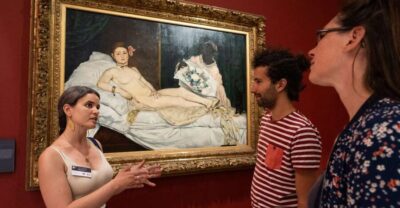
Musée d’Orsay Skip-the-Line Tour with Expert Guide
Read our review →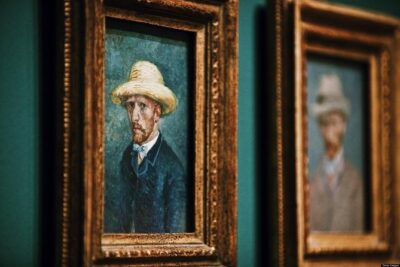
The Musée d’Orsay Guided Tour Orsay Museum Semi-Private 6ppl Max
Read our review →
Louvre & Musée d’Orsay Guided Museum Tour Semi-Private 6ppl Max
Read our review →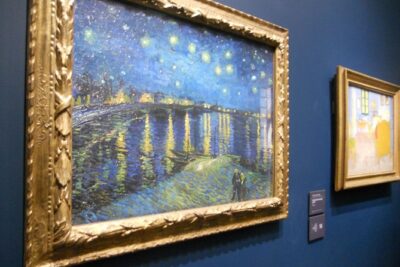
Orsay Museum – Exclusive Guided Tour (Reserved Entry Included)
Read our review →Browse the lists this tour appears in