
Reviewed · MONT SAINT MICHEL TOURS
Airborne Museum Admission Ticket
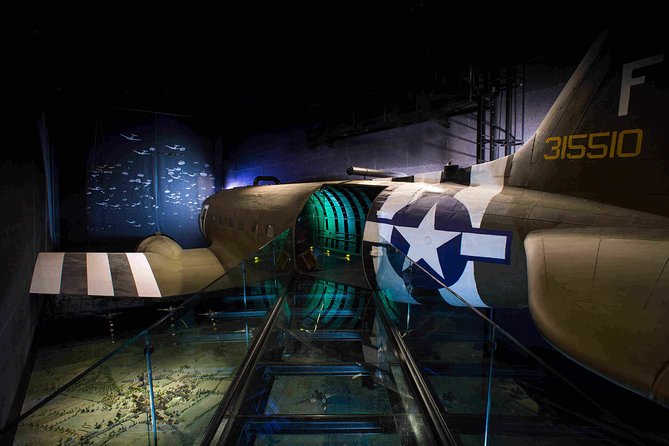
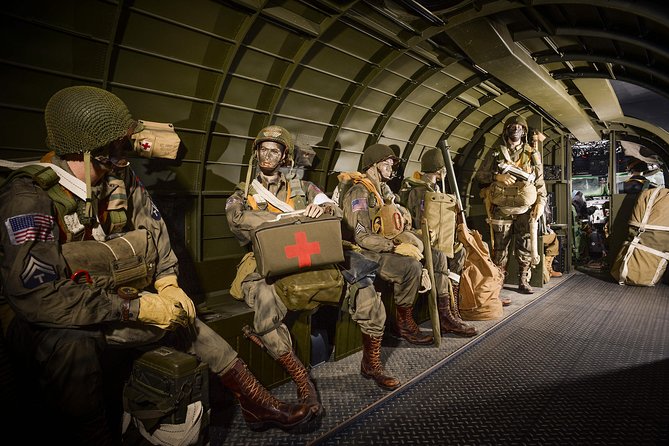
The most striking part of this museum is the chance to step inside a real C-47 aircraft and experience the night jump toward Sainte-Mère-Église through film, sound, and special effects. The story focuses on the American 82nd and 101st Airborne divisions and the fighting that followed their landings on June 6, 1944.
I like the freedom of a self-guided visit, and I like the included Histopad, which adds augmented-reality scenes to the museum displays. The main drawback is that this is not a skip-the-line ticket, so busy periods may still mean waiting at the entrance.
Key points to know before you go
- Enter Operation Neptune: A real C-47 aircraft places you inside the opening moments of the airborne assault.
- Use the Histopad: Augmented reality brings Normandy in 1944 into the museum’s displays.
- Allow about two hours: Films, aircraft exhibits, and interactive sections reward an unhurried visit.
- Visit at your own pace: There is no fixed tour group or required departure time once you are inside.
- Expect a focused D-Day story: The museum concentrates on the American paratroopers of the 82nd and 101st Airborne.
- Plan around opening hours: Summer hours run later than the shorter autumn schedule.
Why Sainte-Mère-Église matters to the story
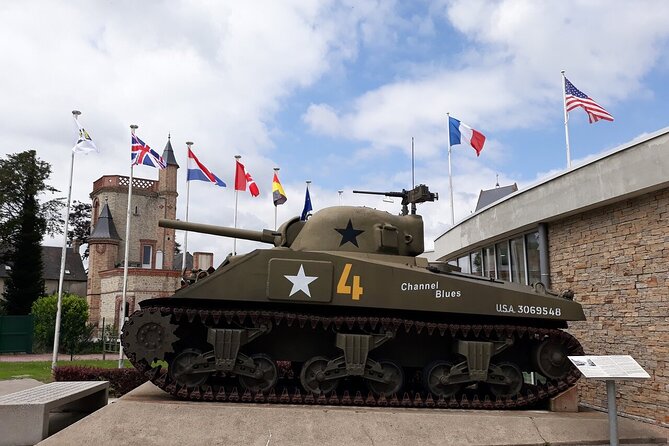
The Airborne Museum is in Sainte-Mère-Église, a Normandy town closely tied to the first hours of the Allied D-Day operation. Its setting gives the visit a clear sense of place: this is not a general World War II museum with a few parachute displays added on. The focus is the American airborne landing and the liberation of Sainte-Mère-Église and the Cotentin region.
That focus is useful because the Normandy campaign can feel sprawling. Utah Beach, Omaha Beach, Pointe du Hoc, the American Cemetery, and the inland fighting all tell different parts of the story. Here, you concentrate on the troops who came in by parachute and glider before dawn, then faced confused fighting on the ground.
I find that a focused museum often works better than one trying to explain every unit and every battle. You can follow the sequence more easily: preparation in England, the nighttime flight, the landing, the first clashes, and the push toward liberation.
The museum is also close to Utah Beach and other Normandy Landing Beaches, so it fits naturally into a wider D-Day day. The location listed for the booking is Mont-Saint-Michel, but the museum itself is in Sainte-Mère-Église. Check your route carefully before setting out, since those are separate places and the museum is not in Mont-Saint-Michel itself.
More museums in France:
- Paris: Louvre Museum Timed-Entrance Ticket
★ 4.6 · 71,977 reviews - Louvre Museum Masterpieces Guided Tour with Access
★ 4.5 · 12,023 reviews - Paris: Louvre Museum Entry Ticket With Host and River Cruise
★ 4.6 · 9,926 reviews
Operation Neptune puts you inside the airborne assault
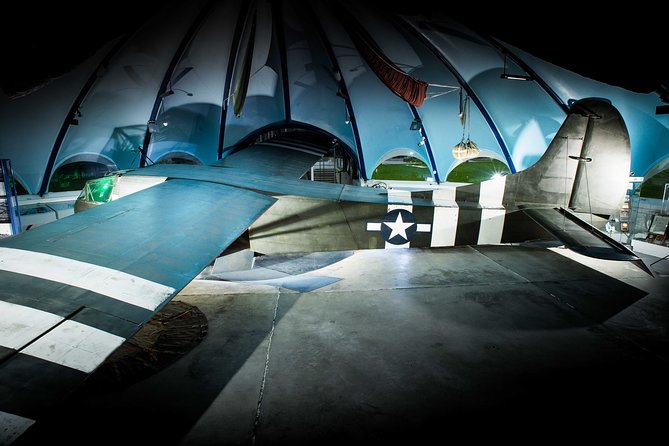
The central experience takes place in the building called Operation Neptune. The presentation begins at night in England, where you board a real C-47 aircraft. The goal is not simply to look at an old plane behind a barrier. The museum uses the aircraft as part of a staged account of the flight toward Normandy.
You then follow the landing near Sainte-Mère-Église, with the action moving from the air to the town and surrounding area. A 20-minute film covers German occupation, the D-Day landings, and the liberation of Sainte-Mère-Église and the Cotentin region.
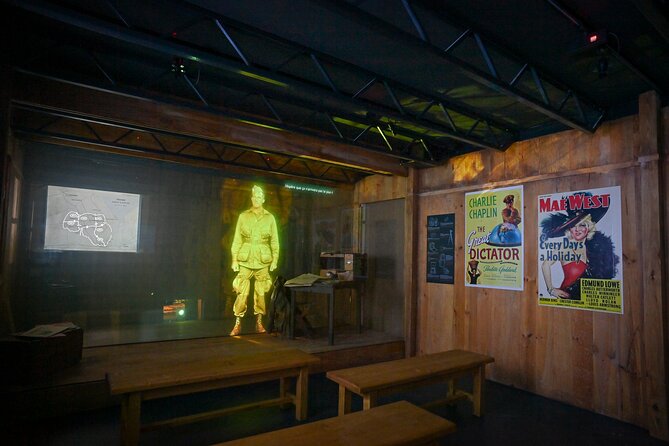
That film is an important part of the visit. It gives the displays a timeline and emotional weight, especially if you do not already know how the airborne landings unfolded. Several parts of the museum use film and video, so you are not left to decode uniforms, weapons, and maps on your own.
The production is designed to make the opening hours of D-Day feel immediate. For some people, the sound, motion, and bombing effects will make the story easier to grasp. For others, the theatrical style may feel stronger than a quiet museum display. If you prefer a traditional collection of documents and labels, allow time to step away from the presentation and look closely at the artefacts.
The aircraft is the key physical object. A full-size C-47 gives you a better idea of the cramped conditions and the practical difficulty of loading men and equipment for a nighttime jump. The museum also includes a glider experience, adding another side of the airborne operation.
The Histopad adds a second layer to the exhibits
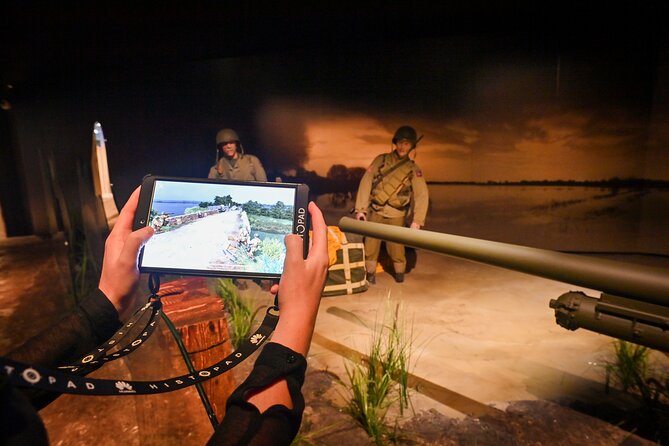
The included Histopad is one of the strongest reasons to choose this admission. It is an interactive tablet that uses augmented reality and period scenes to show how places and events looked in Normandy in 1944.
You hold the device near selected displays and use it to explore extra information and reconstructed views. The graphics are designed to place you at the center of the D-Day action, rather than simply asking you to read a long panel.
This is especially useful for younger members of a family. Children from six to twelve can follow the visual parts of the story more easily than a series of military labels, and the interactive format gives them something active to do. Adults who already know the broad outline of D-Day can also use it to connect objects with specific moments.
The Histopad does not replace the museum’s film or aircraft presentation. It works best as an extra layer. I would first get the basic story from the film, then use the tablet to examine the displays more closely.
Keep in mind that interactive technology can slow your pace. If you try every feature, two hours may pass quickly. If you are visiting several Normandy sites in one day, decide in advance how much time you want to give the tablet so the museum does not crowd out the rest of your schedule.
A practical two-hour visit
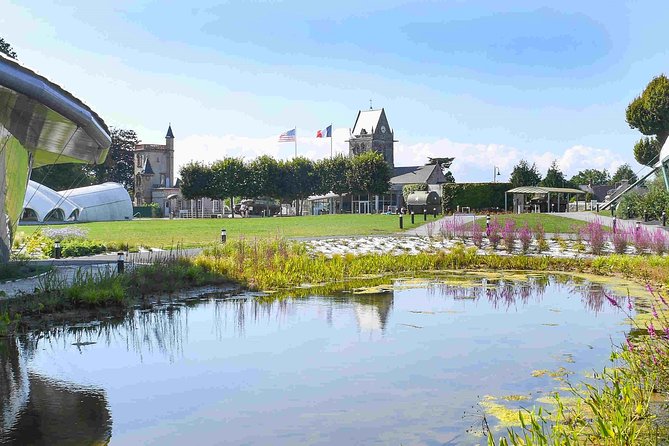
The experience is self-guided, so you can move according to your own interest. There is no named guide to follow and no fixed commentary from a tour leader. The Histopad supplies interactive information, while the films and displays provide the main structure.
A sensible visit might look like this:
- Start with Operation Neptune and the C-47 aircraft.
- Watch the 20-minute film from beginning to end.
- Follow the exhibits covering the airborne landings and the liberation of Sainte-Mère-Église.
- Use the Histopad for the augmented-reality sections.
- Leave time for the aircraft and glider elements rather than rushing through them.
The advertised visit lasts about two hours, but the actual time depends on how closely you use the tablet and watch the films. One visitor’s estimate of two to three hours makes sense for anyone who wants to take in the videos, interactive material, and aircraft displays without hurrying.
The museum works well for mixed-age groups because the experience has several speeds. One person can focus on the historical explanations, another can watch the film, and children can spend more time with the visual effects. Still, the subject is war, occupation, and death. Parents should decide how much detail is suitable for their children.
A self-guided format also has a quiet advantage: you can pause. If a section is emotionally heavy or confusing, you do not have to keep pace with a group. You can return to a display or move on when you are ready.
A few other France half-days to compare
- Disneyland® Paris 1-Day Ticket
★ 4.6 · 49,412 reviews - Paris: Versailles Palace and Gardens Full Access Ticket
★ 4.6 · 41,579 reviews - Paris: Eiffel Tower Entry Ticket with Optional Summit Access
★ 4.4 · 20,035 reviews - Paris: Moulin Rouge Cabaret Show Ticket with Champagne
★ 4.7 · 16,088 reviews
What the films and effects do well
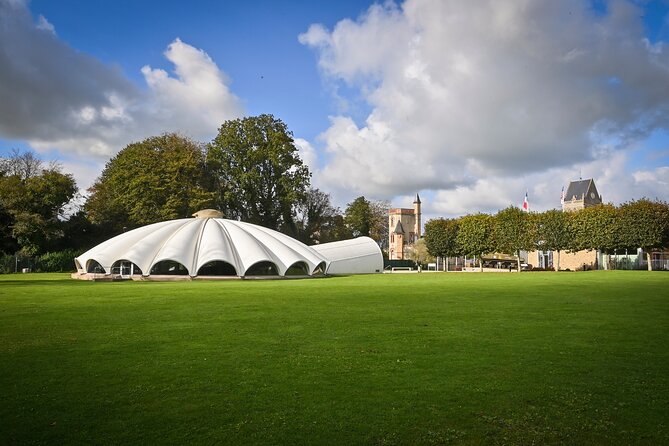
The museum’s films are repeatedly praised for being informative, and that is an important part of its value. A D-Day collection can easily become a room full of dates and military terms. The 20-minute film gives you a human and geographic framework before you tackle the details.
The Operation Neptune presentation also uses a simulator-style sequence involving the plane and bombing effects. This is more like a historical attraction than a quiet archive. The approach can make the scale and danger of the operation easier to understand, particularly if this is your first Normandy museum.
I would not treat the effects as a substitute for serious history. They are a way into the subject. Afterward, the artefacts, films, and Histopad can help you place the spectacle in context.
This balance is worth keeping in mind when you decide how to spend your time in Normandy. If you want personal stories, military equipment, and a strong sense of the initial airborne assault, this museum should suit you. If your main interest is the naval landings, German fortifications, or the wider battle after June 6, you will need other sites as well.
Is the $13.32 admission good value?
At about $13.32 per person, the ticket is reasonably priced for a two-hour museum visit that includes the Histopad. The value improves if you use the interactive guide, watch the films, and spend time with the aircraft exhibits rather than making a quick pass through the rooms.
The ticket is flexible, which helps when you are building a Normandy itinerary around weather, beach visits, and driving time. You can visit during the museum’s opening period without committing to a fixed guided departure.
The price does not include skip-the-line admission. That matters most during the busiest summer hours, when the museum is open from 9 a.m. to 7 p.m. from May 1 through August 31. The ticket gives you entry, not priority access.
The shorter autumn hours are easy to manage if you plan ahead:
- September 1 through September 30: 9:30 a.m. to 6:30 p.m.
- October 1 through November 30: 10 a.m. to 6 p.m.
The museum is open every day during the listed periods. I would avoid arriving near closing time, especially if you want the full Operation Neptune presentation and the Histopad sections.
Who will enjoy this museum most?
This is a good choice for anyone with a strong interest in D-Day, the American airborne divisions, or military history. It is also a useful first stop before visiting the landing beaches because it explains what happened inland while the beach assaults were beginning.
Families may appreciate the combination of film, aircraft, simulation, and augmented reality. The interactive format gives younger children a reason to stay engaged, although the wartime subject still calls for parental judgment.
The museum is also suitable for independent visitors. Since you are not tied to a guide or group schedule, you can read carefully, skip familiar material, or stay longer with the C-47 and Histopad.
It may be less satisfying if you want a broad survey of all Normandy operations. The story here is deliberately narrow. You will learn much more about the 82nd and 101st Airborne than about every unit involved in the invasion.
The booking information says most people can participate, and service animals are allowed. The activity has a maximum of nine travelers, though the self-guided format means you should still expect to explore independently rather than receive personal instruction from a guide.
How to fit it into a Normandy day
Sainte-Mère-Église works well as part of a day devoted to Utah Beach and the nearby landing sites. The museum can provide the background first, then the beaches and memorials can show you the physical setting on a larger scale.
I would allow two hours inside, then add time for getting to and from your other stops. Do not schedule the museum so tightly that you must leave before the film ends. The presentation is built as a sequence, and rushing out halfway through would weaken the point of the visit.
The flexible entrance is helpful if you are driving between sites. You can choose a morning or afternoon visit within the opening hours, but there is no skip-the-line benefit, so a peak-time arrival may require patience.
The listing associates the experience with Mont-Saint-Michel, while the museum address is Sainte-Mère-Église. Treat the two locations as separate itinerary points. If Mont-Saint-Michel is already part of your day, check the distance and timing before adding this museum.
A balanced verdict on the experience
I like the way this museum combines a real aircraft, a clear film, and modern interactive technology. Each element serves a different purpose: the C-47 gives you a physical sense of the airborne operation, the film supplies the story, and the Histopad adds visual context.
The theatrical effects will not suit everyone. Some visitors may find them exciting, while others may prefer less simulation and more original documents. The museum’s strongest value comes when you use the effects as an introduction, then slow down for the historical displays.
The admission price is modest for the amount of material, and the self-guided format gives you control over the pace. The lack of skip-the-line entry is the main practical weakness, especially in summer.
Should you book the Airborne Museum?
Book it if you want a focused, accessible account of the American paratroopers and the first hours of D-Day. The real C-47, the 20-minute film, and the included Histopad give you several ways to understand the operation, and two hours is a manageable commitment in a busy Normandy itinerary.
Skip it only if you have very limited time and your priority is another specific part of the campaign, such as the beaches or naval history. For families, first-time Normandy visitors, and anyone interested in the 82nd and 101st Airborne, the $13.32 admission offers solid value. Just confirm that you are heading to Sainte-Mère-Église, not Mont-Saint-Michel, and leave enough time for the complete visit.
FAQ
Where is the Airborne Museum located?
The museum is located in Sainte-Mère-Église, Normandy, close to Utah Beach and the Normandy Landing Beaches.
How much does admission cost?
The listed price is $13.32 per person.
How long does a visit take?
The visit takes approximately two hours. You may need two to three hours if you watch all the films and spend more time with the interactive material.
Is the ticket flexible?
Yes. The admission ticket lets you visit at a time that suits you during the museum’s opening hours.
Does the ticket include a Histopad?
Yes. A Histopad with augmented reality is included.
Does the ticket include skip-the-line entry?
No. Skip-the-line entrance is not included.
What are the museum’s opening hours from May through August?
From May 1 through August 31, the museum is open daily from 9 a.m. to 7 p.m.
What are the opening hours in September and October?
In September, it is open daily from 9:30 a.m. to 6:30 p.m. From October 1 through November 30, it is open daily from 10 a.m. to 6 p.m.
Can I cancel the booking?
Yes. You can cancel up to 24 hours before the experience start time for a full refund. Cancellations or changes made less than 24 hours before the start time are not accepted for a refund.
Just listed in France
- Paris: Giverny & Versailles Small Group or Private Tour★ 4.5 · 49 reviews
- Half-Day Walking Food Tour in Nice with Lunch★ 5.0 · 49 reviews
- Chartres Cathedral 5 Hours Tour from Paris with Private Transport★ 4.5 · 49 reviews
- Paris: Louvre photoshoot or Seine bridges Eiffel Tower walk★ 5.0 · 49 reviews
- Marseille: Frioul Archipelago Catamaran Cruise with Lunch★ 4.4 · 49 reviews
- Bonifacio: sunset catamaran trip and aperitif★ 4.6 · 50 reviews
- Paris: Choux Pastry and Chocolate Éclair Making Class★ 4.9 · 50 reviews
- Private tour of the Champagne area, meet local producers and taste their Champagne, start from your hotel in Paris.★ 5.0 · 50 reviews
Mont Saint Michel Tours, compared.

2-Hour Guided Walking tour of the Mont Saint Michel
Read our review →
Browse the lists this tour appears in