
Reviewed · MONT SAINT MICHEL TOURS
Private Guided Tour in WW2 Jeep of the Landing Beaches
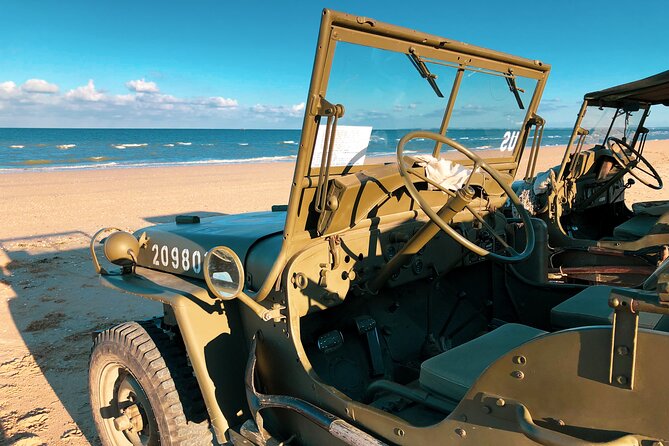
An authentic 1944 Willys Jeep carries you from Sainte-Mère-Église through the American airborne drop zone to Utah Beach. This is not a quick drive past the coast. The route pauses at villages, crash sites, landing fields, and Atlantic Wall remains, giving you a clear sense of how scattered and confusing D-Day was for the men on the ground.
I especially like two things here: the small private format, limited to three people, and the way guides such as Thomas and Flavie use maps, photographs, and personal research to explain what happened. You also travel along country roads and through fields rather than staying on the main tourist route. That makes the setting easier to understand.
The main drawback is the short running time. Two hours gives you a strong introduction to the airborne landings and Utah Beach, but it does not allow for museums, long beach walks, or a full treatment of every D-Day sector. The Jeep is also open to the weather, so bring a warm layer and a windbreaker.
Key points to know before booking
- A focused American airborne route: Follow the action from Sainte-Mère-Église through Turqueville, Beuzeville-au-Plain, Saint-Germain-de-Varreville, and Utah Beach.
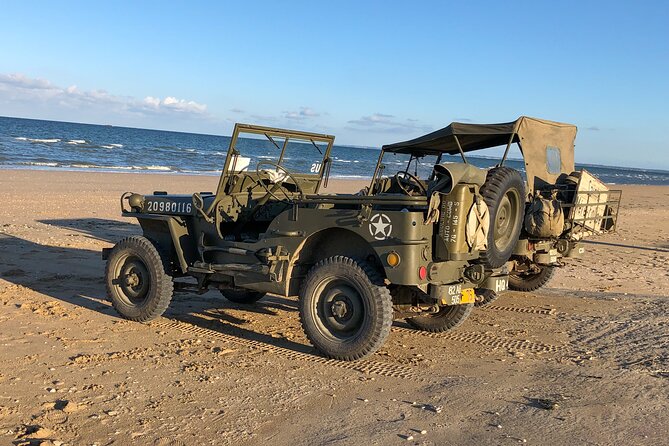
- A genuine WWII Jeep experience: Ride in a functioning Willys Jeep associated with the period, including along backroads and sandy coastal areas.
- Guides who teach with evidence: Thomas, Flavie, and Arthur have used maps, photographs, veteran accounts, and detailed local research to explain the sites.
- Private and personal: The booking covers up to three people, making it easier to ask questions and connect the history to your own family story.
- About 85 minutes of stops: The listed visits total roughly 85 minutes, with the remaining time used for driving between locations.
- A good first Normandy activity: The route can give you the story and geography you need before visiting larger museums or other landing beaches.
Why this Jeep route makes D-Day easier to understand
The D-Day story can feel like a list of beaches, code names, and military units. That is useful, but it can also make the events seem tidy and planned from a distance. This tour helps put you at ground level.
The American airborne landings around Sainte-Mère-Église did not happen on one neat patch of land. Paratroopers landed across fields, villages, roads, and waterways during the night. Some came down far from their intended drop zones. Others had to move through unfamiliar country while trying to find their units and objectives.
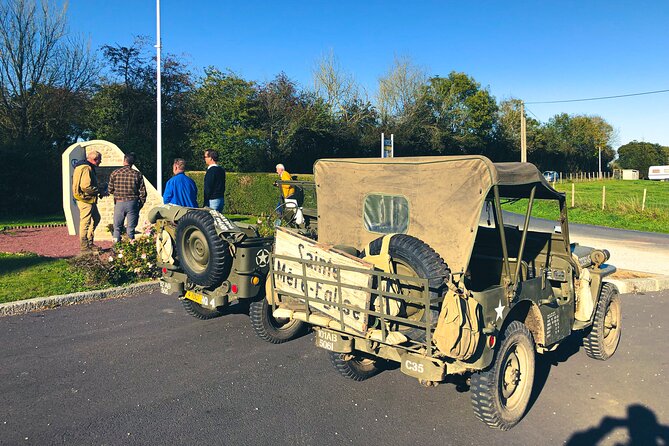
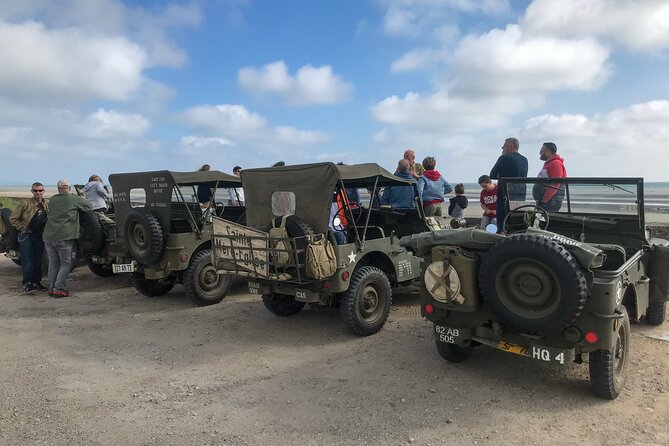
A Jeep is a fitting way to cover this ground. It is small enough for the narrow roads and gives you a lower, more open view than a coach. You can see the lanes, fields, village edges, and flat coastal country that shaped the operation.
The guides add the detail that makes the stops worthwhile. Thomas is especially noted for using maps and photographs to explain strategy and tactics, while Flavie has a gift for making the paratroopers’ routes and problems easy to picture. Arthur has also guided this experience and brings a solid command of the local story.
I would not book this only for the vehicle. The Jeep is the hook, but the history is the reason to go. If your interest is limited to taking a few military-style photographs, the tour may feel too serious. If you want to understand what happened across this corner of Normandy, it offers much more.
A few other France half-days to compare
- Paris: Private Photoshoot at the Eiffel Tower
★ 4.7 · 2,636 reviews - Top Private Cruises in Paris with French Champagne and surprises
★ 5.0 · 1,553 reviews - Private Paris Airport Arrival Transfer – CDG & ORLY Airports
★ 4.5 · 1,119 reviews
Sainte-Mère-Église and the parachute that became a symbol
The meeting point is on Rue Eisenhower in Sainte-Mère-Église, at the parking area near 14 Rue Eisenhower. This village is one of the best places to begin a D-Day visit because it connects directly to the airborne story.
Sainte-Mère-Église is famous for the film The Longest Day and for American paratrooper John Steele. During the night landings, Steele’s parachute caught on the church tower. He survived by playing dead while hanging above the village, though he was later wounded and captured.
The tour allows about 10 minutes here, with no separate admission charge. That is enough for an introduction and a quick look at the setting, but not enough for a full museum visit. If the church, Airborne Museum, or John Steele story matters greatly to you, plan extra time in the village before or after the Jeep ride.
The value of beginning here is simple: you start with a recognizable event, then move outward into the less familiar places where the airborne operation spread. The village gives you a fixed point. The next stops show how wide and uncertain the action became.
Turqueville and the 101st Airborne area
The next stop is Turqueville, described as being in the heart of the 101st Airborne area. The visit lasts about 20 minutes.
This is where the tour begins to move beyond the famous headline sites. You are no longer looking only at a church or a monument. You are following the ground where American airborne units had to move, regroup, and carry out their objectives.
A guide can explain why small villages and country roads mattered so much. In 1944, a lane or crossroads could affect the movement of men, vehicles, supplies, and German defenses. The countryside was not simply scenery. It shaped the choices made by both sides.
This stop is also a good example of why private guiding helps. You can ask questions about a family member, a regiment, or a particular military task. With only three people in the Jeep, the guide can adjust the explanation instead of delivering one fixed speech to a large group.
The stop has no admission fee. Keep your expectations realistic, though. This is a field-history visit, not a formal attraction with extensive displays. Its appeal comes from the guide’s explanation and your position in the actual area.
Beuzeville-au-Plain and Thomas Meehan’s crash site
The route continues to Beuzeville-au-Plain, the site of the crash involving Thomas Meehan’s plane. The stop lasts around 20 minutes and also has no admission charge.
This place connects with the American airborne story told in the series Band of Brothers. That reference may help you place the event, but you do not need to have watched the series to follow the explanation. The guide’s job is to connect the individual story with the larger operation.
A crash site can be easy to miss when you are driving on your own. There may be no grand entrance or large sign that tells you exactly what happened. A local guide gives the location meaning, explaining who was involved and why the event mattered.
I value stops like this because they bring the history down to human scale. Military operations are often described with arrows on a map. A plane crash, a missing officer, or a scattered unit shows the real confusion behind those arrows.
The 20-minute pause is long enough for a serious explanation and questions. It is not a memorial visit with time for extended reflection, so the pace remains brisk. That balance works well for a two-hour outing, but you should not expect long periods at each location.
Same city, a completely different afternoon:
- Paris: Louvre Museum Timed-Entrance Ticket
★ 4.6 · 71,977 reviews - Disneyland® Paris 1-Day Ticket
★ 4.6 · 49,412 reviews - Paris: Versailles Palace and Gardens Full Access Ticket
★ 4.6 · 41,579 reviews - Paris: Evening River Cruise with Music
★ 4.4 · 22,721 reviews
Saint-Germain-de-Varreville and the first American paratrooper
At Saint-Germain-de-Varreville, the tour visits the village where the first American paratrooper, Franck Lilyman, landed. The scheduled stop is about 15 minutes.
This is another quiet location that gains force through context. On a map, a small Norman village may appear ordinary. The guide helps you understand how the first arrival of an American paratrooper changed the meaning of the place on the night of June 5 and into June 6, 1944.
The stop also reinforces an important point about the airborne assault. The men did not arrive in a neat line at a single landing point. They came down at different places, often under pressure and without a clear picture of where they were.
I like the progression of the route here. Sainte-Mère-Église gives you the famous image. Turqueville places you in the 101st Airborne zone. Beuzeville-au-Plain brings in a specific crash and the Band of Brothers connection. Saint-Germain-de-Varreville then adds another personal story. Each stop is short, but together they build a more complete picture.
Utah Beach and the Atlantic Wall
The final stop is Utah Beach, where American troops came ashore on June 6, 1944. The visit lasts about 20 minutes and includes the remains of the Atlantic Wall.
Utah is a key ending for this tour because it connects the airborne operation with the seaborne invasion. The route has followed paratroopers through inland villages and fields, then brings you to the beach where American soldiers landed from the sea.
The remaining Atlantic Wall defenses help you read the shoreline as a military position rather than just a broad stretch of sand. Concrete structures and defensive remains show the obstacles facing the invading force. The guide can tie those physical features to the larger operation you have been discussing since Sainte-Mère-Église.
The Jeep adds a memorable touch at this point. Riding into the Utah Beach area in a period Willys Jeep makes the arrival feel different from stepping off a modern tour bus. It does not recreate combat, and it should not be treated as a theme-park performance. Instead, it offers a physical link to the vehicles used by Allied forces.
Twenty minutes is enough for an overview and a look at the defenses. It is not enough for a complete Utah Beach visit. I would set aside additional time for the beach, memorials, and any museum you want to see. One guide has also helped people choose a museum afterward, which can be useful if you want to continue the story while the details are fresh.
What guides Thomas, Flavie, and Arthur add
The strongest part of this activity is the guide. Thomas is repeatedly praised for his detailed explanations, his use of maps and photographs, and his conversations with WWII veterans. That background gives him more than a standard timeline. He can connect names, places, times, and military decisions.
Flavie brings the same serious attention to the subject, with an emphasis on helping you picture the routes taken by the paratroopers. Her explanations work well for families because she makes the subject understandable without assuming that everyone has studied the war.
Arthur has also led the tour and is described as friendly, clear, and well prepared. The specific guide you receive may depend on availability, so you should not book on the assumption that one particular person will lead your outing.
The private format is important. A group of three can ask more questions than a large coach group, and the guide has room to respond to your family’s interests. If a relative served in Normandy, bring the details you have. This tour has helped people connect the route with family military stories, including a search for a relative’s role at Omaha Beach and a combat engineer’s work on a bridge.
The guides also use personal stories from veterans. That can add a human voice to events that otherwise remain abstract. Expect serious history, but not a dry lecture. The tone is passionate and respectful.
The Jeep, roads, weather, and comfort
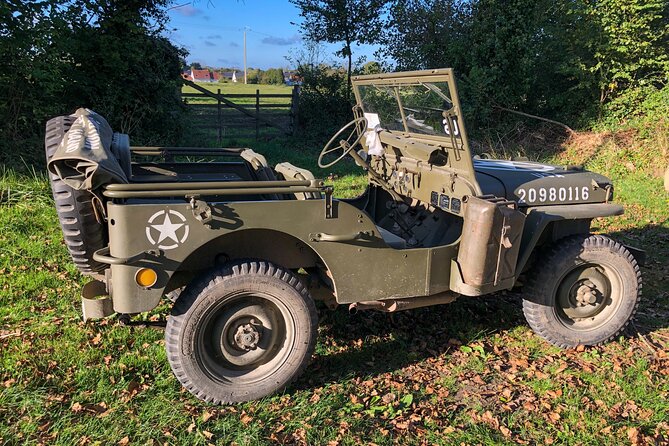
The vehicle is an authentic WWII-era Willys Jeep that remains functional decades after the war. The experience includes private transportation, and the route uses backroads through Norman villages and countryside.
The open Jeep gives you a strong sense of place, but it also exposes you to wind and cool weather. Bring a windbreaker and warm clothing even if the forecast looks pleasant. The coast can feel colder than the inland villages, and the ride may be less comfortable for anyone who needs a cushioned, enclosed vehicle.
The Jeep’s off-road ability is part of the appeal, though the supplied details do not promise a particular amount of off-road driving. You can expect country roads and access to historic areas, but the exact driving conditions may vary.
This is not the best choice for someone seeking air conditioning, a quiet cabin, or a long beach walk. It is a good fit if you want the vehicle itself to be part of the history lesson.
Two hours, three people, and the real value
The price is $302.34 per group of up to three people. That means the cost is about $101 per person for three people, before any meal or extra museum admission. For one person, the per-person cost is much higher, so the value improves sharply when two or three people share the booking.
The price includes private transportation but not lunch. Since the activity lasts about two hours, lunch is not part of the route anyway. You can plan a meal separately in Sainte-Mère-Église or elsewhere in your Normandy schedule.
The listed stops account for about 85 minutes:
- Sainte-Mère-Église: 10 minutes
- Turqueville: 20 minutes
- Beuzeville-au-Plain: 20 minutes
- Saint-Germain-de-Varreville: 15 minutes
- Utah Beach: 20 minutes
The remaining time covers the drive between stops and the movement through the area. That schedule is compact, but it is not rushed in the same way as a coach tour that makes only a photo stop. You receive several explanations tied to actual places.
I consider the price reasonable for a private experience with a period Jeep and a specialist guide, especially for three people. It is less compelling if you want admission to museums or a full-day beach tour included. Think of it as a focused history route, not a complete Normandy package.
The activity is booked, on average, 56 days ahead. That is a useful warning for anyone planning a summer visit or a trip around the June 6 anniversary. Confirmation is sent within 48 hours, subject to availability.
Who should book this Normandy Jeep tour?
I would recommend it most strongly to:
- People with a serious interest in the American airborne landings
- Families who want children to understand the story through places and images
- Anyone with a WWII family connection
- Visitors who have already seen a general overview and want more local detail
- Small groups who value private guiding
- People who like historic vehicles and outdoor touring
It can also work as your first Normandy activity. The guide’s maps and explanations can give you a framework for later visits to Utah Beach, Omaha Beach, or a museum.
I would be more cautious if you have only one free hour, need an enclosed vehicle, or want a broad tour of all the Normandy beaches. This route focuses on Sainte-Mère-Église, the American airborne operation, and Utah Beach. It does not cover Omaha, Gold, Juno, or Sword Beach.
Service animals are allowed, the meeting point is near public transportation, and most people can participate. The activity ends back at the same parking area in Sainte-Mère-Église, which makes it easier to fit into a day based there. Free cancellation is available if you cancel at least 24 hours before the start time. Changes or cancellations made later are not accepted for a refund.
Should you book it?
Book this tour if you want specific places, personal stories, and a serious guide rather than a broad sightseeing loop. The best reason to choose it is the combination of the Willys Jeep and the carefully focused route from the airborne drop zone to Utah Beach.
I would book it early, especially if you are visiting during a busy season. Share the Jeep with two other people when possible, bring warm clothing, and leave extra time for a museum or a longer visit at Utah Beach.
Skip it only if you want a full-day D-Day survey, indoor comfort, or included museum admissions. For a small group that wants to understand how the American airborne landings unfolded on the ground, this is one of the more personal ways to begin a Normandy visit.
FAQ
Where does the tour start?
The tour starts at Parking Rue Eisenhower, 14 Rue Eisenhower, 50480 Sainte-Mère-Église, France.
Where does the tour finish?
The activity ends back at the same meeting point in Sainte-Mère-Église.
How long is the tour?
The tour lasts approximately two hours.
How many people can join?
The tour is private and has a maximum of three participants.
What language is offered?
The experience is offered in English.
Is transportation included?
Yes. Private transportation is included.
Is lunch included?
No. Lunch is not included in the tour price.
What places does the tour visit?
The route visits Sainte-Mère-Église, Turqueville, Beuzeville-au-Plain, Saint-Germain-de-Varreville, and Utah Beach.
Does the tour include museum admission?
No museum admission is listed as included. The stops themselves have no separate admission charge.
Can I cancel for a full refund?
Yes, if you cancel at least 24 hours before the experience starts. Cancellations or changes made less than 24 hours before the start time are not accepted for a refund.
Just listed in France
- Paris: Giverny & Versailles Small Group or Private Tour★ 4.5 · 49 reviews
- Half-Day Walking Food Tour in Nice with Lunch★ 5.0 · 49 reviews
- Chartres Cathedral 5 Hours Tour from Paris with Private Transport★ 4.5 · 49 reviews
- Marseille: Frioul Archipelago Catamaran Cruise with Lunch★ 4.4 · 49 reviews
- Paris: Louvre photoshoot or Seine bridges Eiffel Tower walk★ 5.0 · 49 reviews
- Bonifacio: sunset catamaran trip and aperitif★ 4.6 · 50 reviews
- Paris: Choux Pastry and Chocolate Éclair Making Class★ 4.9 · 50 reviews
- Private tour of the Champagne area, meet local producers and taste their Champagne, start from your hotel in Paris.★ 5.0 · 50 reviews
Mont Saint Michel Tours, compared.
2-Hour Guided Walking tour of the Mont Saint Michel
Read our review →
Browse the lists this tour appears in