
Reviewed · DIJON TOURS
Dijon: Burgundy Wines Masterclass
Burgundy wine can seem like a code at first. Labels focus on villages, vineyards, and production rules more than on the grape itself. This two-hour class with Matthieu or Patrice gives you the key to that code, then lets you taste the results with cheese and charcuterie.
I like the clear teaching structure: first, you learn how to smell and taste wine, then you apply those skills to Burgundy. I also like the local focus. The class connects the wines to Burgundy’s areas, grapes, rules, and production methods rather than treating the tasting as a string of unrelated glasses.
The main consideration is the price, $97 per person, which is a serious outlay for two hours. It makes the most sense if you want a proper introduction to Burgundy and will use what you learn during the rest of your trip. This is an adults-only activity, and it is not suitable for pregnant women.
Key points to know before booking
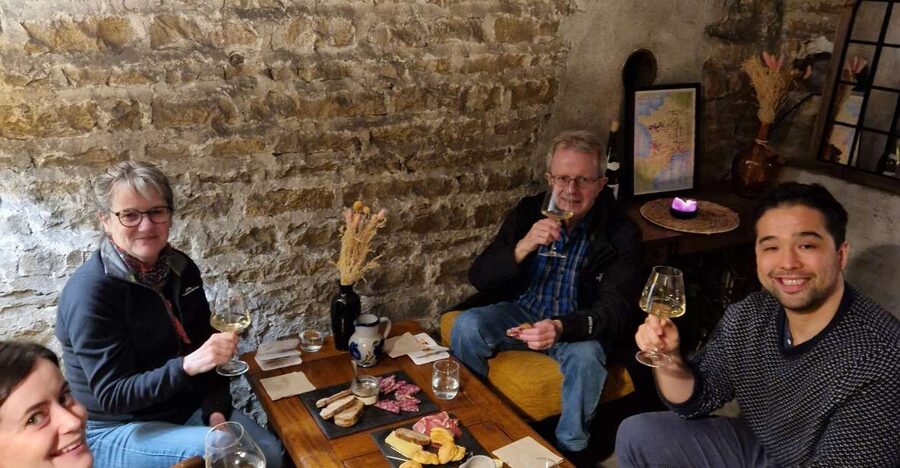
- A practical introduction to Burgundy labels: You learn how the region names and classifies its wines, a useful skill for restaurant lists and wine shops.
- Sommelier-led tasting: The instructor teaches the mechanics of tasting, including how to use your sense of smell and how to spot a wine that is not right.
- Local context in a short format: The class explains Burgundy’s wine areas, grape types, production rules, and background without requiring a full day in the vineyards.
- Food is part of the lesson: Cheese, charcuterie, and other nibbles help you test how wine and food work together.
- A relaxed teaching style: Matthieu is described as humorous and warm, while Patrice is praised for an engaging, easygoing class.
- Flexible booking: You can cancel up to 24 hours before the start for a full refund and reserve now while paying later.
Why Burgundy wine needs a class
Burgundy is famous, but it is not always easy to understand from a bottle label. The region is best known for wines made from a small number of grape types, yet the label often gives more attention to the place where the grapes grew. That makes the origin of the wine central to the lesson.
You begin with the basic question: how do you taste wine properly? The instructor takes you through the order of work. You look at the wine, smell it, taste it, and think about what you are noticing. This is not just theatrical swirling. It gives you a repeatable method you can use later at dinner.
That practical start suits beginners. If you have never attended a wine tasting, you do not need special vocabulary or prior experience. The class explains the process in plain terms, then allows you to test each idea in the glass.
It also works for people who already know a little. Burgundy has enough local rules and terminology to trip up even a regular wine drinker. Learning how the region organizes its wines can make a future bottle purchase less of a gamble.
A few other France half-days to compare
- Dijon: La Cave du Palais Burgundy Wine Tasting Experience
★ 4.8 · 400 reviews - Small-Group Full-Day Tour of Côte de Nuits, Côte de Beaune Vineyards and Beaune Historical District
★ 5.0 · 364 reviews - Pinot Noir Masterclass – Wine tasting in Dijon
★ 5.0 · 147 reviews
The opening lesson: learning to taste
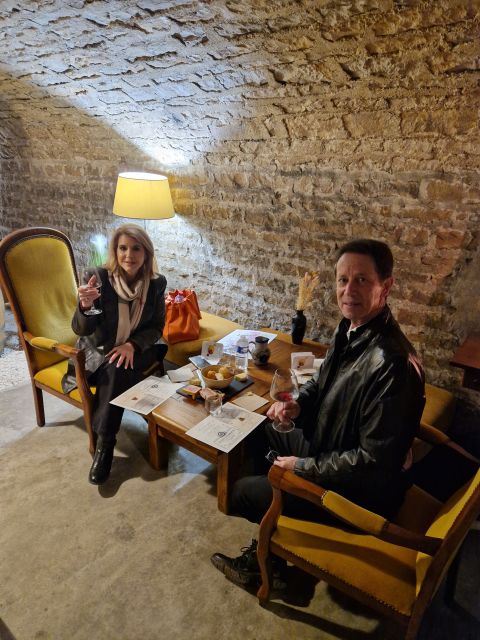
The first stage focuses on the senses. You learn what to look for in a wine’s appearance, aroma, and flavor, with the instructor guiding you through each step. The aim is not to turn you into a professional sommelier in two hours. It is to make you more alert to what is already in the glass.
The guide has ten years of experience leading tastings for amateurs and professionals. The teaching also draws on advanced sommelier training completed at the highest level of the school attended in London the previous year. That background matters because a good tasting needs both technical skill and the ability to explain it to people with different levels of experience.
One useful element is the explanation of how to identify when a wine is not right. This goes beyond asking if you like the flavor. You learn to notice signs that a bottle may be faulty, a skill that can help you speak up politely in a restaurant.
The class keeps the tone relaxed. Matthieu is described as humorous and attentive to the group, while the overall approach allows questions and discussion. One class even ran beyond the expected time because the group was enjoying itself, with an extra wine brought out. You should not treat that as a guaranteed extension, but it gives you a sense of the informal spirit.
Burgundy in the glass: areas, grapes, and rules
After the tasting basics, the class turns to Burgundy itself. You learn about the different parts of the region, the grapes used there, and the rules that shape production. This is the point where the tasting becomes more than a pleasant drink.
The instructor explains why two wines from Burgundy can taste quite different even when they use related grape types. Place, growing conditions, winemaking choices, and local classification all affect what reaches your glass. You are not simply comparing red and white wine. You are learning how a region expresses differences from one area to another.
The section on production rules is especially useful for first-time Burgundy buyers. The region’s naming system can be confusing, and a bottle label may not read the way you expect. The class shows you how to read a Burgundian label and understand what its wording tells you.
That information is valuable outside the class. Later in Dijon, you can approach a wine list with more confidence. You may not remember every classification, but you will have a framework for asking sensible questions and understanding why some bottles cost far more than others.
The class also brings the wine country to life without requiring transport beyond Dijon. If you have limited time and cannot visit several vineyard areas, this is an efficient way to get regional context in one sitting.
Tasting several wines side by side
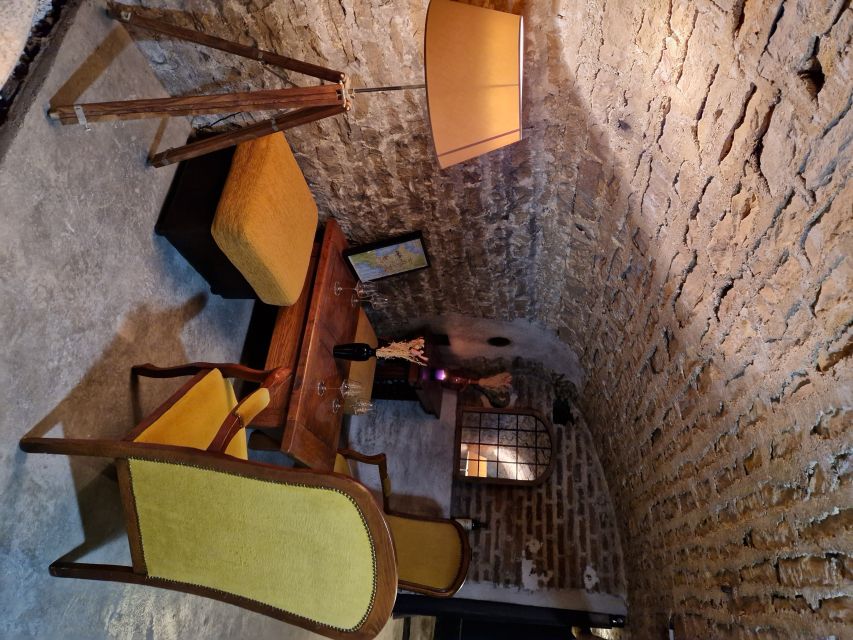
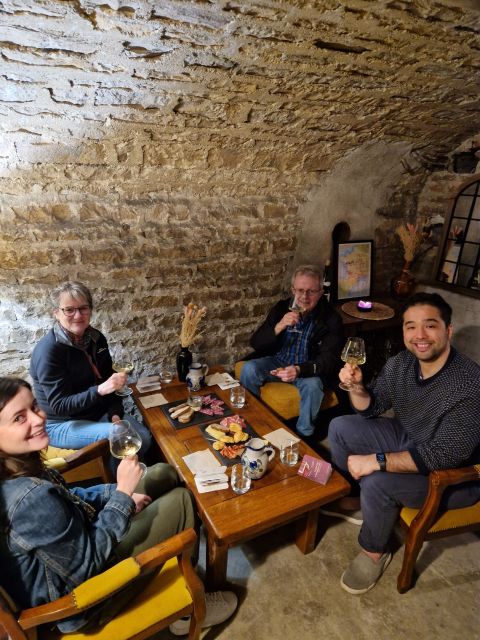
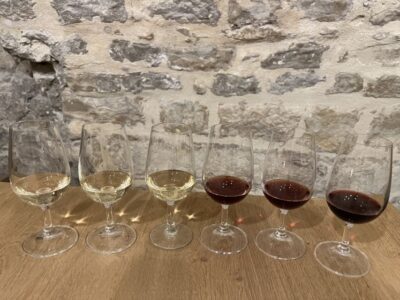
The tasting is the heart of the activity. Five wines are expected, although the instructor may add a sixth if the group is engaged and time allows. The point is comparison. You taste, discuss, and return to the differences between the wines instead of drinking each one in isolation.
That format helps you notice details that are easy to miss when ordering a single glass at a restaurant. One wine may seem lighter, fuller, more fragrant, or more suited to food. The instructor links those impressions to grape type, area, and production choices.
I like that the wines are not treated as a contest with one winner. The goal is to understand why they differ and what kind of drinker might prefer each style. You can enjoy the lesson even if your taste does not match the instructor’s.
The class also includes a demonstration of how to smell a wine that is not sound. This is a small but valuable detail. Many casual wine drinkers know that a wine can be faulty but do not know what to look for. Seeing and smelling an example gives you a clearer memory than hearing a definition alone.
Because the experience lasts two hours, the pace should feel focused rather than rushed. You have enough time to taste several wines and discuss them, but not enough time for a full survey of every Burgundy appellation. That limit is worth keeping in mind. This is an introduction, not a substitute for a multi-day vineyard tour.
Same city, a completely different afternoon:
- Paris: Louvre Museum Timed-Entrance Ticket
★ 4.6 · 71,977 reviews - Disneyland® Paris 1-Day Ticket
★ 4.6 · 49,412 reviews - Paris: Versailles Palace and Gardens Full Access Ticket
★ 4.6 · 41,579 reviews - Paris: Evening River Cruise with Music
★ 4.4 · 22,721 reviews
Cheese, charcuterie, and the food pairing lesson
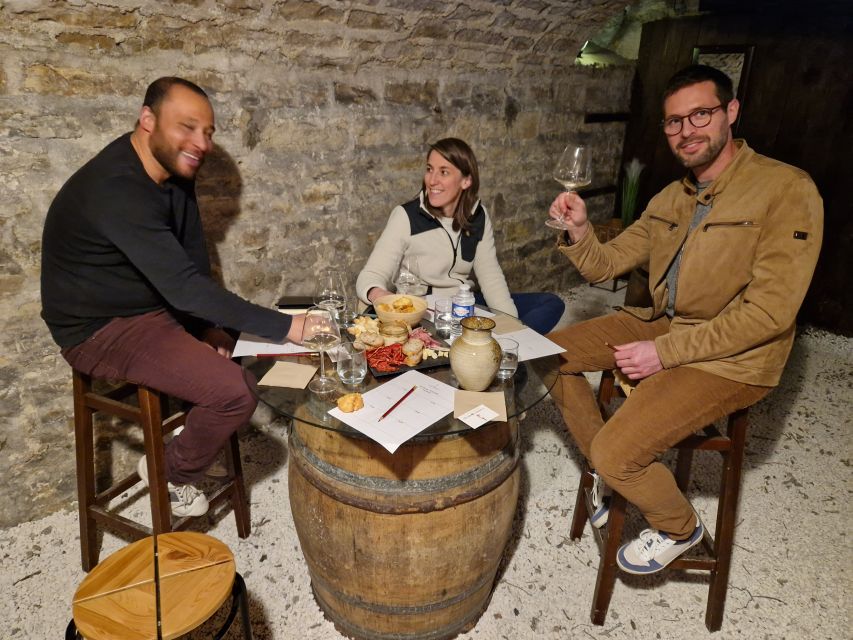
The wines come with a board of cheese and charcuterie, plus other nibbles such as scones. This is not merely a snack added to the booking. It gives the instructor a chance to show how food can change your impression of a wine.
A sip on its own may taste sharp, soft, fruity, dry, or full. Try it with a piece of cheese or cured meat and the balance can shift. You begin to see why pairing is not about rigid rules. It is about matching weight, texture, salt, acidity, and flavor.
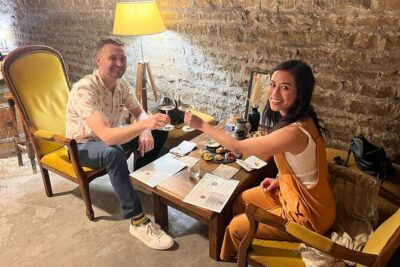
The food also makes the class more social. You have something to share while the instructor explains the wines, and the setting feels less formal than a technical lecture. For couples and small groups, that can be part of the appeal.
The pairing segment received particularly strong praise, with the food described as a highlight alongside the wines. Still, you should book this for the wine lesson first. The board supports the tasting, but this is not a meal or a dedicated food tour.
If you have dietary needs, the supplied information does not specify alternative options. It is sensible to ask before booking rather than assume substitutions are available.
Matthieu, Patrice, and the teaching style
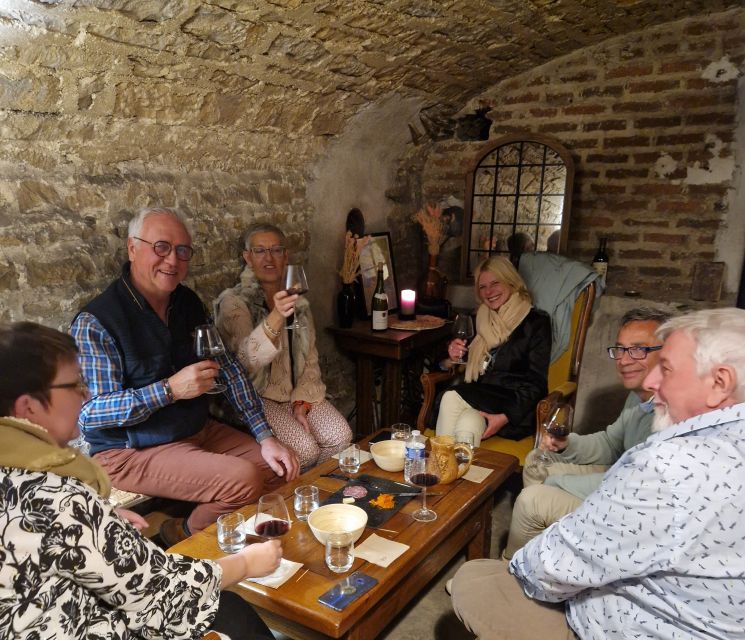
The experience appears to be led by Matthieu or Patrice. Matthieu is repeatedly described as warm, funny, and passionate about Burgundy, with a talent for making technical points easy to follow. One detailed account places the class among the best wine courses experienced across several French wine regions.
Patrice is also praised for an informative, relaxed, and engaging class. The important point for you is that the value depends partly on the instructor’s ability to keep the group involved. Wine terminology can become dry in the wrong hands. Here, the teaching style is presented as conversational, with room for questions and a good deal of humor.
The class suits a mixed group. Beginners can start with the basics, while more experienced wine drinkers can ask about labels, classification, tasting faults, and regional differences. You should expect a group setting rather than a private consultation.
The English and French language options make the class accessible to international visitors and French speakers. Check the available language and starting time when you book.
Meeting at The Wine Compass in Dijon
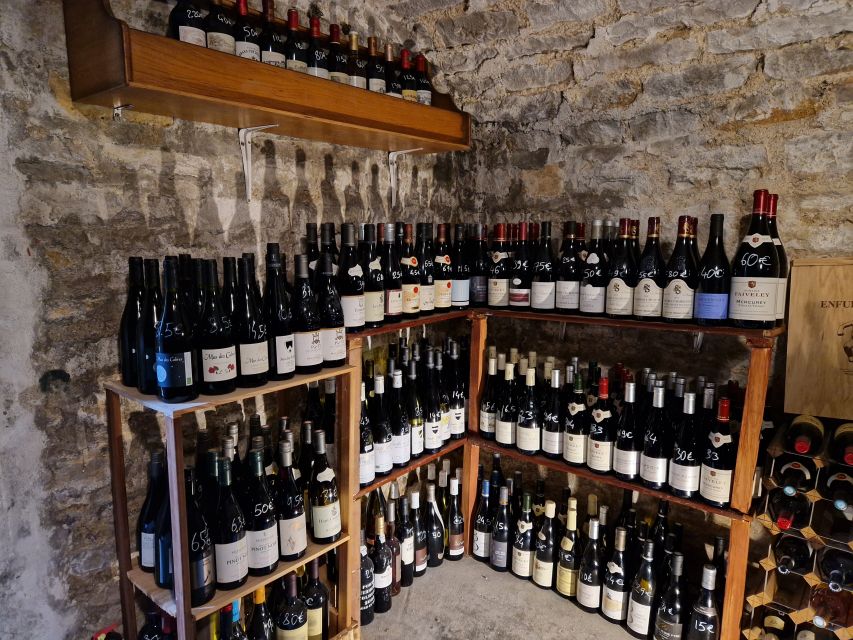
The meeting point is The Wine Compass. Enter the courtyard and look for stairs going down on the left. A sign reading The Wine Compass marks the spot.
This direction is simple, but give yourself a few extra minutes. The entrance is reached through a courtyard and down stairs, so do not expect a large street-front shop that announces itself from a distance.
The activity ends back at the same meeting point. That makes it easy to fit into a day of sightseeing in central Dijon, at least in planning terms. You do not need to arrange a separate return transfer, and the two-hour length leaves room for other plans before or after.
Starting times vary, so availability must be checked before booking. The supplied information does not give a fixed daily schedule or a group size, so avoid building a tight connection around the class.
Is $97 a fair price?
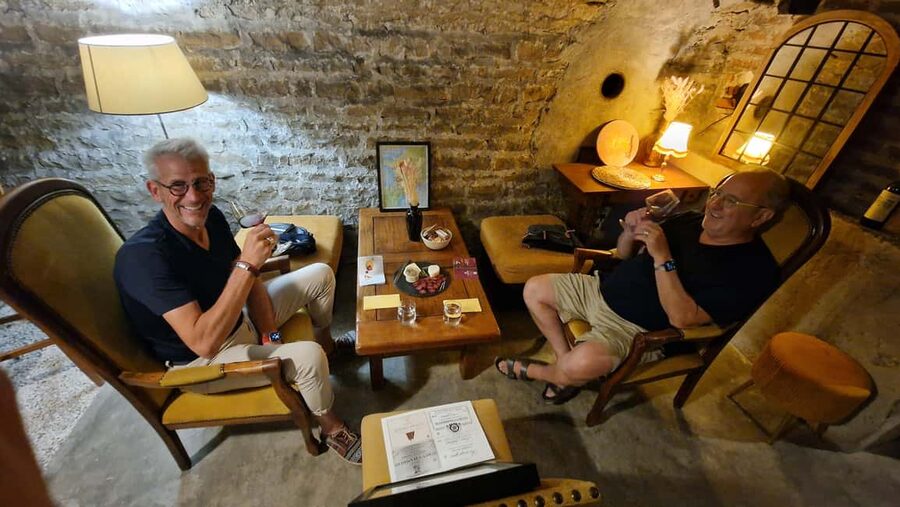
At $97 per person, this costs more than a casual tasting at a wine bar. The price covers a guided lesson, several Burgundy wines, professional instruction, and cheese and charcuterie. You are paying for interpretation as much as for the liquid in the glasses.
I see the strongest value for three types of visitor. First, you are new to Burgundy and want a clear foundation. Second, you are visiting Dijon without time for a full wine-country excursion. Third, you already enjoy wine but want to understand labels, classification, and tasting faults more clearly.
The value is weaker if you only want a quick drink or a large number of pours. The class is structured around learning, and two hours cannot cover every part of Burgundy. You should also remember that wine prices vary widely, so the cost of the experience cannot be judged only by counting bottles.
The reserve-now-and-pay-later option helps if your schedule is still changing. Free cancellation up to 24 hours before the activity gives you some protection, provided you meet that deadline.
Who should book this class?
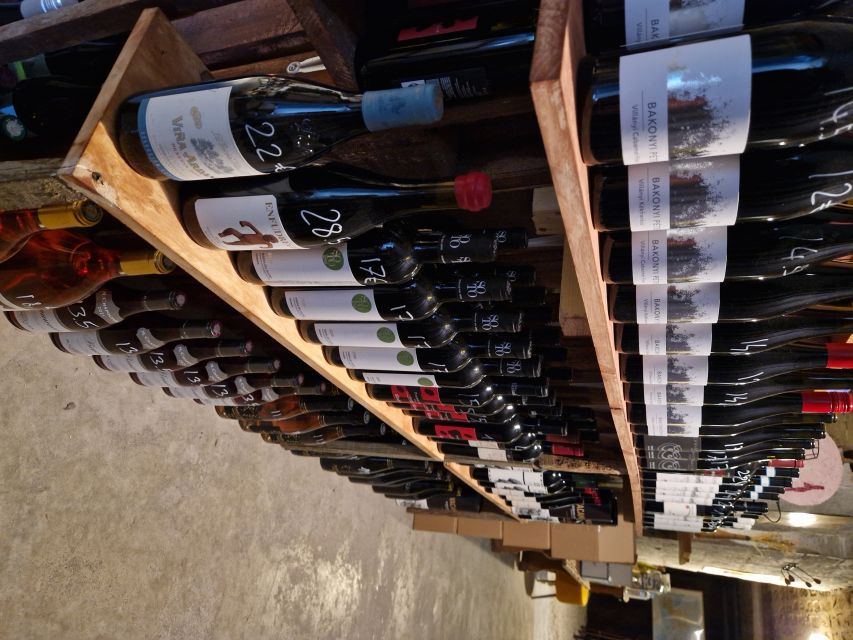
I would recommend it to adults who want a useful introduction rather than a purely scenic outing. It is especially good for first-time wine tasters because the lesson starts with basic technique and builds from there.
It also suits a serious Burgundy itinerary. Take the class near the beginning of your stay, and you can use the label-reading and tasting lessons in restaurants or shops afterward. If you place it at the end of your trip, it can help organize what you have already tasted.
This is not suitable for children under 18, or for people under 17 according to the booking information. Pets are not allowed, and the experience is not suitable for pregnant women.
You should choose another activity if your main goal is to visit vineyards, walk among vines, or tour a working winery. The class explains production and regional differences, but the supplied details do not promise vineyard transport or a cellar visit.
FAQ
How long does the Burgundy wine masterclass last?
The class lasts two hours. Starting times vary, so you need to check availability for the date you want.
How many wines will I taste?
Five wines are expected. An additional sixth wine may be offered if the group has enough time and is enjoying the session, but that extra pour is not guaranteed.
Is food included?
Yes. The experience includes a cheese board and charcuterie. Additional nibbles, including scones, may accompany the tasting.
What languages are available?
The instructor can lead the class in English or French.
Where does the class begin?
Enter the courtyard at The Wine Compass. On the left, look for stairs going down and a sign saying The Wine Compass. The activity ends at the same meeting point.
Can I cancel my booking?
You can cancel up to 24 hours in advance for a full refund. The reserve-now-and-pay-later option lets you book without paying immediately.
Should you book the Dijon Burgundy Wines Masterclass?
Book it if you want Burgundy to make sense, not just taste good. The strongest part is the combination of practical tasting technique, local wine knowledge, label reading, and food pairing in a compact two-hour session.
I would be less enthusiastic if you are seeking a vineyard visit or a bargain tasting. At $97, the class needs to deliver more than a few glasses, and its value rests on the teaching. Based on the structure, the experienced instructors, and the strong emphasis on clear, entertaining guidance, it is best viewed as a short wine course with tasting included.
For an adult visiting Dijon with limited time, that is a useful trade. You leave with more than pleasant memories and a full glass. You leave better prepared to choose, taste, and understand Burgundy wine.
Just listed in France
- Paris: Giverny & Versailles Small Group or Private Tour★ 4.5 · 49 reviews
- Half-Day Walking Food Tour in Nice with Lunch★ 5.0 · 49 reviews
- Chartres Cathedral 5 Hours Tour from Paris with Private Transport★ 4.5 · 49 reviews
- Marseille: Frioul Archipelago Catamaran Cruise with Lunch★ 4.4 · 49 reviews
- Paris: Louvre photoshoot or Seine bridges Eiffel Tower walk★ 5.0 · 49 reviews
- Paris: Choux Pastry and Chocolate Éclair Making Class★ 4.9 · 50 reviews
- Private tour of the Champagne area, meet local producers and taste their Champagne, start from your hotel in Paris.★ 5.0 · 50 reviews
- Bonifacio: sunset catamaran trip and aperitif★ 4.6 · 50 reviews
Dijon Tours, compared.
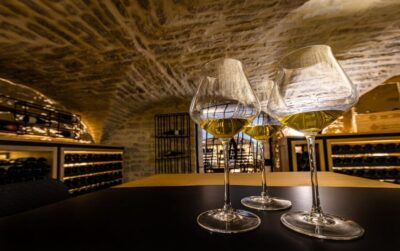
La Cave du Palais Burgundy Wine Tasting Experience
Read our review →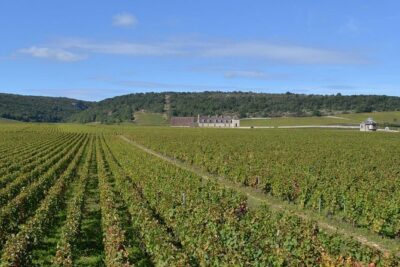
Small-Group Full-Day Tour of Côte de Nuits, Côte de Beaune Vineyards and Beaune Historical District
Read our review →
Half Day Tour of the Cote de Nuits Vineyards from Dijon
Read our review →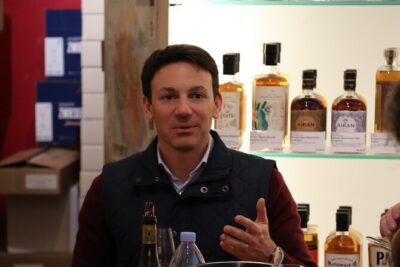
Small group Burgundy tour of Beaune with Wine Tasting from Dijon
Read our review →Browse the lists this tour appears in