
Reviewed · MUSEE D ORSAY & ORANGERIE TOURS
Orangerie & Monet’s Water Lilies Exclusive Tour w/ Reserved Entry
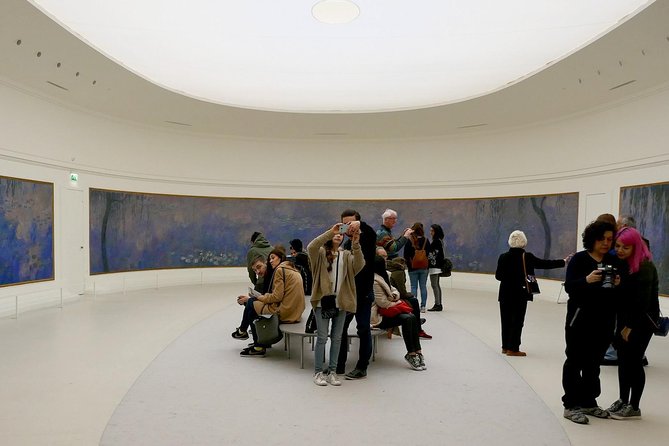
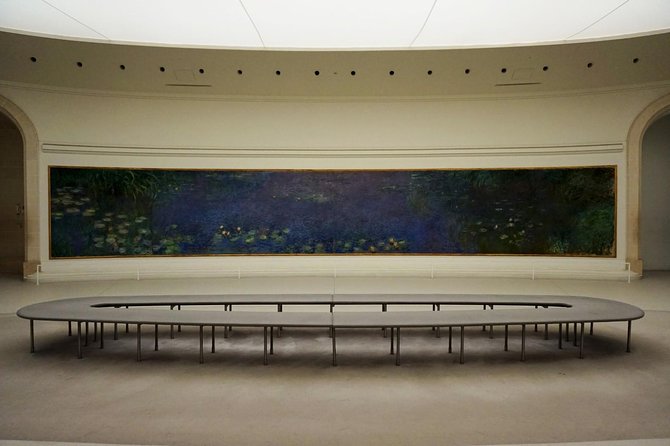
Monet’s Water Lilies are the main event here, and they deserve more than a quick look before lunch. At the Musée de l’Orangerie, the paintings fill two specially designed oval rooms, letting you stand close to the sweeping ponds, reflections, and soft bands of color. A guide such as Belen, Dunya, Anatole, Marcel, or Zdravko can add the stories and art history that make the paintings easier to understand.
I like the reserved entry, especially when your Paris schedule is tight, and I like the museum’s size. Two hours gives you a focused art visit rather than an exhausting march through endless galleries. The second strong point is the guide-led approach: the best guides, including Anatole and Dunya, explain how the works connect to the social changes and artistic experiments of their time.
The main consideration is price. At $143.91 per person, this costs far more than visiting the museum on your own. It makes the most sense if you want expert interpretation, a private guide, or help making the most of a short stay. Temporary exhibitions are not included, and museum closures can occasionally happen without warning.
Key points to know before booking
- Monet’s Water Lilies occupy two purpose-built oval rooms, where the scale and layout are part of the artwork.
- Reserved entry is included, though added security can still create short waits.
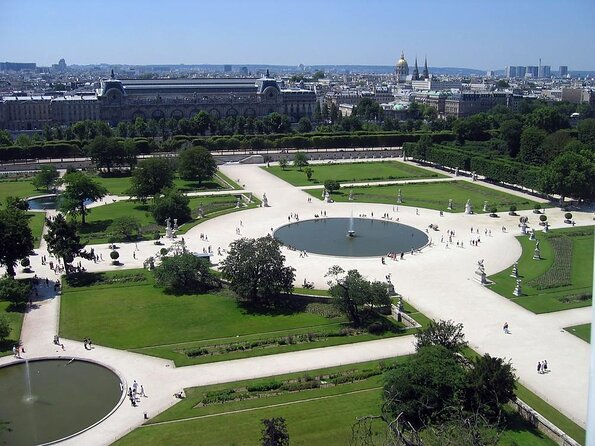
- The tour covers more than Monet, with works by Cézanne, Matisse, Picasso, Renoir, Modigliani, Utrillo, and others.
- Private and small-group choices are available, but wheelchair access applies only to the private option according to the tour details.
- Strong guide quality is central to the experience, with praised guides including Belen, Dunya, Anatole, Marcel, Emma, Michel, Lili, and Zdravko.
- Allow time after the guided portion to sit quietly with Monet’s paintings and look again without commentary.
Why Monet’s Water Lilies deserve a full visit
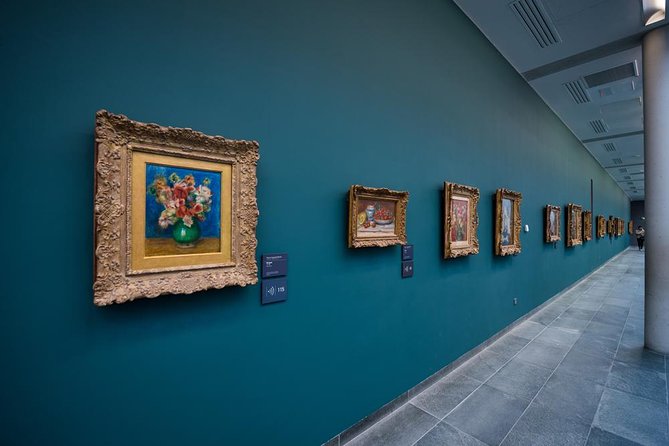
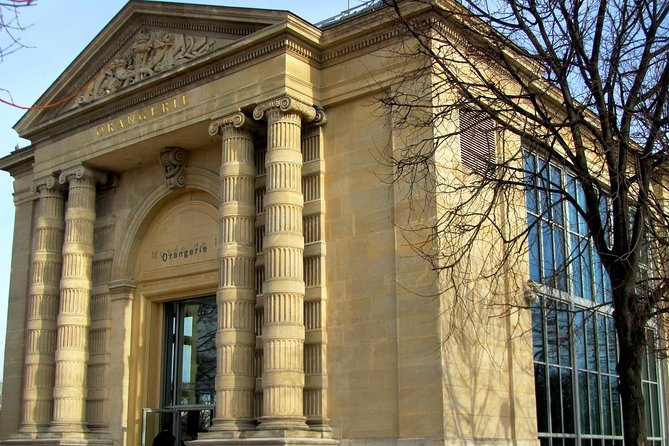
The Musée de l’Orangerie sits in the Tuileries Gardens, an easy place to pair with a walk between the Louvre, Place de la Concorde, and the Seine. Its setting helps explain the museum’s character. The building began as an orangery, a glasshouse used to protect citrus trees, and became an art museum in the early 20th century when Paris needed more gallery space.
The museum is best known for the huge group of Water Lilies paintings Monet gave to France. Their arrival was tied to Monet’s friendship with Georges Clemenceau, the French statesman who helped arrange their presentation. The paintings were intended as a gift to the country after the First World War, and their display was designed around the experience of looking at them as a group.
That context matters. These are not simply large paintings of pretty ponds. Monet was studying light, reflection, weather, and the shifting border between solid objects and open space. The oval rooms allow the works to surround you, so you see how one panel changes the mood of the next.
A guide can point out the broad sweep of the project without reducing it to a lecture. Marcel, for example, is praised for giving people quiet time among the paintings while still explaining Monet’s life and the creation and display of the works. That balance is important. The rooms work best when you receive enough background, then get a chance to look in silence.
A few other Paris half-days to compare
- Paris: Musée d’Orsay Entry Ticket and Seine River Cruise
★ 4.6 · 1,344 reviews - Paris: Musée d’Orsay Skip-the-Line Tour with Expert Guide
★ 4.5 · 1,145 reviews - Musée d’Orsay Skip-the-Line Tour with Expert Guide
★ 4.8 · 1,088 reviews
Entering the Musée de l’Orangerie in the Tuileries Gardens
The meeting point is at the Musée de l’Orangerie, Jardin des Tuileries, 75001 Paris. The tour ends at the same place, so you are free to continue through the gardens or walk onward to another central Paris sight.
Reserved entry reduces one common source of stress: figuring out the museum queue on the spot. It does not mean every second will be frictionless. The museum can apply extra security measures, and short lines may still form even with reserved access. Large bags and suitcases are not allowed inside. Bring only a handbag or a small, thin backpack.
You should also arrive ready for a museum visit rather than a casual stroll. Appropriate dress may be required for entry, and the tour notes call for a moderate level of physical fitness. The museum is near public transport, while hotel pickup and drop-off are not included. If you are carrying luggage or staying outside central Paris, a taxi or Uber is the practical choice.
The tour lasts about two hours. That is enough time for a well-planned introduction to the Water Lilies and a selection of the museum’s other works. It is not enough for an exhaustive examination of every gallery, so the guide’s choices matter.
The Water Lilies rooms: scale, color, and quiet
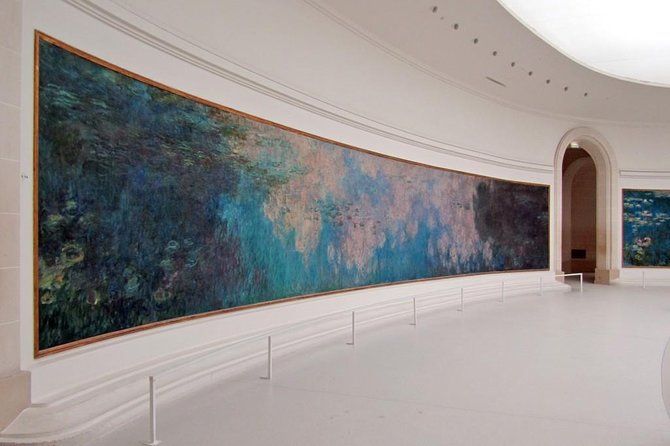
Most people come for Monet, and the first part of your visit should help you see why these rooms are so memorable. The paintings are large enough to change your sense of distance. From one point, you can read the flowers, branches, water, and reflections. From another, the image becomes a field of color and brushwork.
This is where a guide earns the fee. A strong explanation can help you notice how Monet moved away from a clear horizon and recognizable scenery. You can look for the water’s surface, the floating flowers, and the reflections of the world above it, even when the painting gives you no firm place to stand.
Belen is praised for explaining why particular works matter and how later artists were influenced by earlier ones. Dunya is described as turning the visit into a live art class, with attention to both the paintings and the ideas behind them. Those are useful qualities in a museum built around subtle changes. You do not need someone to tell you that the paintings are beautiful. You need help seeing what changes from panel to panel.
The best plan is not to rush straight out once the guide finishes. Several guides, including Marcel, have allowed time for quiet reflection. Sit or stand with the paintings on your own, then return to the details you may have missed while listening. That extra time can make the visit feel personal rather than simply instructional.
Cézanne, Matisse, Picasso, and the modern collection
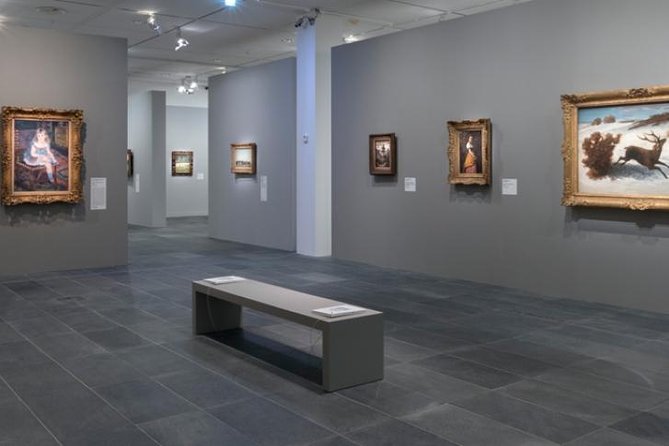
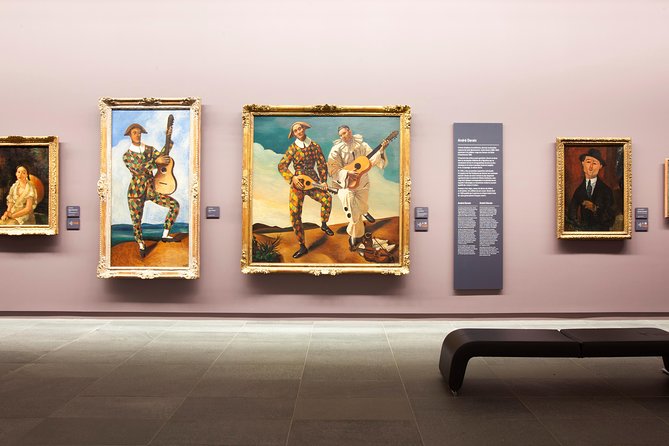
The Orangerie is small compared with the Louvre or Musée d’Orsay, but its collection reaches well beyond Monet. You can see Cézanne’s studies of fruit and flowers, Matisse portraits, and examples from several stages of Picasso’s career, including nudes.
The collection also includes works connected with Renoir, Modigliani, and Utrillo. The exact selection may vary during the year, and temporary exhibitions are not included in this experience. Still, the permanent displays give the guide room to show how artists handled color, form, portraiture, and the human body in very different ways.
This section is one reason I prefer a guided visit over simply buying an entry ticket and wandering. Without context, you might recognize a famous name but miss the link between the works. Anatole is praised for explaining the museum’s art in a way that makes the visit feel like a journey through changing artistic ideas. He also worked well with a family that included children aged 10, 15, and 17, which suggests that a good guide can adjust the pace and level of detail.
The underground or lower-level collection can also be part of the tour. Marcel is described as giving equal care to this contemporary section after leading the Monet portion. If you want only the Water Lilies, tell your guide early. If you enjoy seeing how one period leads into another, keep the broader route.
Same city, a completely different afternoon:
- Paris: Louvre Museum Timed-Entrance Ticket
★ 4.6 · 71,977 reviews - Disneyland® Paris 1-Day Ticket
★ 4.6 · 49,412 reviews - Paris: Versailles Palace and Gardens Full Access Ticket
★ 4.6 · 41,579 reviews - Paris: Evening River Cruise with Music
★ 4.4 · 22,721 reviews
What the best guides add
The tour’s strongest feature is not just entry access. It is the person standing beside you. The guide names praised in the supplied material include Belen, Michel, Dunya, Zdravko, Romain, Anatole, Marcel, Emma, Lili, Emmanuelle, Taylor, and Lucia.
The repeated strengths are clear: strong art knowledge, enthusiasm, good pacing, and an ability to connect paintings with the lives of artists and the society around them. Belen is praised for giving a full picture of the museum before arriving at Monet, while Michel is praised for bringing the art culture alive through background stories.
Zdravko is noted for using photos on a tablet to add context and for allowing time to observe the works independently. That combination is useful. You want a guide who can answer questions, but you also want enough space to form your own response to the art.
Romain is praised for introducing works by Derain, Soutine, Laurencin, and Rousseau, artists you might otherwise pass without much thought. Taylor is described as a reliable person to ask questions about the art world. Emmanuelle is praised for a clear presentation of the painters and their works.
Guide assignments can change, so you should not assume a particular person will lead your tour unless the booking confirms it. Still, the repeated praise for the guiding team suggests that the human side of this experience is a major part of its value.
Private tour or small group?
The private option gives your group its own guide. That is the better choice if you want to ask many questions, set a gentler pace, or shape the visit around Monet, modern art, or a family’s interests. A private tour also includes wheelchair access according to the supplied details.
The small-group option can lower the cost per person when several people book together, and group discounts are available. It may suit you if you want a social visit and do not need the guide to adjust every explanation to your interests.
The tradeoff is control. A small group usually means following the guide’s planned route and sharing question time. The private format costs more, but the difference can be worthwhile for a family, a couple with strong art interests, or anyone who wants a carefully paced visit.
The tour is offered in English. You must provide a mobile phone number with the country code, which the operator says is imperative. Keep your phone available on the day in case the guide needs to contact you about meeting arrangements.
Is $143.91 a fair price?
The price is high for a two-hour museum visit. Admission alone is much cheaper than the full tour cost, so you are paying for the guide, reserved entry, planning, and the convenience of having the museum explained in a compact period.
I would judge the value by your priorities. If you have already studied Monet, feel comfortable finding your way through Paris museums, and prefer to look independently, buy a regular ticket instead. The extra cost may not add enough.
If you are visiting Paris for a few days, want to understand what you are seeing, or feel unsure about Impressionist art, the calculation changes. A good guide can prevent you from spending two hours looking only at the most famous paintings. You get a framework for the entire museum and a clearer sense of why the Water Lilies matter.
For a private group, the per-person cost may also feel more reasonable when divided among several people. The experience is especially well suited to families, since the guide can connect art to stories, social change, and visual details instead of leaving younger visitors to read wall labels.
Timing, access, and practical limits
The museum is in a central area with public transport nearby. The tour begins and ends at the museum, and no hotel transfer is included. Plan your route before setting out, especially if you are using the visit between other timed attractions.
Do not bring a suitcase. Only handbags and small, thin backpacks can pass through security. If you are moving between hotels, arrange luggage storage before arriving.
Museum rooms may have quiet or restricted speaking rules. Your guide will explain these before you enter the affected spaces. This is particularly relevant in the Water Lilies rooms, where the calm atmosphere is part of the experience.
Occasional closures can happen without advance warning from museum management. If the opening is delayed by more than one hour, an alternative is offered, but the tour terms say that refunds or discounts are not available in that situation. That is a small but real risk to consider when building a tightly packed day.
Free cancellation is available up to 24 hours before the start time. Cancellations or changes made less than 24 hours ahead are not accepted for a refund.
Who should book this Orangerie tour?
I would recommend it to a first-time Paris visitor who wants a clear introduction to Monet and modern French art. It is also a good fit for someone who has limited museum time and would rather see the important works with a guide than spend energy planning a route.
Families can benefit from the private option, especially when children or teenagers have different levels of interest. A guide such as Anatole can keep the discussion lively while still giving adults serious art and historical context.
Art lovers who have already visited the Louvre and Musée d’Orsay may also appreciate the quieter scale of the Orangerie. The museum offers a change of rhythm: fewer rooms, a focused collection, and the chance to study Monet without attempting to cover an enormous institution.
I would skip the tour if you are watching every euro, dislike guided commentary, or want to spend a long afternoon looking at a small number of works at your own speed. In that case, independent entry is the better match.
Should you book it?
Book this experience if Monet’s Water Lilies are a priority and you want more than a quick photo stop. The reserved entry is useful, but the guide is the real reason to pay extra. Belen, Dunya, Anatole, Marcel, Zdravko, and the other named guides are praised for passion, context, and a pace that leaves room to look.
Choose private if you want wheelchair access, personal questions, or control over the pace. Choose small group if price matters more and you are happy to share the route. Either way, keep your bags light, allow for security checks, and save a few minutes after the tour to look at Monet again on your own.
FAQ
How long does the Orangerie tour last?
The tour lasts approximately two hours.
Where does the tour begin and end?
It begins at the Musée de l’Orangerie in the Tuileries Gardens at Jardin des Tuileries, 75001 Paris, and ends back at the meeting point.
Is museum admission included?
Yes. Reserved entry, the guided museum tour, and all entrance fees are included. Temporary exhibitions are not included.
Is the tour offered in English?
Yes. The experience is offered in English.
Can I choose a private tour?
Yes. You can choose a private guide or a small-group option. The private option gives your group its own guide.
Is the museum wheelchair accessible on this tour?
Wheelchair-friendly access is included for the private option. The supplied tour details say this does not apply to the small-group option.
Can I cancel for a full refund?
Yes, if you cancel at least 24 hours before the experience start time. Cancellations or changes made less than 24 hours before the start time are not refunded or accepted.
Just listed in Paris
- Chartres Cathedral 5 Hours Tour from Paris with Private Transport★ 4.5 · 49 reviews
- Paris: Giverny & Versailles Small Group or Private Tour★ 4.5 · 49 reviews
- Paris: Louvre photoshoot or Seine bridges Eiffel Tower walk★ 5.0 · 49 reviews
- Private tour of the Champagne area, meet local producers and taste their Champagne, start from your hotel in Paris.★ 5.0 · 50 reviews
- Paris: Choux Pastry and Chocolate Éclair Making Class★ 4.9 · 50 reviews
- Paris Eternelle Notre-Dame Virtual Reality Tour★ 4.5 · 50 reviews
- Normandy D-Day Landing Beaches Private Day Trip from Paris★ 5.0 · 50 reviews
- Disneyland® Paris 1 Day with Round-Trip Train Tickets from Paris★ 4.0 · 50 reviews
Musee d Orsay & Orangerie Tours, compared.
Musée d’Orsay Entry Ticket and Seine River Cruise
Read our review →
Musée d’Orsay Skip-the-Line Tour with Expert Guide
Read our review →
Musée d’Orsay Skip-the-Line Tour with Expert Guide
Read our review →
The Musée d’Orsay Guided Tour Orsay Museum Semi-Private 6ppl Max
Read our review →
Louvre & Musée d’Orsay Guided Museum Tour Semi-Private 6ppl Max
Read our review →
Orsay Museum – Exclusive Guided Tour (Reserved Entry Included)
Read our review →Browse the lists this tour appears in