
Reviewed · DIJON TOURS
Half Day Tour of the Cote de Nuits Vineyards from Dijon
The real pleasure here is seeing how Burgundy’s famous wines fit into the countryside that produces them. In about four and a half hours, you move from Dijon through grand cru vineyards, medieval villages, old forests, and the Château du Clos de Vougeot, then finish with a tasting of five to seven wines, often including Premier Cru bottles. The wine lesson is the heart of the afternoon, but the scenery gives it meaning.
I like the small group size, capped at eight, and I like the range of guides who have led this outing, including Antonin, Paul, Leonie, Ivan, Jeremy, and Hubert. Each brings a strong grasp of Burgundy wine, and some have formal credentials such as Antonin’s WSET Diploma. The main drawback is timing: the drive can take 60 to 90 minutes before you make substantial stops, and this is not a village walking tour.
Key points to know
- Clos de Vougeot is more than a photo stop: You enter the château and see its historic presses, vat rooms, and monks’ cellar.
- The tasting usually includes five to seven wines: Premier Cru, Pinot Noir, and white Burgundy may all appear, depending on the day.
- The group is limited to eight people: That makes it easier to ask questions and adjust the conversation to your interests.
- The return route adds real scenery: You travel through the Hautes-Côtes de Nuits, ancient forests, and the Ouche Valley.
- The tour leaves Dijon at 1:30 p.m.: It returns to the same central meeting point at roughly 6 p.m.
- The focus is vineyards and heritage, not town visits: You may see villages and churches from the road, but the schedule does not promise time to explore each one.
Why this Côte de Nuits afternoon works
Burgundy can be tricky to understand on your own. Famous names such as Romanée-Conti, Clos de Vougeot, Nuits-Saint-Georges, and Gevrey-Chambertin sit in a narrow band of vineyards, yet each place has its own reputation, soil, and style. A guide helps you connect those labels to actual plots of vines and villages.
This outing gives you three useful pieces of the puzzle: time among the vineyards, a visit to a major historic wine site, and a structured tasting. You are not simply driven from Dijon to a cellar for a few glasses. You see the setting first, then learn how the wine developed in this part of Burgundy.
The format is especially helpful if you are new to Burgundy wine. Guides explain the local classification system, the role of the vineyards, and the development and production of the region’s wines. You can ask basic questions without feeling out of place, or use the time to discuss finer points if you already know your Pinot Noir from your Chardonnay.
A few other France half-days to compare
- Dijon: La Cave du Palais Burgundy Wine Tasting Experience
★ 4.8 · 400 reviews - Small-Group Full-Day Tour of Côte de Nuits, Côte de Beaune Vineyards and Beaune Historical District
★ 5.0 · 364 reviews - Pinot Noir Masterclass – Wine tasting in Dijon
★ 5.0 · 147 reviews
Starting in central Dijon at 1:30 p.m.
The meeting point is the central bus parking area at 16 Place Darcy, near Dijon’s public transport network. The afternoon departure is convenient for a morning in Dijon, and it leaves enough time for lunch before you meet the group. Lunch is not included, so plan to eat beforehand rather than count on food during the tour.
The group travels by minibus, with a maximum of eight people. That is a useful middle ground. You avoid the impersonal feel of a large coach, but you also do not pay for a fully private outing. The vehicle has been described as clean and comfortable, though your guide’s commentary and the group dynamic will shape the experience as much as the vehicle does.
Guides have included Antonin, Paul, Leonie, Ivan, Jeremy, David, and Hubert. The exact guide is not fixed in the information provided, but the pattern is clear: this is led by local people who know the wine region well. Antonin, for example, speaks English and holds a WSET Diploma. Paul has led tastings focused on Burgundy’s wine system, while Ivan has guided visits along the route of the grands crus.
Driving through the Côte de Nuits vineyards
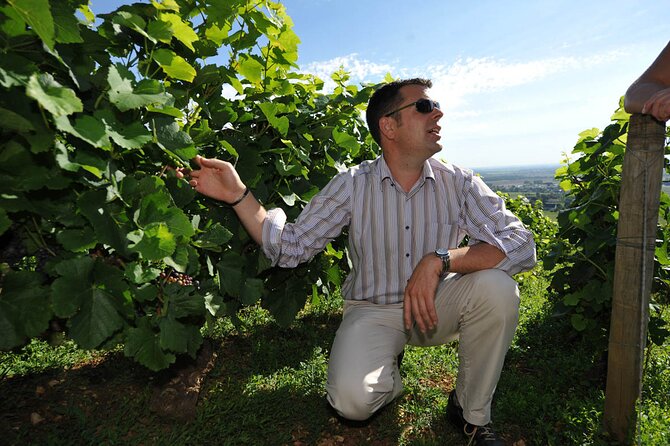
The first part of the afternoon is largely about orientation. You drive south from Dijon through the Côte de Nuits, passing vineyards, wine villages, churches, castles, and old houses. This is the stretch where expectations matter most.
If you picture a tour with long stops in several picturesque villages, adjust that picture. The route may show you places such as Fixin and Nuits-Saint-Georges, and guides may pause at viewpoints or vineyard plots, but the experience is not built around wandering through each village. One clear description of the tour notes that the initial drive may last 60 to 90 minutes before the main visits begin.
I see that as a fair trade for a half-day schedule, but you should know what you are buying. The value is in the guide’s explanation and the broad view of the wine country, not in checking off a series of village centers. If you want substantial free time in Beaune, Fixin, or Nuits-Saint-Georges, choose a longer excursion or visit those places separately.
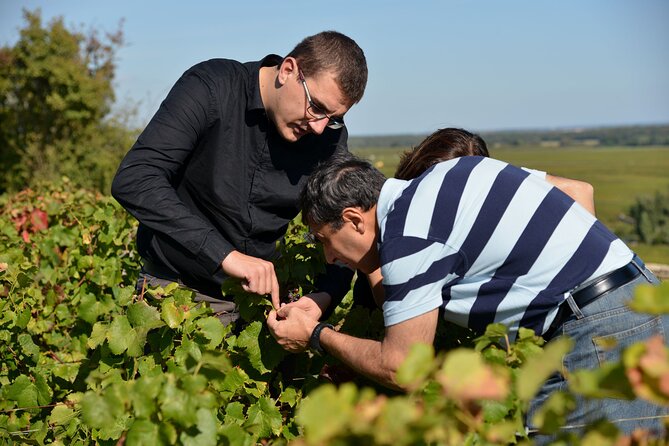
The vineyard stops help make the lesson concrete. Instead of hearing only about terroir in a tasting room, you can look at the vine plots themselves and see how closely the celebrated vineyards sit beside ordinary working parcels. The guide may explain the local classifications and the way Burgundy’s reputation is tied to individual plots rather than only to broad regional labels.
Entering Château du Clos de Vougeot
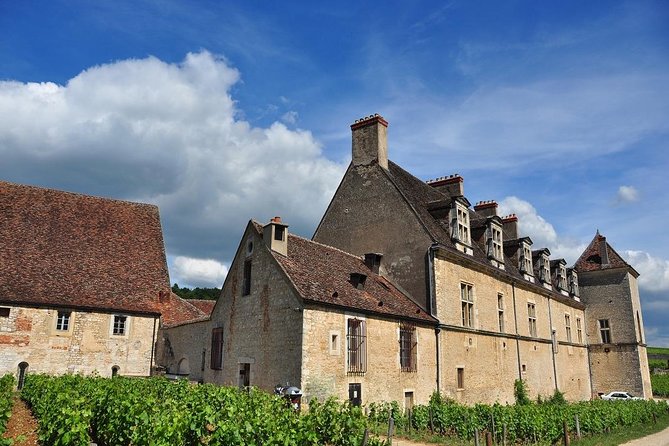
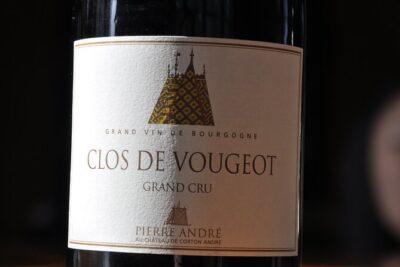
The Château du Clos de Vougeot is the afternoon’s main historic stop. Built in stages between the 12th and 16th centuries, it reflects the work of Cistercian monks, who helped establish the wine-making tradition in this part of Burgundy.
Inside, you see the old wine-making facilities: the vat rooms, presses, and monks’ cellar. These spaces give useful scale to the past. Burgundy wine is often presented through elegant labels and expensive bottles, but the château brings you back to the practical work behind them: pressing grapes, storing wine, and managing production long before modern equipment.
The château is also a good counterpoint to the vineyard drive. The vines show the present-day region, while the old presses and cellar explain how the place became a center of wine production. The entrance fee is included, so you do not need to decide on the spot whether the visit is worth an extra charge.
Do not expect the château visit to feel like a full afternoon in a major palace. The attraction is compact and closely tied to wine-making history. Its value comes from seeing the working spaces and hearing the context from your guide.
Same city, a completely different afternoon:
- Paris: Louvre Museum Timed-Entrance Ticket
★ 4.6 · 71,977 reviews - Disneyland® Paris 1-Day Ticket
★ 4.6 · 49,412 reviews - Paris: Versailles Palace and Gardens Full Access Ticket
★ 4.6 · 41,579 reviews - Paris: Evening River Cruise with Music
★ 4.4 · 22,721 reviews
Walking among vines and Burgundy heritage
A stroll through the Côte de Nuits vineyards is included, though the precise length and location can vary with the day’s route. The walk adds welcome time outside the minibus and lets you see the vineyards at ground level.
The setting changes with the season. The supplied information does not promise a particular view or weather, so bring sensible shoes and a light layer. Rain did not prevent one tour from continuing, but the experience is more comfortable when you are prepared for a damp path or cool afternoon.
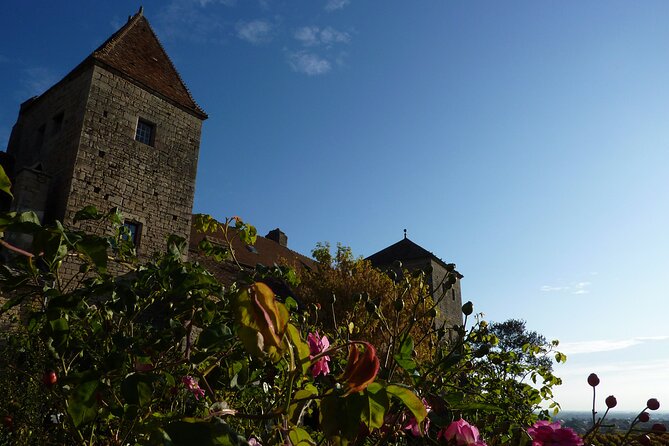
The route also brings in Burgundy’s built heritage. You may pass medieval houses, small churches, and castles as the guide explains how villages and vineyards developed together. These details matter because the Côte de Nuits is not just a scenic strip of farmland. It is a working cultural region where wine, architecture, monastic history, and village life are closely linked.
That said, the walk is not a strenuous hike, and the tour is designed so most people can participate. The available information says most travelers can take part, but it does not give a detailed accessibility breakdown. If you need specific mobility arrangements, ask Authentica Tours before booking.
The cellar tasting: five to seven Burgundy wines
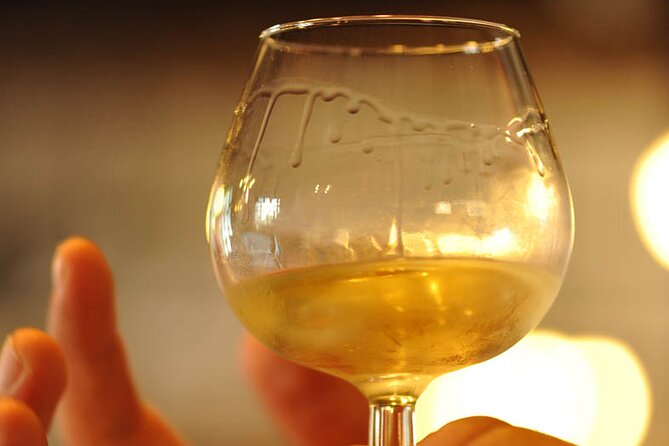
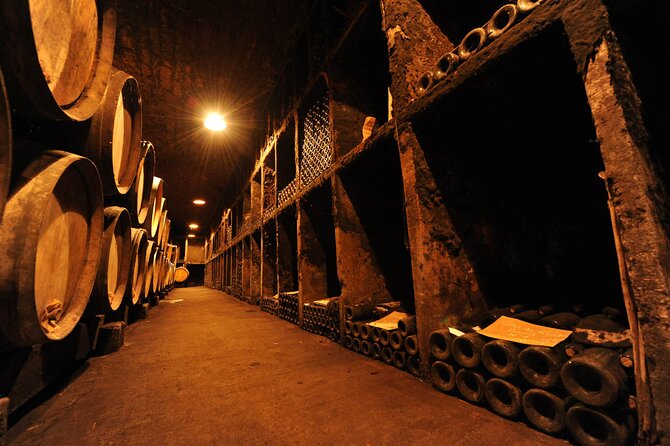
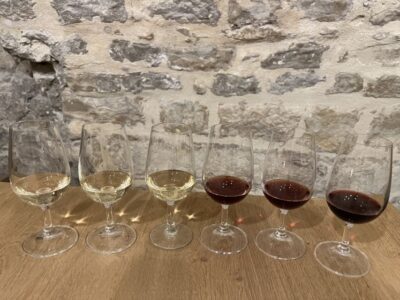
The tasting is held in a traditional cellar and usually features five to seven wines, with a selection that can include Premier Cru, red Burgundy, white Burgundy, and the region’s celebrated Pinot Noirs. The exact wines may change, which is normal in Burgundy and worth accepting.
This is not a quick sample followed by a sales pitch. The tasting is used as a teaching session. Guides explain the wines’ background, the development of Burgundy’s wine production, and the local system that gives each bottle its identity. One afternoon included six wines, while a smaller group tasted nine across two wineries. Those numbers suggest that the day can flex somewhat, but the standard expectation is five to seven wines.
You do not need advanced wine vocabulary. The best guides, including Antonin, Paul, and Jeremy, have been praised for making complex subjects approachable. A good question to ask is how two wines from nearby vineyards can taste different, or why a Premier Cru costs more than a village wine. The small group makes this sort of conversation practical.
White wine is part of the promise, but the Côte de Nuits is especially linked with red Pinot Noir. If you prefer red wine, you will have plenty to study. If you want an equal split between red and white, ask the guide what the day’s lineup is likely to include.
The tasting comes after the vineyard and château visits, which is the right order. You first see the place, then taste the result. That sequence makes the wines easier to remember than an isolated cellar tasting in Dijon.
The return through the Hautes-Côtes and Ouche Valley
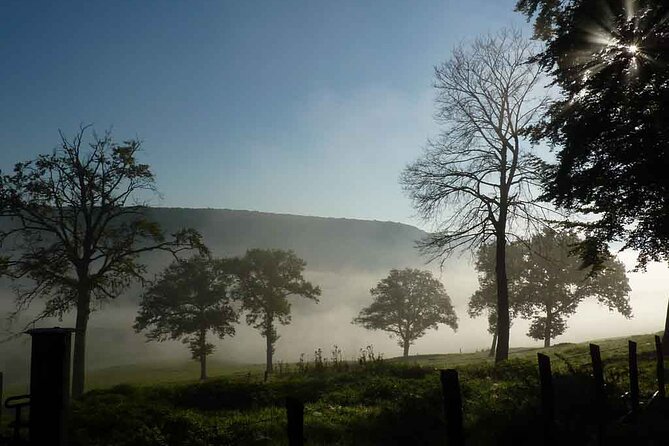
The ride back is not dead time. The route passes through the ancient forests and countryside of the Hautes-Côtes de Nuits before reaching the Ouche Valley and the 18th-century Burgundy Canal.
This part of the tour gives you a wider view of the region beyond the famous grands crus. The Côte de Nuits vineyards are tightly packed and intensely cultivated, while the Hautes-Côtes offer a more rural setting. The change helps you understand that Burgundy is not one uniform view of vines and stone villages.
The canal adds another piece of local history and scenery. You may not spend long beside it, but seeing the waterway within the Ouche Valley rounds out the route. It is a pleasant way to end the afternoon, especially if you enjoy looking out the window while your guide fills in the regional story.
The tour ends back at the Place Darcy meeting point at about 6 p.m. That makes it easy to plan dinner in Dijon afterward. Because traffic and stops can affect the exact return time, avoid booking an early evening train or a tightly timed restaurant reservation.
How much value do you get for $80?
At $80, this is priced as an accessible introduction to a costly wine region. The price includes the guided tour, wine tasting, vineyard visit, and entry to Château du Clos de Vougeot. It does not include lunch, but lunch is not part of the 1:30 to roughly 6 p.m. schedule anyway.
The value is strongest if you would otherwise need to arrange a car, find the château, identify a cellar open for tasting, and decode Burgundy’s labels by yourself. You also avoid driving after tasting several wines. The small group and local guide add value that a self-guided visit cannot easily match.
This is not the cheapest way to see one vineyard or taste a single producer’s wines. Nor is it a private, luxury wine day with a long meal. Think of it as a well-packed introduction that combines transport, interpretation, scenery, history, and wine.
The 94 percent recommendation rate and 4.8 rating from 108 reviews suggest strong overall satisfaction, but the more useful point is why the tour works: the guides consistently bring expertise, humor, and flexibility. Antonin was singled out for his wine training and care with questions. Paul has been praised for both wine instruction and friendly guiding. Hubert has been noted for his regional expertise, driving, and willingness to take photos. Those personal touches can make a short tour feel much more substantial.
Who should book this afternoon?
I would choose this tour if you are staying in Dijon, have only half a day, and want an introduction to Burgundy without renting a car. It suits couples, friends, and solo visitors who enjoy asking questions and sharing a tasting with a small international group.
It is also a good fit for wine beginners. You will learn enough to feel more comfortable ordering Burgundy wine later, without needing to prepare in advance. Experienced wine drinkers can still benefit, particularly if the guide is someone such as Antonin, Paul, or Jeremy and the group is interested in detailed discussion.
I would look elsewhere if your main goal is extended time in village streets, a full meal, or visits to many separate wineries. The route gives you vineyard views and heritage stops, but most of the afternoon is spent riding between sites, learning from the guide, and tasting.
Booking confirmation is issued at the time of booking, but a minimum of four people is required for departure. If the minimum is not reached, Authentica Tours may cancel after confirmation and offer another option or a full refund. You can cancel for a full refund up to 24 hours before departure. Inside 24 hours, the payment is not refunded.
Should you book the Côte de Nuits tour?
Book it if you want the big picture in a compact afternoon: vineyards, monastic wine history, a major château, countryside, and a serious tasting. At $80, the combination is strong, particularly for visitors without a car.
Go in expecting a guided regional tour, not a walking tour of several villages. The first drive can be long, but the payoff is a clearer understanding of why Burgundy’s wines matter and how the vineyards connect to the places around them. For many people, that is exactly the right first taste of the Côte de Nuits.
FAQ
Where does the tour start?
It starts at the central bus parking area at 16 Place Darcy, 21000 Dijon, France.
What time does the tour depart?
The scheduled start time is 1:30 p.m.
How long does the experience last?
The tour lasts approximately four hours and 30 minutes. It is scheduled to return to the meeting point at about 6 p.m.
How many people can join the tour?
The tour has a maximum of eight participants. At least four people are required for the tour to depart.
What wines are included in the tasting?
The tasting includes a selection of five to seven Burgundy wines. The selection can include Premier Cru wines, red and white Burgundy, and Pinot Noir.
Is Château du Clos de Vougeot included?
Yes. Entry to the château is included, along with a guided visit to its historic wine-making facilities, presses, vat rooms, and monks’ cellar.
Is lunch included?
No. Lunch is not included in the tour price.
Can I cancel for a refund?
Yes. You can cancel at least 24 hours before the scheduled start time for a full refund. Cancellations or changes made within 24 hours are not refunded or accepted.
Just listed in France
- Paris: Giverny & Versailles Small Group or Private Tour★ 4.5 · 49 reviews
- Half-Day Walking Food Tour in Nice with Lunch★ 5.0 · 49 reviews
- Chartres Cathedral 5 Hours Tour from Paris with Private Transport★ 4.5 · 49 reviews
- Marseille: Frioul Archipelago Catamaran Cruise with Lunch★ 4.4 · 49 reviews
- Paris: Louvre photoshoot or Seine bridges Eiffel Tower walk★ 5.0 · 49 reviews
- Private tour of the Champagne area, meet local producers and taste their Champagne, start from your hotel in Paris.★ 5.0 · 50 reviews
- Bonifacio: sunset catamaran trip and aperitif★ 4.6 · 50 reviews
- Paris: Choux Pastry and Chocolate Éclair Making Class★ 4.9 · 50 reviews
Dijon Tours, compared.
La Cave du Palais Burgundy Wine Tasting Experience
Read our review →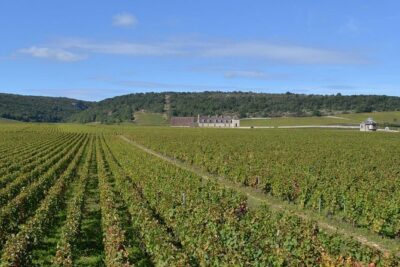
Small-Group Full-Day Tour of Côte de Nuits, Côte de Beaune Vineyards and Beaune Historical District
Read our review →
Small group Burgundy tour of Beaune with Wine Tasting from Dijon
Read our review →
Browse the lists this tour appears in