
Reviewed · STRASBOURG TOURS
Strasbourg: Walking Tour with a Local Guide
Strasbourg is the sort of city that rewards a good first walk. This two-hour tour links its big sights with the smaller streets, canals, bridges and old houses that give the city its character. You begin at Place Gutenberg and finish with a useful sense of how the historic center fits together.
I like the practical side of this experience: your guide points out good photo spots and gives advice on where to eat after the walk. I also like the local feel. Guides such as Alex, Natalie, Emmy and Catalina have been praised for explaining the city with warmth, humor and plenty of personal detail.
The main thing to watch is the language setup. Tours are offered in English and German, and a group can be multilingual, which may mean waiting through explanations in two languages. The pace can also be brisk for some walkers, though one guide slowed down when asked.
Key points to know before you go
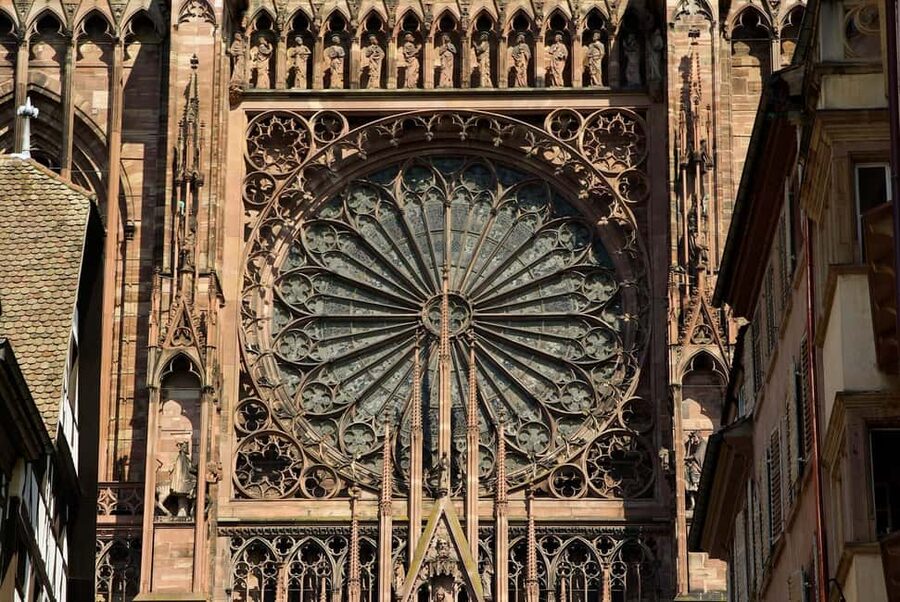
- A compact route through Strasbourg’s historic core: See Place Gutenberg, Petite France, the Tanners’ Quarter, Place Kléber and Notre Dame Cathedral in two hours.
- Local guidance beyond the postcard views: Guides explain the people, buildings and events that shaped Strasbourg, with names such as Alex, Natalie, Emmy and Catalina appearing in recent tour feedback.
- Excellent orientation for a first visit: The walk helps you understand where to return for shopping, meals, photos and further sightseeing.
- Cathedral visit means an exterior stop: Entry tickets are not included, so plan a separate visit inside if you want to see more.
- English and German are available: Ask about the language arrangement, since some departures combine both languages.
- Good value at $28 per person: You are paying for a live introduction to several major sights, not admission to the cathedral or food along the way.
Starting at Place Gutenberg
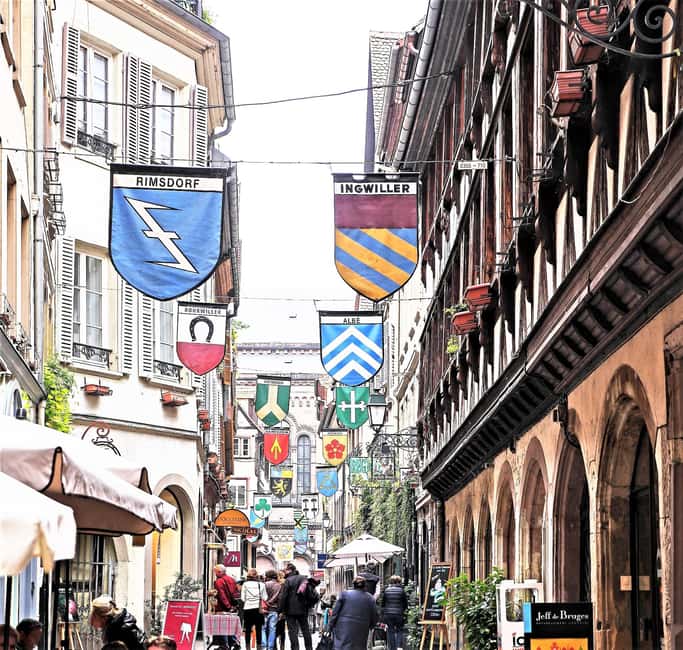
The tour meets at Place Gutenberg, near the statue and tree, where you look for a guide wearing a blue UTG Experience badge. This is a sensible starting point because the square sits inside the Grande Île, Strasbourg’s historic island center and a UNESCO World Heritage Site.
Place Gutenberg is more than a convenient meeting spot. The square is named for Johannes Gutenberg, associated with the invention of the printing press, and your guide explains why his connection matters to Strasbourg. This gives the walk an early lesson in how the city’s identity reaches beyond pretty buildings.
I find a central square like this useful at the start of a city tour. You can check your shoes, water and camera, meet the guide, and then move straight into the old streets without spending time on a bus or waiting for transport.
The route is a walking tour from beginning to end. Wear comfortable shoes, especially if you plan to continue exploring afterward. A hat, sunscreen and water are wise in warm weather, since one summer group found the heat tiring even though the guide kept the visit engaging.
More Walking Tours in Strasbourg
- Strasbourg: Walking Tour with Local Guide
★ 5.0 · 598 reviews - Strasbourg: Guided Historical Neighborhoods Walking Tour
★ 4.9 · 275 reviews - Strasbourg: Traditional Food Walking Tour with Tastings
★ 4.8 · 219 reviews
The cathedral and Strasbourg’s grandest first impression
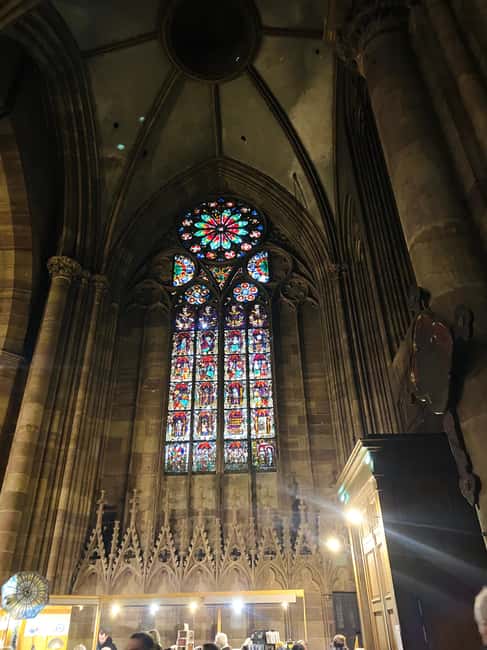
Notre Dame Cathedral is one of the major landmarks on the walk. Its tall facade, elaborate stone decoration and strong presence make it an easy place to pause, look upward and take photographs.
Your guide helps you notice details you might miss while simply standing in front of the building. The photo advice is a useful touch, especially if you arrive in bright daylight or are trying to fit the full facade into a phone picture. You also get context about the building rather than just a quick stop for a snapshot.
This part of the experience is primarily an exterior introduction. Cathedral entry is not included, so you will need to arrange and pay for that separately if you want to go inside. That is not a flaw, but it matters when comparing this walk with a tour that includes an indoor visit.
The cathedral stop may come at a slightly different point in the route. The advertised route lists Petite France and Place Kléber as the main walking sections, with the cathedral included as a pass-by stop, while the fuller description places the cathedral early in the experience. Expect to see it, but do not treat the order as fixed.
One hour among the canals of Petite France
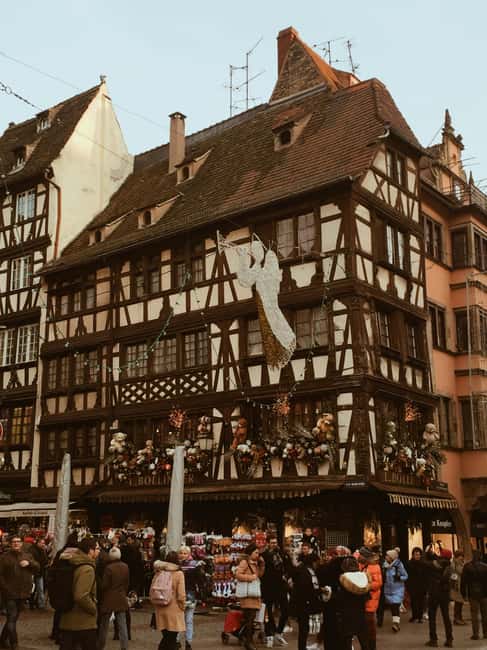
Petite France is the visual heart of the walk. Here, canals, bridges and colorful old houses create the Strasbourg most people picture before arriving. The area is pleasant to explore on foot because the scenery changes every few minutes, from water views to narrow streets and quiet corners.
Your guide shares stories about the people who lived and worked here. That human detail matters. Old houses become more interesting when you understand that this was a working neighborhood, not simply a decorative quarter preserved for photographs.
This is also where the photo advice earns its keep. Your guide can point out attractive angles across the water, good bridge views and places where the buildings line up well in a picture. You still need to watch your footing and keep up with the group, since the tour continues rather than stopping for a long photography session.
Petite France receives about an hour of guided attention, making it the longest part of the route. That is a good balance for a first visit. You get time to understand the area without spending the entire afternoon there, and you can return later for a slower walk or a meal.
The area can also be the busiest section of the tour, though the supplied information does not promise a quiet route or a particular crowd level. Go in expecting a popular part of central Strasbourg, with plenty to see as you walk.
Place Gutenberg and the city’s wider story
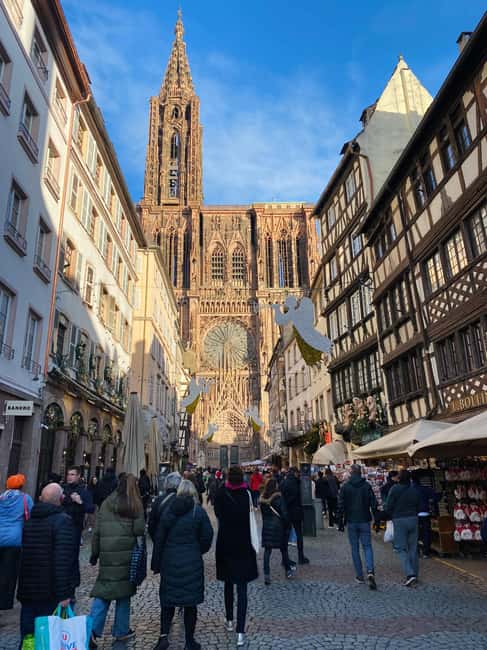
Returning to Place Gutenberg as a named stop gives the guide a chance to connect Strasbourg’s streets with its place in European history. The point is not simply that a famous inventor has a square named after him. You hear why the square matters to the city and how Strasbourg’s position helped it become an important center of ideas and exchange.
The strongest guides appear to use stories, architecture and local details rather than rattling off dates. Alex, for example, was praised for knowing the city’s buildings and history, while another guide was described as enthusiastic and able to answer questions. One piece of useful criticism was that some explanations leaned heavily on facts, figures and dates instead of turning them into memorable stories.
That distinction is worth keeping in mind. If you enjoy a thorough stream of historical information, you may appreciate the detail. If you prefer a slower, story-led style, tell your guide early. A good question can also steer the conversation toward the parts of Strasbourg that interest you most.
Same city, a completely different afternoon:
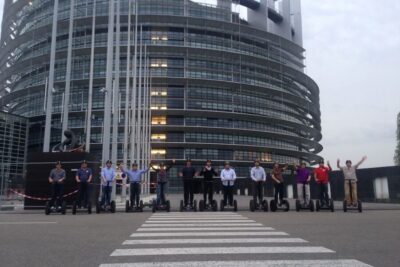
- Strasbourg: Euro Guided Tour by Segway
★ 4.7 · 808 reviews - Colmar, Medieval Village & Castle Small Group from Strasbourg
★ 5.0 · 769 reviews - 2-Hour Strasbourg Euro Tour by Segway
★ 5.0 · 642 reviews - From Strasbourg: Best Of Alsace Historical Day Trip
★ 4.7 · 633 reviews
The Tanners’ Quarter and the best time to ask about food
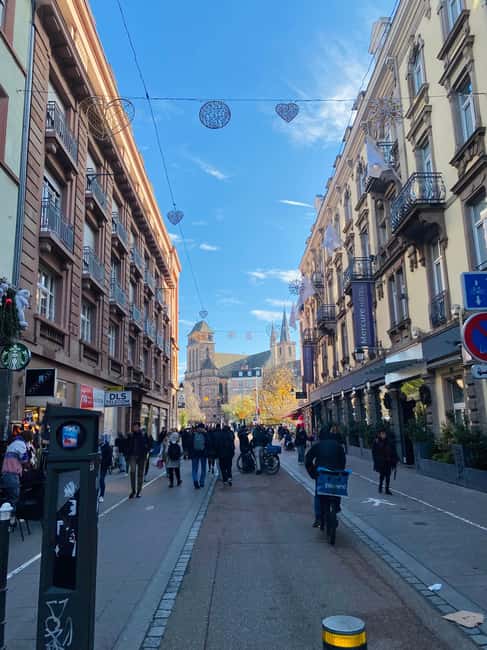
The route passes through the Tanners’ Quarter, an area associated with restaurants, bars and relaxed local life. This is a practical stop because it moves the tour from major monuments toward the places where you might actually spend your evening.
Ask your guide for suggestions here or elsewhere in the center. Food and drinks are not included, but recommendations on where to eat are part of the experience. You may also hear about places to explore after the tour, which can save you from choosing a restaurant at random.
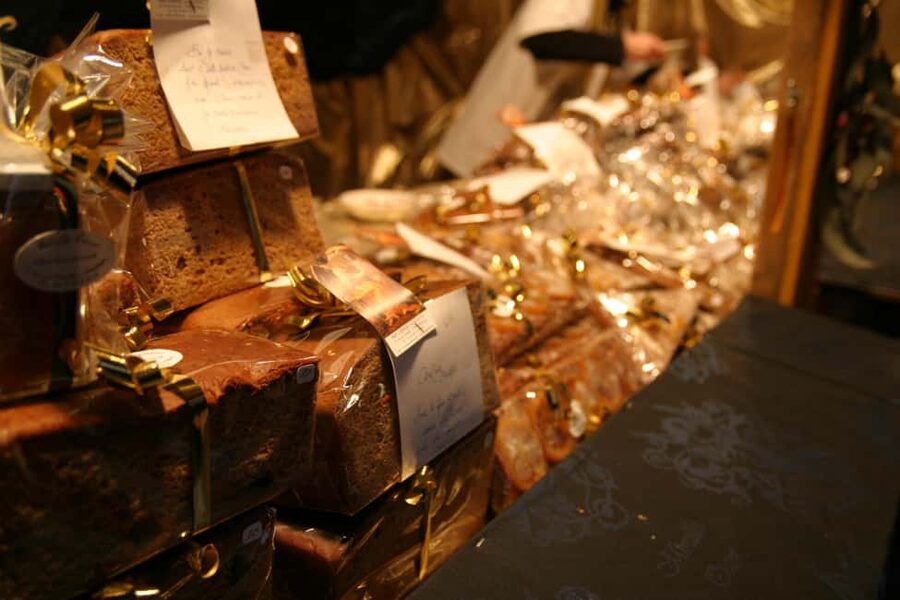
One seasonal detail is worth noting. A winter group enjoyed stopping at shops to sample local delicacies, but the activity description only promises food advice, not tastings. Consider any sampling an occasional possibility rather than something built into the $28 price.
The Tanners’ Quarter is also a good reminder that Strasbourg is more than its cathedral and canals. The tour tries to show how the historic center functions today, with dining and social life woven into the old streets.
Place Kléber and a useful finish in the city center
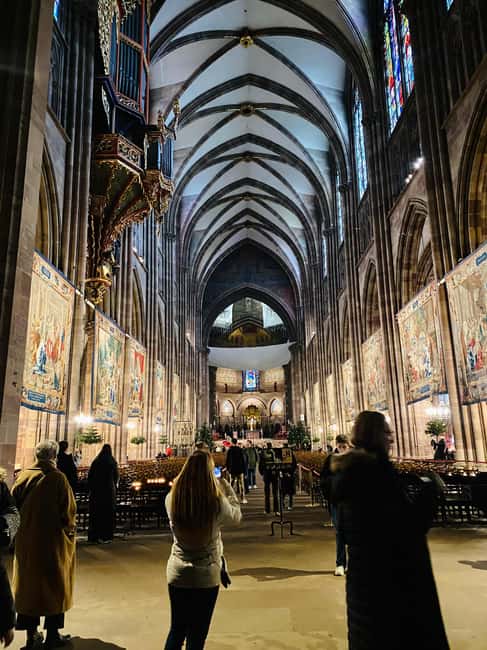
Place Kléber is Strasbourg’s main square and the final major area on the route. It gives you a different scale after the narrow streets of Petite France. Your guide explains the life of Jean-Baptiste Kléber, a figure linked to the French Revolution, and places the square within Strasbourg’s political story.
This is a useful ending because Place Kléber is central and easy to use as a base for the rest of your day. From here, you can decide whether to return to the cathedral, continue shopping, look for a meal or wander back toward the canals.
The stop is listed at about 30 minutes, although the exact timing can change with the group and the guide. The tour is designed as an overview rather than a series of long visits inside each attraction. That makes it a good opening activity, but not a replacement for spending a full afternoon in Petite France or visiting the cathedral properly.
What the guides add to the walk
The guide quality is the main reason to book this experience rather than follow a map. Several guides have been singled out for their friendliness, energy and command of local stories. Alex is repeatedly described as warm and well informed, Natalie brought enthusiasm to the city’s buildings, and Emmy and Catalina were praised for clear explanations and a welcoming manner.
The tone seems to vary slightly by guide. Some focus heavily on architecture and dates, while others use humor and personal stories to keep the group moving. That is normal for a local-led walk, and it means your experience may depend on the individual guide assigned that day.
The tours are offered in English and German. A multilingual departure can work well if you are comfortable hearing both languages, but it can also reduce the amount of time spent in your preferred language. One English-speaking participant specifically wished for a single-language group, and another found that German explanations meant waiting and less detailed English information.
If language matters to you, confirm the setup before starting. If you are placed in a mixed group, politely ask how the guide plans to divide the explanations. This is especially useful if you want detailed historical information rather than a quick overview.
The same practical advice applies to walking speed. The route is described as easy, but two hours on city streets still requires steady movement. One guide slowed down after a participant explained that the pace was too fast. Speak up early rather than struggling at the back.
Is $28 a fair price?
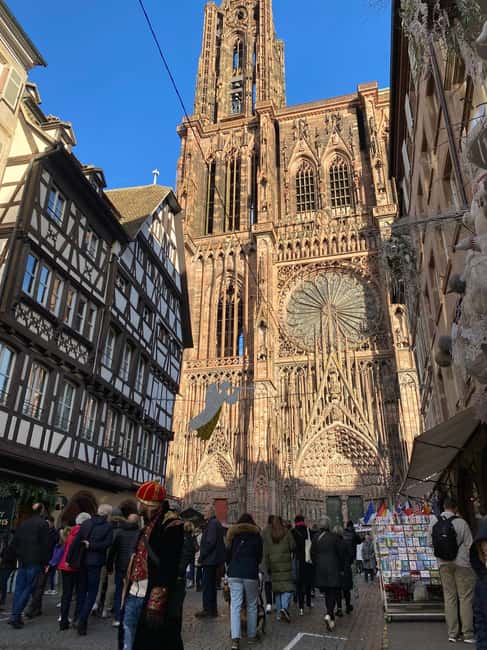
At $28 per person, I consider this a reasonable price for a first look at Strasbourg. You receive two hours with a live local guide and cover several of the city’s main areas without paying for a vehicle or separate sightseeing admissions.
The value is strongest if you are new to Strasbourg. A guide can give you a working map of the Grande Île, explain why the cathedral, Petite France, Gutenberg and Kléber squares matter, and suggest where to return. That orientation can help you use the rest of your visit more efficiently.
The price is less compelling if you want long indoor visits, food or a highly specialized history lecture. Cathedral admission costs extra, and there is no meal or drink included. You are buying an introduction and local perspective, not a complete sightseeing package.
The rating attached to the experience is 4.3 from 607 reviews, which suggests a generally dependable outing with some variation. The most common strengths are guide personality, city knowledge, interesting stories and the chance to find corners you might miss alone. The main cautions are multilingual commentary, occasional fast walking and the fact that some guides may favor facts over storytelling.
Who should book this Strasbourg walk?
I would choose this for a first visit, a short stay, or the first morning of a longer trip. It suits you if you want to understand the shape of the center before deciding where to spend more time.
It also works well for photographers. The cathedral, canals, bridges and old houses give you plenty to frame, while the guide can point out useful viewpoints. Bring your camera, but remember that the pace may not allow unlimited time at each location.
Families and older walkers should consider the two-hour duration and steady walking pace. The tour is wheelchair accessible, which is important, though the route still takes place in an old urban center where surfaces and crowd movement can affect comfort. The supplied information does not give details about the exact group size or restroom breaks.
History fans should ask questions and tell the guide what they want to hear more about. Guides have covered architecture, local people, the French Revolution, the printing press and Strasbourg’s past struggles. The depth may vary, but the route gives you several natural openings for discussion.
Book it if you prefer a lively overview and useful local suggestions. Skip it if you want to explore at your own pace, spend a long time inside the cathedral, or avoid multilingual tours entirely.
Practical details that can shape your day
The meeting point is Place Gutenberg, near the statue and tree. Look for the blue badge marked UTG Experience rather than waiting beside a random entrance.
The tour lasts two hours, with available starting times shown when you check a date. It is offered in English and German, and the group may be multilingual. Cancellation is free up to 24 hours in advance, and you can reserve now and pay later, which helps if your Strasbourg plans are still shifting.
Bring comfortable shoes, water, a hat, sunscreen and a camera. Food and drinks are not included. The cathedral admission is also separate, so decide whether to schedule an indoor visit before or after the walk.
FAQ
How long is the Strasbourg walking tour?
The tour lasts two hours.
Where does the tour meet?
It meets at Place Gutenberg, 67000 Strasbourg, France, near the statue and tree.
How do I find the guide?
Look for a guide wearing a blue company badge marked UTG Experience.
What languages are available?
The tour is offered in English and German.
Can the tour be multilingual?
Yes. The tour can combine languages, so you may hear explanations in both English and German.
Is the tour wheelchair accessible?
Yes, the activity is listed as wheelchair accessible.
Is entry to Strasbourg Cathedral included?
No. Cathedral entry tickets are not included in the tour price.
Are food and drinks included?
No. Food and drinks are not included, though the guide gives recommendations on places to eat and explore.
What should I bring?
Bring comfortable shoes, a hat, a camera, sunscreen and water.
Can I cancel for a full refund?
Yes. You can cancel up to 24 hours in advance for a full refund.
Can I reserve now and pay later?
Yes. The activity allows you to reserve your place and pay later.
Is this a good tour for a first visit to Strasbourg?
Yes. The route covers major sights and historic areas, including the cathedral, Petite France, Place Gutenberg, the Tanners’ Quarter and Place Kléber, giving you a useful first orientation.
Just listed in Strasbourg
- From Strasbourg: Half-Day Tour of Alsace Villages★ 4.7 · 50 reviews
- Medieval Villages and Wine Tasting from Strasbourg★ 5.0 · 55 reviews
- Strasbourg City Center Guided Bike Tour w/ Local Guide★ 5.0 · 57 reviews
- Strasbourg Food Tour : Gourmet private Tour with tastings★ 4.7 · 58 reviews
- Private Tour: From Strasbourg to Colmar, Eguisheim, Riquewhir★ 4.5 · 58 reviews
- Capture the Magic of Strasbourg with an Exclusive Photoshoot★ 4.9 · 61 reviews
- FULL DAY ALSACE PRIVATE TOUR : Tailored by your Friendly Driver★ 5.0 · 76 reviews
- Explore Strasbourg in 60 minutes with a Local★ 5.0 · 82 reviews
Strasbourg Tours, compared.
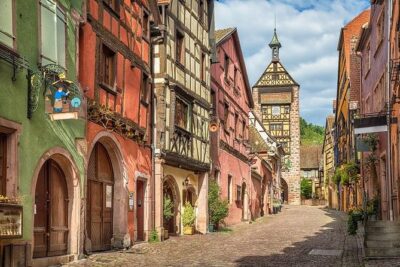
Colmar, Medieval Village & Castle Small Group from Strasbourg
Read our review →
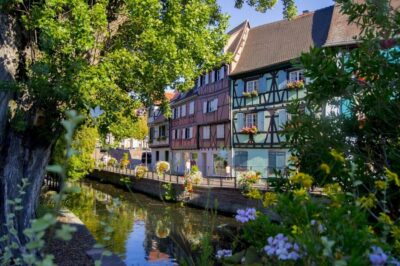

Strasbourg Food Tour – A Taste of Tradition by Do Eat Better
Read our review →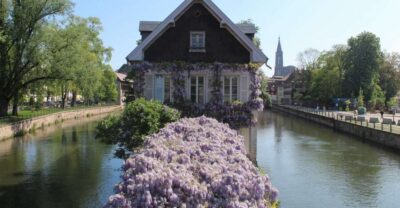
Browse the lists this tour appears in