
Reviewed · STRASBOURG TOURS
Strasbourg: Guided Bike Tour with a Local Guide
Strasbourg makes an excellent city for a bike tour because its major sights are spread across several distinct districts. In 150 minutes, you ride from Petite France and the covered bridges to the imperial avenues of Neustadt, then out to the European Parliament and Council of Europe before returning through the old center.
I like the way this route shows Strasbourg as more than a pretty medieval quarter. I also like the regular stops for photos and explanation, including the cathedral, Place Broglie, Stork Street, and parts of the old city wall. The main thing to consider is that riding through busy pedestrian areas can feel awkward, so you should be confident on a bike and comfortable keeping pace with a group.
Key points at a glance
- Petite France and the Vauban Dam: See canals, covered bridges, and the defensive works that helped shape Strasbourg.
- A two-part view of Strasbourg: Compare the medieval old town with the 19th-century Neustadt, built during the German imperial period.
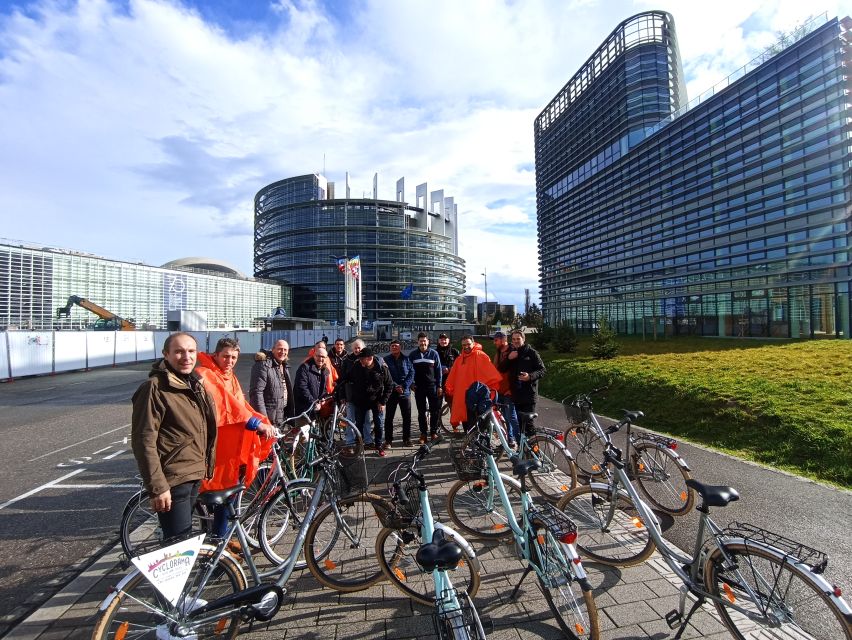
- The European district: Cycle past the European Parliament, Council of Europe, and European Court for Human Rights.
- A flat route with useful range: You cover far more ground than on foot without facing serious hills.
- Guides who adapt well: Katarina, Joshua, Vivienne, and other guides are praised for clear explanations, humor, patience, and good pacing.
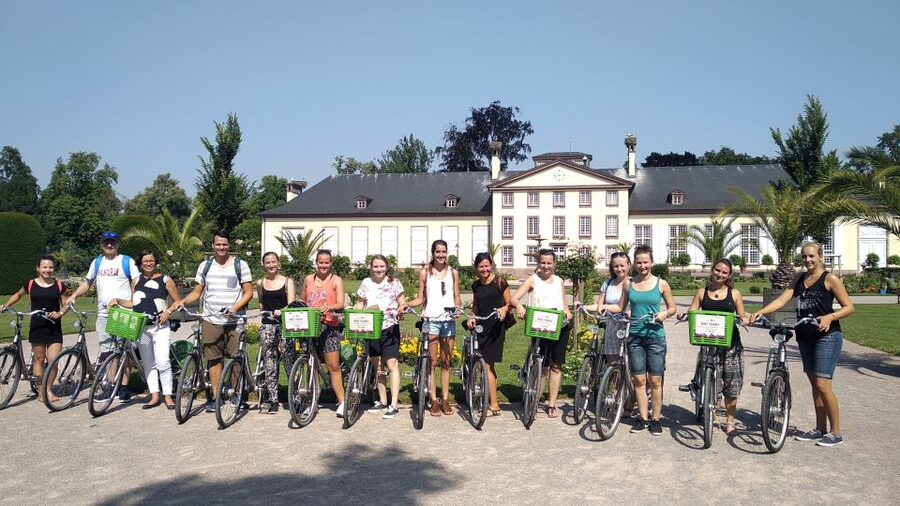
- Practical bike setup: A bicycle is included, with helmets available and baskets suitable for a small bag.
Why a bicycle works so well in Strasbourg
A walking tour can show you the center, but Strasbourg’s character changes quickly as you move beyond the cathedral. A bicycle lets you connect the old town, Neustadt, the European district, and Parc de l’Orangerie in one outing.
The route is generally easy because Strasbourg is flat. That does not mean you can coast through without paying attention. You may need to weave around pedestrians in the historic center, and the group moves through city streets rather than staying on one quiet path.
I see this as a good choice for a first look at Strasbourg. You get a map in your head, learn which districts deserve a longer visit, and can return later to the places that catch your interest.
The tour lasts 2.5 hours, long enough to cover the main ground without becoming an all-day athletic event. The guide combines riding with stops, so you are not pedaling continuously while trying to listen.
More bike and e-bike rides in Strasbourg:
- Strasbourg: Euro Guided Tour by Segway
★ 4.7 · 808 reviews - 2-Hour Strasbourg Euro Tour by Segway
★ 5.0 · 642 reviews - Strasbourg: 1.5-Hour Guided Segway Tour
★ 4.8 · 383 reviews
Starting with Strasbourg’s old center
The exact meeting point depends on the option you book. The listed starting locations include Café Lové and La Pépinière, so check your confirmation carefully before setting out.
The program begins with a short introduction to Strasbourg. This opening matters because the city’s story is not simple. French and German influence is visible in the architecture, street plan, names, and political role of the city.
From the starting point, you ride toward the historic center and cross the Pont du Corbeau. The bridge brings you into the area around Gutenberg Place, a useful point for understanding how the old city developed around the Ill River.
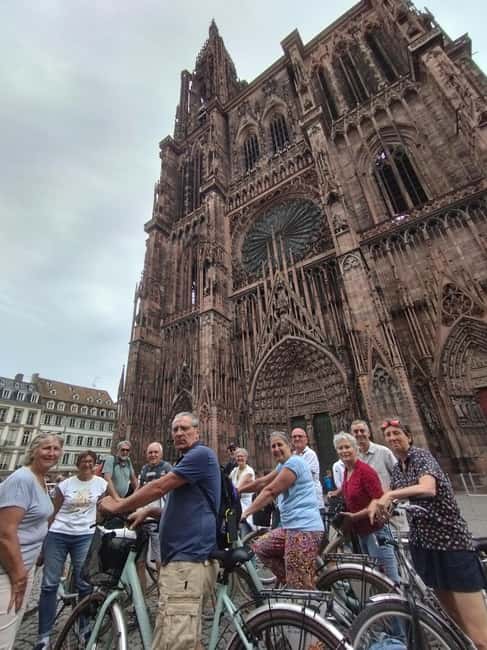
You soon reach Notre Dame de Strasbourg Cathedral. Its soaring façade is one of the tour’s major visual moments, and the stop gives you time to look closely rather than simply pass by on a bicycle.
The cathedral area can be busy, especially around the small streets and open spaces nearby. Your guide helps turn the crowds into part of the experience by pointing out details you might miss while walking on your own.
The route also reaches Place Broglie and the Opera house. This gives you a different view of central Strasbourg, away from the cathedral’s immediate orbit.
Petite France, covered bridges, and the Vauban Dam
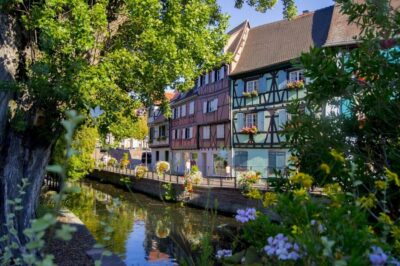
Petite France is the postcard section of Strasbourg, but it is more than a photo stop. The district’s canals, timber-framed buildings, narrow lanes, and former working waterfront make it one of the city’s most atmospheric areas.
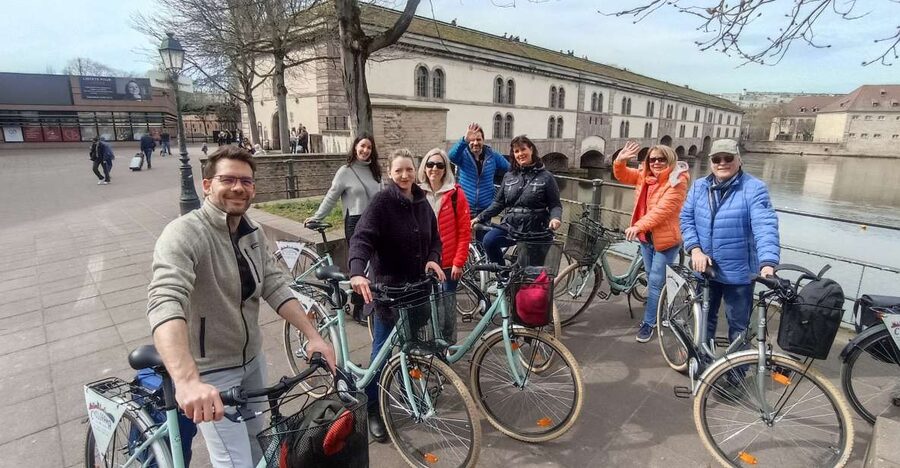
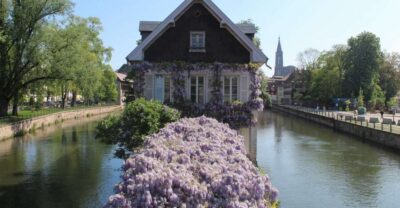
You ride through the Old Town and see the covered bridges. Despite the name, the bridges no longer have their original roofs, but the defensive complex remains an important part of the city’s older fortifications.
The route continues to the Vauban Dam, a defensive structure associated with the city’s military history. From here, you can connect Strasbourg’s waterways with the walls and bridges that once helped protect the city.
This portion is likely to be the most scenic part of the outing. It is also where riding can become least relaxed. Petite France attracts pedestrians, and the narrow streets require care. I would not book this tour if you are still learning to balance, brake, or turn in crowded areas.
The guide stops at suitable points for photographs, but this is not designed as a long-form photography tour. You get a good selection of views, then keep moving to see the wider city.
The cathedral lanes and lesser-seen corners
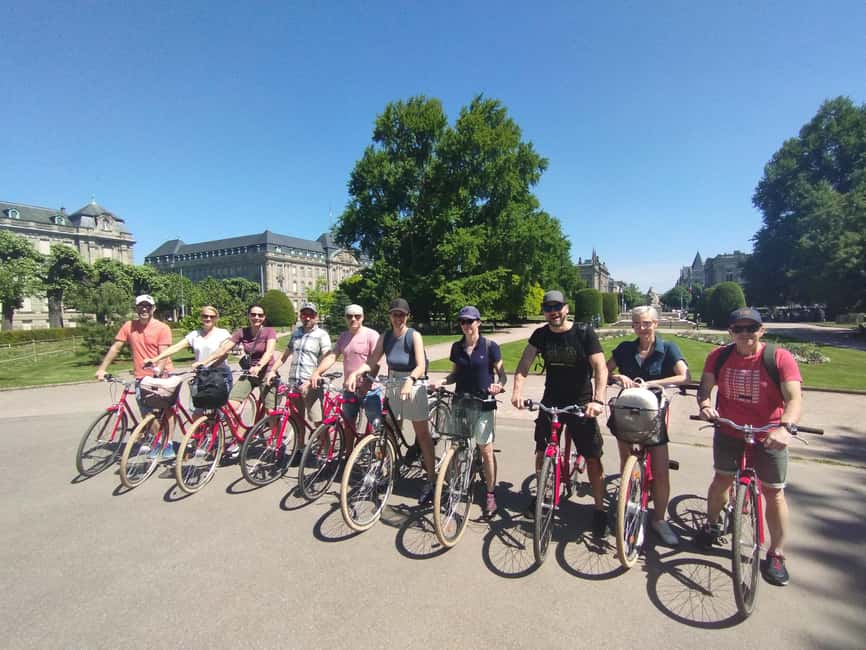
After crossing the Pont du Corbeau and visiting the cathedral area, the ride uses smaller streets around Notre Dame. This is where a local guide can add real value.
Instead of simply ticking off the famous façade, you learn how the surrounding streets fit together. The route also reaches spots close to Place Saint Etienne that you might skip if you were following only the main sightseeing loop.
Stork Street and its nearby park are particular highlights for me because they show a quieter side of Strasbourg. The ride is not limited to the most photographed squares. It makes room for details and corners that can be easy to overlook during a short city visit.
The guides are praised for explaining architecture, local history, and symbolism in an accessible way. Katarina is repeatedly singled out for her friendly manner and ability to answer questions. Joshua, also called Josh, is noted for adjusting the start time for a traveler with a tight connection, though you should not assume every timing request can be accommodated.
More bike days in Strasbourg:
- Strasbourg: Bike Tour with a Guide bikes included
★ 4.4 · 153 reviews - Strasbourg City Center Guided Bike Tour w/ Local Guide
★ 5.0 · 57 reviews - Versailles Palace Bike Tour with Market & Marie-Antoinette hamlet
★ 5.0 · 2,680 reviews - Paris: Charming Nooks and Crannies Bike Tour
★ 4.8 · 2,585 reviews
Neustadt and Strasbourg’s German imperial chapter
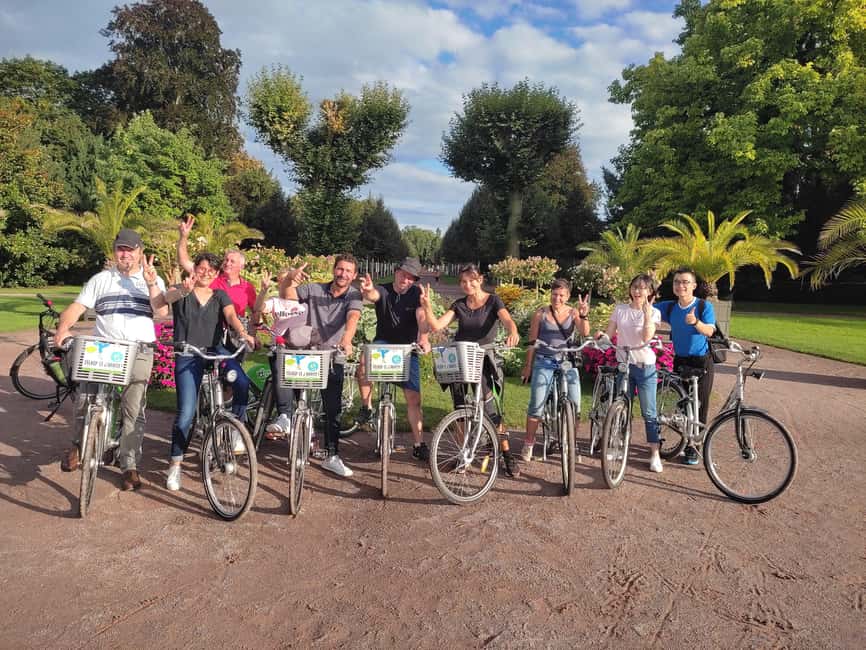
The move into Neustadt changes the feel of the tour. This district was developed during the 19th century, when Strasbourg was under German rule, and its broad avenues and formal buildings contrast sharply with the medieval center.
You see how the city expanded beyond its older walls and how planning changed from compact lanes to grander urban spaces. That contrast is one of the strongest reasons to choose the bicycle route.
Some people may prefer more time among medieval buildings. One four-star assessment specifically found that the newer part of Strasbourg took up a substantial share of the tour and would have preferred more old-town sites. That is a fair criticism if your main interest is the Middle Ages.
I think the Neustadt section earns its place because it explains Strasbourg as a border city. The tour does not present the old center as the whole story. You see how political control, urban growth, and architecture altered the city over time.
The route is also easier to handle here than in the tightest parts of Petite France. The broader streets make it simpler to stay with the group, though you still need normal city-riding awareness.
The European district and a modern Strasbourg
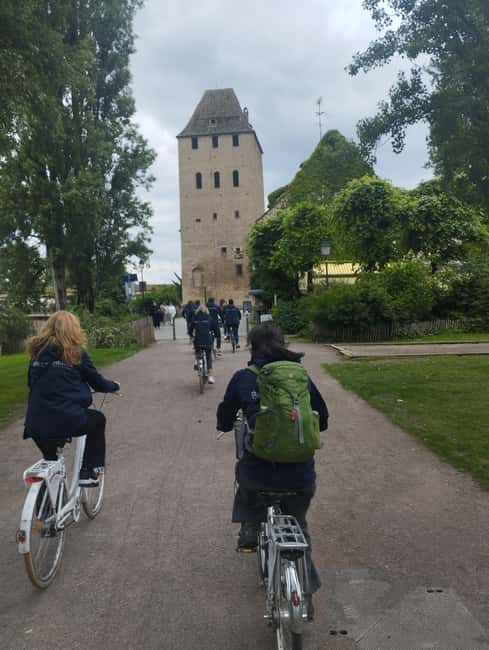
From Neustadt, you reach the heart of Strasbourg’s European district. The route passes the European Parliament, the Council of Europe, and the European Court for Human Rights.
These buildings represent Strasbourg’s present-day role as a center of European cooperation and law. They also make the tour feel unusually broad in scope. In one afternoon, you move from medieval defenses to 19th-century imperial planning and then to modern international institutions.
The buildings themselves may not be the emotional high point for every visitor. If you have limited interest in European politics or institutional architecture, this part can feel less personal than Petite France or the cathedral.
Still, the context is useful. Strasbourg is not simply an Alsatian old town preserved for visitors. Its modern identity is tied to its position between France and Germany and to its place in European public life.
The guide provides the explanation while you ride and stop. This is more useful than trying to visit the district alone without knowing what each institution does.
A breath of air at Parc de l’Orangerie
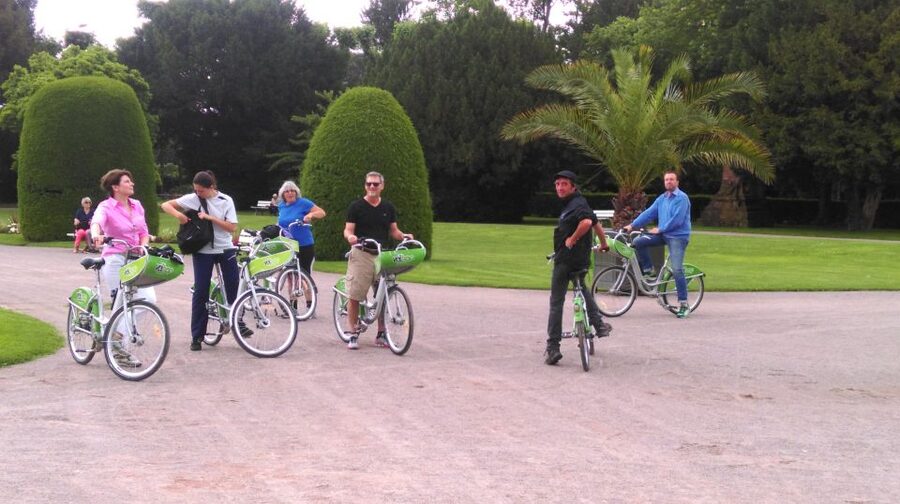
The ride pauses at Parc de l’Orangerie for about 10 minutes. After the central streets and formal institutional buildings, the park provides a welcome change of pace.
You get a chance to stretch, breathe, and take in one of Strasbourg’s greener public spaces. The stop is brief, so you should think of it as a pause within the route rather than free time for a full park visit.
This is also a good point to judge the tour’s rhythm. The outing keeps you moving, but regular stops prevent it from feeling like a race. Several guides, including Vivienne and Katarina, are praised for maintaining a comfortable pace and allowing time for questions.
If you are traveling with a teenager, this mix can work well. One parent specifically noted that a 16-year-old enjoyed the experience, and the route offers enough visual variety to hold attention better than a long, stationary lecture.
Returning along old walls and back to Petite France
The return route heads toward Place d’Austerlitz and follows a section of Strasbourg’s 14th-century wall. This is a valuable detail because defensive remains are easy to miss when you are focused on the cathedral and canals.
You then return toward Petite France and the historic center. Seeing the old district later in the ride helps tie the city together. You have already seen the modern institutions and the imperial expansion, so the older quarter feels like part of a much larger story.
The listed drop-off options include Café Lové and La Pépinière, with the final point depending on the booking option. Treat the end of the ride as a convenient return to the starting area rather than a guided stop with extra sightseeing.
The guides make the difference
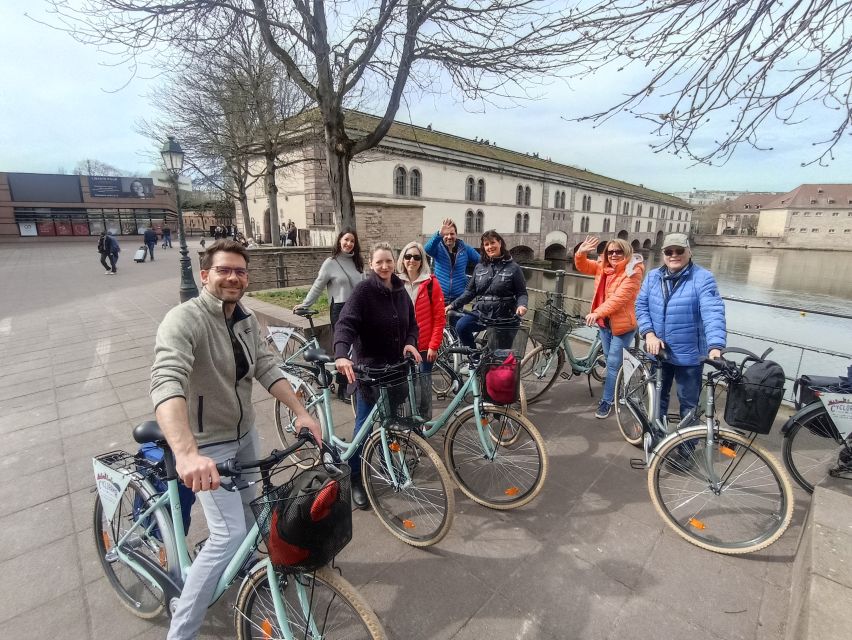
The guide is central to this experience. The advertised languages are English, German, and Dutch, and the tour uses a live guide rather than an audio recording.
Katarina and Katerina appear in the guide feedback under slightly different spellings, so the name may vary by listing or translation. She is repeatedly described as friendly, patient, clear, and strong on Strasbourg’s history and architecture.
Joshua, or Josh, receives similar praise for his explanations, humor, and practical handling of the route. Vivienne is noted for her warm manner and expert understanding of the city. Other guides have also been praised for taking extra time when needed and for using documents to explain local history.
The strongest pattern is not simply that the guides know facts. They explain them in a way that works while you are riding, then pause often enough for questions and photographs.
The German option can be especially useful if you want to practice the language. One German-speaking participant appreciated that the guide checked for understanding and repeated points in simpler German when needed.
Bikes, helmets, pace, and riding comfort
A bicycle is included, and past outings have used bikes described as new, well maintained, and easy to ride. Helmets are available, and baskets can hold a small bag.
You should still arrive dressed for active sightseeing. The route is flat, but you are riding for 150 minutes and moving through streets with pedestrians. Comfortable clothing and secure belongings make sense.
The tour is not presented as a strenuous cycling challenge. The regular stops and level route suit many casual riders. At the same time, you need enough control to stop, start, turn, and stay with a group.
The most useful practical warning is about pedestrians. The old center can be crowded, and weaving around people may feel daunting if you rarely ride in cities. Parents should consider each child’s bike confidence rather than relying only on age.
Rain does not necessarily ruin the outing. One participant had a wet day and still enjoyed the ride, but weather will affect comfort and visibility. The activity is outdoors, so check the forecast and dress accordingly.
Is $46 a good value?
At $46 per person, the tour is reasonably priced for 2.5 hours with a bicycle and live multilingual guide. The real value comes from the distance covered and the historical links between districts.
A walking tour may cost less in some cities, but it cannot easily connect Petite France, the cathedral, Neustadt, the European institutions, Parc de l’Orangerie, and the old wall in one afternoon. A self-guided bike ride can cover the distance, but you would lose the explanations and local orientation.
The price makes the most sense early in your stay. You can use the route to decide where to return, how the districts connect, and which sights deserve more time.
It is less useful if you want a slow visit inside individual monuments. You do not spend long periods at the cathedral, European institutions, or park. You see them from the route and hear their context.
Free cancellation up to 24 hours before the start and the option to reserve now and pay later make the booking less rigid. The meeting point can vary, so check the selected option and start time before you commit your schedule.
Who should book this Strasbourg bike tour?
I would choose this tour if you have only a day or two in Strasbourg and want a broad first look. It is also a good fit if you enjoy local history but prefer learning while moving rather than standing in one square.
Families with older children and confident cyclists should find the route appealing. The flat streets, short stops, and variety of districts make it easier to keep a mixed-age group interested.
It suits visitors who have already taken a boat tour or walked around the central island too. The Neustadt, European district, park, old wall, and smaller streets add material beyond the standard old-town circuit.
I would be cautious if your bike skills are weak, if you dislike city traffic, or if your only goal is medieval Strasbourg. In that case, a walking tour focused on the cathedral and Petite France may be a better match.
Should you book it?
Yes, if you want to understand Strasbourg as a whole city rather than only photograph its prettiest streets. The combination of Petite France, Neustadt, European institutions, Parc de l’Orangerie, and old fortifications gives you a useful sense of how Strasbourg changed across centuries.
Book it early in your visit, wear comfortable clothes, and choose the language in which you will follow history most easily. Expect a few crowded stretches and a brisk but manageable pace.
Skip it only if you want long stops at individual sights or do not feel secure riding around pedestrians. For most confident cyclists, $46 buys an efficient, friendly introduction that covers much more ground than your feet can manage in the same time.
FAQ
How long does the Strasbourg guided bike tour last?
The tour lasts 150 minutes, or 2.5 hours.
What language is the tour offered in?
The live guide can conduct the tour in English, German, or Dutch.
Is a bicycle included?
Yes. A bicycle is included in the tour price.
Are helmets available?
Yes, helmets are available. Baskets are also available for carrying a small bag.
What main areas does the tour visit?
The route includes Strasbourg’s Old Town and Petite France, the Neustadt district, the European district, Parc de l’Orangerie, and a section of the old city wall.
Will I see Strasbourg Cathedral?
Yes. The route stops in front of Notre Dame de Strasbourg Cathedral and also passes through the small streets around it.
Which European institutions will I see?
You will see the European Parliament, the Council of Europe, and the European Court for Human Rights.
Is the route difficult?
The route is generally easy because Strasbourg is flat. You should still have good bike skills because parts of the ride pass through areas with pedestrians.
Where does the tour start?
The meeting point varies by the option booked. Listed starting locations include Café Lové and La Pépinière.
Can I cancel for a refund?
You can cancel up to 24 hours in advance for a full refund. You can also reserve now and pay later.
Just listed in Strasbourg
- From Strasbourg: Half-Day Tour of Alsace Villages★ 4.7 · 50 reviews
- Medieval Villages and Wine Tasting from Strasbourg★ 5.0 · 55 reviews
- Strasbourg City Center Guided Bike Tour w/ Local Guide★ 5.0 · 57 reviews
- Private Tour: From Strasbourg to Colmar, Eguisheim, Riquewhir★ 4.5 · 58 reviews
- Strasbourg Food Tour : Gourmet private Tour with tastings★ 4.7 · 58 reviews
- Capture the Magic of Strasbourg with an Exclusive Photoshoot★ 4.9 · 61 reviews
- FULL DAY ALSACE PRIVATE TOUR : Tailored by your Friendly Driver★ 5.0 · 76 reviews
- Explore Strasbourg in 60 minutes with a Local★ 5.0 · 82 reviews
Strasbourg Tours, compared.
Colmar, Medieval Village & Castle Small Group from Strasbourg
Read our review →

Strasbourg Food Tour – A Taste of Tradition by Do Eat Better
Read our review →
Browse the lists this tour appears in