
Reviewed · STRASBOURG TOURS
Alsace Wine Route Small Group Half-Day Tour with Tasting from Strasbourg
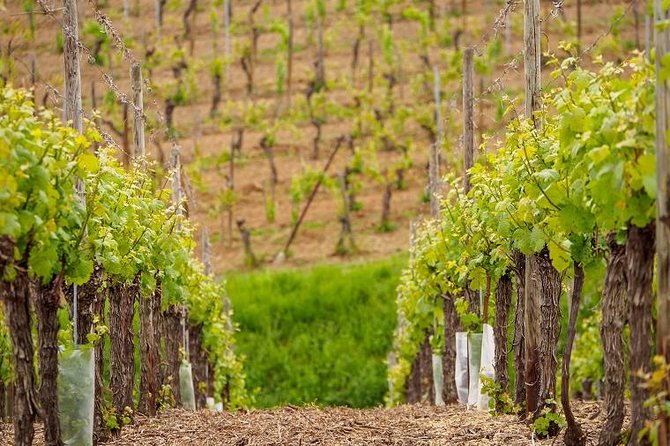
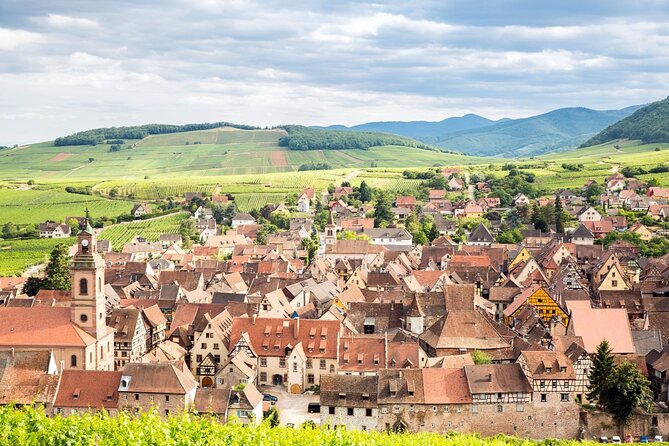
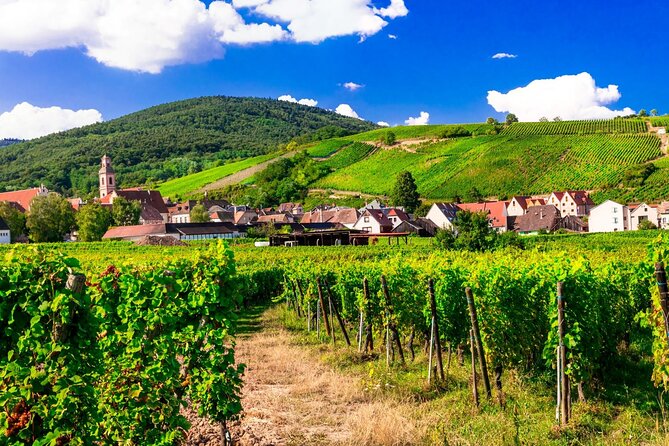
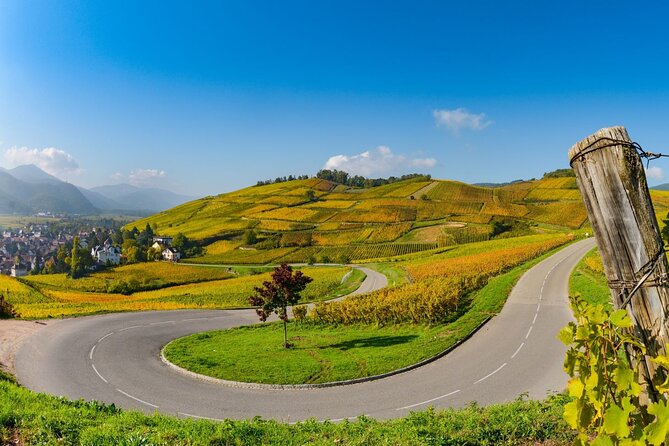
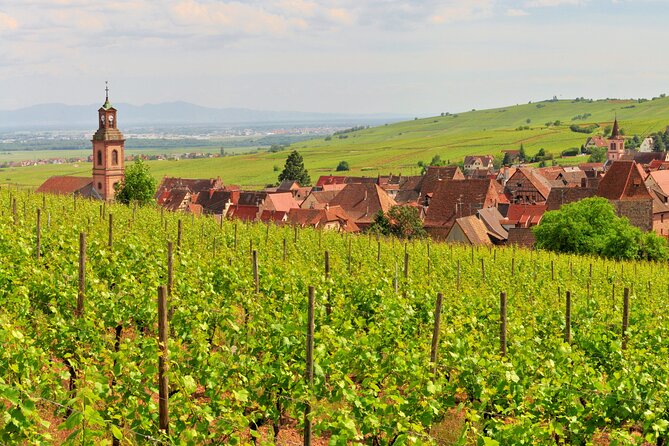
The best part of this four-hour outing is the chance to leave Strasbourg and reach the Alsace Wine Route, where vineyards, Vosges foothills, and old wine villages replace city streets. You visit two wineries, taste a broad range of local wines, and get a useful introduction to a region that can feel confusing if you explore it without a car.
I like the small eight-person group, which keeps the van comfortable and gives you room to ask questions. I also like the mix of stops: one visit may be an intimate family operation, while another takes place in a more traditional wine cellar. The main drawback is simple: there is no meal, and tastings can involve a lot of wine, so eat a proper breakfast or lunch first.
Key points to know before you book
- Two wineries in four hours: You get a focused introduction rather than a full-day vineyard crawl.
- Small Alsatian producers: Depending on the day, visits may include family-run wineries and personal cellar presentations.
- Up to eight people: The small van makes conversation and questions easier than on a large coach.
- Several local grape varieties: Expect to learn about Riesling, Gewürztraminer, Crémant, and other Alsatian wines.
- Morning or afternoon departures: You can fit the tour around a Strasbourg sightseeing day.
- No food included: Have something substantial before you start, since snacks are not normally served.
Leaving Strasbourg for the Alsace Wine Route
The tour begins at 8 Place de la Gare, in front of Strasbourg’s main train station. That is a practical meeting point, especially if you are staying near the center or arriving by train. You meet your English-speaking driver-guide, then board an air-conditioned minivan with room for a maximum of eight people.
The drive follows the Route des Vins d’Alsace, a 105-mile, or 170-kilometer, wine road running along the edge of the Vosges Mountains. You will not cover the entire route in four hours. Instead, the guide selects wineries that fit the schedule and the day’s arrangements.
That matters because Alsace wine country is not one compact attraction. Vineyards and producers are spread among many villages, and the quality of a short visit depends heavily on which wineries are open and available. Ophorus works with many producers, so the exact stops can vary. A repeat visit may therefore feel quite different from the first.
The drive itself is part of the experience. Guides such as Carlos, Jerome, Laurence, Pauline, Roman, Oliver, and Adam have been praised for explaining the wine, local culture, and regional past while pointing out places along the way. The strongest guides add useful context between tastings instead of treating the minivan as simple transportation.
Still, allow for some driving time. One account describes the roads between villages as a reasonable but noticeable part of the outing. If you want to spend hours walking through vineyards, photographing every village, or touring a single estate in detail, a half-day tour will feel brief.
A few other Strasbourg half-days to compare
- From Strasbourg: Half-Day Tour of Alsace Villages
★ 4.7 · 50 reviews - From Paris: Giverny, Monet’s House, & Gardens Half-Day Trip
★ 4.5 · 2,174 reviews - From Arles: Half-Day 4×4 Camargue Safari
★ 4.7 · 1,772 reviews
What Alsace wine tastes like
Alsace is best known for white wine, and the tour gives you a practical way to compare the area’s main grapes. You may taste most of the region’s seven grape varieties, including Riesling and Gewürztraminer. The point is not only to sample several glasses. You learn how different grapes can change the aroma, sweetness, body, and finish of the wine.
Riesling is often a good reference point because it can show crisp acidity and a clear sense of place. Gewürztraminer offers a very different profile, with its distinctive perfume and fuller feel. You may also encounter Crémant d’Alsace, the region’s sparkling wine. One group especially enjoyed learning what Crémant is and trying it alongside the still wines.
The exact number of pours can vary by winery and day. One visit included around 15 wines across two stops, which gives you a sense of how generous the tastings may be. That is also why breakfast or lunch is essential. France does not generally provide snacks at a tasting simply to protect the taste of the wine, and the included food is effectively none. A little bread may appear, but do not count on it.
You do not need to arrive with advanced wine knowledge. The most useful part of the tour is having someone explain what is in your glass and why the wines differ. A guide with sommelier training, such as Jerome, can add extra detail, but the better guides all appear to connect the wine to the soil, sunlight, climate, and farming traditions in plain language.
First tasting: the character of a family winery
Your first tasting takes place at one of the wineries selected for that day. Some visits are held in small family spaces, sometimes even in the owner’s home or kitchen. If you expect polished visitor centers, rows of display bottles, and a formal vineyard tour, this can surprise you.
I see the informality as both a strength and a possible weakness. The family setting can feel personal and genuine. You may meet the people who make the wine and hear about their work without a large commercial presentation getting in the way. For many people, that direct contact is more memorable than a standard tasting room.
On the other hand, the stop may not include a walk through the vines or a tour of every production area. The setting can be modest, and the person pouring the wine may not be a professional presenter. One visit may feel warm and welcoming, while another may be less engaging. That variation is part of choosing a small-producer route.
The wineries visited on different days have included Robert Blanck in Obernai, Fritz Schmitt in Ottrott, and Habsiger near Strasbourg. These names are useful examples, not a promise of your exact itinerary. The company’s network allows it to arrange different combinations of producers based on the day of the week.
Pay attention to the style of the visit rather than judging a winery only by its size. A tiny cellar can offer a better sense of local life, while a larger estate may explain its wines in a more organized way. The tour aims to give you some contrast between those approaches.
Second tasting: a traditional caveau and broader comparison
The second stop is described as a classic Alsatian wine cellar, or caveau. This is where you get a clearer look at the traditional environment used to store and age wine. The cellar setting helps explain why temperature, darkness, and stable conditions matter during the aging process.
The second winery may feel more structured than the first. Some groups have visited a larger estate after an intimate family stop, while others have visited two small producers. Either way, the second tasting gives you a chance to compare styles, vintages, grape varieties, and presentation.
This is often the most useful point in the tour. By now, you have tasted enough to recognize that Alsace wine is not one single flavor. A dry Riesling, aromatic Gewürztraminer, and sparkling Crémant can all belong to the same region while offering completely different experiences.
The quality of the host matters here. A lively presenter can turn a tasting into a conversation about farming, family, and local customs. A less engaging host may simply pour small samples and move on. The driver-guide cannot control every part of the winery visit, so your experience may depend partly on the particular producers scheduled that day.
The tastings are included in the price, but food is not. You should also expect wine portions to be tasting pours, not full glasses. If you want to buy bottles, some wineries can arrange international shipping, which is useful if you find a favorite but do not want to carry it through the rest of your trip.
Same city, a completely different afternoon:
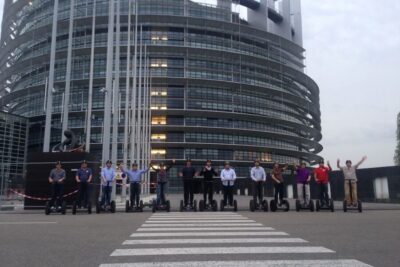
- Strasbourg: Euro Guided Tour by Segway
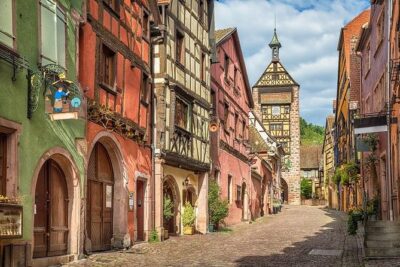
★ 4.7 · 808 reviews - Colmar, Medieval Village & Castle Small Group from Strasbourg
★ 5.0 · 769 reviews - 2-Hour Strasbourg Euro Tour by Segway
★ 5.0 · 642 reviews - From Strasbourg: Best Of Alsace Historical Day Trip
★ 4.7 · 633 reviews
The guides make or break the four-hour outing
A half-day wine tour depends heavily on the person in the front seat. A good guide has to handle driving, timing, regional history, wine explanation, and group conversation without making the ride feel like a lecture.
Carlos has been singled out for his warmth, regional knowledge, and ability to make people feel comfortable. Jerome is described as energetic and well informed about both viticulture and local history. Laurence has been praised for her passion, friendly manner, and willingness to answer questions. Pauline is noted for explaining the area clearly, while Adam is credited with covering wine, culture, and history in an enjoyable way.
Those details matter because you may spend as much time moving between villages as you do inside the wineries. A strong guide uses that road time well. You may learn about the region’s changing identity, local families, village architecture, and the role of wine in Alsace life.
The guide is not always the highlight. One account describes a quieter ride and a driver who felt more like transportation than a full guide. Another found a guide pleasant but not especially lively. If you want nonstop banter, this may not always deliver. If you prefer a calm ride with room to ask questions, that quieter pace may suit you.
The operator’s stated policy is to wait no more than 10 minutes for late arrivals. Arrive early at the station meeting point. A delayed departure cuts into a short four-hour schedule, and you should not expect the group to wait indefinitely.
Comfort, timing, and the real value of $157.28
The listed price is $157.28 per person. That is not a bargain basement excursion, but it includes an English-speaking driver-guide, air-conditioned minivan transport, and two wine tastings. You are paying for a small group, a driver, local arrangements, and access to wineries that can be difficult to reach without your own car.
For two people, the cost may compare favorably with arranging a private taxi to several villages and then organizing tastings on your own. You also avoid the obvious problem of driving after drinking. The value is strongest if you want a simple half-day plan from Strasbourg and care more about access and explanation than about spending an entire day at one estate.
The value is weaker if you mainly want a large number of full glasses, a meal, or a detailed vineyard tour. Food, personal purchases, insurance, and other personal expenses are not included. You may taste many wines, but the tour is designed for sampling and learning, not drinking freely.
The four-hour length is a sensible fit for a short stay. Choose the morning departure if you want your afternoon free for Strasbourg. Choose the afternoon option if you prefer a slower morning or want to pair the wine route with city sightseeing earlier in the day.
The tour ends back at the same train station meeting point. Hotel pickup and drop-off are not included, so plan your route to and from Place de la Gare.
Who will enjoy this tour most
I would choose this experience if you are based in Strasbourg, do not have a car, and want to see real Alsace wine country without committing a full day. It suits couples, solo visitors, and small groups who enjoy learning as much as tasting.
It is also a good choice for first-time wine visitors. You can compare grape varieties and ask basic questions without having to build your own route. Solo visitors may appreciate the chance to share a small vehicle with people from different countries, while still having a more personal setting than a large bus tour.
Wine enthusiasts will enjoy the range of producers, especially if the day includes a mix of family wineries and a larger estate. If you return to Strasbourg, the company’s network of local producers means you may be able to visit different wineries on another booking.
I would be more cautious if you want a guaranteed vineyard walk, a specific winery, a meal, or a particular guide. The exact stops can change, and family-run tastings may be quite informal. Adults only are allowed, and children under 18 cannot join.
The tour requires at least two adults to operate. Most people can participate, and the meeting point is near public transportation, but pets are not permitted. Confirmation is provided when you book. The experience is non-refundable and cannot be changed for any reason, except that poor weather or failure to reach the minimum group size can lead to another date or a full refund.
Should you book the Alsace Wine Route tour?
Book it if you want an efficient, small-group introduction to Alsace wine, with scenic driving, two tastings, and a guide who can explain more than what is in your glass. The combination of local producers, an old-style cellar, and a maximum of eight people gives the outing a personal feel.
Before you reserve, eat well and keep your expectations realistic. This is not a vineyard lunch, a full-day wine school, or a guaranteed visit to a grand estate. It is a compact route through Alsace wine country, and its strongest moments come from the guide, the chosen wineries, and the chance to taste several local styles in one afternoon or morning.
At $157.28, I consider it good value for visitors without a car who want convenience and access. If you accept some driving and a little unpredictability in the winery settings, this is a smart way to get beyond Strasbourg’s old town and into the vineyards.
FAQ
How long is the Alsace Wine Route tour?
The tour lasts approximately four hours.
Where does the tour begin?
It begins at 8 Place de la Gare, 67000 Strasbourg, France.
Where does the tour end?
The activity ends back at the meeting point near Strasbourg’s train station.
How many people can join the tour?
The maximum group size is eight people, traveling in an eight-passenger minivan.
Is transportation included?
Yes. Transport is provided in an air-conditioned minivan.
Are wine tastings included?
Yes. Two wine tastings are included in the tour.
Which wines might I taste?
You may taste several Alsatian grape varieties, including Riesling and Gewürztraminer. Crémant d’Alsace may also be included, depending on the wineries visited.
Is food included?
No. Food and drinks are not included unless specifically stated. Snacks are usually not provided during French wine tastings, so you should eat before the tour.
Can children join the tour?
No. This is an adult-only experience, and children under 18 are not permitted.
Is hotel pickup included?
No. Hotel pickup and drop-off are not included. You need to reach the meeting point at Place de la Gare.
Are morning and afternoon departures available?
Yes. You can select a morning or afternoon tour when booking.
What happens if the tour is canceled because of bad weather?
If poor weather causes the cancellation, you will be offered a different date or a full refund.
Can I cancel for a personal reason?
No. The experience is non-refundable and cannot be changed for any reason.
Just listed in Strasbourg
- From Strasbourg: Half-Day Tour of Alsace Villages★ 4.7 · 50 reviews
- Medieval Villages and Wine Tasting from Strasbourg★ 5.0 · 55 reviews
- Strasbourg City Center Guided Bike Tour w/ Local Guide★ 5.0 · 57 reviews
- Private Tour: From Strasbourg to Colmar, Eguisheim, Riquewhir★ 4.5 · 58 reviews
- Strasbourg Food Tour : Gourmet private Tour with tastings★ 4.7 · 58 reviews
- Capture the Magic of Strasbourg with an Exclusive Photoshoot★ 4.9 · 61 reviews
- FULL DAY ALSACE PRIVATE TOUR : Tailored by your Friendly Driver★ 5.0 · 76 reviews
- Explore Strasbourg in 60 minutes with a Local★ 5.0 · 82 reviews
Strasbourg Tours, compared.
Colmar, Medieval Village & Castle Small Group from Strasbourg
Read our review →

Strasbourg Food Tour – A Taste of Tradition by Do Eat Better
Read our review →
Browse the lists this tour appears in