
Reviewed · STRASBOURG TOURS
Alsace Wine Route Wineries & Tasting Small Group Guided Tour from Strasbourg
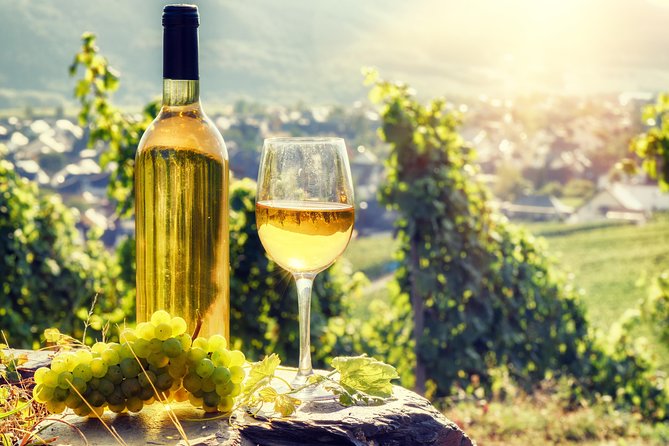
The best part of this day is the mix of wine and storybook villages. You are not simply driven to one large estate, handed a glass, and sent back to Strasbourg. The route links three different wineries with old wine towns, vineyard views, and an introduction to the families and soils behind Alsace’s famous white wines.
I like the small maximum of eight people, which gives the guide room to adjust the day and answer questions. I also like the range of grapes, from crisp Riesling and Sylvaner to floral Gewürztraminer and Pinot Gris. The main caution is that village visits can change, especially in winter, and the lunch stop may have limited restaurant choices.
Key points to know before booking
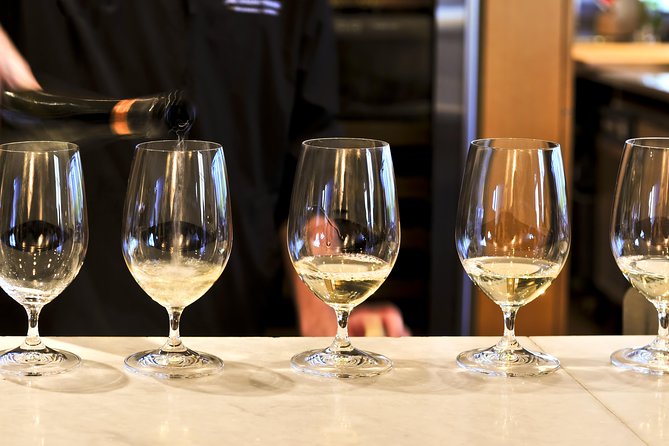
- Three winery visits: Tastings cover classic Alsace grapes and may include Grand Cru wines.
- Small-group format: The minivan holds no more than eight people, allowing a more personal day.
- Beautiful wine villages: Mittelbergheim, Dambach-la-Ville, Ribeauvillé, and Riquewihr form the planned route, though the exact stops can vary.
- English-speaking guides: Guides such as Pauline, Laurence, Jérôme, Amélie, Florence, and Maksym have led this experience.
- Lunch is your responsibility: Bring a good breakfast, since tastings generally do not include snacks.
- Full-day outing: The tour runs about eight hours, beginning at 9 a.m. and returning to central Strasbourg.
Why this Alsace wine day works well
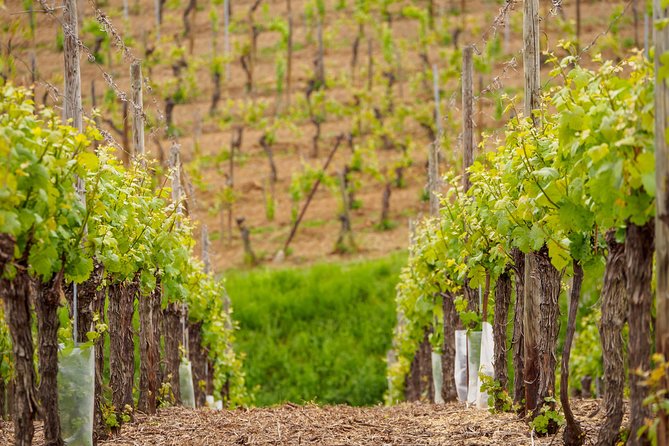
Alsace is one of France’s easiest wine regions to visit without a car. The Route des Vins d’Alsace runs for about 105 miles along the foot of the Vosges Mountains, passing hundreds of vineyards and a string of remarkably preserved villages.
From Strasbourg, the challenge is not finding a pretty town. The challenge is choosing which towns, wineries, and roads fit into one day. This tour handles the driving and links several wine areas in a sensible loop. You can look out the window, taste local wines, and let the guide deal with directions and timing.
The price is $260.12 per person. That is not a cheap outing, but it includes about eight hours of transport, an English-speaking driver-guide, and three tastings. You are paying for access to several wineries, a small group, and a full day outside Strasbourg. You still need to pay for lunch and any bottles you buy.
For a wine lover, the value is strongest if you want a broad introduction rather than one serious estate visit. You can compare family-run producers, more modern operations, and traditional cellar settings in one day. If your main goal is simply to see Riquewihr, a dedicated village excursion may be a better fit.
More wine tastings in Strasbourg:
- From Strasbourg: Medieval Villages & Wine Tasting Day Trip
★ 4.8 · 329 reviews - Alsace: Full-Day Wine Tour & Tastings from Strasbourg
★ 4.8 · 125 reviews - Medieval Villages and Wine Tasting from Strasbourg
★ 5.0 · 55 reviews
Meeting at Strasbourg Cathedral
The day begins at 9 a.m. at the tourist information office at 17 Place de la Cathédrale, right in the middle of Strasbourg. There is no hotel pickup or drop-off, so plan to reach the meeting point on your own.
You will ride in an air-conditioned minivan. With a maximum of eight people, the group feels much smaller than a standard coach tour. That matters on a wine day, since questions about grapes, producers, and buying bottles tend to come naturally as the day unfolds.
The guides are a major part of the experience. Pauline is praised for combining wine information with warm hospitality. Laurence is especially strong at explaining the region and helping the group focus on wines they enjoy. Jérôme has led days centered on grapes, soil, vineyard families, and local history. Amélie has also helped visitors make the most of the lunch stop and village time.
Guide assignments vary, so you cannot request a particular person with certainty. Still, the repeated strength of the guiding suggests that the human side of the tour is one of its safest bets.
Mittelbergheim and the first white wines
The first wine area is Mittelbergheim, a village associated with the Kastelberg, Zotzenberg, and Wiebelsberg Grand Cru vineyards. These names refer to officially recognized vineyard sites, where slope, soil, and exposure help shape the grapes.
The tasting here focuses on Riesling, Sylvaner, and Pinot Blanc. Alsace Riesling can surprise people who know only the sweeter German versions of the grape. It is often dry, bright, and firm, with enough freshness to pair well with food.
Sylvaner tends to be quieter and less showy. Pinot Blanc is usually softer and easy to drink. Tasting all three early in the day gives you a useful base for understanding the rest of the route.
This first stop also sets up an important Alsace lesson. The region sits near the German border and has changed hands between France and Germany over the centuries, but its wines have their own identity. Grape names may feel familiar to German wine drinkers, yet the styles, labels, and local traditions are distinctly Alsatian.
The exact winery can vary. The aim is to give you a focused tasting in the Mittelbergheim area, not to guarantee one named estate on every departure.
Dambach-la-Ville and the cellar experience
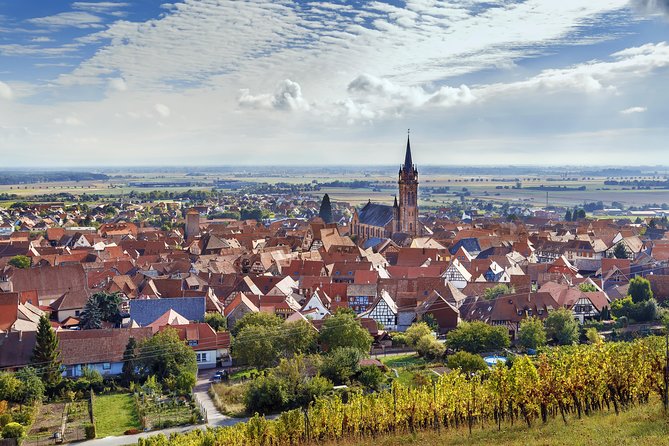
The route continues to Dambach-la-Ville, one of the region’s major wine-producing villages. It is known for the Frankstein Grand Cru, one of Alsace’s best-known vineyard sites.
The second tasting takes place in a traditional caveau, or wine cellar. You may sample Riesling and Gewürztraminer while learning how climate and soil affect the final wine. Gewürztraminer is often the most immediately recognizable Alsace grape, with a strong floral and spice character. It can be dry, off-dry, or sweet, so tasting it in context is useful.
This stop may feel more rustic than polished. That is part of the point, but it is also where expectations matter. One version of the experience has taken place in a very basic cellar or garage-like setting that felt cold and lacked atmosphere. If you visit in the off season, bring a warm layer.
I would not book this tour expecting three grand tasting rooms with elaborate displays. The charm is often in meeting smaller producers and seeing how wine is made in working village cellars. For some people, that feels more authentic. For others, it may seem too plain for the price.
A few other Strasbourg half-days to compare
- Strasbourg Food Tour – A Taste of Tradition by Do Eat Better
★ 5.0 · 614 reviews - Alsace Wine Route Small Group Half-Day Tour with Tasting from Strasbourg
★ 4.5 · 291 reviews - Strasbourg: Traditional Food Walking Tour with Tastings
★ 4.8 · 219 reviews - Visit of Cave Immersive – tasting – Kougelhopf to Strasbourg
★ 5.0 · 116 reviews
Lunch in a small Alsace village
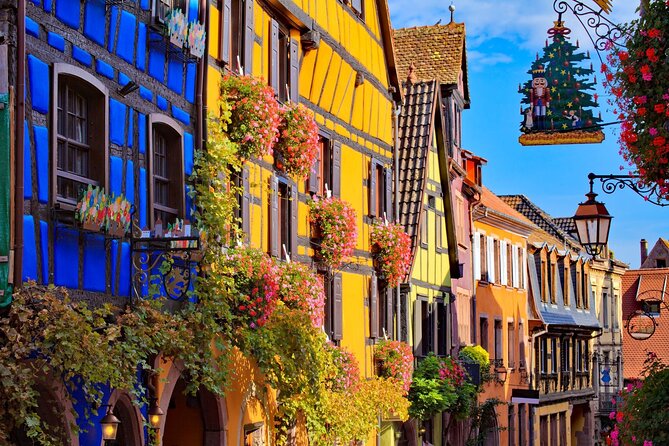
Lunch is not included, and the guide will generally leave you time to eat and explore. Stops have included villages such as Bergheim, which has a charming main street and attractive old buildings.
You should arrive with a plan to be flexible. Restaurant hours can be limited, particularly outside the busiest season, and one stop has been noted for having very few open dining choices. Ask the guide for recommendations as soon as lunch plans are discussed.
A good breakfast is wise. French wine tastings often do not include bread, cheese, crackers, or other snacks because producers want visitors to taste the wine without food changing the flavor. That means three tastings can catch up with you by midday.
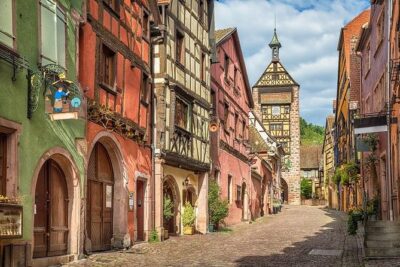
Use lunch as more than a fuel stop. The villages are compact and easy to explore on foot, and a short walk helps break up the hours in the minivan. You might see fortified gates, half-timbered homes, flower boxes, and narrow lanes that make Alsace feel quite different from Strasbourg.
Ribeauvillé and Riquewihr after lunch
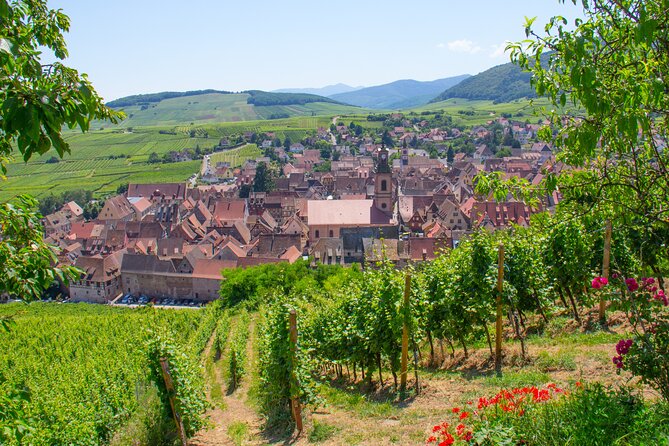
The afternoon heads toward the Ribeauvillé and Riquewihr wine area. Five Grand Cru sites are associated with this zone: Kirchberg, Osterberg, Geisberg, Schoenenbourg, and Sporen.
Riesling remains central, but the tasting may also include Muscat, Gewürztraminer, and Pinot Gris. Muscat can be aromatic and fresh. Pinot Gris is generally fuller and more rounded. Comparing these wines after the morning tastings helps you see that Alsace is not a one-grape region.
The plan includes time in Ribeauvillé and Riquewihr, two of the most attractive villages on the route. Ribeauvillé has a more lived-in feel, with a long main street and surrounding hills. Riquewihr is especially polished, with tightly packed medieval buildings and a fairytale appearance.
But do not treat both village visits as guaranteed walking tours. Traffic, winery locations, road conditions, and seasonal events can alter the schedule. During the Christmas market period, access to Riquewihr can be difficult because of road closures and heavy congestion. You may pass through the area without having enough time to explore the village itself.
That distinction matters if Riquewihr is your main reason for booking. The tour is best understood as a wine day that includes village time, not as a dedicated four-village sightseeing tour.
Three wineries, three different personalities
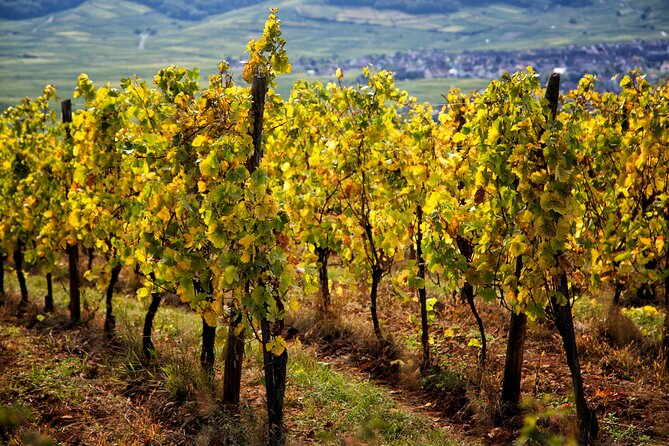
The strongest feature of the day is the variety between producers. You may visit a small family cellar, a more modern winery, and a mid-sized estate. Each can explain the region from a different angle.
Family-run wineries often make the tasting personal. You may hear about the family’s history, see the cellar, and taste wines that are sold directly by the producer. Some stops are generous with pours, which makes it possible to compare several grape varieties rather than sample only one or two.
Long-established names such as Hugel and Trimbach help place the region in context. These wine families have worked in Alsace for generations, and their names are part of the area’s wine story. The tour does not promise a visit to either famous producer, but guides may discuss how such estates fit into local traditions.
The quality of the tasting can vary. Two visits may be lively and full of useful explanation, while a third may feel less engaging. In one case, the guide had to do most of the talking because the winemaker seemed uninterested. That does not ruin the day, but it shows why the guide matters.
You should also expect opinions about the wine to differ. Some people will find the selection delicious and buy bottles to ship home. Others may consider the wines good but not exceptional for the price. The tour offers breadth and access, not a guarantee that every bottle will match your taste.
How much walking and wine is involved
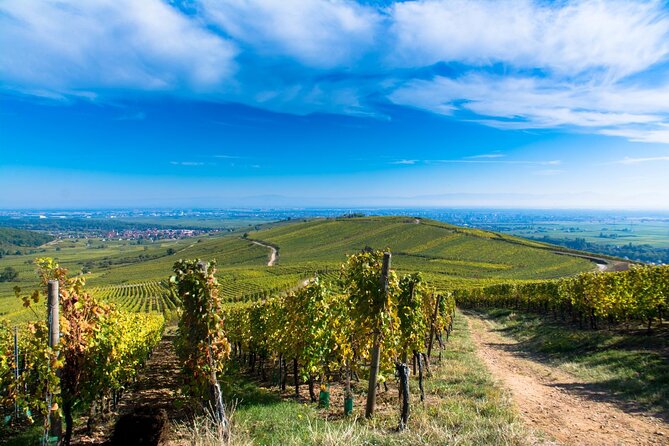
This is primarily a scenic driving and tasting day. You will spend time walking through villages, but the information provided does not give a fixed walking distance or a detailed mobility plan.
Most people can participate, and the small minivan keeps the transport manageable. Wear shoes suited to old village streets, which may be uneven. Bring a coat in cooler months, especially if you will taste in a basic cellar.
Three tastings can involve a fair amount of wine. You do not have to finish every pour, and pacing matters. Eat well before departure, drink water when you can, and speak up if you prefer smaller pours.
The tour is for adults only. Children under 18 are not permitted, and pets are not allowed. At least two adults must book for the departure to operate.
Who should book this tour
I would choose this day if you want to see the Alsace wine region without renting a car. It suits first-time visitors who want wine education, village scenery, and local stories in one outing.
It also works well for people who enjoy comparing producers. The three stops are not identical, and that variety helps you decide which Alsace grapes and styles you prefer.
You may want a different plan if you dislike flexible schedules or want a formal estate tour every time. It may also disappoint if your top priority is guaranteed time in Riquewihr. Winter visitors should be especially open to route changes, cold cellars, and fewer restaurants at lunch.
The tour returns to the original meeting area in Strasbourg after about eight hours. During the Christmas period, the return point may be just outside the Grande-Île district, with the exact location arranged with the guide.
Should you book the Alsace Wine Route tour?
Book it if you value easy transport, small groups, and variety. The day gives you a practical first look at Alsace wine, from Riesling and Sylvaner to Gewürztraminer, Pinot Gris, Muscat, and Grand Cru bottles.
I would especially recommend it for couples, friends, and solo visitors who want company without joining a large bus group. The guides are consistently praised for their warmth, regional knowledge, and ability to tailor explanations to the group.
Think twice if you are paying mainly for a luxury wine setting or a guaranteed visit to every named village. At $260.12, the experience earns its price through the full day, three tastings, and included transport, but the quality and atmosphere of individual wineries can vary.
For the right visitor, this is a relaxed and useful way to let Alsace reveal itself one cellar and one village at a time.
FAQ
Where does the tour begin?
It begins at 17 Place de la Cathédrale, at the tourist information office in central Strasbourg.
What time does the tour start?
The scheduled start time is 9 a.m.
How long does the tour last?
The tour lasts about eight hours and ends back at the meeting point in Strasbourg.
How many wineries will I visit?
You will visit three wineries and receive three wine tastings.
What wines might I taste?
The tastings may include Riesling, Sylvaner, Pinot Blanc, Gewürztraminer, Pinot Gris, Muscat, and Grand Cru wines.
Is lunch included?
No. Food and drinks are not included unless specifically stated. You should eat a good breakfast and plan to buy lunch during the day.
Are children allowed on the tour?
No. This is an adult-only activity, and children under 18 are not permitted.
Just listed in Strasbourg
- From Strasbourg: Half-Day Tour of Alsace Villages★ 4.7 · 50 reviews
- Medieval Villages and Wine Tasting from Strasbourg★ 5.0 · 55 reviews
- Strasbourg City Center Guided Bike Tour w/ Local Guide★ 5.0 · 57 reviews
- Strasbourg Food Tour : Gourmet private Tour with tastings★ 4.7 · 58 reviews
- Private Tour: From Strasbourg to Colmar, Eguisheim, Riquewhir★ 4.5 · 58 reviews
- Capture the Magic of Strasbourg with an Exclusive Photoshoot★ 4.9 · 61 reviews
- FULL DAY ALSACE PRIVATE TOUR : Tailored by your Friendly Driver★ 5.0 · 76 reviews
- Explore Strasbourg in 60 minutes with a Local★ 5.0 · 82 reviews
Strasbourg Tours, compared.
Colmar, Medieval Village & Castle Small Group from Strasbourg
Read our review →

Strasbourg Food Tour – A Taste of Tradition by Do Eat Better
Read our review →
Browse the lists this tour appears in