
Reviewed · STRASBOURG TOURS
Strasbourg: Historic Center Walking Tour
Strasbourg is easiest to understand when you connect its grand squares, medieval lanes, and cathedral in one well-paced walk. This private two-hour tour gives you that framework, with a local guide adjusting the conversation to your interests rather than delivering the same speech to every group.
I like the private format, since you can ask about food, architecture, Alsatian culture, or later plans without waiting for a large group. I also like the practical advice built into the walk. Guides such as Andrea, Jean-Pierre, Marius, and Nahama have helped visitors choose places to eat, find more sights, and shape the rest of their time in the city.
The main consideration is time. Two hours is enough for a strong introduction, but not for a full interior visit to every major site. The tour is also primarily a walking experience, so comfortable shoes matter.
Key points to know before booking
- Private and adjustable: You have an exclusive guide rather than a mixed group, and the route can reflect your interests.
- A useful first look at Strasbourg: The walk links the cathedral with Place Kléber, Place Broglie, Place Saint-Étienne, Place de la République, and the old quarter.
- Guides with different strengths: Andrea is praised for warm storytelling, Jean-Pierre for clear city context, and Marius for humor and strong local detail.
- Good advice for the rest of your stay: Guides can suggest food, gardens, nearby sights, and places that fit your plans.
- Languages and access: Tours are offered in English, French, Spanish, or Italian, and the activity is wheelchair accessible.
- Reasonable value at $34: For a private two-hour walk, the price is attractive, especially if you use the advice to plan the next day or two.
Why a private walk works well in Strasbourg
Strasbourg’s center is compact, but its story is not simple. French and German influences meet here, and the city’s squares, churches, canals, and civic buildings reflect several periods of change. You can certainly walk around alone, but it is easy to see only the postcard version.
A private guide gives you room to pause. If you care about architecture, you can ask about building details. If food is your priority, you can focus on Alsatian dishes and places to eat. If you are traveling with children, you can keep the walk moving and avoid long lectures.
The guide can also respond to what you have already seen. A first-time visitor may want the main sights, while someone staying several days may prefer side streets and less obvious corners. The tour is designed to accommodate both.
The strongest praise has gone to guides who make the walk feel personal. Jennie described Kevin as feeling like an old friend, while Julie found Andrea warm, engaging, and easy to talk with. That matters on a two-hour tour. A guide who listens can turn a standard route into useful orientation for your particular trip.
More Walking Tours in Strasbourg
- Strasbourg: Walking Tour with a Local Guide
★ 4.3 · 607 reviews - Strasbourg: Walking Tour with Local Guide
★ 5.0 · 598 reviews - Strasbourg: Guided Historical Neighborhoods Walking Tour
★ 4.9 · 275 reviews
Starting at 7 Rue des Frères
The listed meeting point is 7 Rue des Frères. From there, the tour can move through the central sights in a sequence that covers both the principal squares and the older districts.
Because this is a private tour, confirm the precise meeting arrangements when booking. The route details allow some variation, and the description also presents Place de la République as an opening point before moving toward Place Kléber, La Petite France, and the cathedral. The formal stop order lists the cathedral, Place Saint-Étienne, Place Broglie, Place Kléber, and Place de la République, with a return to 7 Rue des Frères.
That difference is not necessarily a problem. It shows why you should tell the guide what matters most at the start. If the cathedral is your priority, ask for generous time there. If you want an overview first, the grand squares make a useful introduction.
One especially useful feature is the possibility of a short city timeline early in the walk. Jean-Pierre used about ten minutes to set out Strasbourg’s story before moving into the details. That sort of overview helps the buildings make sense instead of leaving you with disconnected dates and names.
Notre Dame Cathedral: the tour’s visual high point
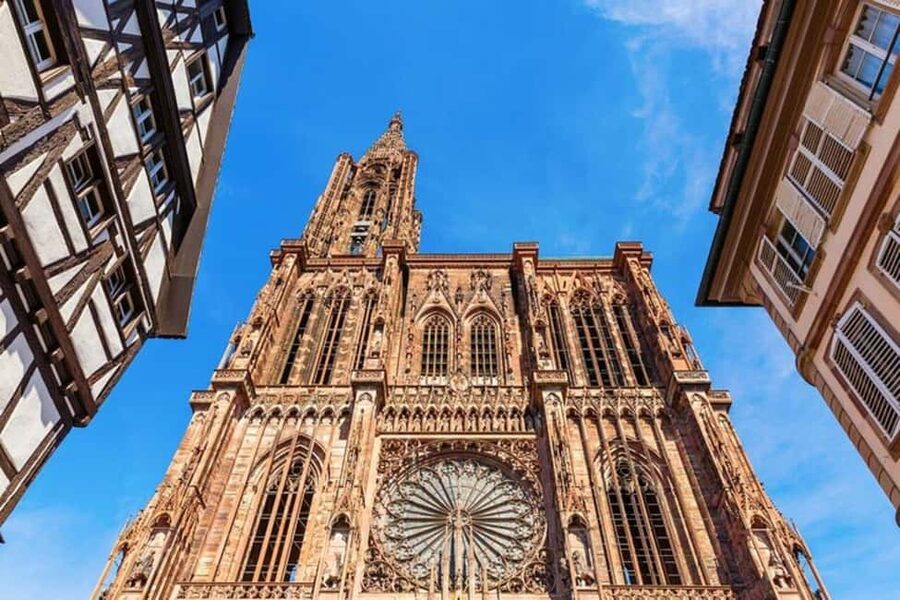
Strasbourg’s Notre Dame Cathedral is the grandest stop on this walk. Its tall facade and detailed stonework dominate the center, and the tour includes guided time here.
You should think of this as an exterior-focused introduction unless your chosen arrangement specifically includes an interior visit. The supplied details say the guide can help book tickets for desired visits, but ticketed entry is not included in the tour price. That distinction is important if you hope to see every interior feature or visit an attraction at a set time.
The cathedral is a good place to ask questions. Guides can explain the structure, its place in Strasbourg’s story, and the details that are easy to miss when you simply take a photograph. Several people specifically valued the cathedral portion, along with the walks through nearby streets and alleys.
Allow yourself a moment to look upward. Strasbourg’s cathedral is not a quick tick on a list. Its scale gives you a sense of the city’s importance, while the surrounding lanes bring you back to everyday Strasbourg.
If you want a detailed art-history lecture or an extended cathedral visit, two hours will feel short. If you want the building placed in context as part of a wider city walk, this stop fits the tour well.
Place Saint-Étienne and the quieter side of the center
Place Saint-Étienne gives the tour a change of pace. It is included as a guided stop and helps broaden the picture beyond the cathedral and the most photographed squares.
This is where a private guide can be especially useful. The main squares are easy to locate, but smaller public spaces often need explanation to become memorable. Ask your guide how the area has changed, what local life is like around it, and what details you might otherwise pass without noticing.
The route is not meant to turn every stop into a long museum lecture. Instead, you get short explanations while moving through the city. That keeps the walk practical and leaves room for questions.
If you enjoy taking photographs or looking at flowers and street details, say so. Jean-Pierre noticed that one family enjoyed smelling flowers and later suggested rose gardens for them to visit. That is a fine example of the value of a private guide: useful advice can come from a small personal interest, not just from a fixed list of monuments.
More historic sites in Strasbourg:
- From Strasbourg: Best Of Alsace Historical Day Trip
★ 4.7 · 633 reviews - Guided Walking Tour in Strasbourg between History and Curiosities
★ 5.0 · 137 reviews - Strasbourg: Private Walking Tour of the Historical Center
★ 4.2 · 107 reviews - Paris: Louvre Museum Entry with History of Mona Lisa
★ 3.9 · 2,823 reviews
Place Broglie and the city’s grand civic face
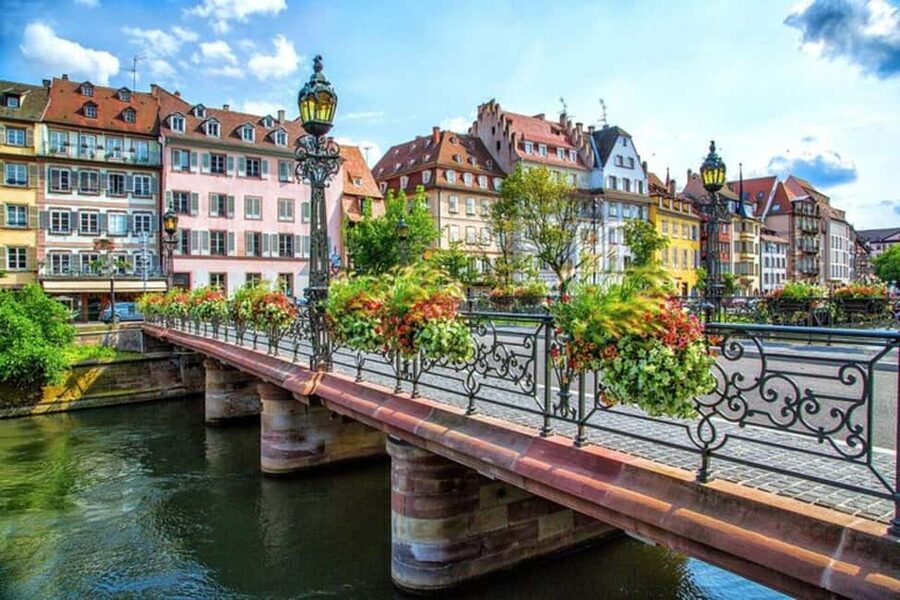
Place Broglie adds a more formal setting to the route. Here, the focus shifts from narrow lanes and medieval character to the broad civic spaces that help explain Strasbourg as a major European city.
Your guide can help connect Place Broglie with the other squares rather than treating it as an isolated photo stop. That is one reason I prefer a guided walk early in a stay. You learn how the center fits together, making it easier to return on your own later.
The tour’s guides vary in style. Marius has been praised for explaining Strasbourg with humor, while other guides are valued for a more structured approach. You cannot choose the personality in advance unless the provider confirms it, but the private format gives you a better chance to establish the pace you want.
Place Broglie may be less immediately charming than Petite France, but it adds balance. A walk limited to picturesque lanes can make Strasbourg seem like a stage set. The grand squares show its public and political side.
Place Kléber and the festive center
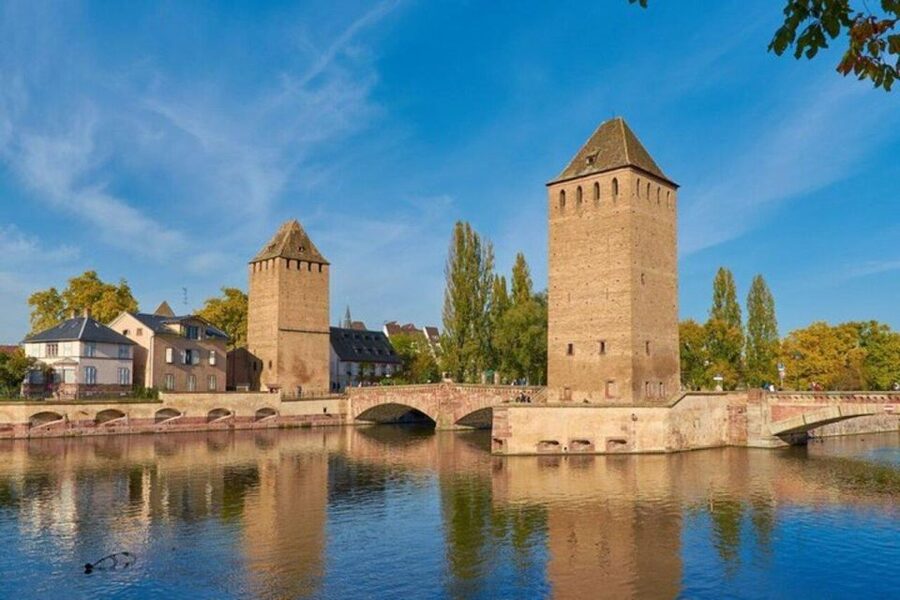
Place Kléber is Strasbourg’s main square and one of the liveliest points on the route. It has an active feel throughout the year and becomes especially dramatic during the Christmas season, when its large festive tree draws attention.
If you visit in December, this is a natural place to ask about Christmas traditions and the seasonal layout. The square can be busy, so keep personal belongings secure and agree on where to regroup if you pause for photos.
Outside the holiday period, Place Kléber still works as a useful orientation point. It is a central meeting place and a good base for understanding how the old center connects with shopping streets and nearby landmarks.
Do not expect the square alone to provide the same atmosphere as Petite France. Kléber is broad and urban, while Petite France is more intimate. The strength of the tour is seeing both within one compact walk.
La Petite France: canals, lanes, and local character
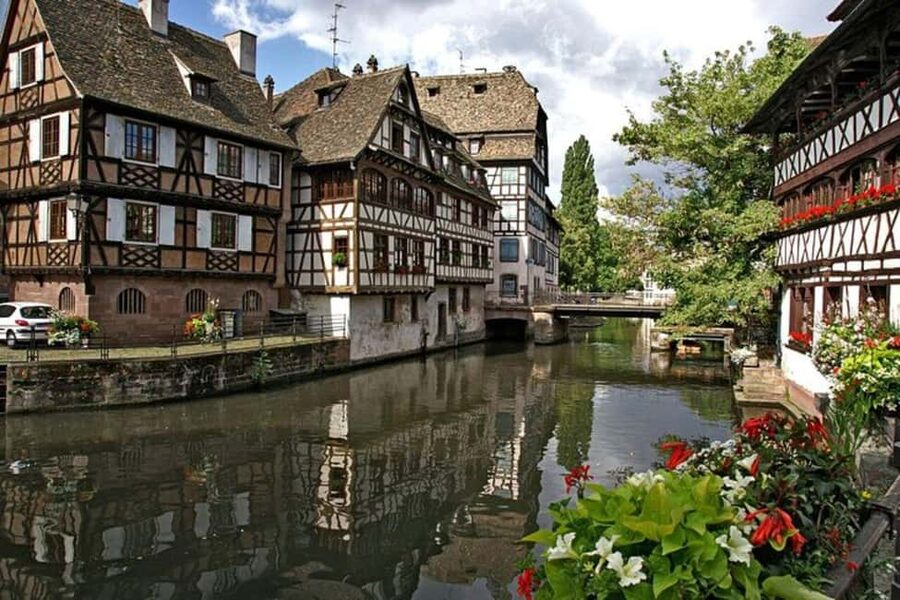
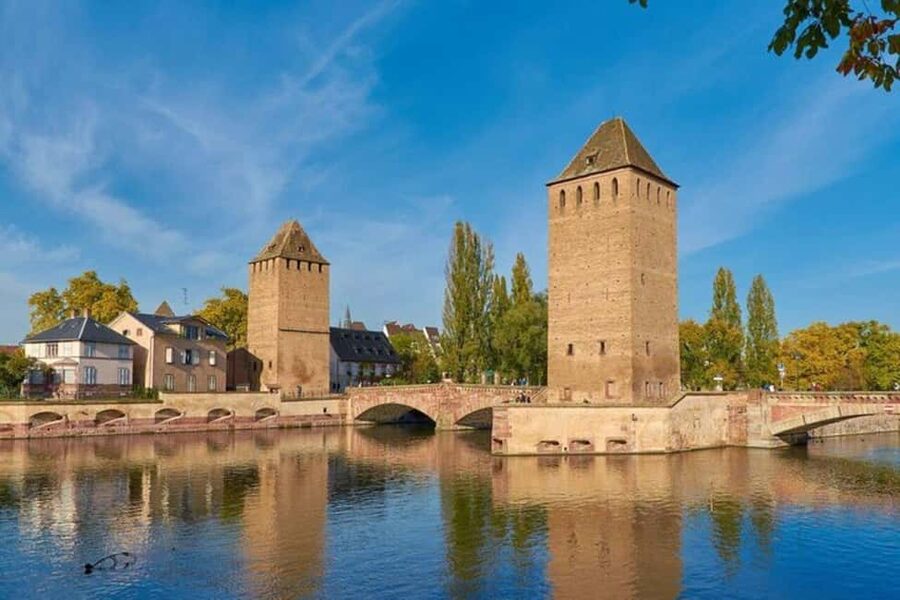
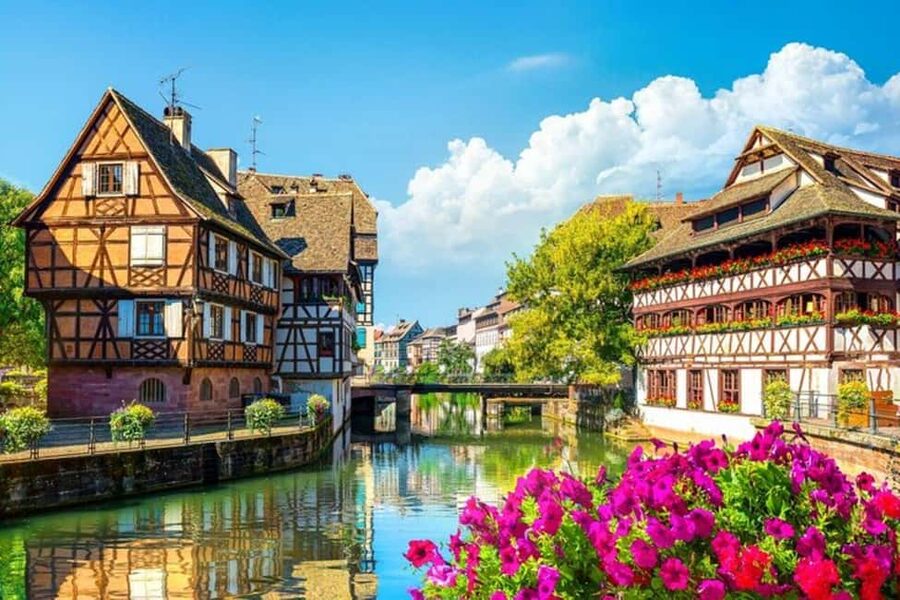
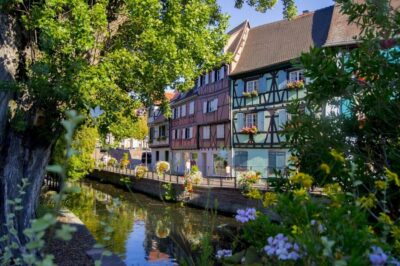
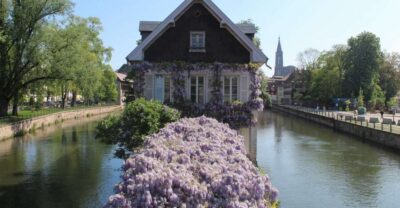
La Petite France is the most picturesque neighborhood named in the tour description. Its lanes and water-side setting give you the Strasbourg many people picture before arrival, but the guide’s role is to explain how the area developed and changed over time.
This is a good section for a slower pace. Look at the older buildings, bridges, and narrow passages, then ask how people use the district today. The walk is not only about pretty facades. Its value comes from learning why this part of Strasbourg looks different from the grand squares.
The area can draw plenty of interest, especially at popular times, so a private guide cannot guarantee quiet streets. What the guide can do is help you focus on details and adjust the route when practical.
La Petite France also gives you a chance to ask about food. Alsatian cooking is a recurring interest in the feedback, and guides have suggested places to eat based on personal plans. Ask about the dishes you want to try, then request advice that fits your budget and schedule. Food guidance is most useful when you explain what you actually like.
One caution: the provided stop list does not formally include La Petite France, even though it is a major part of the expected experience. If this neighborhood is essential for you, confirm that it will be included in your customized route.
Place de la République and a wider view of Strasbourg
Place de la République provides a different setting again, with space to consider Strasbourg beyond its oldest lanes. The tour description presents it as a possible starting point, while the stop list places it near the end before returning to the meeting point.
That flexibility works in your favor. Beginning here can give you a broad introduction before moving into the old center. Ending here can leave you with a wider sense of the city after the cathedral and historic streets.
Ask your guide for the city’s basic timeline at this point if it was not covered earlier. A short overview can help you understand Strasbourg’s changing identity and its position in a region shaped by both French and German connections.
The square is not likely to be the most intimate stop, but it is valuable for contrast. Strasbourg is more than Petite France and the cathedral, and Place de la République helps make that clear.
The guide makes or breaks the experience
A walking tour depends heavily on the person leading it. Here, the guide names that appear in the feedback include Jean-Pierre, Kevin, Andrea, Marius, Nahama, Marjorie, Stef, and Amelie.
The praise is consistent in a few areas. Jean-Pierre is valued for setting out a clear timeline and giving tailored suggestions. Andrea is described as warm, personable, and strong on details. Marius combines information with humor, and Amelie draws on a lifetime in Strasbourg and local cultural knowledge.
Nahama is praised for listening to interests and offering a range of ideas, including taking group photographs. Marjorie receives credit for keeping the historical information fun, while Stef is described as both well informed and cheerful.
You should still set expectations at the beginning. Tell the guide if you prefer dates and architecture, local food, photography, gardens, shopping, or a gentle pace. The more specific you are, the more useful the private format becomes.
The tour is offered in English, French, Spanish, and Italian. That is helpful for mixed-language families or couples, but confirm your preferred language when reserving.
What $34 gets you
At $34 per person, this is a strong price for a private two-hour tour, especially if your group has several people. You are paying for an exclusive guide, route customization, walking, and public transport where needed, except when a different option is selected.
Food, drinks, and attraction tickets are not included. The provider can help arrange tickets for desired visits, but you should treat those as extra costs.
The best value comes when you take the tour near the start of your stay. Use the guide’s recommendations for the next day or two, and the fee becomes more than payment for two hours of sightseeing. It becomes a way to avoid poor restaurant choices, missed areas, and aimless walking.
For a solo visitor, $34 is still fair if you want personal attention. For a larger private group, it becomes particularly appealing. A large guided group may offer a lower per-person cost, but it cannot usually adapt as closely to your interests.
Who should book this walk?
I would choose this tour if you have limited time in Strasbourg, want a private guide, or like asking questions as you go. It is also a good first-day activity for a longer stay because it gives you a map in your head and practical ideas for later.
Families may appreciate the adjustable pace. Food-focused visitors can ask about Alsatian dishes and restaurants. First-time visitors can cover the main landmarks without having to plan the route alone.
You may want something else if you prefer long interior visits, specialist architecture tours, or a full-day program. Two hours passes quickly, and the price does not include food or entry tickets.
The wheelchair-accessible format is a useful advantage, but the exact route and any access limits at individual sites should be confirmed in advance. Historic streets and buildings can vary in ease of access even when the tour itself is listed as accessible.
Booking is flexible: you can cancel up to 24 hours before the start for a full refund, and you can reserve now and pay later. Starting times depend on availability.
Should you book the Strasbourg walking tour?
Book it if you want a personal introduction rather than a fixed group lecture. The mix of cathedral, grand squares, Petite France, and local advice covers the essentials, while the private format lets you shape the walk around your interests.
I would book it early in a Strasbourg stay and tell the guide exactly what you hope to see. Ask for La Petite France if it is a must, allow extra time for any cathedral visit you want to make, and use the final minutes to ask about food and the rest of your route.
At $34, the tour offers good value for a private two-hour orientation. It will not replace a full museum day, but it can help you make much better use of one.
FAQ
How long does the Strasbourg walking tour last?
The tour lasts two hours. Starting times depend on availability.
Is this a private tour?
Yes. The tour is private and exclusive, so no one else is added to your group. A private group option is available.
Which places are included?
The guided route includes Notre Dame Cathedral, Place Saint-Étienne, Place Broglie, Place Kléber, and Place de la République. La Petite France is also described as part of the expected experience, so confirm its inclusion if it is essential to you.
What languages are available?
The tour can be conducted in English, French, Spanish, or Italian.
Are food and drinks included?
No. Food and drinks are not included. Attraction tickets are also separate, although the team can help arrange tickets for desired visits.
Can I cancel or pay later?
You can cancel up to 24 hours in advance for a full refund. You can also reserve now and pay later, so you do not need to pay at the time of booking.
Just listed in Strasbourg
- From Strasbourg: Half-Day Tour of Alsace Villages★ 4.7 · 50 reviews
- Medieval Villages and Wine Tasting from Strasbourg★ 5.0 · 55 reviews
- Strasbourg City Center Guided Bike Tour w/ Local Guide★ 5.0 · 57 reviews
- Strasbourg Food Tour : Gourmet private Tour with tastings★ 4.7 · 58 reviews
- Private Tour: From Strasbourg to Colmar, Eguisheim, Riquewhir★ 4.5 · 58 reviews
- Capture the Magic of Strasbourg with an Exclusive Photoshoot★ 4.9 · 61 reviews
- FULL DAY ALSACE PRIVATE TOUR : Tailored by your Friendly Driver★ 5.0 · 76 reviews
- Explore Strasbourg in 60 minutes with a Local★ 5.0 · 82 reviews
Strasbourg Tours, compared.
Colmar, Medieval Village & Castle Small Group from Strasbourg
Read our review →

Strasbourg Food Tour – A Taste of Tradition by Do Eat Better
Read our review →
Browse the lists this tour appears in